





Bottles, pump parts, nipples, and other feeding accessories can quickly take over a kitchen counter.
A good baby bottle organizer can help, but good baby bottle storage is about more than keeping things tidy. Clean feeding items should also be fully dry and stored in a clean, protected place before the next feed.
For parents who go through multiple bottles and pump parts every day, that makes organization part of the routine—not just a way to make the kitchen look tidier.
What Should a Baby Bottle Organizer Actually Store?
A useful baby bottle organizer may need space for:
- Baby bottles
- Nipples, caps, and rings
- Valves and membranes
- Breast pump parts
- Bottle brushes and cleaning supplies
- Extra bottle accessories
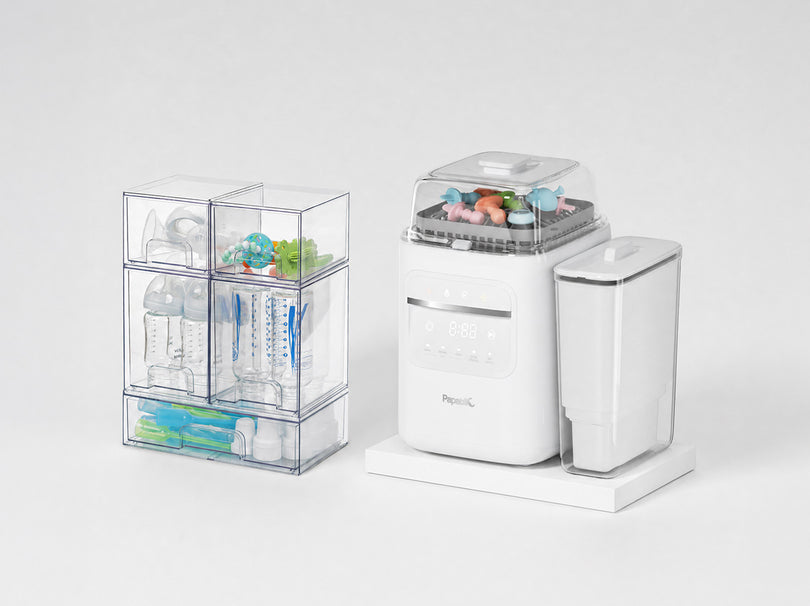
Instead of keeping everything in one pile, separate bottles from smaller parts and give frequently used pieces their own place. That can make your bottle storage easier to maintain and keep clean items organized between feeds.

6 Baby Bottle Storage Ideas for a More Organized Kitchen
1. Pick One Dedicated Baby Bottle Storage Area
Choose one fixed area close to where you prepare and use bottles. A consistent location makes everyday feeding supplies easier to find and keeps them from spreading across the kitchen.
2. Give Small Parts Their Own Space
Nipples, rings, valves, and pump membranes are easy to lose. Use divided bins or bottle storage containers to keep these smaller pieces together. You will waste less time rummaging around, especially during chaotic late‑night feeds.
3. Use Vertical Space
A crowded counter does not necessarily mean you need more counter space. A vertical rack, shelf, or cabinet organizer can make better use of the space above and around your existing work area. This can be especially helpful in smaller kitchens where every inch of counter space matters.

4. Keep Everyday Bottles Within Easy Reach
Not every bottle needs to be front and center. Keep the bottles and accessories used most often in the easiest-to-reach area. Extra bottles, backup nipples, and less frequently used accessories can go into cabinets or storage containers.
A simple rule is: the more often you use something, the easier it should be to reach.
5. Create a Dedicated Bottle Washing Station
If you are cleaning multiple bottles every day, storage is only one part of the problem. Consider creating a dedicated bottle washing station with a clear path from dirty bottles to clean, dry ones. Keep cleaning supplies, bottle parts, and drying or storage equipment within the same general area.
For hand washing, the CDC recommends using a clean basin or container dedicated to infant feeding items rather than washing them directly in the sink.
For parents washing several bottles and pump parts every day, an organized washing station can turn bottle cleaning into a more consistent workflow.
6. Turn Your Storage Area Into a Baby Feeding Station
The most useful setup may combine storage with the rest of the feeding routine. A practical baby feeding station can follow a simple path:
Dirty bottles → Cleaning → Drying → Storage → Ready-to-use bottles
Once each step has a natural place, it becomes easier to keep the kitchen organized and know where everything belongs.
How to Set Up a Baby Bottle Washing Station
A bottle washing station should connect cleaning with drying and storage rather than treating them as separate tasks.
Start by giving dirty bottles a dedicated place, then create space for cleaning and drying. After that, keep clean bottles and feeding parts in a protected storage area.
For parents washing multiple bottles and pump parts every day, an automatic bottle washer can become the center of this setup.
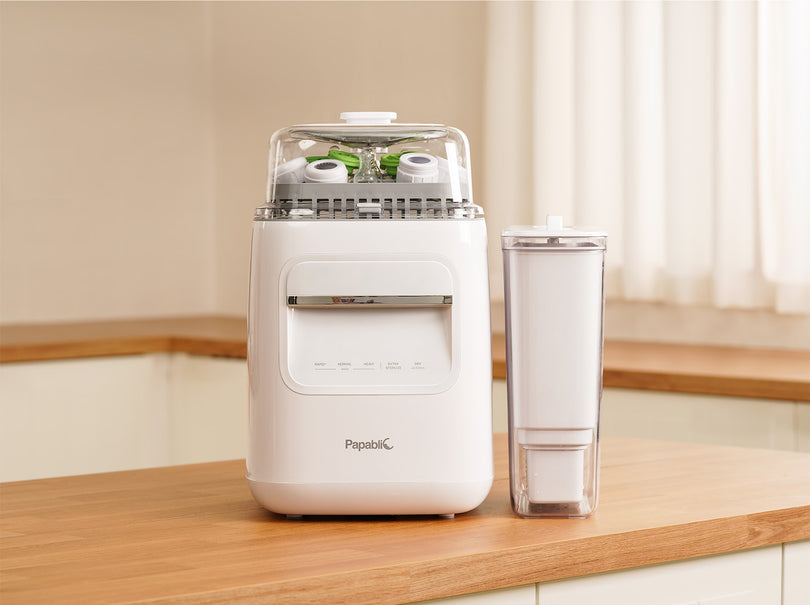
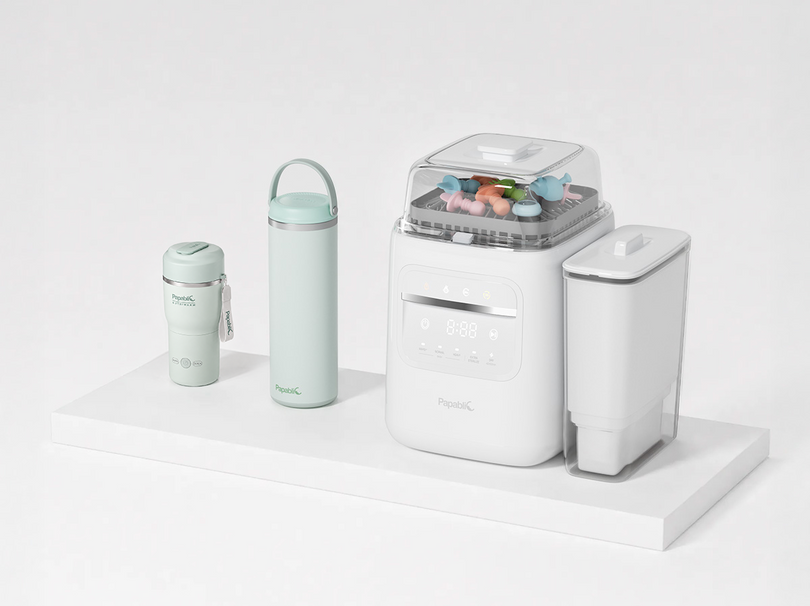
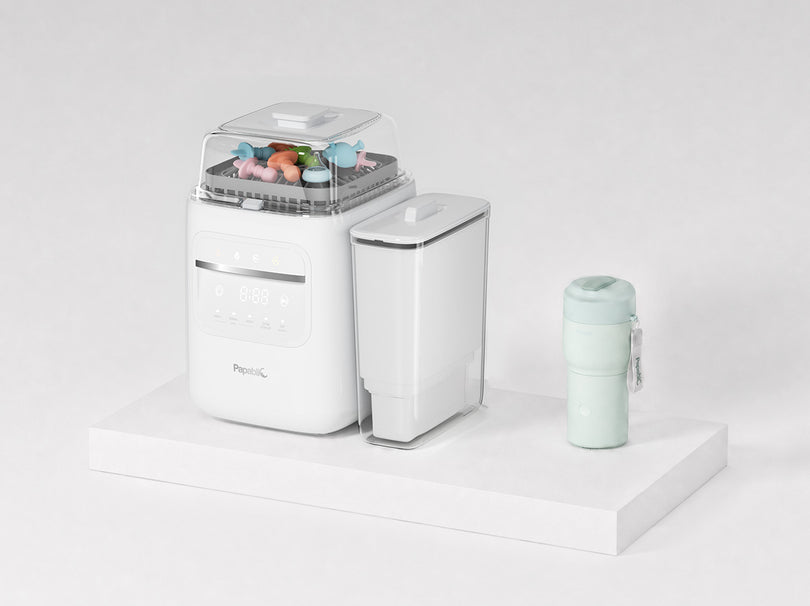
Papablic SafeguardPlus™ combines filtering, washing, sterilizing, drying, and storing in one system. It holds up to 8 bottle sets or 2 pump parts and accessories. It also features 12‑Min Rapid Wash and 72‑hour Hygienic Storage System that keeps bottles dry and protected until the next feed.
That makes it possible to connect the washing, drying, and storage parts of your feeding workflow in one place.
How to Organize a Baby Feeding Station
Once the bottle cleaning area is established, you can build the rest of the feeding station around it.
- Zone 1 - Feeding: Everyday bottles and accessories
- Zone 2 - Washing: Dirty bottles and pump parts
- Zone 3 - Drying & Storage: Clean items after washing
- Zone 4 - Pumping: Valves, membranes, flanges, and other small parts

The goal is not to create a perfect-looking countertop. It is to create a feeding setup where every item has a logical place.
Even with thoughtful zoning, hand‑washing and air‑drying take extra space and effort. A bottle washer consolidates Zone 2 and Zone 3 into one step — it washes, sanitizes, dries and keep bottle parts hygienic for 72 hours, reducing countertop clutter and daily manual chores.
Conclusion
The best baby bottle organizer is not necessarily the biggest rack. It is the one that fits into a feeding routine you can actually maintain.
For families washing bottles and pump parts throughout the day, a dedicated bottle washing station can become the center of that setup. Papablic SafeguardPlus™ brings filtering, washing, sterilizing, drying, and storing into one system, helping connect the cleaning process with the storage routine that follows.
The goal is simple: less clutter, fewer disconnected steps, and clean bottles ready when the next feed comes around. 🍼✨
- Shop the Papablic SafeguardPlus™ now and get a gift bundle worth $159.99.
- Limited to 200 units, first‑come, first‑served — this bonus offer ends once supplies are gone.
FAQs
What should I look for in a baby bottle organizer?
Look for an organizer that gives bottles, nipples, caps, rings, valves, and other frequently used accessories a logical place. If you pump, consider how you will organize smaller pump parts as well.
How should baby bottles be stored after cleaning?
Baby bottles and feeding parts should be completely dry before storage. The CDC recommends storing clean, dry, reassembled feeding items in a clean, protected area.
What is the best way to organize baby bottle storage?
Separate everyday bottles from extra supplies, give small parts their own compartments, and keep clean bottles close to where they are prepared and used. A dedicated baby bottle organizer or feeding station can help create a consistent workflow.
workflow. Can a bottle washer be part of a baby feeding station?
Yes. A bottle washer can serve as the cleaning center of a baby feeding station, with storage and feeding supplies organized around it. Papablic SafeguardPlus™ combines filtering, washing, sterilizing, drying, and storing in one system.