




Table of contents
If you have a newborn, you've probably heard the phrase “tummy time” many times. Pediatric organizations including the AAP and NIH recommend supervised tummy time as part of a baby's early development. So when should you start? How long should it last? How much does a 2-month-old need? And what are you supposed to do if your baby hates being on their stomach?
Tummy time does not need to feel like another item on an already endless newborn checklist. It can happen on your chest, across your lap, or on the floor. The goal is simply to give your baby regular, supervised opportunities to be awake and on their tummy, gradually building strength and becoming more comfortable with movement.
When Should Babies Start Tummy Time?
You can start tummy time from the beginning of your baby's life. The AAP says parents can begin tummy time the day their baby comes home from the hospital, starting with short periods while the baby is awake and supervised.
You do not need to wait until your baby can hold their head up. In fact, tummy time gives young babies an opportunity to practice using the neck, shoulders, arms, and upper-body muscles they will need as their movement develops.
For a newborn, tummy time can be as simple as placing your baby tummy-down on your chest while you are fully awake, or across your lap for a few minutes. As your baby gets used to the position, you can gradually introduce tummy time on a firm, clear floor surface.
One important distinction is that tummy time is for awake time, not sleep. When your baby is ready to sleep, place them on their back on a firm, safe sleep surface. Tummy time and sleep are two completely different things.
How Much Tummy Time Does a Baby Need?
There is no single number that every baby has to hit every day. Tummy time usually starts with very short sessions and gradually increases as your baby gets stronger.
The AAP recommends starting with 3–5 minutes two or three times a day and gradually working toward 15–30 minutes of total tummy time each day by around 7 weeks. The NIH gives a similar 15–30 minute daily target by around 2 months. Nemours KidsHealth suggests working toward about one hour a day by around 3 months, spread across multiple sessions rather than done all at once.
The important part is the progression. A newborn may only tolerate a couple of minutes, while an older baby may happily spend much longer exploring on the floor. You can also spread tummy time throughout the day instead of trying to complete it in one session. After a diaper change, after a nap, or during a few minutes of play can all become natural opportunities.

Tummy Time by Age: What to Expect
Tummy time changes quite a bit during the first few months. Your newborn may barely lift their head at first, while a 3- or 4-month-old may be pushing up, reaching for toys, and trying to move around.
The table below is meant to give you a quick idea of what you may see, not a checklist your baby has to complete on a specific day. The CDC describes developmental milestones as things that most children—75% or more—can do by a certain age, so individual babies can reach them at slightly different times.
| Age | What You May See |
| Newborn | Brief head lifts or head turns; may prefer chest or lap tummy time. |
| 1 month | Begins attempting to lift or turn the head; gradually tolerates longer sessions. |
| 2 months | Holds head up while on the tummy; moves arms and legs more actively. |
| 3 months | Lifts head and chest higher; starts pushing up on forearms. |
| 4–6 months | Pushes up more strongly, reaches for toys, pivots, and may begin rolling. |
The CDC lists holding the head up while on the tummy as a movement and physical-development milestone for 2-month-olds. By 4 months, pushing up onto the elbows or forearms while on the tummy is also listed as a physical milestone.
That progression is one reason tummy time matters. It gives babies opportunities to practice movements that become more advanced as they grow, rather than expecting those skills to appear all at once.
What If My Baby Hates Tummy Time?
If your baby starts crying the moment you put them on their stomach, you are not doing anything wrong.
Many babies dislike tummy time at first because it is hard work. Instead of trying to force a longer session, change the position or make the experience more interesting.
Try tummy-to-chest time while you recline, tummy time across your lap, or getting down on the floor face-to-face. Put a favorite toy or mirror nearby, sing to your baby, or simply talk to them.
Timing can help, too. Tummy time often works better when your baby is awake and relatively content rather than already hungry, exhausted, or upset.
If your baby becomes frustrated after a couple of minutes, take a break and try again later. A short successful session is often more useful than turning tummy time into a daily battle.
4 Tummy Time Positions to Try
Tummy time does not have to begin on a play mat. In fact, changing positions can be especially helpful when your baby is still getting used to being on their stomach.
| Position | How to Try It |
| Tummy to Tummy | Recline and place baby tummy-down on your chest |
| Tummy-Down Carry | Hold baby tummy-down with their head and body supported |
| Lap Tummy Time | Place baby across your lap while staying close and talking to them |
| Eye-Level Play | Get down on the floor in front of baby and interact face-to-face |
Sunnybrook Hospital has a short video demonstrating tummy time exercises for your baby.
Making Time for Tummy Time
The hardest part of tummy time may not actually be tummy time. It may be fitting it into a day that already revolves around feeding, diaper changes, naps, pumping, laundry, and trying to get five uninterrupted minutes to yourself.
One simple approach is to connect tummy time to routines that already happen every day. Try a short session after a diaper change, when your baby wakes from a nap, or during a few minutes of play. Once it becomes part of something you already do, tummy time feels less like another task you have to remember.
And the same idea can make other parts of the newborn routine easier, too. For parents who pump or bottle-feed, bottle cleaning can become another repetitive task that happens over and over throughout the day. There are bottles, nipples, valves, pump parts, and all the tiny pieces that somehow seem to multiply overnight.
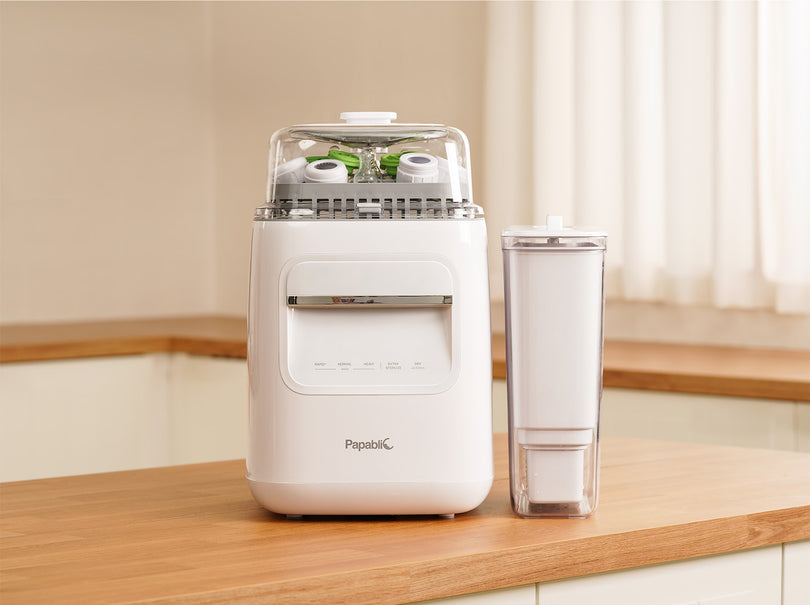
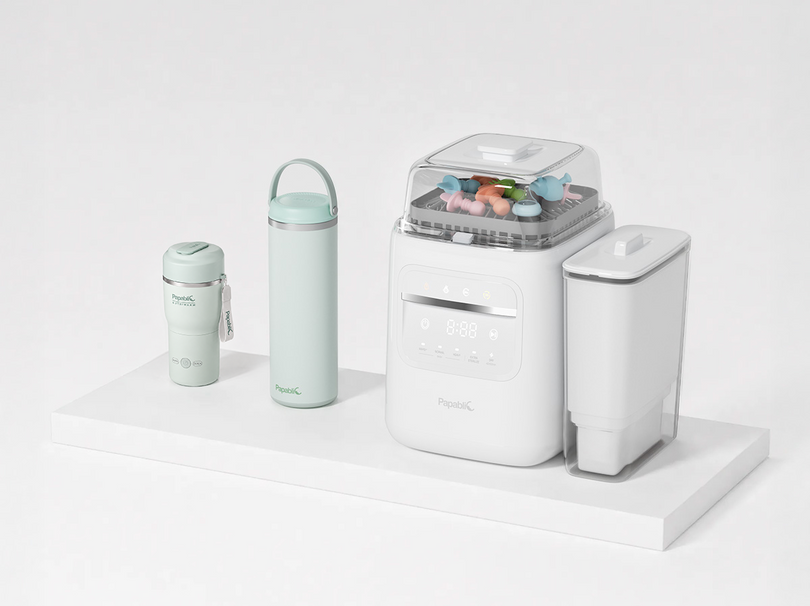
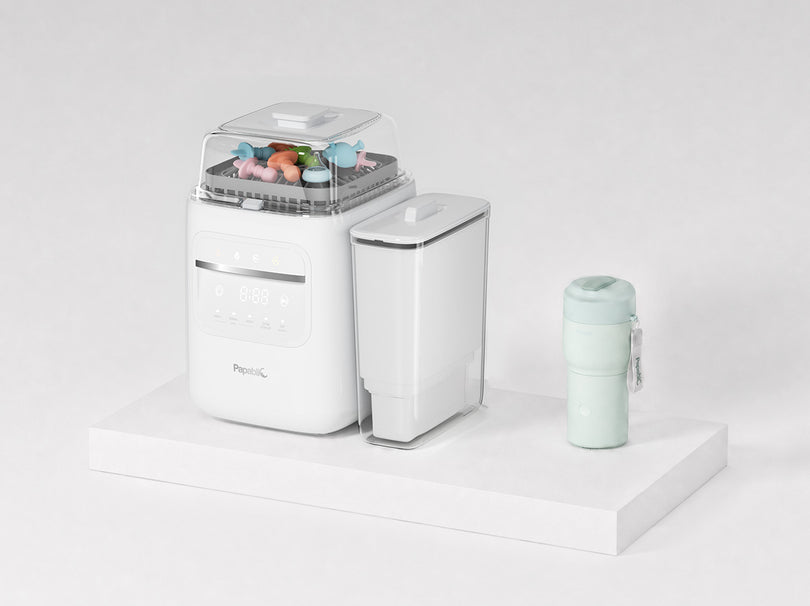
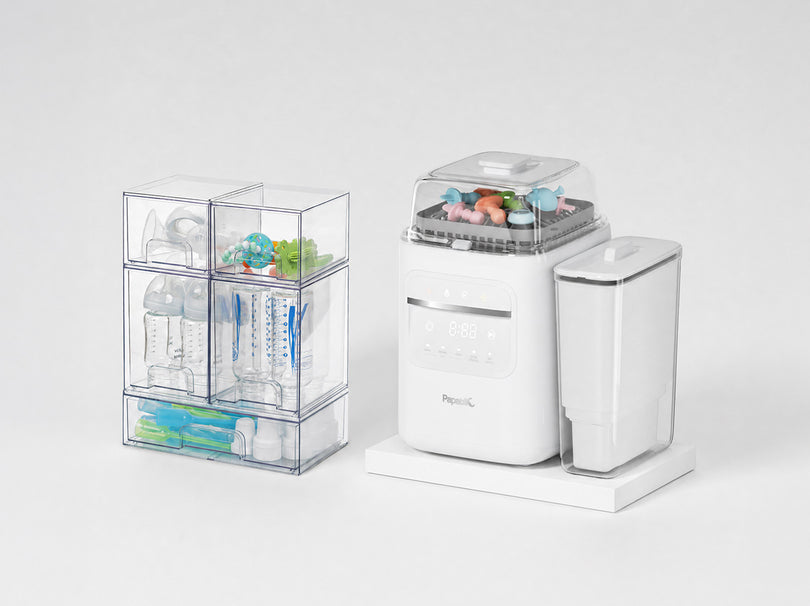
If you're already spending a significant part of your day at the sink, a dedicated bottle washer can take some of that repetitive cleaning work off your plate. Papablic's SafeguardPlus™ Baby Bottle Washer System combines filtering, washing, sterilizing, drying, and storage, with capacity for up to 8 bottle sets or 2 breast pump sets with accessories.

When one repetitive household task takes less hands-on time, you may have more room in your day for the things that actually require you, whether that's tummy time, feeding, playing, or simply sitting down for a few minutes.
Tummy Time Safety: What Parents Need to Know
The most important rule is simple: tummy time should only happen when your baby is awake and supervised.
Use a firm, flat, safe surface and stay close enough to watch your baby throughout the session. Avoid using a bed or sofa for tummy time, where a baby could roll or become trapped against a soft surface.
And remember that tummy time should never replace safe sleep practices. When your baby is ready to sleep, place them on their back on a firm, flat sleep surface. The AAP's simple rule is “Back to Sleep, Tummy to Play.”
If your baby falls asleep during tummy time, move them to their safe sleep space and place them on their back. If your baby consistently struggles with tummy time, strongly favors turning their head to one side, or you have concerns about their movement or development, talk with your pediatrician or another healthcare professional.
What Happens If You Don't Do Tummy Time?
Parents sometimes worry that missing tummy time means they have already caused a developmental problem. It is more useful to think about tummy time as an opportunity for practice rather than a test your baby can pass or fail.
Regular supervised tummy time gives babies opportunities to strengthen their neck, shoulder, arm, back, and core muscles and practice movements that support later physical skills. So if you missed a few days—or your baby only tolerated a few minutes at a time—there is no reason to panic. Start again with short sessions and gradually build from there.
Tummy Time Doesn't Have to Be Perfect
The newborn stage can make every parenting recommendation sound like another thing you have to get exactly right. But tummy time does not need to be perfect.
Your newborn may only tolerate a couple of minutes. Your 2-month-old may complain after five minutes. Your 3-month-old may suddenly decide that being on their tummy is much more interesting once they can actually see what is happening around them.
What matters is giving your baby regular opportunities to be awake, supervised, and moving on their tummy, then gradually increasing the amount as they become stronger and more comfortable. And while your baby is working on those first little movements, you are also learning how to build a daily rhythm around them.
Sometimes making that rhythm easier means finding a few minutes for tummy time. Sometimes it means putting the bottles in the washer instead of standing at the sink. Both are small ways of making more room in your day to actually be with your baby.

- Shop the Papablic SafeguardPlus™ now and get a gift bundle worth $159.99.
- Limited to 200 units, first‑come, first‑served — this bonus offer ends once supplies are gone.
FAQs
When should babies start tummy time?
Healthy babies can generally begin tummy time from the first days after birth, including once they are home from the hospital. Start with short, supervised sessions and gradually increase the amount as your baby becomes stronger and more comfortable.
How much tummy time should a 1-month-old have?
There is no single required number of minutes for every 1-month-old. Start with short sessions several times throughout the day and gradually increase the amount as your baby gets stronger and more comfortable.
How much tummy time does a 2-month-old need?
The AAP recommends gradually working toward 15–30 minutes of total tummy time each day by around 7 weeks. Spread that time across multiple sessions rather than trying to do it all at once.
What should a baby be able to do during tummy time?
Development varies, but by 2 months many babies can hold their head up while on their tummy. As they get stronger, you may see them pushing up, reaching for toys, pivoting, and eventually rolling.
What if my baby hates tummy time?
Try shorter sessions, change positions, get down at your baby's eye level, or start with tummy-to-chest or lap tummy time. Many babies simply need time to become comfortable with the position.
Is tummy time safe for newborns?
Yes, when your baby is awake and closely supervised. Tummy time should take place on a firm, safe surface and should never be used as a sleep position. Babies should be placed on their backs for sleep.
Related Blogs


Editor's Recommendation


