




Your sink fills up again by noon, and suddenly you are scrubbing bottles while a hungry baby is already fussing. If you pick the wrong baby bottle washer, you do not just waste money, you waste the one thing you cannot restock: time and calm. That is when rewashing, water spots, wet parts, and mystery smells start to feel personal.
This guide helps you choose a baby bottle washer you will actually keep using, especially if you are new parents juggling night feeds or NICU parents who want tighter hygiene routines. I will walk through three practical, real-world picks (Papablic plus two competitors you provided), then break down what to look for: wash performance, steam sterilizer features, fast drying, closed storage, and water quality.
Bottle Washer Picks and why each fits
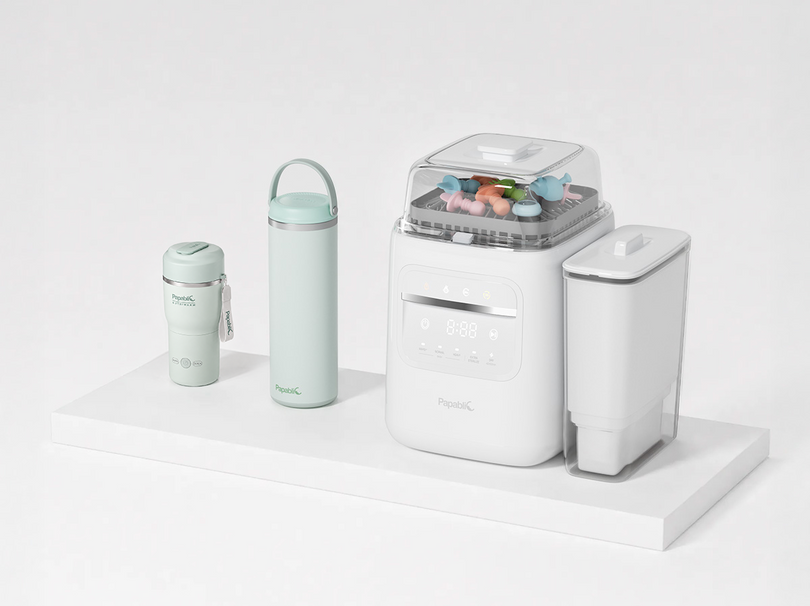
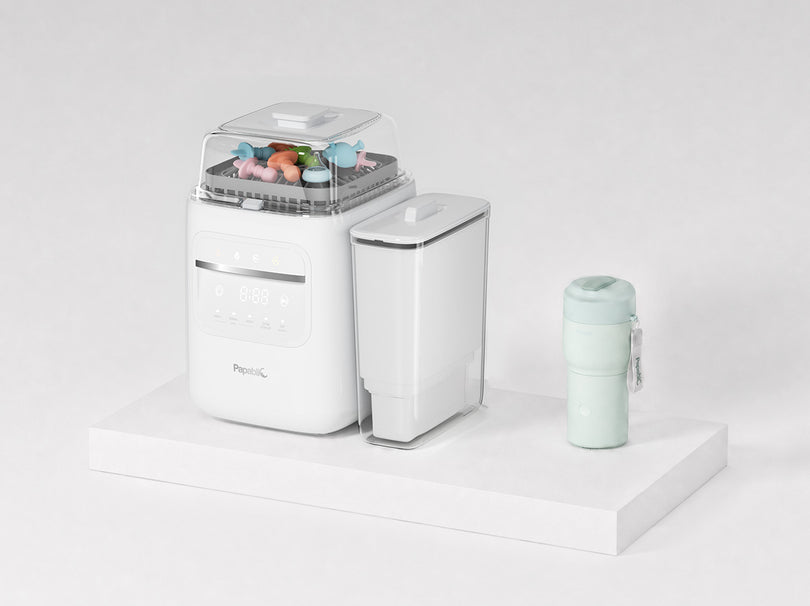
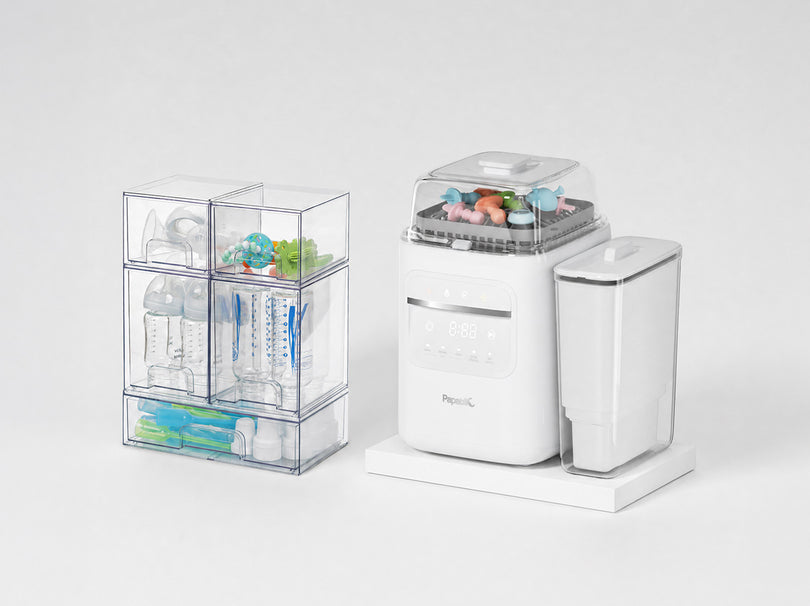
1) Papablic SafeguardPlus™ Baby Bottle Washer System

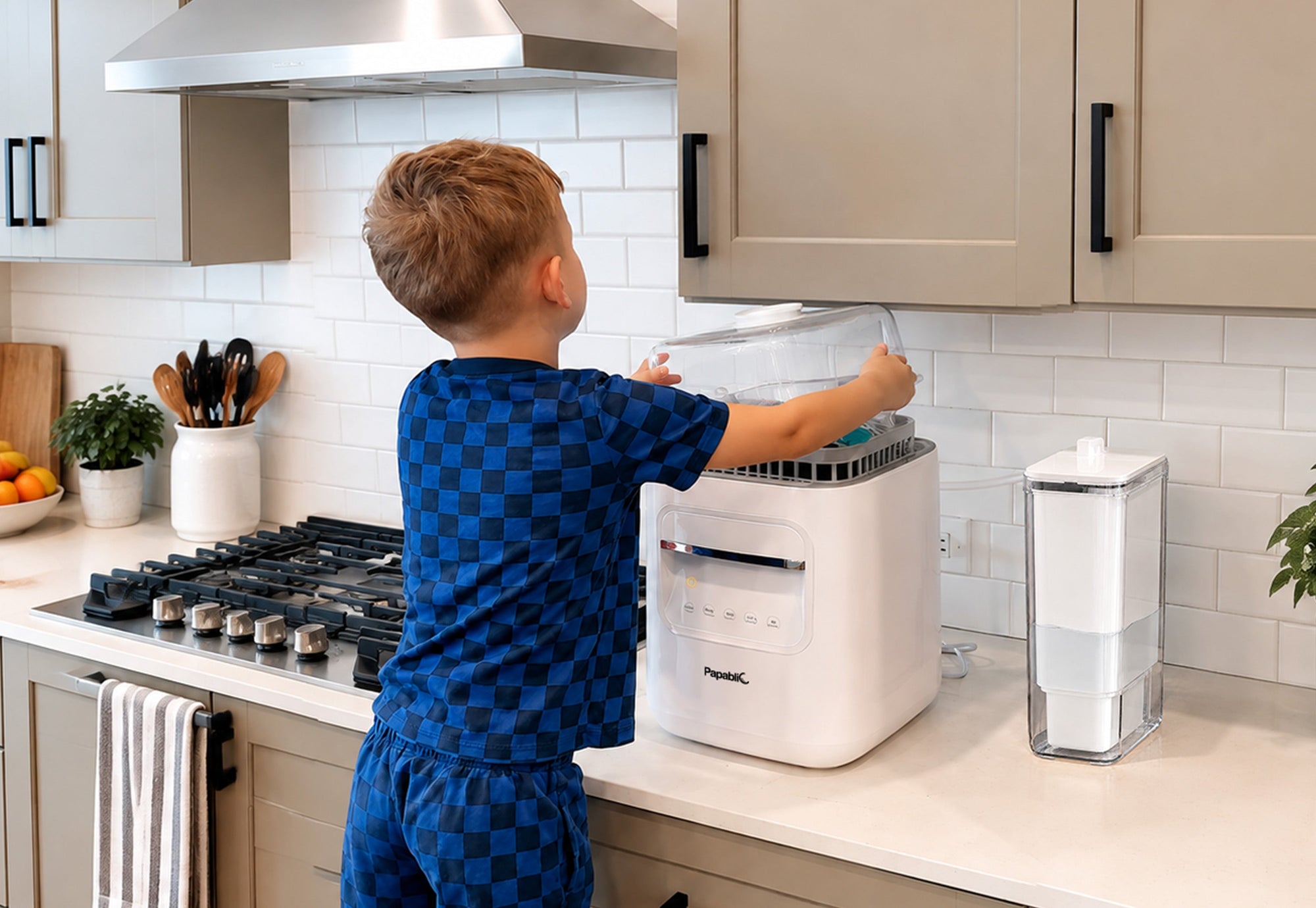
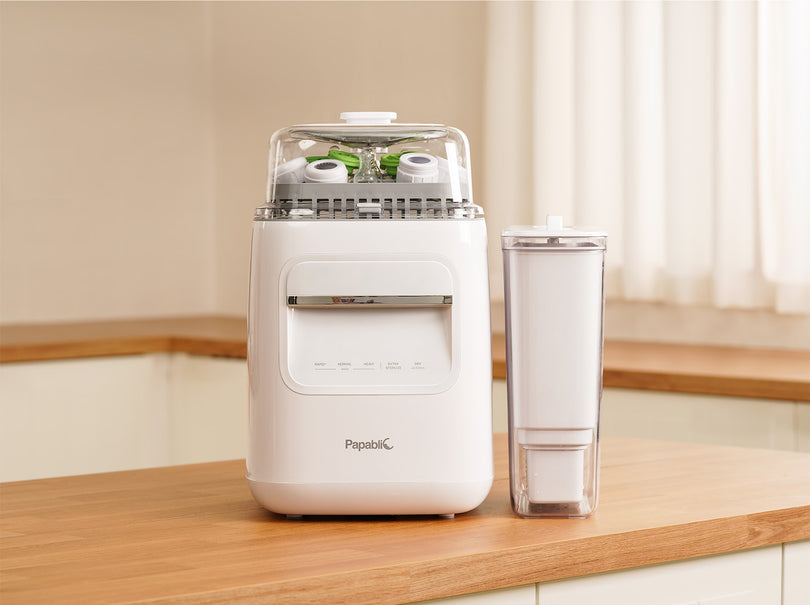
If you are doing high-frequency feeding and rotating bottles plus pump parts all day, capacity and predictable hygiene matter more than fancy extras. The SafeguardPlus™ Baby Bottle Washer System is built for that kind of pace, and it leans into a less-talked-about pain point: your tap water. In March 2026, plenty of new parents worry about mineral scale, spots, and what is actually in the water touching feeding essentials, so a system that addresses water quality inside the workflow can be a meaningful upgrade.
- Best for: high-frequency feeding families, combo feeding, heavy pump-part rotation, NICU parents who want a tighter routine
- Type: All-in-One Bottle Washer with Sterilizer style workflow (washing + hygiene-focused storage)
- Core functions: 5-in-1 Baby Bottle Cleaning System
- Capacity callout: upgraded to 8 bottles and wearable pumps
- Water system: built-in PurifyClean(TM) water purification
- Hygiene and storage: 72-hour hygienic storage
- Germ claim: reduces 99.99% harmful germs
- Maintenance cue: filter replacement reminder; replace every 30 wash cycles
- What to expect in real use: fewer re-washes from hard-water spotting because purification and softening are addressed before cleaning begins
Why it wins: If your biggest frustration is falling behind (bottles pile up, pump parts never fully dry, you keep restarting the process), the SafeguardPlus™ Baby Bottle Washer System is designed to keep your feeding essentials moving in larger batches, with added focus on water purification to reduce scale-related annoyance and contamination anxiety.
Shop: Papablic SafeguardPlus™ Baby Bottle Washer System
2) Baby Brezza Bottle Washer Pro

If your definition of easy-to-use is "no hookup, no hoses, no negotiating with the sink," a tank-based automatic bottle cleaner can feel like the simplest reset button. The Baby Brezza Bottle Washer Pro is built around convenience: load, push a preset, and let it run. That is especially helpful when you need a quick turnaround between feeds, and you do not want to handwash nipples and tiny valves yet again.
- Best for: small daily loads, fast resets between feeds, apartments, and kitchens where sink hookup is a non-starter
- Core functions: washes, sterilizes, and dries
- Cleaning hardware: 20 high-pressure spray jets
- Time callout: washes + rinses in 19 minutes
- Drying and storage: dries with HEPA-filtered air; products stay sterilized inside for 72 hours
- Water setup: removable clean and dirty water tanks; no messy sink hook-up or drain hose
- Capacity callout: holds up to 4 bottles plus parts and accessories
- Cycle options: 6 cleaning settings (wash/sterilize/dry combos, plus wash-only, sterilize-only, dry-only)
Why it wins: This is a strong fit when your workflow is more "frequent small runs" than "big batch once or twice daily." If you keep getting stuck with wet parts right before the next feed, the Fast Drying Baby Bottle Sterilizer aspect (drying plus closed storage) is what turns it from a gadget into a routine.
Shop: Baby Brezza Bottle Washer Pro
3) Grownsy 4-in-1 EaseClean Feeding Bottle Washer Pro
If you want a Bottle Sterilizer and Dryer workflow but do not want separate machines crowding your counter, the Grownsy 4-in-1 EaseClean Feeding Bottle Washer Pro is positioned as a single-box answer. It is aimed at the parent who is tired of hand scrubbing, then moving wet parts to a second device, then wondering if everything stayed clean while it air-dried.
- Best for: routine wash + Steam Sterilizer + dry in one machine, with closed storage to reduce re-contamination
- Core functions: washing, 212F steam sterilizing, hot-air drying, 72-hour storage
- Cleaning hardware: 26 spray jets total (12 interior + 14 exterior)
- Pressure claim: 24,000 Pa cleaning power
- Quick cycle: 19-minute quick wash
- Hygiene and storage: HEPA-filtered 72-hour sterile storage
- Capacity callout: holds up to 4 bottles plus accessories
- Water efficiency claim: uses 86% less water than traditional hand washing
Why it wins: If your biggest regret risk is "I will not keep up with the routine," a one-touch, end-to-end Bottle Cleaning System is easier to stick with. The combination of spray coverage, steam, and sealed storage is meant to reduce the number of manual steps that usually break consistency.
Shop: Grownsy Baby Feeding Bottle Washer Pro | Sterilizer and Dryer
Buying Guide: What to look for before you buy
How important is sanitizing for newborns or NICU parents?
If your baby is premature, under 2 months, or immunocompromised, sanitizing is not just a nice-to-have step you do when you feel like it. In those higher-risk windows, it is common to sanitize feeding items more often because the consequences of choosing wrong are higher: you can lose confidence in your routine, and you may end up boiling parts at 2 a.m. when you should be sleeping.
The practical takeaway for a Baby Bottle Washer purchase is simple: prioritize a Bottle Washer with a Sterilizer cycle you will actually run daily. According to the CDC, daily sanitizing is recommended for higher-risk infants (including babies under 2 months, premature infants, or those with weakened immune systems).
Do you need drying and closed storage, or just washing?
Washing is only half the problem. The real choke point in most homes is that parts come out wet, then your next feed is delayed while you shake water out of valves or wipe bottles with whatever towel is nearby.
A Fast Drying Baby Bottle Sterilizer feature (heated drying or filtered-air drying) matters when:
- You pump, or bottle feed,d more than once overnight
- You have wearable pump parts that trap moisture
- You keep seeing water spots or a stale smell from slow air drying
- You want a Hygienic Bottle Dryer style "ready when you are" workflow
Closed storage (often marketed as 72-hour storage) matters when you do not want to rewash after something sits out on the counter. It also matters if you are building a Smart Baby Bottle Station where everything stays contained and predictable.
What actually makes a bottle washer easy to use?
Easy-to-use is rarely about having more modes. It is about removing decision points and reducing the number of times you touch dirty and clean parts in the same hour.
Look for these practical signals:
- No sink hook-up if your kitchen layout is cramped
- Clear loading layout for small parts (valves, membranes, nipples)
- One-button presets you can use sleep-deprived
- A workflow that does not require pre-washing beyond a quick rinse
- A storage mode that keeps items enclosed after the cycle
If you are shopping as new parents, ask yourself one honest question: "Will I still use this when I am exhausted?" The most advanced baby bottle cleaner is the one you can run on autopilot.
Water quality and scale: Will your area cause buildup?
Hard water is a silent, routine killer. It causes spots, limescale, and that "why does this still look dirty" feeling even after a full cycle. It can also push you into extra rinsing, extra descaling, and extra maintenance that you did not plan for.
If water quality is a concern in your area, prioritize either filtration or a very clear descaling routine with reminders. This is also where built-in purification can reduce anxiety for NICU parents who want fewer unknowns in their baby care routine.
On the broader topic of water contaminants, the key point is persistence: PFAS are often called "forever chemicals" because they can persist in the environment and the human body. The US EPA explains that there are thousands of PFAS chemicals, and they are found in many consumer products and environmental media.
Practical tips to avoid buyer regret
- Measure your counter space and open-lid clearance before you commit.
- Count your real daily load: bottles per day, plus pump parts sets.
- Decide if you are a "batch runner" (1 to 2 big runs) or a "reset runner" (multiple small runs).
- Put maintenance on your calendar: filters, tablets, and descaling are part of ownership.
Common mistakes to avoid
- Buying too much capacity for your real routine, then never running full loads
- Underestimating drying time, then still hand-drying every cycle
- Ignoring water hardness, then getting stuck in constant descaling
- Choosing a system with too many steps, then abandoning it by week three
Cross-sell tie-ins (keep it optional, keep it useful)
If you are trying to simplify feeding beyond cleaning, build your setup around fewer handoffs:
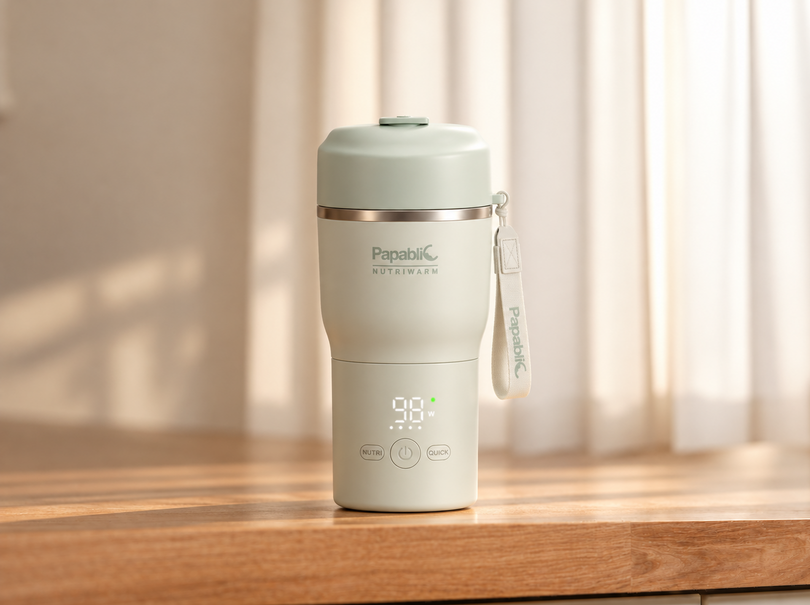
- Bottle Warmers: a consistent night-feed flow that pairs well with clean, dry bottles
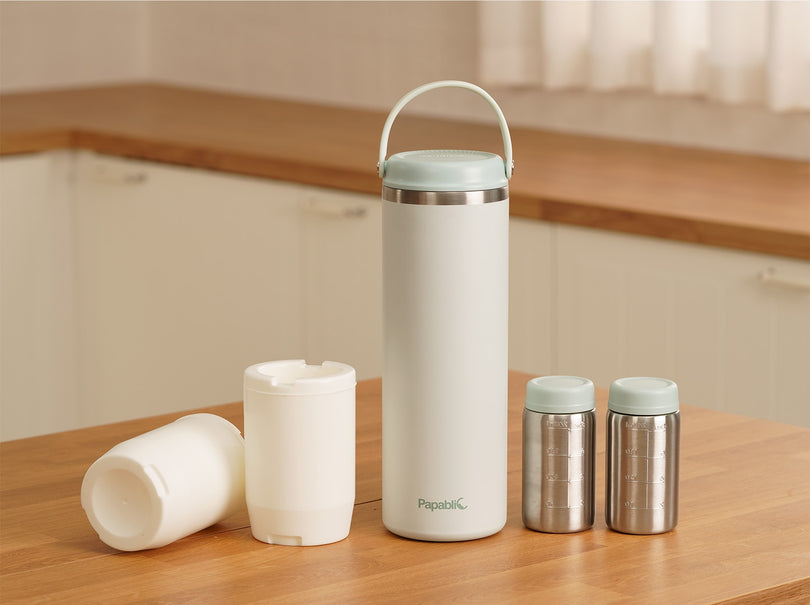
- Portable Bottle Warmer and Travel Bottle Warmer options: reduce the "how do we feed on the go" stress
- Breast Milk Cooler: keeps pumped milk organized for commutes or day trips
- Smart Baby Bottle Station: one dedicated area for Feeding Essentials, detergent tablets, clean parts storage, and your bottle warmer
If you are also planning for newborn essentials outside feeding, it helps to group purchases by use-case zones:
- Sleep zone: Baby Bassinets
- Diaper Zone: Changing Pads
- Play zone: Baby Play items that are easy to wipe down
- Safety zone: Baby Safety basics that reduce daily friction
Comparison Table
Quick side-by-side: which one matches your routine?
| Model | Core functions | Capacity callout | Water setup | Storage | Notes |
|---|---|---|---|---|---|
| Papablic SafeguardPlus™ Baby Bottle Washer System | 5-in-1 cleaning system | 8 bottles + wearable pumps | Built-in purification | 72-hour hygienic | Pre-order; ships April 15 |
| Baby Brezza Bottle Washer Pro | Wash, sterilize, dry | Up to 4 bottles | Clean/dirty tanks | 72-hour sterilized | 19-min wash + rinse |
| Grownsy 4-in-1 EaseClean Feeding Bottle Washer Pro | Wash, 212F steam, dry | Up to 4 bottles | Fill + drain hose | 72-hour storage | 26 jets; 24,000 Pa |
Conclusion
If you want an easy-to-use Baby Bottle Washer that leans into water quality, bigger batch capacity, and a more "all-in-one feeding solutions" mindset, Papablic SafeguardPlus™ Baby Bottle Washer System is the most differentiated pick in this shortlist. If your kitchen setup makes hoses and hookups a dealbreaker, the Baby Brezza Bottle Washer Pro is built around tank-based convenience and quick resets. If you want a single-machine routine that emphasizes spray coverage plus 212F Steam Sterilizer behavior and sealed storage, Grownsy is positioned as a straightforward wash-sterilize-dry workflow.
Official Site: Papablic
FAQ
How do I know if I actually need a bottle washer?
You likely need an automatic bottle cleaner if you are washing bottles and pump parts multiple times per day, and the drying step keeps slowing you down. A baby bottle washer is most helpful for new parents who are bottle feeding, pumping, or combo feeding and constantly cycling small parts. If you find yourself doing two or more washing sessions daily, the time savings become very real. If you only use a bottle occasionally, a dishwasher basket plus disciplined air drying may cover your needs.
What is the difference between a baby bottle washer and a dishwasher's sanitize cycle?
A baby bottle washer is purpose-built for narrow bottles, nipples, and small components, so the racks and spray patterns are designed to hit those shapes reliably. Many models also combine washing, steam sterilizing, and a Fast Drying Baby Bottle Sterilizer mode, so you are not juggling multiple appliances. A dishwasher sanitize cycle can work well for dishwasher-safe items, but small parts can flip, pool water, or get lost without secure baskets. In practice, the biggest difference is consistency: bottle washers are designed around repeatable results for feeding essentials.
Is steam sterilization the same as UV sterilization for baby bottles?
No, steam sterilization and UV sterilization work differently and have different failure points. Steam sterilization uses heat and moisture, which tends to penetrate well as long as parts are heat-safe and properly loaded. UV relies on line-of-sight exposure, so shaded areas, tight creases, or parts stacked too closely may receive less effective coverage. For NICU parents or anyone prioritizing a Baby Bottle Sanitizer routine, the better choice is usually the method you can run correctly every single day.
Why do my bottles come out with spots or white residue?
Spots and white residue are most often mineral deposits from hard water drying on plastic or glass. They can also show up if detergent dosing is mismatched or if the machine needs descaling, especially after heavy daily use. To reduce the issue, rinse off heavy milk residue quickly, avoid overcrowding so rinse water can drain, and keep up with descaling on the schedule your machine expects. If your area has hard water, choosing a system that addresses water quality or reminds you about maintenance can prevent repeated frustration.
How often should I replace filters or use descaling products in a bottle washer?
Most systems tie maintenance to cycle counts rather than calendar time, because usage varies wildly between families. If you run multiple loads daily, you will hit filter and descaling thresholds much faster than a once-a-day household. Hard water also accelerates mineral buildup, so your schedule may need to be more aggressive than the average recommendation. The most important feature is not the exact interval, it is the reminder system that keeps you from guessing when you are sleep deprived.
Can I wash wearable breast pump parts in these machines?
Many bottle washers can handle pump parts, but wearable pump components are bulkier and can block spray paths if the rack layout is not designed for them. Before you rely on a machine for wearable parts, confirm it supports wearable pumps specifically or offers a dedicated rack, and then test one full cycle for pooled water in valves or hubs. The practical goal is full contact: water must reach every surface, and drying must clear moisture from hidden cavities. If you pump frequently, treat wearable parts compatibility as a top-tier requirement, not a bonus.
Can I use a bottle washer as part of an all-in-one feeding setup?
Yes, a bottle washer is often the anchor of an All-in-One Feeding Solutions counter setup because it stabilizes the clean-dry-storage loop. When you combine it with bottle warmers and a breast milk cooler, you reduce last-minute scrambling and make feeding more predictable across caregivers. The key is placement: keep detergent tablets, clean tongs, and drying-safe storage in the same zone so you do not cross-contaminate. If you are building a Smart Baby Bottle Station, choose devices that match your true routine rather than the most feature-heavy option.