
If you're the parent who reads the label on dish soap and asks what's actually in it, welcome. Low-toxin bottle cleaning isn't about buying every "natural" product on the shelf; it's about a few smart, doable swaps in your daily routine. Here's the rundown: the detergent, the water, the drying method, and the bottle materials themselves, pulled together into a routine you can realistically keep up.
Key Takeaways
-
Choose a fragrance-free, plant-derived detergent over a scented dish soap for bottle parts.
-
Tap water can carry chlorine, lead, or PFAS residue that lingers after rinsing.
-
For hand-washed bottles, a clean towel beats an open drying rack, per CDC guidance, though a closed drying system skips the question entirely.
-
Silicone and glass carry less risk than scratched or cloudy plastic for daily milk contact.
-
A system that filters, washes, and dries in one cycle removes several separate decisions from your day.
What "Low-Toxin Bottle Cleaning" Actually Means
Low-toxin bottle cleaning means cutting back on your baby's everyday exposure to harsh detergent residue, contaminated wash water, and materials that break down with repeated use. It doesn't mean removing every trace of chemistry from your kitchen; that's not realistic, and it's not the goal.
That's really a "scrunchy mom" mindset in action. Scrunchy parents land somewhere between the all-natural "crunchy" camp and the convenience-first "silky" camp. They blend homemade with store-bought and adjust based on what a given day calls for.
Bottle care fits that same pattern well. You don't need to boil everything by hand to reduce your family's exposure, you just need to know which choices actually move the needle.
Choosing a Low-Tox Bottle Detergent
The lowest-risk bottle detergent is fragrance-free, dye-free, and built on plant-derived surfactants rather than synthetic fillers and optical brighteners. Those last two ingredients are added purely for scent and shine. They don't clean any better, and they're two of the easiest things to cut from a baby bottle routine.
Look for a short ingredient list you can actually read. If a label lists "fragrance" as a single catch-all term, that usually means a proprietary blend the manufacturer isn't required to break down further. A plain castile-based liquid or a formula made specifically for feeding gear tends to rinse cleaner and leave less residue on plastic and silicone surfaces than a general dish soap.
What's in Your Wash Water?
Tap water itself can be a bigger factor than most parents expect. Lead most often gets into tap water through corroding service lines, solder, or brass fixtures in homes built before the mid-1980s, according to the EPA. The CDC specifically flags formula-fed infants as a higher-risk group here, since the large volume of water they consume relative to their body size increases their exposure if that water is drawn from a lead-contaminated tap.
Utilities also treat most municipal supplies with chlorine or chloramine to control bacteria, a disinfection step the EPA confirms is standard practice across the country, and depending on where you live, the water reaching your tap may still carry PFAS, the so-called "forever chemicals" that the EPA has only recently begun setting enforceable limits for in drinking water. None of that is necessarily visible or has a strong taste, so a bottle rinsed in water like this can still carry those residues even after a thorough wash.
That doesn't mean city water is unsafe to use day to day. It does mean that filtering the water that actually touches your baby's bottles, rather than the water you drink separately, is worth building into your routine if you can.
How You Dry Matters Too
Air-drying is the better choice, and how you air-dry makes a real difference. The CDC recommends drying feeding items on a clean, unused dish towel or paper towel rather than a standard drying rack, since open racks trap moisture in tight corners and can grow mold or bacteria between uses if they aren't cleaned often.
If you do use a rack, dedicate it only to feeding items and wash it every few days, or more often for a newborn. A closed drying system that pulls moisture out mechanically removes this variable entirely, since nothing sits open to dust or room air while it dries.
Bottle Materials and What Touches the Milk
Material matters because scratched or cloudy plastic can trap bacteria in tiny grooves that a brush can't reach, while glass, stainless steel, and medical-grade silicone resist that kind of wear. A bottle that's gone visibly hazy or picked up deep scratches has likely reached the point where it should be replaced, regardless of brand, since worn plastic makes cleaning and sterilizing noticeably harder to do thoroughly.
For a sensitive baby, material choice can matter even more, since irritation from residue or degraded plastic tends to show up faster. Choosing BPA-free, food-safe parts from the start, and retiring them on a normal schedule rather than waiting for visible damage, is a simple way to stay ahead of it.
Putting It All Together: A System-Level Approach
Detergent, water, drying, and materials all connect, and treating them as one system rather than four separate chores is where a low-tox routine actually holds up over time. That's where water purification becomes the piece most parents overlook.
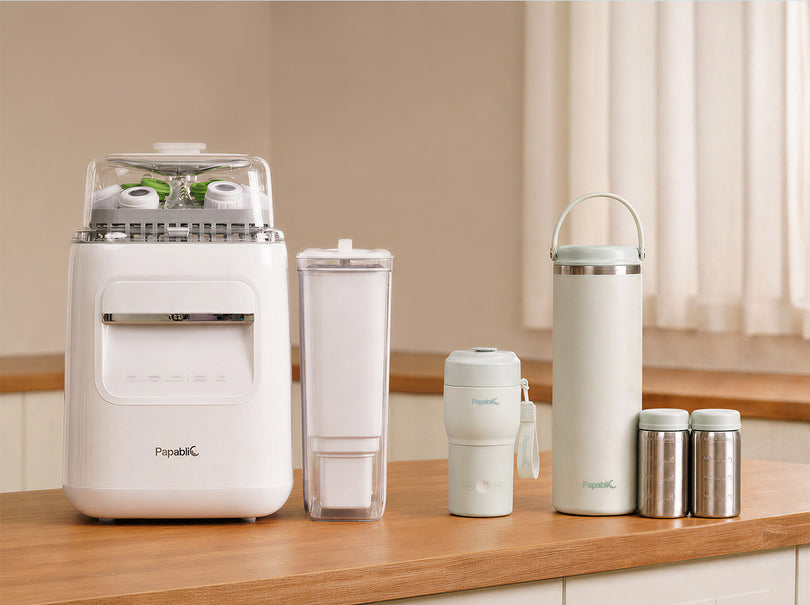
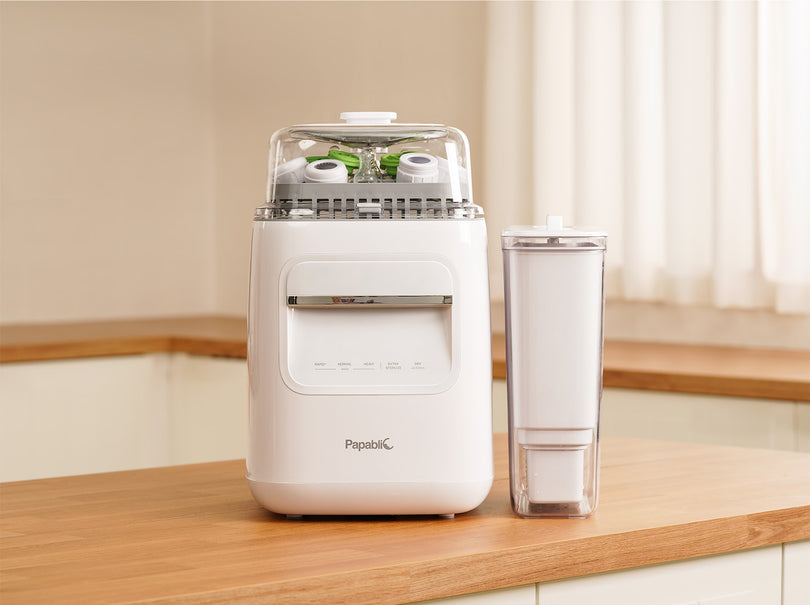
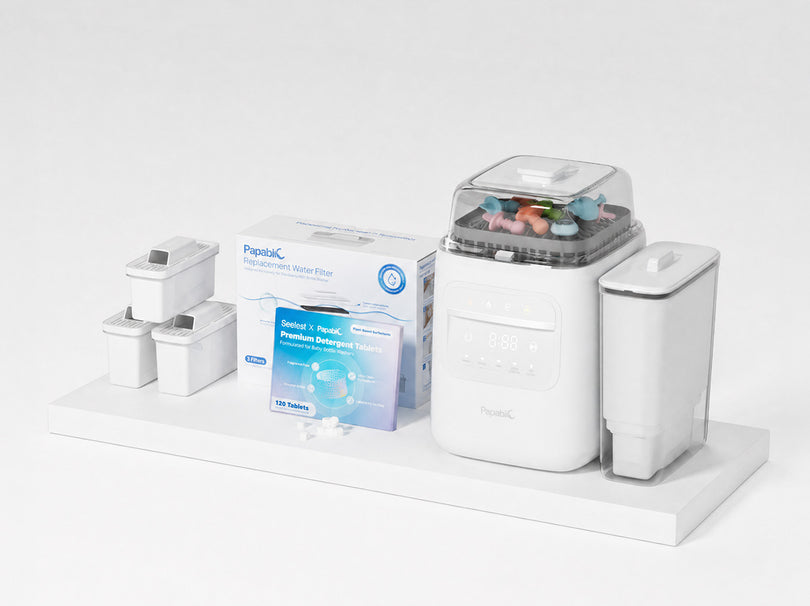
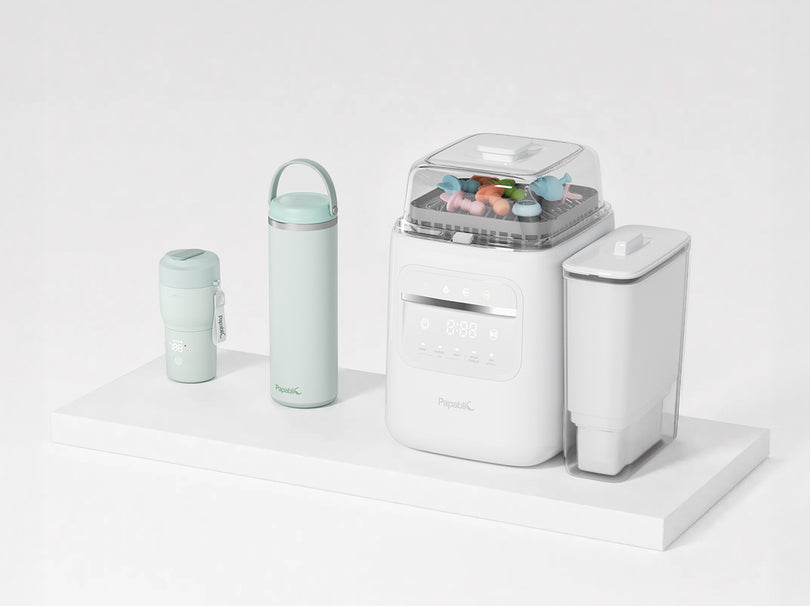
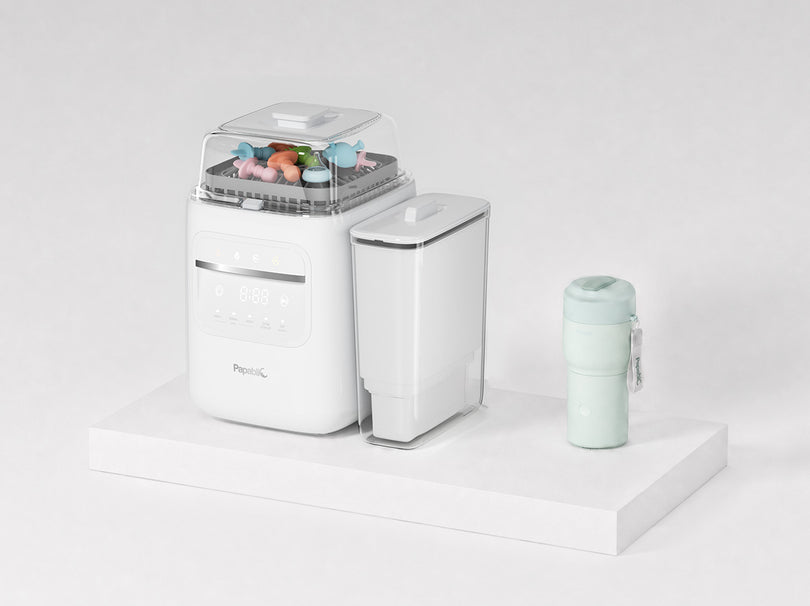
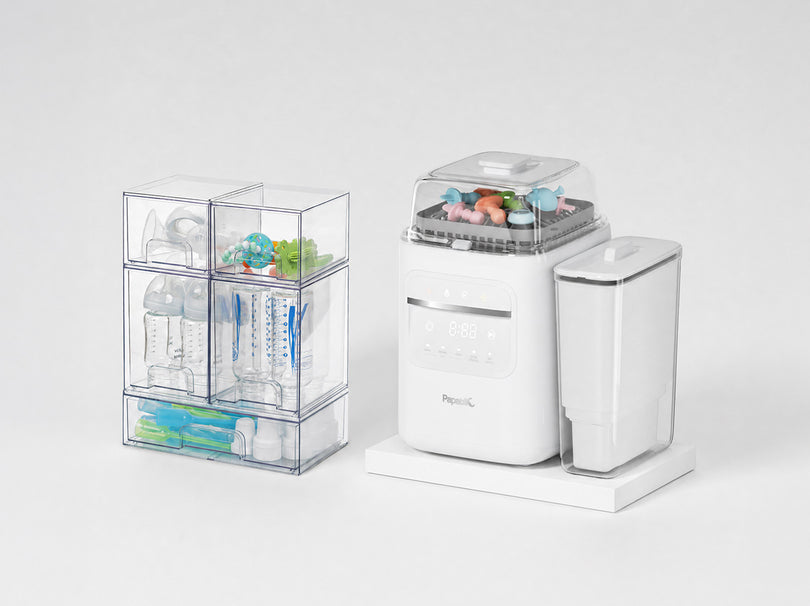
The Papablic SafeguardPlus™ Baby Bottle Washer System, which washes, dries, and stores up to 8 bottle sets or 2 pump part sets per cycle, was built around exactly that gap, with PurifyClean™ Technology that softens incoming water and filters out contaminants before it ever reaches a bottle, rather than treating water quality as an afterthought to washing.
The filtration itself is certified by the Water Quality Association to NSF/ANSI/CAN 372 for lead-free compliance, so the lead-reduction claim isn't just marketing language, it's backed by third-party testing against an industry standard.
From there, the Papablic SafeguardPlus™ Washer handles the rest of that same cycle: it sterilizes, dries, and stores the full load, so the water quality question and the drying question are solved by the same system instead of two separate habits to remember.
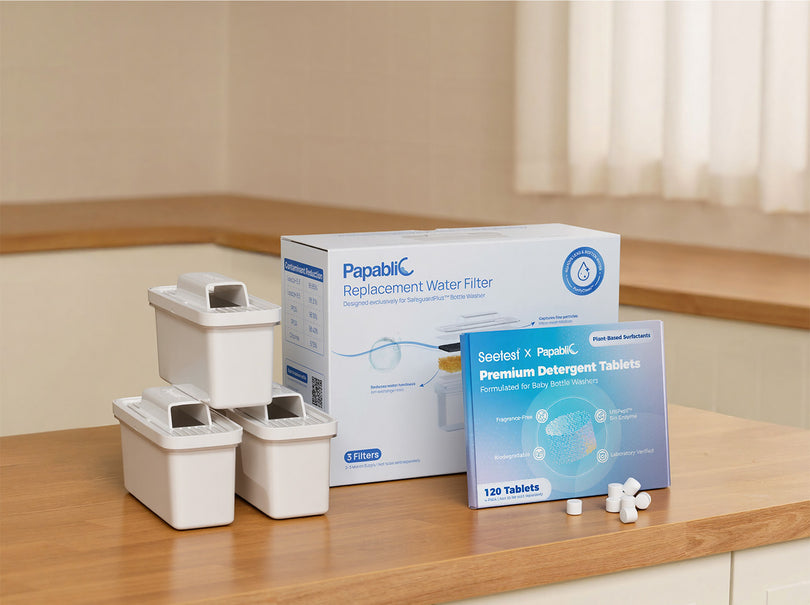
Adding a detergent tablet to a cycle gives an even more thorough clean when you want it as part of a broader low toxin baby care approach, though the wash cycle works fully on its own without one.
For parents comparing this to a dishwasher, the difference usually comes down to cross-contact: bottles washed alongside dinner plates and greasy pans pick up food residue that a dedicated, bottle-only system simply never encounters.

A Realistic Low-Tox Bottle Routine
A workable routine changes as your baby grows, and it doesn't need to be complicated at any stage.
|
Baby's Age |
Wash Frequency |
Sterilizing Frequency |
Drying Method |
|
Newborn to 2 months |
After every feed |
Daily |
Clean towel or closed drying system |
|
2–6 months |
After every feed |
A few times a week |
Clean towel or closed drying system |
|
6+ months, healthy |
After every feed |
As needed (illness, new parts) |
Clean towel or drying rack, washed often |
Most parents settle into a rhythm faster than they expect. The biggest shift tends to happen once daily sterilizing feels optional rather than required, usually somewhere past the two-month mark for a healthy, full-term baby.
Frequently Asked Questions
Is Tap Water Safe for Washing Baby Bottles?
Yes, tap water is generally fine for washing baby bottles in most U.S. homes, since public water systems are regulated for safety. It can still carry chlorine byproducts, trace lead, or other residues depending on your local supply and plumbing age, so filtering the water used for bottle washing is a reasonable extra step, especially with an older home or well water.
Do I Need a Special Soap for Baby Bottles?
No, a special "baby" label isn't required, but a fragrance-free, dye-free formula is worth prioritizing. Scented dish soaps often rely on synthetic fragrance blends and optical brighteners that can leave more residue on plastic and silicone than a simpler, plant-derived detergent designed for feeding gear.
What’s the Difference Between Crunchy and Scrunchy When It Comes to Bottle Care?
The difference comes down to flexibility, not rules. A crunchy approach tends to favor all-natural methods across the board, hand-washing with homemade or fully natural products every time, while a scrunchy approach mixes natural choices with practical, tested solutions depending on the day, using a filtered system on busy weeks and a from-scratch method when there's time for it.
Clean Soap, Clean Water, Clean Bottles: Low-Tox from Start to Finish
Low-toxin bottle cleaning really comes down to four connected choices: what you wash with, what's in your water, how things dry, and what the bottle is made of. Get those four right, and the rest of the routine tends to fall into place.
If you'd rather solve them together than juggle them separately, the Papablic SafeguardPlus™ Baby Bottle Washer System filters, washes, sterilizes, dries, and stores up to 8 bottle sets or 2 pump part sets in one cycle, built around the water-quality piece that most routines miss.