





Republished from Koohry
Disclosure: Papablic gifted me this bottle washer for review—but not my opinion. What you’ll read here is based on my own hands-on experience and honest assessment, whether the results are flattering or not.
When parents shop for a baby bottle washer, they usually compare cleaning power, capacity, drying, and sterilization. But there’s another factor worth considering: what kind of water is being used to clean your baby bottles?
Most modern bottle washers can handle everyday cleaning, but unfiltered tap water can still leave mineral buildup and raise questions about water quality.
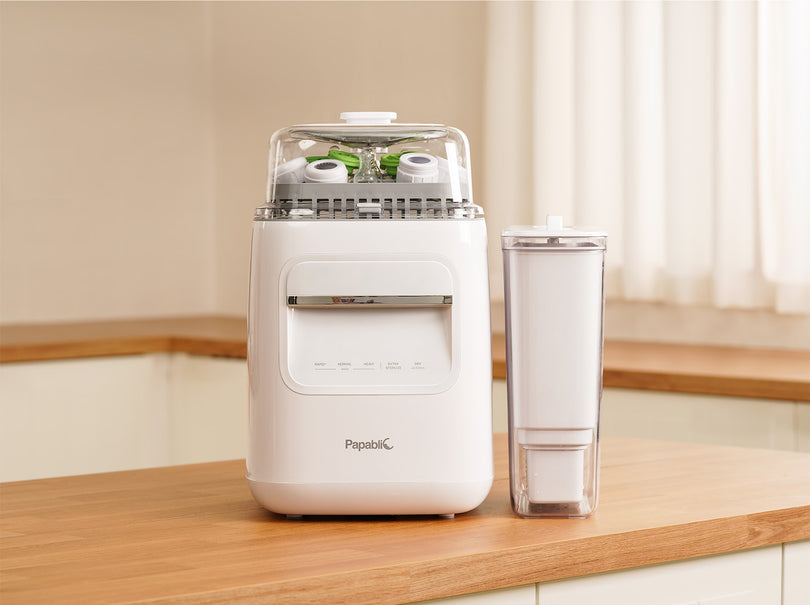
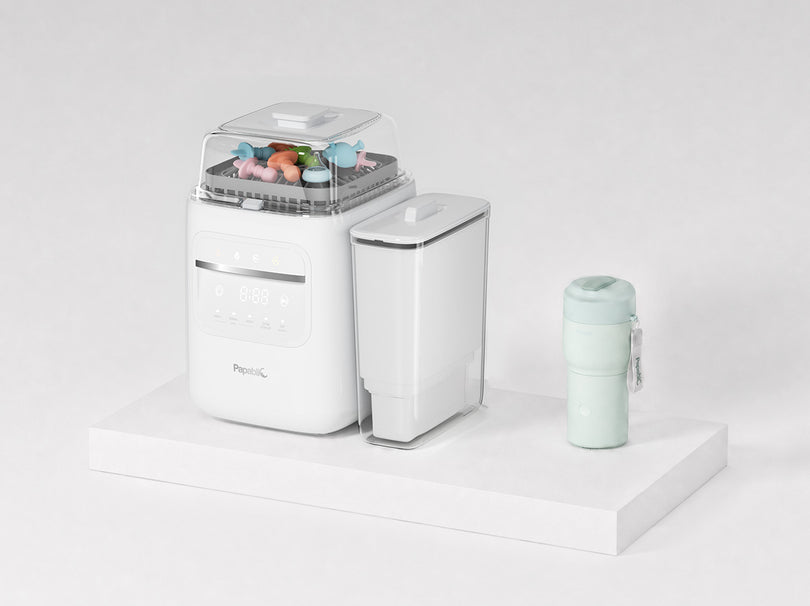
As a dad who looks for practical products for busy families, I wanted to take a closer look at the Papablic SafeguardPlus™ baby bottle washer with its built-in water purification.

Why Water Quality Matters When Washing Baby Bottles
Most parents fill their baby bottle washer directly from their kitchen sink. But tap water naturally contains minerals. The most common ones are calcium and magnesium. Those minerals can remain behind as the water evaporates.
Over time, this buildup is called limescale. You have probably seen it before:
- White crust around faucets
- Cloudy spots on shower heads
- Mineral buildup near sinks
The same thing can happen inside baby bottles and feeding accessories. Parents may notice:
- White cloudy film inside bottles
- White spots
- Chalky residue
- A hazy appearance after washing

But minerals aren't the only water-quality concern. Tap water can vary by location, with some areas reporting contaminants such as lead and PFAS. Parents can check the Environmental Working Group's Tap Water Database to learn more about their local water quality.

The water quality made me curious. If we're carefully choosing baby bottles, breast pumps, and feeding accessories, shouldn't we also consider the water being used to clean them?
The Papablic SafeguardPlus™ Solves the Water Problem With Built-In Filtration
The reason I decided to test the Papablic SafeguardPlus™ is because it takes a different approach from most bottle washers on the market.
Instead of simply using whatever water comes from your faucet, Papablic includes a built-in filtration system designed to soften water and help reduce impurities, including minerals associated with limescale buildup. The filter works before the washing cycle begins, helping provide cleaner water for the entire cleaning process.
For parents, this means one less thing to worry about:
- You don't have to buy separate distilled water just for your bottle washer.
- You don't have to constantly descale your machine.
- And you don't have to wonder whether hard water contaminants is affecting your bottles or baby over time.
To test how effective the filtration system was, I used a TDS meter, which measures total dissolved solids in water, including minerals and other dissolved particles. Generally, a higher reading means more dissolved substances are present.

Testing Cleaning Performance With Real Baby Bottles
To test the Papablic SafeguardPlus™, I loaded it with bottles that were genuinely dirty with dried milk residue, bottle nipples, and feeding accessories that needed a deeper clean.
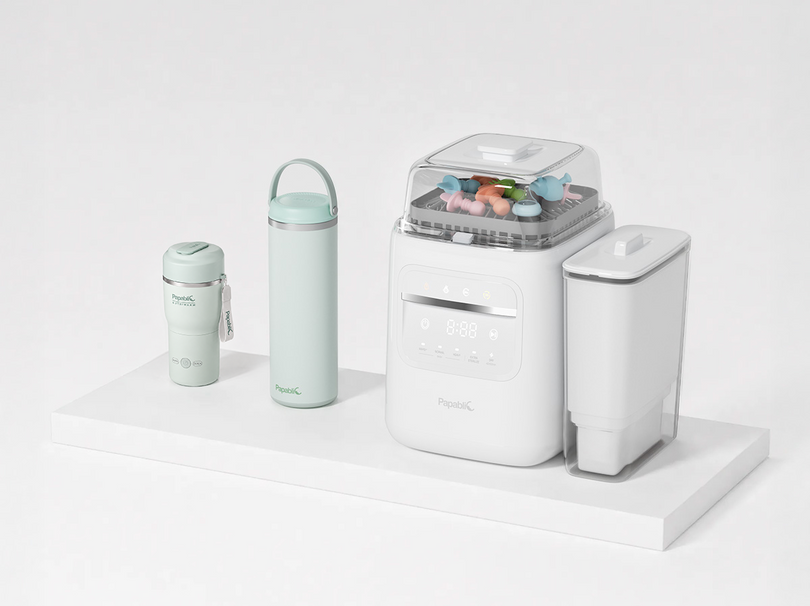
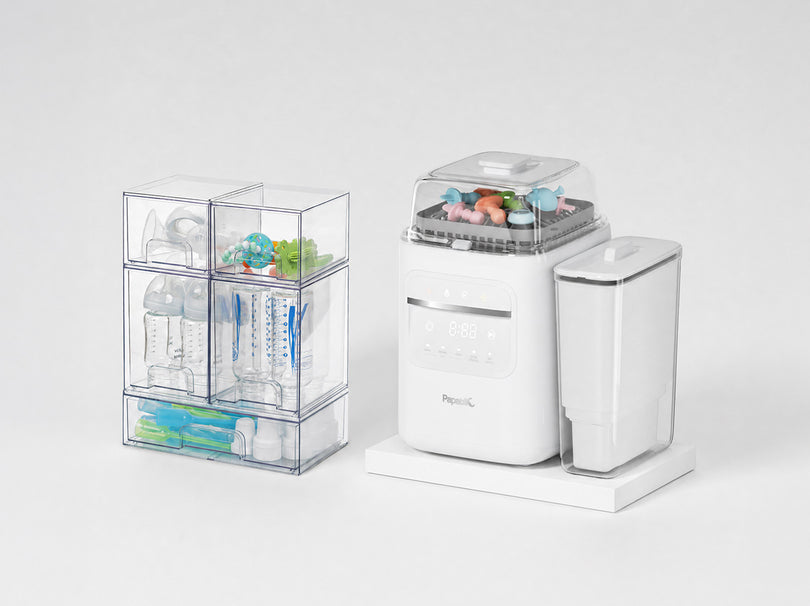
The large capacity also allows you to clean more than just bottles. It can hold 8 bottles or 2 pump part sets at a time. You can add items like pacifiers and other baby-safe feeding accessories. After loading everything, you simply add a cleaning tablet, choose your preferred cycle, and let the machine handle the work.
After the cycle finished, the bottles came out visibly clean with no leftover milk residue or stains.

One of the biggest advantages of an all-in-one bottle washer and sterilizer is eliminating extra steps. With a traditional routine, parents often need to wash bottles, move them to a sterilizer, wait for them to dry and find a clean place to store them.
The Papablic SafeguardPlus™ combines these steps into one process without requiring you to move everything between different appliances. Another convenient feature is that the machine can keep bottles stored inside for up to 72 hours after the cycle finishes, helping keep feeding equipment ready for the next use.
For parents managing newborn schedules, pumping sessions, and daily bottle routines, having everything handled in one place can save valuable time.
Final Verdict: Is the Papablic Bottle Washer Worth It?
My answer is yes. What impressed me most was how everything works together: effective cleaning, automatic sterilizing and drying, ample capacity, and built-in water filtration.
- Shop the Papablic SafeguardPlus™ now and get a gift bundle worth $159.99.
- Limited to 200 units, first‑come, first‑served — this bonus offer ends once supplies are gone.
For families who:
- Wash multiple bottles every day
- Use formula or breast milk bottles frequently
- Pump regularly
- Want a simpler feeding routine
- Live in areas with hard water
- Have higher hygiene and safety standards for babies
The Papablic SafeguardPlus™ makes a strong case.
The best baby products are the ones that remove stress from everyday life. A baby bottle washer shouldn't just clean bottles — it should make the entire feeding routine safer and easier. And that is exactly where Papablic stands out.
FAQs
Why does water quality matter when using a baby bottle washer?
Water quality matters because the water used during cleaning directly contacts your baby's feeding equipment. Tap water naturally contains minerals like calcium and magnesium, which can leave behind limescale buildup over time. This may appear as cloudy film, white spots, or chalky residue on bottles and accessories.
What makes the Papablic SafeguardPlus™ different from other bottle washers?
Many bottle washers focus primarily on cleaning, sterilizing, and drying. The Papablic SafeguardPlus™ adds built-in water filtration to the process, which is designed to improve the water quality used during cleaning by removing lead, PFAS and other harmful contaminants.
Is the Papablic SafeguardPlus™ worth buying for pumping and bottle-feeding families?
For families who regularly wash bottles and breast pump parts, the Papablic SafeguardPlus™ can be a valuable addition to the feeding routine. For families looking to reduce daily bottle-cleaning work and create a more efficient feeding setup, it offers a convenient all-in-one solution.