If you’re expecting or have a little one under 12 months, you’ve probably spent hours researching the safest baby car seats, sturdiest baby cribs, and most reliable baby monitors. You’ve checked off items on your baby essentials list, signed up for birthing classes, and prepped the nursery down to the last detail. But one of the most impactful things for your baby’s daily health — their feeding hygiene — is often full of hidden risks most parents never even think to look for.
This guide is adapted from my recent seminar at Prego Expo, where I broke down exactly why newborns need extra protection, what invisible risks might be lurking in your feeding routine, and simple, actionable steps you can take to keep your baby safe, without adding more stress to your plate. We’ll work from the basics all the way to practical tools, so you can walk away feeling confident, not overwhelmed.

Why Newborns Need Extra Hygiene Attention
Let’s start with the most foundational question: why does hygiene matter so much more for newborns than for older kids or adults?
In my clinical experience, this is the piece that doesn’t get talked about enough. Newborns — especially premature babies, or infants who spent time in the NICU — have immature immune systems. They haven’t built up the natural defenses adults take for granted to fight off germs, irritants, and even low-level contaminants. That means things that wouldn’t bother us can easily cause infection, digestive distress, or developmental impacts for them.
The second key point is that feeding is the most direct exposure pathway for babies. Anything that touches your baby’s mouth — baby bottle nipples, pacifiers, breast pump parts, feeding utensils — goes straight into their digestive system. It’s not just about what’s in their formula or breast milk; it’s about every surface that comes into contact with what they ingest.

This doesn’t mean you need to panic about every little thing. It just means that small, intentional choices about how you clean and prepare their feeding supplies can make a real difference in their health. For breastfeeding families, this applies just as much to your pump parts and breastfeeding storage bags as it does to bottles. Consistent, thorough cleaning doesn’t just protect your baby — it also lowers your risk of common complications like clogged ducts and mastitis, which I see far too often in new parents who rush through cleaning.
Hidden Hygiene Risks Most New Parents Overlook
As both a nurse and a mom, I know how much thought goes into every decision for your baby. But there are risks you can’t see with just your eyes, and they fly under the radar for most new families.
Invisible Contaminants in Tap Water
The biggest overlooked risk, in my opinion, is the quality of the water you use for feeding and cleaning. Depending on where you live, your tap water may not be totally free from compounds that are risky for infants — even if it’s clear, and even if it meets basic adult drinking standards.
There are three main concerns I always highlight for new families:
-
Lead: Even low levels of lead are harmful for infants, because their brains and bodies are developing so quickly. It often leaches into water from older home plumbing, and you can’t taste, see, or smell it.
-
PFAS: These are widely used, long-lasting chemicals often called “forever chemicals.” They’ve been found in drinking water systems across North America, and they can accumulate in the body over time. Testing has even detected them in some commercial infant foods.
-
Hard water minerals: High levels of calcium and magnesium leave cloudy white limescale residue on bottle surfaces, and build up inside cleaning tools to create rough surfaces where bacteria can thrive.

A very common myth I hear is that boiling water fixes all of these issues. Let’s be clear: boiling water kills bacteria and viruses, which is great — but it does absolutely nothing to remove lead, PFAS, or heavy metals. Even nursery water marketed specifically for babies isn’t uniformly regulated to filter out all of these high-risk compounds, so I always tell parents to verify third-party testing instead of just trusting the label.
|
Water Source
|
Kills Bacteria & Viruses
|
Reduces Lead & PFAS
|
Limescale Residue Risk
|
|
Unfiltered tap water
|
❌ (unless boiled)
|
Minimal to none
|
High (hard water areas)
|
|
Boiled tap water
|
✅
|
❌
|
High
|
|
Distilled water
|
✅
|
✅
|
None
|
|
Bottled nursery water
|
Variable by brand
|
Variable by brand
|
Low to moderate
|
|
NSF-certified filtered tap water
|
✅
|
✅(varies by filter rating)
|
Low (with softening)
|
Trapped Residue and Slow Moisture Buildup
The second hidden risk is trapped milk residue and moisture, even after you’ve washed bottles by hand.
Hand washing with a bottle brush works for surface grime, but it almost always misses narrow, hard-to-reach spaces: the threads of baby bottle nipples, anti-colic vent tubes, and the tiny crevices in breast pump parts. Trapped milk residue creates the perfect breeding ground for bacteria, even after what feels like a thorough rinse.

Most traditional setups also rely on a bottle washing rack for air drying, which can leave surfaces damp for 4 hours or more. Extended moisture speeds up bacteria and mold growth, undoing all the work of careful cleaning. Standalone tools like steam sterilizer bags or countertop sterilizers kill existing germs, but they don’t remove stuck-on residue — and they do nothing to address the water quality issues that cause limescale buildup in the first place.
What “Comprehensive Feeding Hygiene” Really Means
If water quality can carry hidden contaminants, and hand washing can miss critical spots, that means our approach to feeding hygiene can’t just be “scrub the bottles until they look clean.”
True comprehensive hygiene starts at the source. It’s about:
-
Making sure the water going into the cleaning process is as free of contaminants as possible
-
Removing both visible milk residue and invisible germs from every surface
-
Drying items quickly and fully to stop bacteria growth before it starts
-
Reducing the chance for harmful substances to come into contact with your baby’s feeding tools at all
I know this can sound overwhelming — and that’s totally normal. Every parent just wants what’s best for their baby, and it’s easy to feel like you can never do enough. But I promise, there are simple, practical steps you can take right now to reduce risk, and you don’t have to do everything perfectly to make a difference.
Practical, Actionable Tips for New Parents
These are the same tips I share with all my patients and new parent friends. They’re evidence-based, easy to implement, and designed to fit into real life — not some perfect, sleep-deprived-free version of parenthood.
-
Check your water quality before your baby arrives
During pregnancy, request a free Consumer Confidence Report from your local water utility to review municipal contaminant levels. If you use private well water, schedule professional lab testing for bacteria, lead, and other contaminants before your due date. At-home TDS test kits also give you a quick baseline reading of total dissolved solids.
This is such an easy thing to add to your pre-baby to-do list. Knowing exactly what’s in your water removes all the guesswork from feeding prep, and helps you decide if extra filtration is worth investing in before your baby comes home.

-
Use infant-safe water for both cleaning and formula preparation
For babies under 3 months old, premature infants, and immunocompromised babies, use filtered, distilled, or purified water that meets infant safety standards for both bottle cleaning and formula mixing. Prioritize water verified to reduce lead, PFAS, and heavy metals — not just bacteria.
Water is the first step of every single cleaning cycle. If you start with water that has hidden contaminants, you’re washing your bottles with the very substances you’re trying to protect your baby from.
-
Disassemble every single part before cleaning
Always fully take apart bottles, nipples, anti-colic vents, and breast pump parts before washing.
I can’t tell you how many times I’ve seen parents wash bottles fully assembled. Those tiny hidden crevices are where milk gets trapped and bacteria grows — taking everything apart is the only way to make sure every surface gets clean.
-
Follow CDC sterilization guidelines for your baby’s age
Sterilization frequency should match your baby’s age and health status, per official pediatric recommendations.
Sterilization isn’t necessary for every family long-term. For healthy older babies, thorough cleaning is enough — but for newborns and high-risk infants, it adds a critical layer of protection.
|
Infant Group
|
Minimum Recommended Sterilization Frequency
|
|
Healthy full-term infants 2+ months old
|
Thorough daily cleaning; sterilization optional
|
|
Infants under 2 months old
|
At least once daily
|
|
Premature infants
|
At least once daily
|
|
Infants with weakened immune systems
|
At least once daily
|
-
Make sure items dry fully and quickly after cleaning
Aim to fully dry all feeding components within 2–3 hours of washing, and sanitize your bottle washing rack regularly to prevent mold buildup.
Moisture is the number one cause of bacteria and mold growth on feeding supplies. Fast drying stops that growth before it starts, which is why just rinsing and leaving bottles on a rack isn’t enough.
-
Prioritize your postpartum recovery over perfect scrubbing
Newborn care isn’t only about your baby — your healing matters too. If you’re recovering from a C-section or vaginal birth with perineal trauma, avoid prolonged standing, bending, and scrubbing at the sink. Delegate cleaning tasks when you can, and use tools that cut down on physical strain.
As an L&D nurse, I say this to every new parent: you can’t care for your baby well if you’re not healing properly. It’s not lazy to find easier ways to get chores done — it’s good caregiving for both you and your baby.
Innovations That Support Safer, Simpler Feeding Care
For most parents, following every single one of these best practices manually, every single day, simply isn’t realistic. Especially in those hazy first few postpartum months, when sleep is scarce, recovery is your top priority, and you’re just trying to get through each feed.
That’s where targeted innovation in baby care can make a huge difference. Over the past few years, purpose-built feeding hygiene tools have become increasingly popular, because they take the guesswork and physical work out of bottle cleaning, while still upholding strict safety standards.
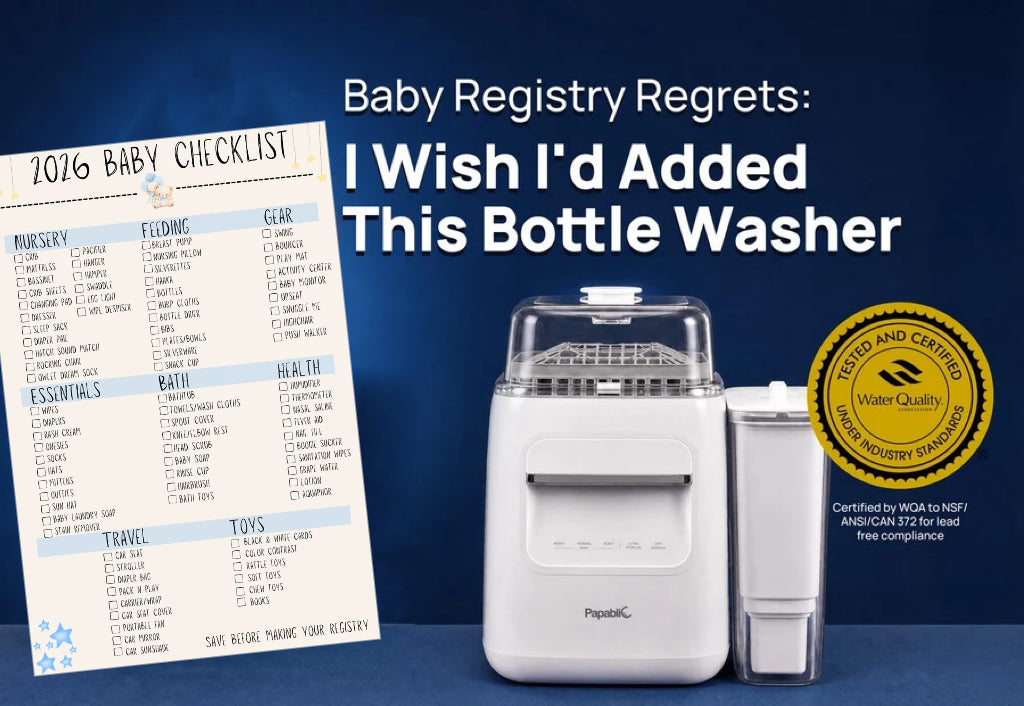
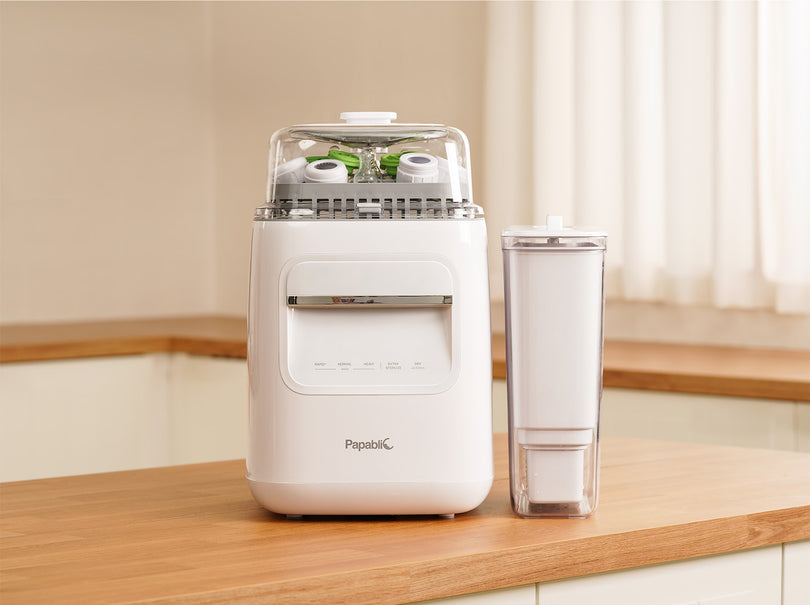
The most comprehensive of these tools is the baby bottle washer sterilizer dryer — an all-in-one system that consolidates washing, sterilization, and drying into a single hands-off cycle, eliminating the need for separate bottle brushes, sterilizers, and drying racks.
To help you understand how different methods stack up, here’s a quick comparison of the most common bottle cleaning approaches:
|
Cleaning Method
|
Cleaning Consistency
|
Sterilization Capability
|
Source Water Quality Control
|
Physical Effort for Postpartum Parents
|
|
Hand wash + separate sterilizer + drying rack
|
Variable
|
✅ (multi steps required)
|
❌
|
High (prolonged standing and bending)
|
|
Countertop steam sterilizer only
|
❌
|
✅
|
❌
|
Low
|
|
Standard dishwasher (sanitize cycle)
|
Moderate
|
✅
|
❌
|
Low
|
|
Standard all-in-one baby bottle washer
|
Consistent
|
✅
|
❌
|
Very low
|
|
Bottle washer with built-in water filtration
|
Consistent
|
✅
|
✅
|
Very low
|
What to Look For in a Quality Baby Bottle Washer
If you’re considering adding a bottle washer to your routine, these are the evidence-aligned features I always recommend prioritizing, to make sure it’s both safe and practical for daily use:
-
Full-cycle wash, sterilize, and dry functionality to avoid multi-step transfers and recontamination risk
-
Built-in water filtration and softening to address source-level water safety gaps
-
Family-appropriate capacity to cut down on repeated daily cycles
-
Flexible cycle modes to fit both daily deep cleans and urgent overnight feeds
-
Low long-term maintenance to reduce extra household work
-
Infant-safe, BPA-free materials with CDC-aligned sterilization temperatures
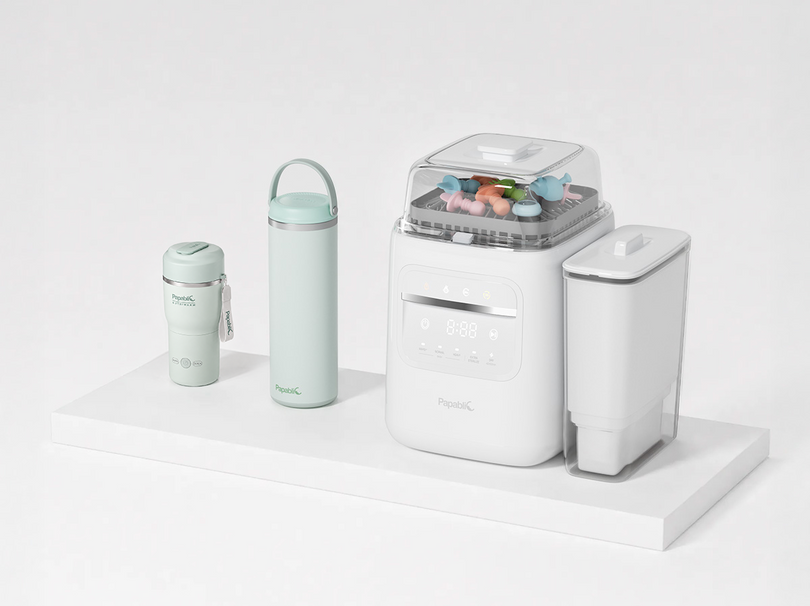
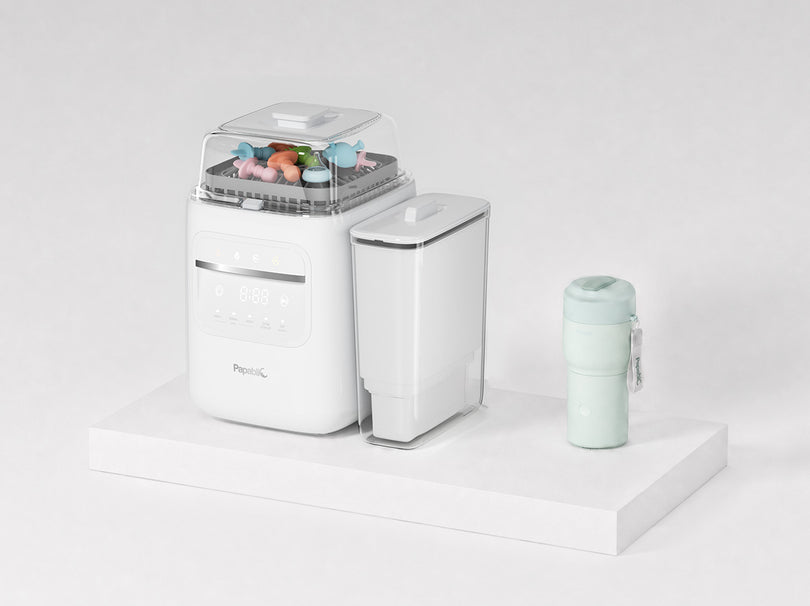
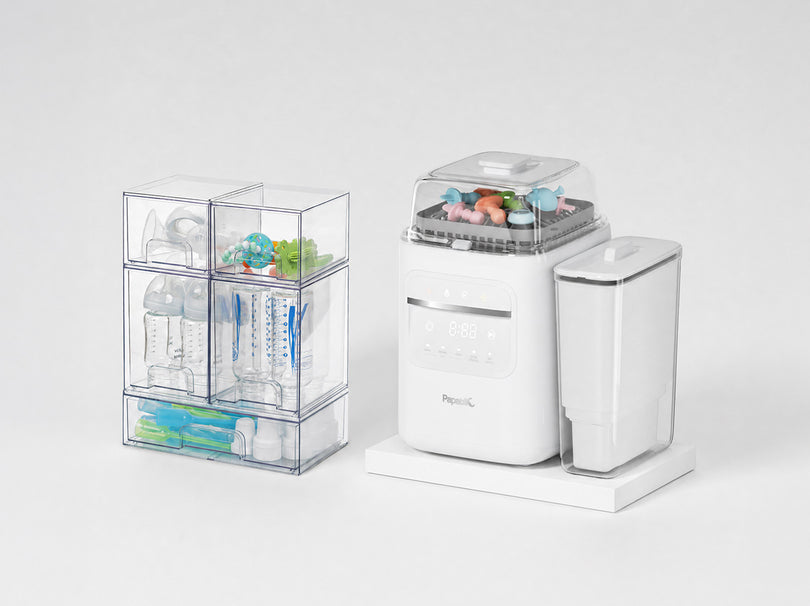
One system I’ve been impressed with, and that directly addresses the water quality gap we talked about earlier, is the Papablic SafeguardPlus™ Baby Bottle Washer System. It’s one of the only bottle washers on the market with a built-in water filtration, designed to tackle contaminants before the cleaning cycle even begins — which aligns perfectly with the “start at the source” hygiene principle we covered earlier.

From my review of the product and feedback from families who’ve used it, key features that align with evidence-based hygiene standards include:
-
Built-in filtration: Helps reduce lead, PFAS, and hard water minerals from tap water to eliminate limescale residue on bottles, and significantly cuts down required descaling compared to standard bottle washers. The system includes an automatic filter replacement reminder, with filters designed to last approximately 30 wash cycles.
-
All-in-one wash, sterilize, and dry cycles: Completes full cleaning, high-temperature sterilization, and thorough drying in a single hands-off cycle, with a 12-minute quick wash mode for urgent overnight feeds. Sanitized items can be safely stored in the unit for up to 72 hours to maintain sterile conditions.
-
Family-sized capacity: Fits up to 8 full-size baby bottles or 2 breast pump parts, pacifiers, and small feeding accessories — enough for a full day of feeds for most families, cutting down on daily cycles.

-
Low-effort operation: Minimal hands-on setup reduces physical strain for postpartum parents, supporting rest and recovery in the early newborn months.
For families who already have whole-home water filters, the unit’s dedicated built-in filtration adds an extra layer of reassurance. Many general household filters aren’t rated to remove the full range of contaminants that matter for developing infants, so a purpose-built system adds targeted protection for your baby’s feeding supplies.

Ongoing Support for New & Expecting Families
At the end of the day, the most important thing I want you to remember is this: you don’t have to be perfect to give your baby a safe, healthy start. Every small step you take to protect their feeding hygiene makes a difference, and the fact that you’re here learning about this already means you’re doing an amazing job.
As a nurse, my number one goal is to help parents feel informed and confident, not overwhelmed — which is why I’m proud to partner with Papablic to bring these evidence-based talks to Prego Expo events, both in-person and online.
Papablic works closely with registered nurses, lactation consultants, and parenting educators to deliver accessible, practical guidance for families throughout pregnancy and early parenthood. As a long-term Prego Expo partner, they host regular expert-led seminars covering everything from feeding hygiene and water safety to postpartum recovery and everyday newborn care.
Beyond products, their focus is on empowering every parent with the information they need to make the best choices for their family — from the first feed through every milestone. If you have more questions about bottle cleaning, feeding safety, or newborn care, their team is always available to share personalized guidance.
FAQs:
Is tap water safe for cleaning baby bottles?
It depends entirely on your local water quality. While most municipal tap water meets adult drinking standards, it may contain lead, PFAS, or hard water minerals that carry added risk for infants. If you haven’t tested your tap water, using filtered or distilled water for bottle cleaning and formula preparation is the safest choice for newborns.
Does boiling water remove lead and PFAS?
No, this is one of the most common myths I hear. Boiling water kills bacteria and viruses effectively, but it does not remove lead, PFAS, heavy metals, or hard water minerals. To reduce these contaminants, a certified filtration system is required.
Do I need distilled water for baby bottle cleaning?
Distilled water is a reliable option for newborns, since it’s free of minerals and contaminants — but it’s not your only option. Papablic SafeguardPlus™ Baby Bottle Washer System's WQA-certified filtered tap water that removes lead, PFAS, and hard minerals is also a safe, more sustainable choice for daily use.
How often should I replace my bottle washer filter?
For the Papablic SafeguardPlus™ Baby Bottle Washer System, filters are recommended for replacement every 30 wash cycles, though frequency may vary based on your local water hardness and how often you use the machine. An automatic reminder takes guesswork out of maintenance.