





Introduction
Still staring at a sink full of bottles because you just finished a feed and somehow there are already four more bottles waiting? That loop is where most new parents lose time: you wash, you scrub nipples and valves, you rinse, you air-dry, then you do it again a few hours later. When you are tired, shortcuts creep in, like a quick rinse or a too-fast scrub that leaves a thin milk film behind.
Getting bottle cleaning wrong is not just annoying, it can raise your household germ exposure risk and create constant doubt, especially for NICU parents and pumping families handling multiple sets of parts. This guide breaks down what a high-quality Baby Bottle Washer typically costs in 2026, what features actually change hygiene outcomes and daily workload, and what the real ownership costs look like beyond the device.
You will start by matching your hygiene needs and feeding volume to the right tier, then you will use a feature-to-price checklist to compare apples to apples. After that, you will estimate running costs and counter fit so your Baby Bottle Cleaner becomes a stable part of your routine, not another bulky gadget you regret.
Official Site: Papablic
Baby Bottle Washer Fundamentals and Core Concepts
Wash vs sanitize vs sterilize in baby care
Before comparing costs, classify what you need the machine to do. Washing removes visible soil and fatty milk residue using water flow and detergent. Sanitizing reduces germs to a safer level, usually via heat.
Sterilizing aims for the highest hygiene bar, typically using steam in a Steam Sterilizer cycle. This distinction matters because many parents buy a "sterilizer" expecting it to clean, only to realize it bakes dirty milk onto the bottle walls.
A true Baby Bottle Washer (or Automatic Bottle Cleaner) solves the physical scrubbing problem first. It handles the consistent removal of residue inside nipples and tight pump-kit geometries.
Key takeaways for hygiene:
- Steam cannot clean; it only disinfects what is already scrubbed.
- Moisture breeds bacteria; a Hygienic Bottle Dryer function is critical for safe storage.
What drives the cost of a Baby Bottle Washer in 2026
Bottle washer pricing is not random. You are paying for three specific cost buckets: mechanical cleaning power, air handling, and the "2 a.m. convenience layer." Mechanical power refers to jet targeting and how well the unit hits internal curves.
Heat and air handling cover the Steam Sterilizer capability and drying efficiency. If the machine leaves standing water, you are paying for a glorified drying rack. The convenience layer includes intuitive loading and one-handed access.
These features reduce rework. They stop you from re-washing a nipple because it fell on the floor while you were trying to towel-dry it. The CDC emphasizes proper cleaning for infant feeding items, making these features a matter of health, not just luxury.
Ownership cost anatomy: device, consumables, upkeep
For a realistic budget, separate the sticker price from the "running" price. A Bottle Cleaning System relying on proprietary pods has a cost that scales with every feed. A steam-based unit requires periodic descaling based on your water hardness.
Time is your most valuable currency here. Many pumping families run three to four cycles daily. Saving 15 minutes per cycle is an hour of sleep returned to you every single day.
Consider water quality factors:
- Advanced washers may include filtration.
- The US EPA provides ongoing updates on lead and PFAS, relevant for water-based appliances.
Parent profiles: term babies vs NICU parents
Buying mistakes happen when you shop for an "average" baby instead of your specific reality. A healthy term newborn might do fine with a standard wash and weekly sterilize. NICU parents, however, need higher hygiene confidence and zero cross-contamination.
Pumping families represent a third, distinct profile. Your throughput involves complex valves and flanges that trap milk. An All-in-One Bottle Washer with strong drying prevents the "damp smell" that plagues pump parts.
Decision Shortcut:
- 1-2 washes daily: Prioritize counter footprint.
- 3+ washes daily: Prioritize cycle speed and drying power.
2026 Price Tiers Explained for a Baby Bottle Washer
Module 1: 2026 Price Tiers, Explained

In 2026, the market splits into budget, mid, and premium tiers. The difference is not brand name; it is automation reliability. Budget units often rely on basic rinsing and small capacities.
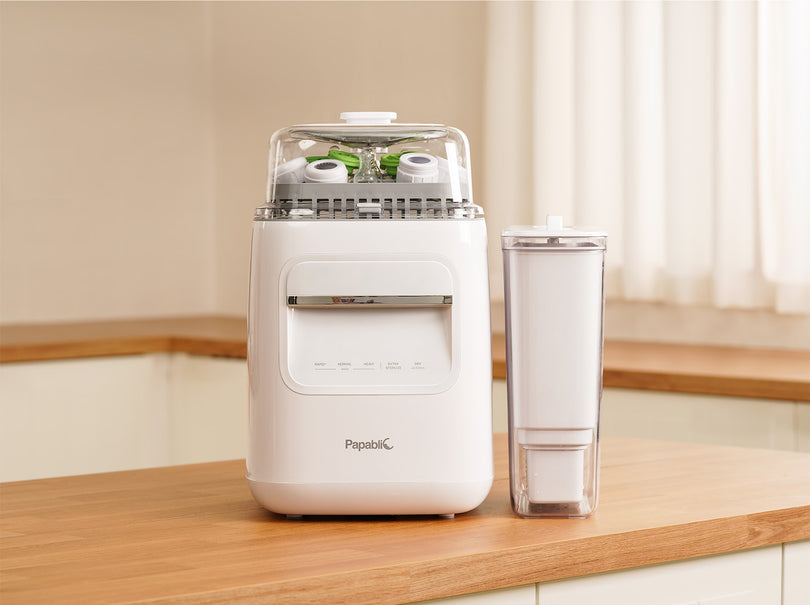
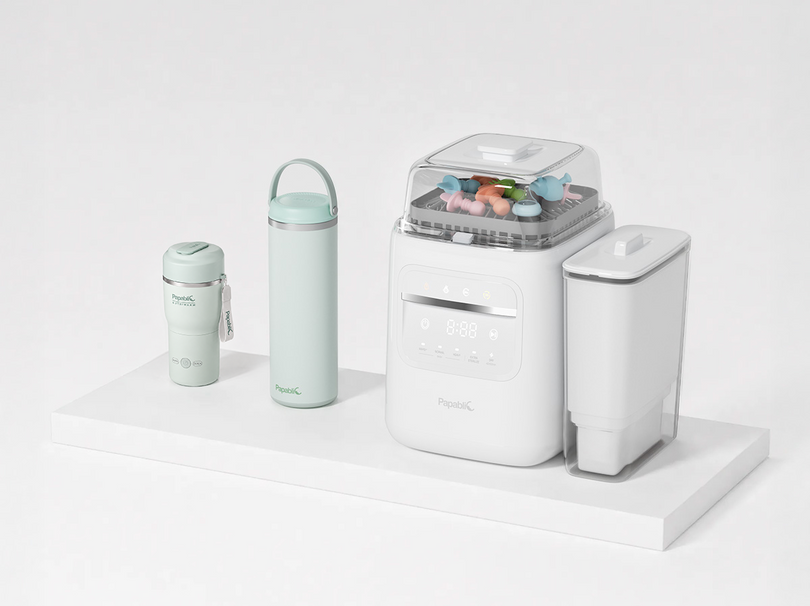
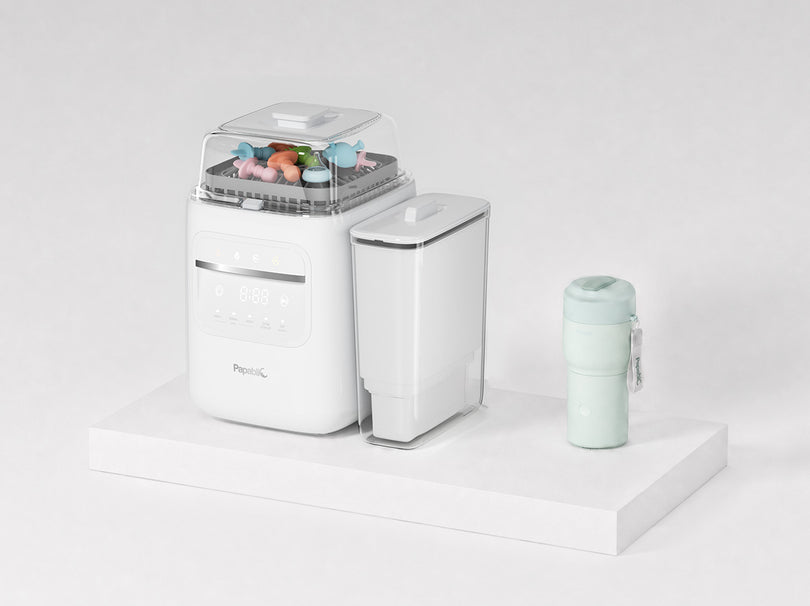
Mid-tier units introduce targeted jets and a stronger Bottle Sterilizer and Dryer workflow. Premium units maximize throughput and offer "store-and-forget" capabilities. A strong anchor for value is the Papablic Baby Bottle Washer and Sterilizer Dryer All in One Bottle Cleaner.
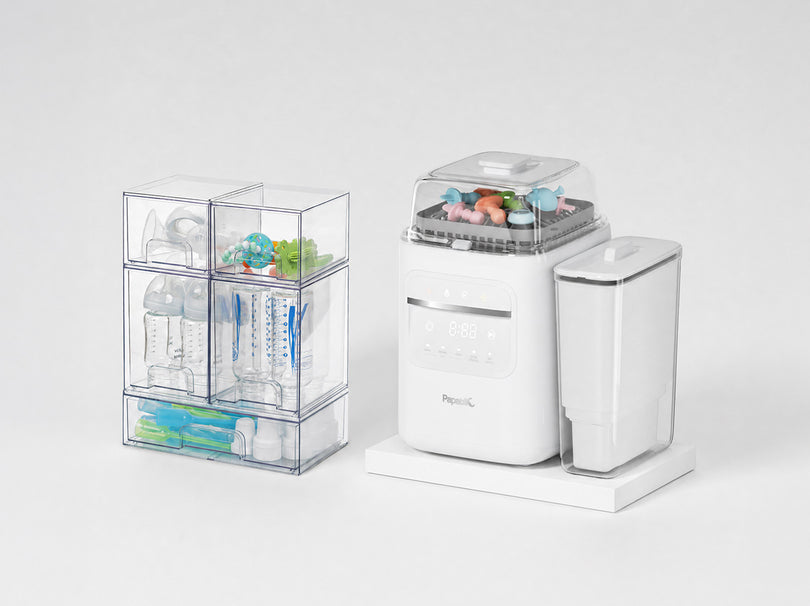
With an MSRP around $289.99, it sits in the sweet spot for functionality. It cleans, sterilizes, dries, and stores, holding 4+ bottles or 2 full pump kits. This capacity maps perfectly to the actual chaos of a newborn schedule.
Moving up tiers gets you:
- Superior spray coverage for internal curves.
- Consistent steam exposure times.
- Drying that actually eliminates pooling water.
Shop: Baby Bottle Washer and Sterilizer Dryer All in One Bottle Cleaner
Feature to Price Checklist for a Bottle Washer with Sterilizer
Module 2: Feature-to-Price Checklist

Compare your Baby Bottle Cleaner using an outcome-based checklist. First, validate the wash mechanism. You need evidence of loading posts that position bottles directly over the jets.
Second, audit the sterilizing method. A Steam Sterilizer cycle is standard, but control is key. For NICU parents, a repeatable, automated cycle removes the mental load of wondering, "Did I boil that long enough?"
Third, scrutinize the drying function as you would a standalone Hygienic Bottle Dryer. Dry parts inhibit bacterial regrowth. If the machine leaves puddles in the bottle base, you are stuck using a towel, defeating the purpose of sterilization.
Copy this checklist:
- Wash coverage: Do jets reach inside valves and nipples?
- Load design: Do posts prevent parts from flipping over?
- Drying: Is there heated air circulation?
- Storage: Does it keep items enclosed post-cycle?
Shop: Baby Bottle Washer and Sterilizer Dryer All in One Bottle Cleaner
Running Costs and Ownership for an Automatic Bottle Cleaner
Module 3: Running Costs and Ownership
A high-quality Baby Bottle Washer is a recurring investment. The primary ongoing costs are consumables and maintenance. Detergent tablets formulated for milk residue are essential, as are descaling tablets to combat mineral buildup.
Utilities are a minor cost factor compared to time. If a cycle allows you to sleep instead of scrub, the ROI is immediate. 15 minutes saved four times a day is a massive lifestyle shift for a new parent.
Pressure-test your budget:
- Count total daily bottles and pump parts.
- Estimate cycles per day (usually 2-4).
- Factor in descaling frequency for hard water areas.
If you need formal guidance on hygiene frequency, the CDC outlines when sanitizing is critical vs. optional.
Shop: Baby Bottle Washer and Sterilizer Dryer All in One Bottle Cleaner
Who Needs What Level of Baby Bottle Washer
Module 4: Who Needs What Level
Regret comes from buying aspirational features instead of practical solutions. For most new parents, the win is simply consistency. A reliable machine ends the internal debate of "am I too tired to wash this properly?"
For NICU parents, hygiene confidence outweighs footprint. You need an All-in-One Bottle Washer that sterilizes and stores parts in a closed loop. This keeps clean items ready for the next critical feed without exposure to household dust.
Pumping families need specific geometry support. It is not just about bottle count; it is about fitting flanges and connectors. If the washer handles bottles but forces you to handwash valves, it has failed you.
Shop: Papablic SafeguardPlus Baby Bottle Washer System
In Home Fit and Setup for an All in One Bottle Washer
Module 5: In-Home Fit and Setup

Treat your All-in-One Bottle Washer like a major appliance project. Measure your cabinet clearance first. Many parents forget that top-loading lids need vertical space to open fully.
Plan your "dirty-to-clean" path. You will run this route while exhausted, so ensure the sink, washer, and storage area flow logically. A disjointed setup leads to wet parts dripping across the kitchen floor.
Usability is a key feature:
- Look for angled controls that are easy to read at night.
- Ensure the water tank is accessible without moving the unit.
- Check that the loading basket lifts out easily.
Shop: Baby Bottle Washer and Sterilizer Dryer All in One Bottle Cleaner
How to Choose a Baby Bottle Washer in 2026
Hygiene requirement and sterilize frequency
Decide your sterilization rhythm realistically. Some families sterilize daily; others weekly. A Bottle Washer with Sterilizer capability allows you to standardize this step without boiling pots of water.
If a machine reduces your anxiety, it is working. Your Baby Bottle Sanitizer strategy should be sustainable for months, not just the first week.
Throughput capacity: bottles plus pump parts
Map capacity claims to your actual inventory. Count your bottles and pump kits. If you are a pumping parent, the ability to wash "bottles plus parts" in one go is the difference between freedom and drudgery.
Capacity Planning Guide:
- Low Volume: 4 bottles + accessories.
- Pumping Focus: 1-2 full pump kits per load.
- High Volume: Multiple sets + parts mixed.
Cycle speed: time-to-clean daily reality
Speed matters when you are down to your last clean bottle. Long dry cycles create bottlenecks if your inventory is low. You need a machine that matches your baby's hunger cadence.
Ask yourself: Do you need a Quick Bottle Sterilizer for rapid turnover? Or do you prioritize a Fast Drying Baby Bottle Sterilizer for overnight readiness?
Total cost: device plus consumables
Calculate the true cost of ownership. Hard water increases descaling costs. Tablet-based systems scale with usage frequency.
| Scenario | Value Driver | Prioritize | Trade-off |
|---|---|---|---|
| 1-2 washes/day | Convenience | Simple loading | Smaller capacity |
| 3-4 washes/day | Time Saved | Speed & Drying | High consumables |
| NICU Parents | Confidence | Sterilize + Dry | Large footprint |
| Pumping Families | Geometry | Spray coverage | Careful loading |
Best Practices and Pitfalls for Baby Bottle Cleaning
Best Practices
A strong Baby Bottle Cleaner requires good habits. Use a sanitize cycle that matches your risk profile. Standardizing the Steam Sterilizer run prevents nightly decision fatigue.
Ensure parts are bone dry before storage. A Hygienic Bottle Dryer result keeps silicone fresh and odor-free. Maintain the unit with scheduled descaling to protect the heating element.
Common Pitfalls to Avoid
Don't assume a rinse is a wash. If you feel a slick film, you need a full detergent cycle. Don't overbuy capacity that clutters your counter without adding value.
Avoid these traps:
- Ignoring consumables: Budget for tablets upfront.
- Nesting parts: Overloading blocks the jets.
- Wet storage: Never store damp parts in a closed bin.
Conclusion
The cost of a high-quality Baby Bottle Washer in 2026 is a trade-off between upfront cash and daily peace of mind. If you choose a tier that matches your workload, the machine becomes an essential partner in your parenting routine. If you buy based on vague features, you may end up handwashing anyway.
Start with your profile—New, NICU, or Pumping. Match capacity, sterilizing needs, and drying performance to your reality. When your Bottle Sterilizer and Dryer workflow is predictable, the hardest parts of the day get a little easier.
Frequently Asked Questions
How much should I expect to spend on a high-quality bottle washer?
Expect to invest between $200 and $350 for a reliable mid-to-premium unit in 2026. This price point secures essential features like high-pressure spray arms, consistent Steam Sterilizer performance, and integrated drying. Cheaper models often lack the drying power necessary for safe storage, leading to extra work. A realistic budget must also include ongoing costs for detergent tablets and descaling solutions.
Is a bottle washer worth it in the long run compared with handwashing or dishwasher?
Yes, specifically if you are washing more than three bottles or pump kits every single day. While handwashing is free, it fails when you are exhausted; a dedicated Automatic Bottle Cleaner guarantees a consistent sanitary baseline regardless of your energy levels. Dishwashers often struggle with small parts flipping over and lack the targeted jets needed for narrow bottle interiors. The true value is calculated in minutes of sleep saved per night.
What features should I look for in a bottle washer for my baby?
Prioritize verified spray coverage, a sealed drying cycle, and specific capacity for pump components. You need jets that physically reach inside nipples and valves, not just a general rinse. A Bottle Washer with Sterilizer function is crucial for standardizing hygiene without the burn risk of boiling water. Finally, look for "dry storage" capability, which keeps parts sterile until you are ready to use them.
Is it better to wash baby bottles with a bottle washer or a dishwasher?
A dedicated bottle washer is generally superior for hygiene due to specialized racks and targeted water jets. Dishwashers are designed for plates and bowls, often leaving milk residue in the blind spots of deep bottles. A Baby Feeding Bottle Washer also integrates high-temperature drying specifically designed to prevent pooling in curved plastics. Choose the machine that fits your daily volume and counter space.
Are there bottle washers that offer multiple functions like sterilizing and drying?
Yes, most modern premium units perform washing, sterilizing, and drying in a single automated sequence. These All-in-One Feeding Solutions are designed to minimize handling, reducing the chance of re-contamination. Look for a workflow that includes a wash, a Steam Sterilizer phase, and a Fast Drying Baby Bottle Sterilizer cycle. This multi-function capability is especially valuable for pumping families managing complex inventories.
Whats the most affordable bottle washer with good performance?
The most affordable effective options are usually compact countertop models that sacrifice water tank capacity for a smaller footprint. You can find decent performance in the entry-level tier if you accept smaller batch sizes and simple controls. However, ensure the unit still offers a true wash cycle and not just a steam rinse. The best value unit is one that handles your actual daily bottle count without requiring multiple back-to-back runs.

