




Introduction
Finding an affordable bottle washer that actually removes greasy milk film without breaking the bank can feel impossible. Yet, thoroughly clean and dry bottles are essential for your baby's health.
Don't worry. In this guide, we will break down how to choose a budget-friendly bottle washer that delivers a safe, completely dry clean.
Official Site: Papablic
Core Foundations
Understanding the hygiene hierarchy is your first step. A Baby Bottle Washer is the key to managing this daily routine.
Cleaning vs. Sanitizing vs. Sterilizing
Cleaning removes the visible milk film. Sanitizing safely reduces germs, while sterilizing uses high heat for maximum germ removal.
A combined Bottle Sterilizer and Dryer streamlines this process. It reduces hand contact and keeps parts from sitting wet on the counter.
Soil Types: Milk Film and Formula Residue
Breast milk and formula create different cleaning challenges. Breast milk leaves a stubborn, oily film on plastic and silicone.
Formula tends to leave chalky deposits that harden as they dry.
The longer residue sits, the harder your Baby Bottle Cleaner has to work. Always do a quick pre-rinse to help the machine perform better.
The Bottle Ecosystem
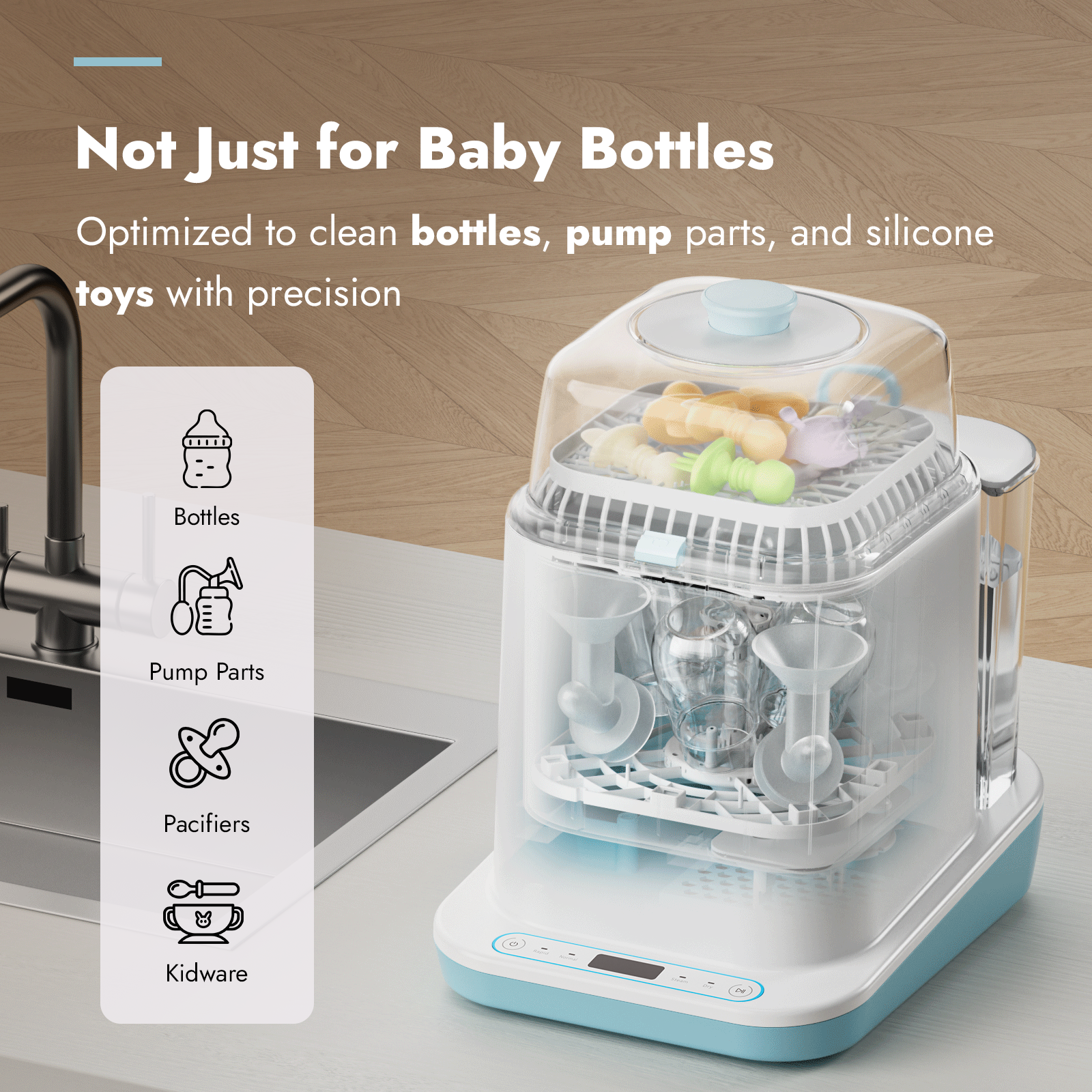
Bottles are easy to wash, but tiny accessories are much harder. You must clean microscopic channels in silicone nipples and tight anti-colic valves.
Pump parts with delicate membranes also need careful attention.
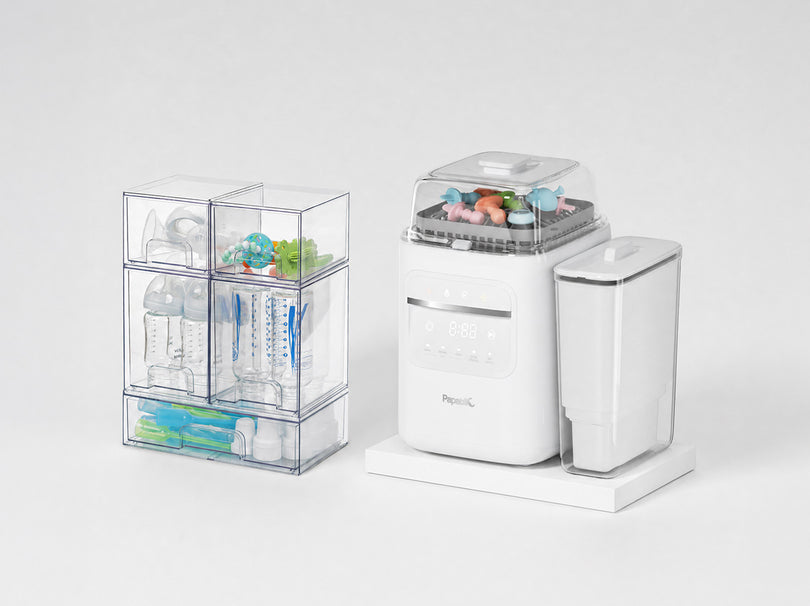
A reliable Bottle Cleaning System requires targeted spray reach. It also needs a secure small-parts basket to keep items from flipping over.
Cycle Anatomy: Wash, Heat, Dry
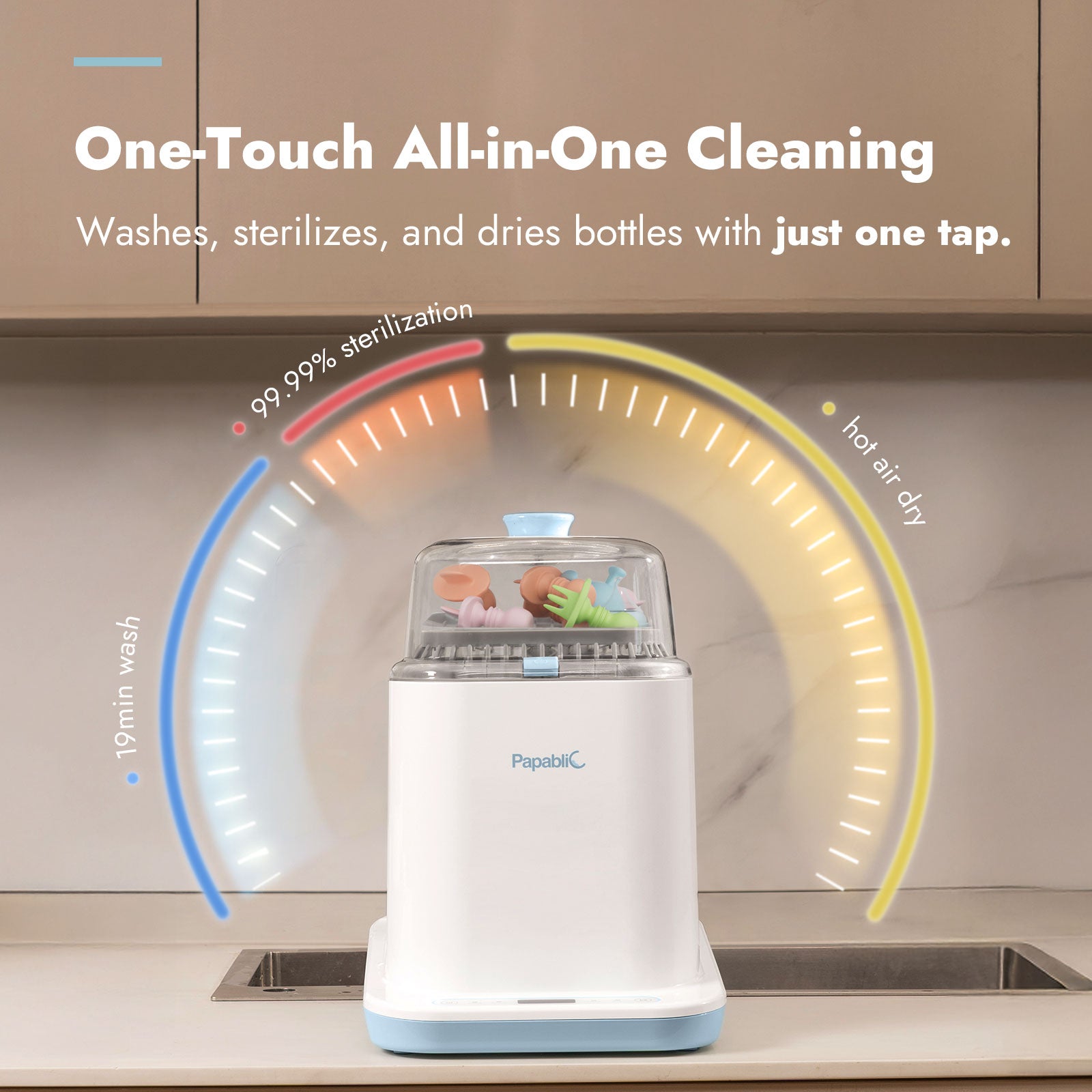
Most countertop units follow a predictable cycle. They wash with detergent, heat the chamber to sanitize, and use airflow to dry.
When you see terms like Steam Sterilizer, remember that washing must come first. Steam will just bake milk film onto the bottle if it isn't cleaned properly.
What "Affordable" Really Means
Affordability is more than the initial price. It includes daily running costs and the value of your time.
Total Cost: Device Plus Detergent Tablets
Most automatic bottle washers use specific detergent tablets. Over time, these consumable costs add up quickly.
Newborn feeding or pumping can require 2 to 4 wash cycles daily. Mixed feeding usually drops to 1 to 2 cycles.
Look for a budget-friendly Baby Feeding Bottle Washer that cleans effectively on shorter cycles to save money.
Time Value: Daily Cycles and Batch Size
Time is highly valuable for new parents. A machine with a larger capacity reduces how often you need to run loads.
Overnight, you need a fast turnaround for a few bottles. Daytime loads might include bulky pump parts.
A well-designed washer acts as a reset button for your Smart Baby Bottle Station, keeping everything organized.
Durability Signals: Seals, Heaters, and Pumps
In affordable machines, durability shows up in the details. Look for strong lid seals that will not warp over time.
Ensure the pump maintains pressure and the heater resists scaling. Regular descaling is a standard maintenance task, especially if you have hard water.
Cleaning Performance That Matters
Cleaning power is where cheap machines fail. A washer that only lightly rinses is not an upgrade from handwashing.
Jet Coverage: 360-Degree Spray Reach
Spray coverage is critical for intricately shaped pump parts. Multi-angle jets determine if water reaches inside tight corners.
The spray must hit bottle shoulders, nipple rings, and pump flanges evenly.
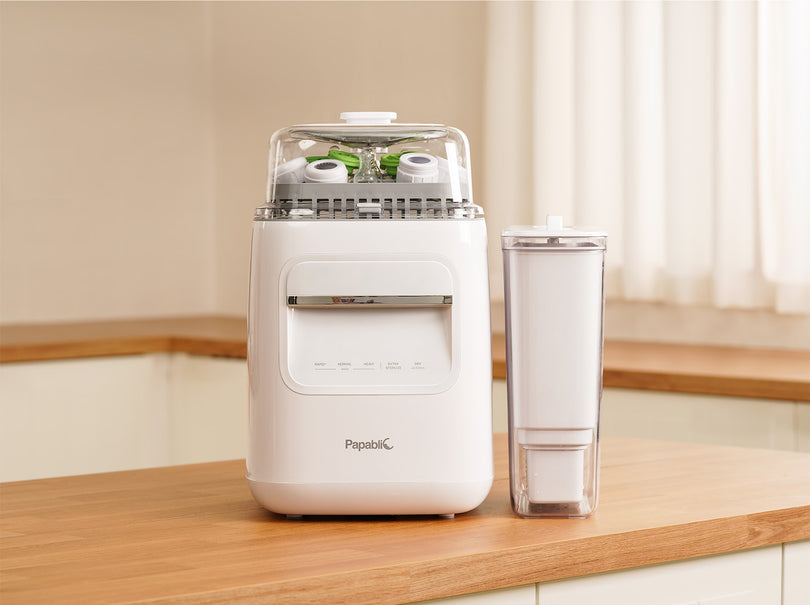
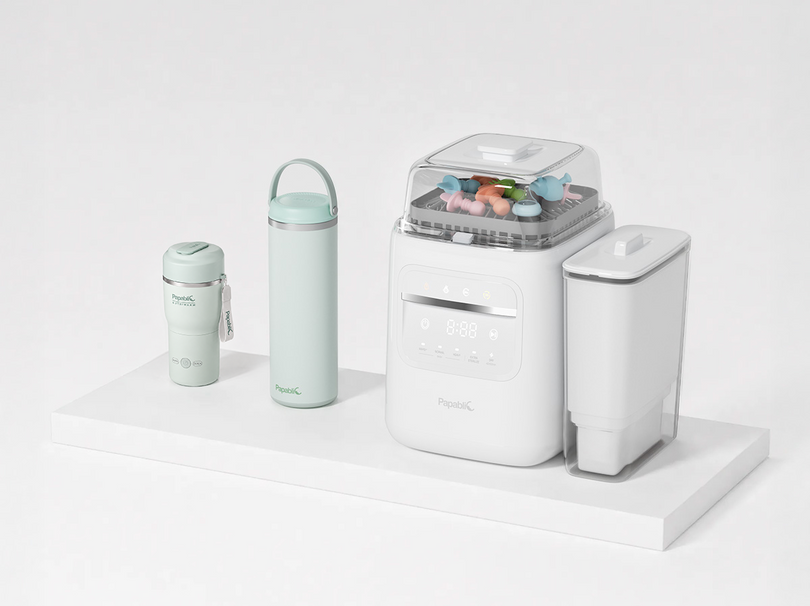
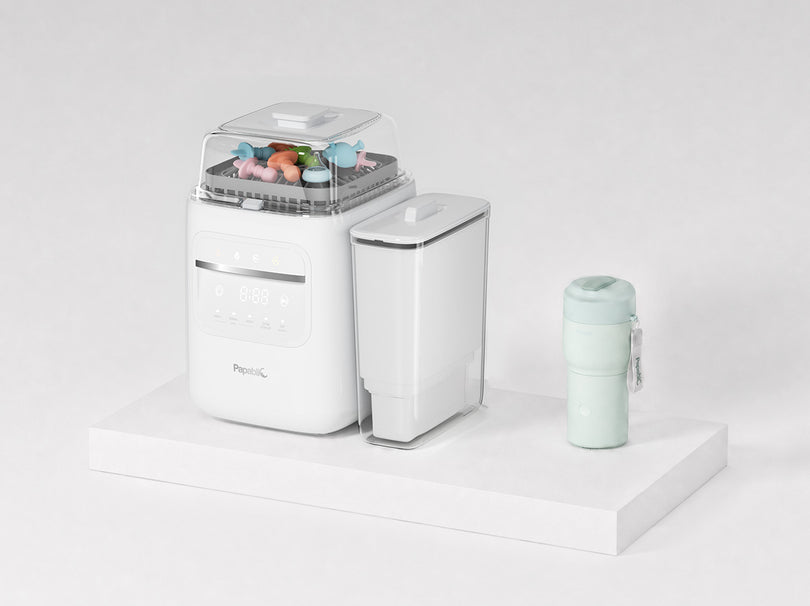
Papablic offers an All-in-One Bottle Washer with a pressure-jet system. Its double-stack layout keeps spray paths clear so residue cannot hide.
Filter design: trapping milk solids
Filters matter most for formula-fed families because undissolved solids and thicker residue can circulate. A filter that is easy to remove and rinse is more likely to get cleaned daily.
A simple routine works best:
- Empty the filter after each formula-heavy cycle.
- Rinse under running water.
- Check for trapped nipple seeds or valve pieces.
This reduces odors and helps your All-in-One Bottle Washer maintain consistent wash power.
Drying method: airflow and gentle heat
Drying is not a luxury feature. It is a health and workflow feature. Damp parts cause two common problems:
- You cannot assemble bottles and pump parts quickly.
- Moisture can contribute to odors and biofilm over time.
A Fast Drying Baby Bottle Sterilizer approach usually means heated airflow, not just residual heat from sterilization. When comparing machines, prioritize a drying system that reliably dries:
- Inside bottle necks.
- Silicone nipples.
- Pump membranes.
If your goal is a Hygienic Bottle Dryer outcome, your test is simple: can you assemble a full bottle immediately after the cycle without towel-drying?
Sterilizing And Safety Reality Check
Sterilization is a sensitive topic because family needs differ. Many healthy, full-term babies do well with consistent cleaning and complete drying. NICU families often want an extra margin.
Dishwasher sanitize can replace an extra step
Dishwashers with a sanitize cycle can reduce bacteria effectively. NSF states certified dishwashers achieve a 99.999% (5-log) reduction in bacteria. However, dishwashers are slow. Small baby parts often flip over and pool dirty water.
Premature babies need extra germ removal
The CDC recommends extra precautions for premature or vulnerable babies. Sanitizing is especially important for infants under two months old.
A dedicated Bottle Washer with Sterilizer automates this process. It reduces the chance of skipping a step when you are exhausted.
Sanitizing cycle target: what 5-log means
NSF uses the 5-log bacterial reduction benchmark for sanitizing. This helps translate marketing claims into real safety outcomes.
A machine that reliably washes, steams, and thoroughly dries provides real peace of mind.
Capacity Planning For Real Life
Capacity determines daily convenience. Too small, and you run constant loads. Too large, and it takes over your kitchen.
Feeding Frequency: Daytime vs. Overnight Needs
Most newborns feed 8 to 12 times a day. If you rotate 6 to 8 bottles, you need at least one full daily wash cycle.
Aim for a machine that fits your typical 12-hour load to replace handwashing completely.
Pump Parts Volume: Flanges, Valves, Bottles
Exclusive pumping means washing two full pump kits, extra bottles, and membranes.
Papablic highlights a capacity of "4+ bottles or 2 full pump kits." Fitting two complete pump sets saves you from midday wash stress.
Storage Mode: Sealed Chamber and Timed Holding
Some machines feature a storage mode that keeps items dry and protected after the cycle ends.
This is perfect for running a cycle before bed. Even without this mode, a fully dry, closed chamber safely holds clean parts.
Space, Noise, And Daily Usability
If a device is hard to use, you will stop using it. Usability is just as important as cleaning power.
Counter Footprint and Lid Clearance
Measure the counter footprint and the vertical lid clearance needed for tall bottles.
A compact footprint is not helpful if you cannot fully open the lid under your kitchen cabinets.
Water Fill, Drain, and Refill Steps
Countertop washers usually require manual water filling. Look for a removable water tank that is easy to refill.
Drain steps must be clear and spill-proof to keep the process simple.
Button Simplicity for Sleep-Deprived Parents
A great Automatic Bottle Cleaner has straightforward controls. You need clear labels and predictable cycle times.
Papablic designs postpartum-friendly, angled control panels. This makes it much easier to use one-handed when you are tired.
Selection And Decision Guide
Use this guide to keep your comparison focused on daily outcomes instead of long feature lists.
Cleaning Coverage: Prioritize Multi-Angle Jets
Multi-angle jets are essential if you wash pump parts or complex anti-colic bottles.
Look for designs that keep small parts separated so water jets hit surfaces evenly.
Drying Speed: Choose Heated Airflow Drying
Heated airflow is a must if you need fast turnarounds between feeds.
It is the best way to ensure parts are immediately ready to use without lingering moisture.
Capacity: Match Bottles Plus Pump Kits
Think in "kits" instead of single parts. Choose a machine that fits your most common load.
Consumables: Estimate Tablets and Descaling
Remember ongoing costs for detergent and descaling tablets. Prioritize machines that clean well without excessive tablet use.
Decision table: scenarios and what to prioritize
| Scenario | Key factors | Recommended approach |
|---|---|---|
| Exclusive pumping | High volume of flanges and valves | Large capacity, pump kit spacing |
| Formula Feeding | Chalky deposits and residue | Accessible filter, multi-angle jets |
| NICU Graduate | Vulnerable immune system | High-heat sterilization, storage mode |
Best Practices And Pitfalls
Best Practices
- Pre-rinse quickly: A quick rinse prevents milk and formula from drying into a hard film.
- Separate small parts: Keep valves and nipples secure in a basket so they do not pool water.
- Descale regularly: Prevent hard water buildup from ruining the heating element.
- Let the dry cycle finish: Stopping early leaves moisture inside bottle rings and nipples.
Common Pitfalls to Avoid
- Overloading the racks: Jets cannot clean through blocked pathways.
- Skipping filter cleaning: Uncleaned filters trap formula solids and create foul odors.
- Storing wet parts: Damp parts in sealed containers will quickly grow bacteria.
Conclusion
An affordable bottle washer is worth the investment when it reliably solves your daily cleaning struggles.
It removes stubborn residue, eliminates manual scrubbing, and delivers perfectly dry parts on demand.
Choose a machine that fits your feeding routine and prioritizes heated airflow. This simple upgrade will give you back valuable time and peace of mind.
Official Site: Papablic
Frequently Asked Questions
Are there bottle washers that offer multiple functions like sterilizing and drying? Yes. All-in-one models combine washing, steam sterilizing, and heated drying into a single cycle. This combined routine reduces hand contact and keeps your feeding hygiene highly consistent.
Is a bottle washer worth it in the long run compared with handwashing or dishwasher? Yes. It is highly valuable if you run multiple cycles daily and need fast, dry parts. It eliminates manual scrubbing and prevents small pump parts from getting lost in a standard dishwasher.
What features should I look for in a bottle washer for my baby? Prioritize multi-angle spray jets, a dedicated parts basket, and heated airflow drying. Look for clear controls and a layout that keeps bottles properly inverted for maximum water contact.
What’s the most affordable bottle washer with good performance? Compact, smaller-capacity units with basic wash-and-dry functions offer the best value. Avoid paying for extra specialty modes if the core washing performance is weak.
Which method is safest for my baby: using a bottle washer, handwashing, or a dishwasher? An automatic bottle washer or a certified high-heat dishwasher is the safest option for consistent hygiene. Automated machines use heat and airflow to eliminate lingering moisture and human error.
Do I need a medical-grade device to clean bottles for a NICU graduate? No. A standard all-in-one washer with a high-heat sanitize mode and full airflow drying is perfectly safe. Maintain a strict daily maintenance routine like filter cleaning and regular descaling.