



Introduction
A bottle washer can look simple on a product page, yet the real confusion starts in your kitchen. One model seems cheaper, another promises more automation, and both claim to save time. If you choose based on sticker price alone, you can end up paying again through extra handwashing, damp parts, repeat cycles, or a machine that does not fit your bottles and pump parts.
This guide sorts out what bottle washer prices actually reflect in 2026, where bottle washer cost turns into daily value, and which features separate a high-quality bottle washer from a frustrating one. We will move from the basics of pricing and ownership cost into price tiers, competitor context, and a practical selection framework built around real feeding routines.
Bottle Washer Price Fundamentals
When you compare bottle washer prices, the first useful principle is this: you are not only buying a machine. You are buying a workflow. The right system reduces sink time, keeps feeding items consistently clean, and makes storage easier between feeds. The wrong one looks affordable at checkout, but quietly adds labor back into your day. The CDC notes that infant feeding items need careful cleaning, sanitizing, and storage to help prevent contamination, which is exactly why performance matters more than a short spec list. According to CDC, feeding items should be cleaned after use and stored carefully once dry.
What bottle washer prices usually include
A price tag often reflects more than wash power alone. In this category, manufacturers bundle several tasks into one countertop appliance, so value depends on how completely the machine replaces your old routine.
- Washing: spray action that removes milk film and residue
- Sterilizing: heat or steam step for hygiene support
- Drying: heated airflow that reduces damp storage
- Storage: enclosed chamber that keeps parts cleaner longer
- Flexibility: support for bottles, nipples, valves, and pump parts
Upfront cost versus ownership cost
The easiest buying mistake is treating bottle washer cost as a one-time purchase. In reality, ownership cost often decides whether a machine feels convenient after month one.
What to check:
- Detergent tablets or pods
- Filter replacement schedule
- Descaling frequency in hard-water homes
- Water tank cleaning effort
- Rewash risk when loads come out damp
A cheaper unit can become the more expensive option if it needs frequent rewashing or proprietary supplies. That is why a high-quality bottle washer often earns its place through labor reduction, not just feature count.
Why cycle quality matters more than cycle count
Many product listings highlight modes, but mode count does not guarantee better results. What matters is how well the washer covers tight seams, narrow bottle shoulders, silicone parts, and pump accessories.
What this means:
- Strong spray coverage matters more than extra presets
- Consistent drying matters more than marketing language
- True capacity matters more than staged product photos
- Better load support reduces manual pre-cleaning
Research indexed by NIH shows that dishwashing variables can change cleaning effectiveness, which is a helpful reminder that method and process design both affect results.
Capacity is about real routines, not ideal loads
A family doing one or two bottles a day can live with a smaller system. A family pumping regularly, combo feeding, or washing wearable pump parts needs more room and better organization.
Common routine patterns:
- Occasional bottle use: lighter capacity is often enough
- Mixed feeding: mid-range capacity becomes more useful
- Exclusive pumping: accessory layout matters as much as volume
- Twins or heavy daily use: larger chamber size pays off faster
What Shapes Bottle Washer Prices
The biggest differences in bottle washer prices usually come from engineering choices you notice only after daily use. Better systems spend more budget on wash coverage, drying strength, filtration, and part handling. Those choices affect both cleaning quality and the number of minutes you win back each day.
Motor strength and spray coverage
A bottle washer has to do more than rinse visible milk away. It has to push water into corners, seams, and bottle shoulders where residue likes to hide.
Key specs or signals:
- Multi-directional spray pattern
- Enough pressure for narrow internal surfaces
- Racks that expose parts to the jets
- Holders that stop small items from flipping
Baby Brezza says its Bottle Washer Pro uses 20 high-pressure spray jets and 3 rinse cycles, which helps explain its premium positioning in the category. Momcozy positions its washers around strong jet counts and high-pressure cleaning as well, including 26 spray jets on one model and 112,000 Pa warm-water pressure on the DeepClean D8. (babybrezza.com)
Heating system and drying method
Drying is where many buyers discover the difference between acceptable and excellent. A machine that washes well but leaves trapped moisture still forces you back to air-drying, counter clutter, and delayed reuse.
Why it matters:
- Dry parts are easier to store safely
- Better airflow lowers rewash risk
- Faster turnaround can reduce spare bottle needs
- Good drying is especially important for pump parts
Water handling and filtration design
Water quality changes performance over time. In hard-water homes, scale can build up faster, and that affects both maintenance and recurring cost.
What to check:
- Built-in filtration or purification
- Replaceable filter cadence
- Easy-to-clean reservoir design
- Clear maintenance reminders
Build quality and replacement ecosystem
A high-quality bottle washer is not just about the first 30 days. It is also about whether you can maintain it without friction.
Common price drivers:
- Better plastics and food-safe materials
- More durable seals and racks
- Availability of filters and cleaning supplies
- Brand support and replacement part access
That last point matters more in 2026 because appliance costs have been sensitive to broader inflation pressure. Reuters coverage cited by other reporting has been tied to price movement in appliance categories, and Associated Press reported that large appliance prices rose during the 2025 inflation cycle, which is one reason to compare total ownership cost instead of shelf price alone. According to Reuters, appliance pricing pressure has remained part of the broader consumer inflation story.
2026 Bottle Washer Price Tiers
A useful way to read bottle washer prices is by tier, not by brand first. Tiers help you understand what performance level you are actually funding. Once you know the tradeoffs, brand comparisons become clearer and less emotional.
Entry tier expectations
Entry-tier models usually cover the basic need: less hand scrubbing. They can make occasional bottle care easier, but they often ask you to compromise on drying quality, load size, or support for awkward accessories.
What this means:
- Basic washing is common
- Drying may be lighter or slower
- Smaller loads are typical
- Pump-part handling may be limited
- Best fit is occasional bottle routines
If you mainly breastfeed and use bottles only sometimes, entry tier can be enough. The mistake is expecting it to behave like a full routine-replacement system when your daily load is actually larger and more complex.
Mid-tier value zone
Mid-tier bottle washer prices usually give the best balance for most homes. This is where stronger spray design, more reliable drying, and broader part compatibility begin to feel like real workflow upgrades instead of feature padding.
Why it matters:
- Better cycle quality reduces repeat cleaning
- Broader rack support helps with pump parts
- Time savings become more consistent day to day
- Ownership cost is easier to justify through use
Best fit:
- Mixed feeding households
- Daily pumping routines
- Parents trying to reduce countertop clutter
- Families who want a practical all-in-one system
Premium tier tradeoffs
Premium-tier systems justify higher bottle washer cost when they remove edge-case failures. You are usually paying for more automation, higher capacity, better drying confidence, and a cleaner storage workflow.
What to check:
- Large usable capacity, not just headline capacity
- Strong drying claims with clear cycle design
- Filter or water-softening features
- Better support for multiple item types
- Long storage mode or enclosed hygiene workflow
Best fit:
- Heavy daily use
- Exclusive pumping
- Twins or high bottle volume
- Parents who value routine consistency over lowest cost
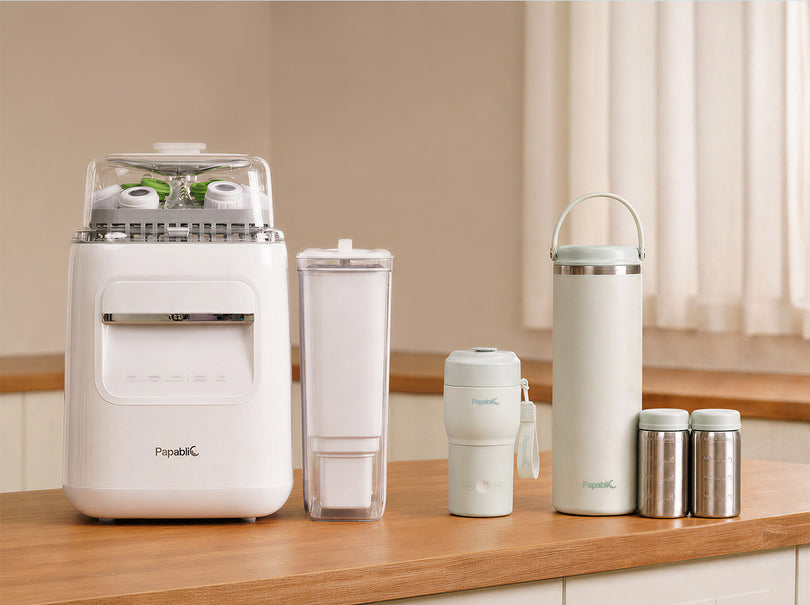
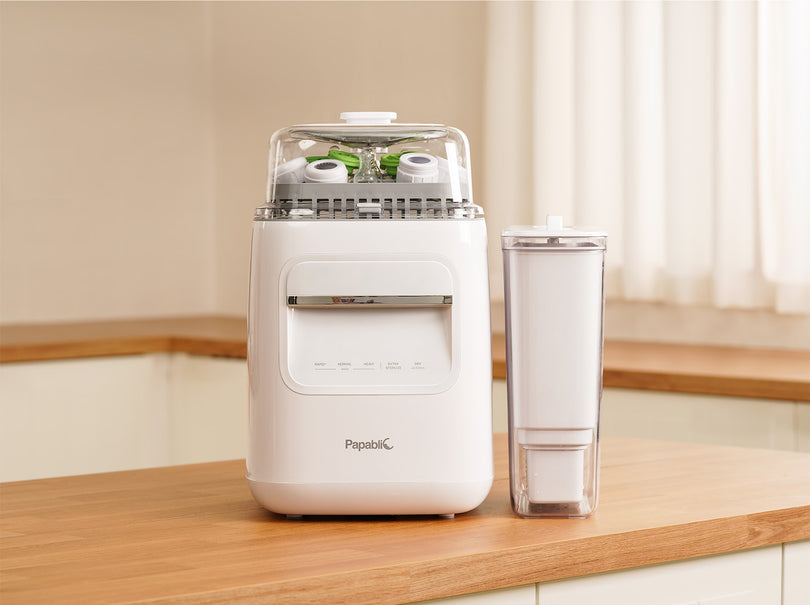
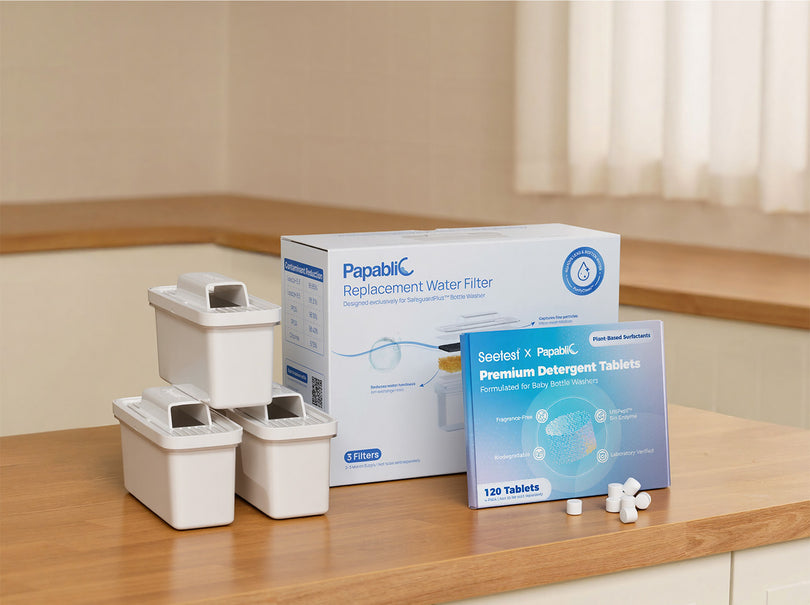
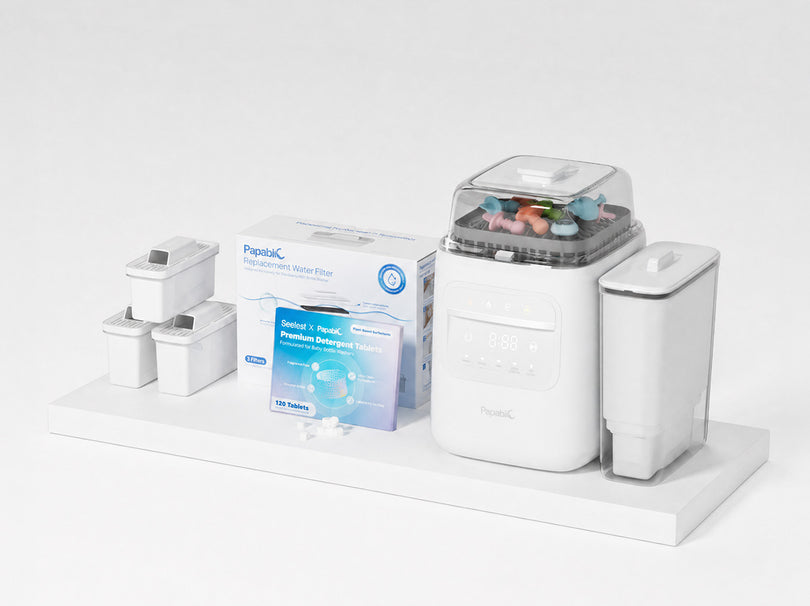
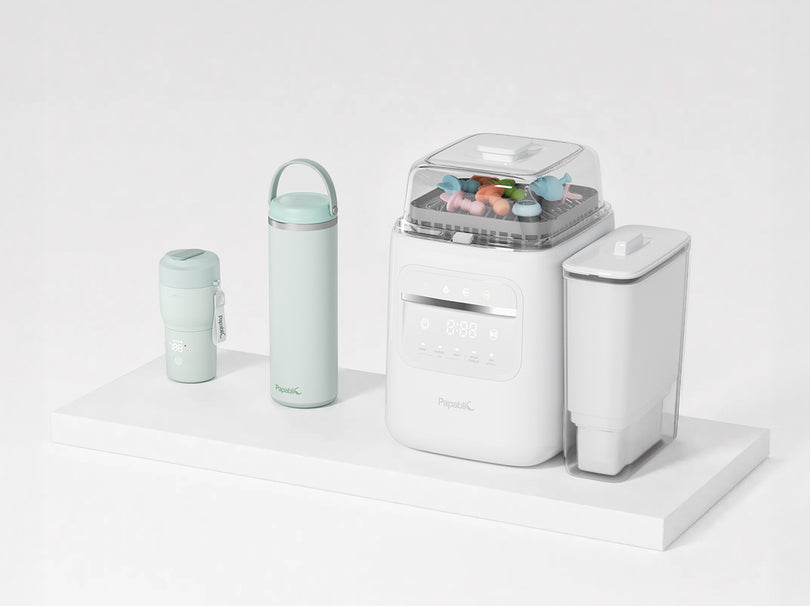
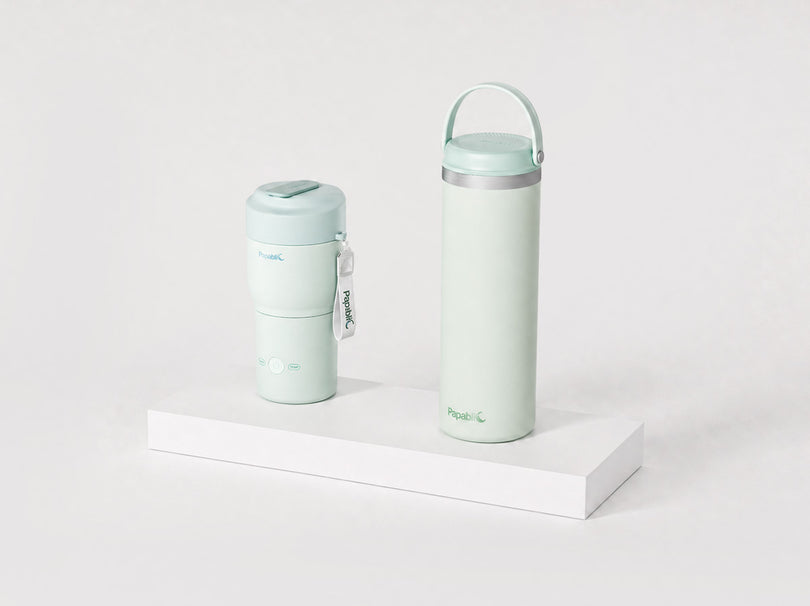
Papablic SafeguardPlus™ Baby Bottle Washer System
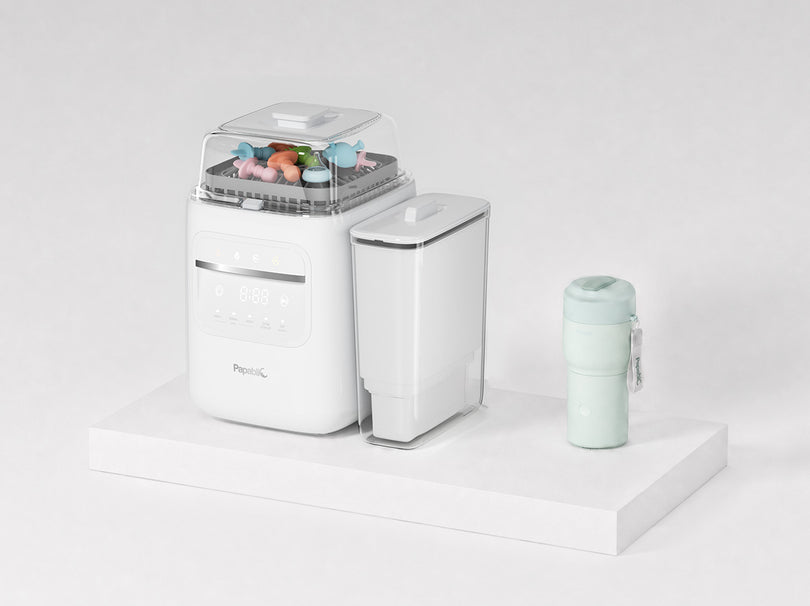
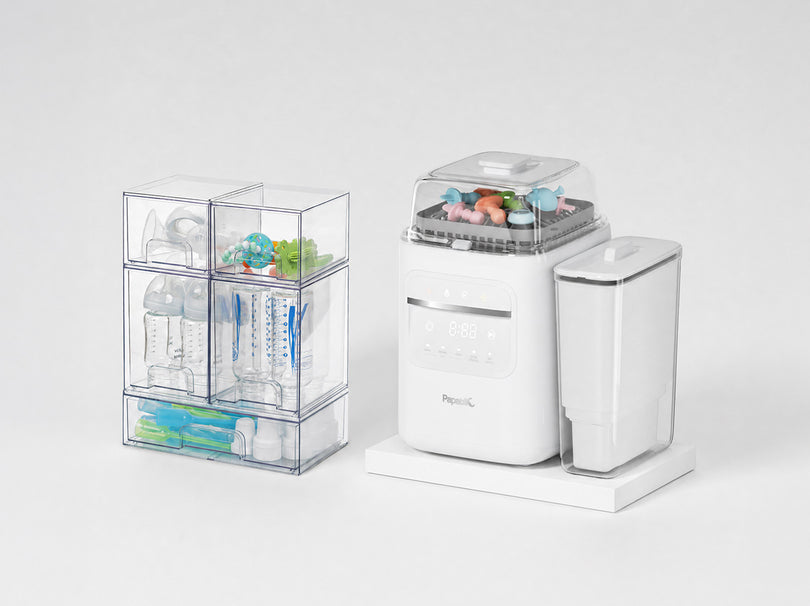
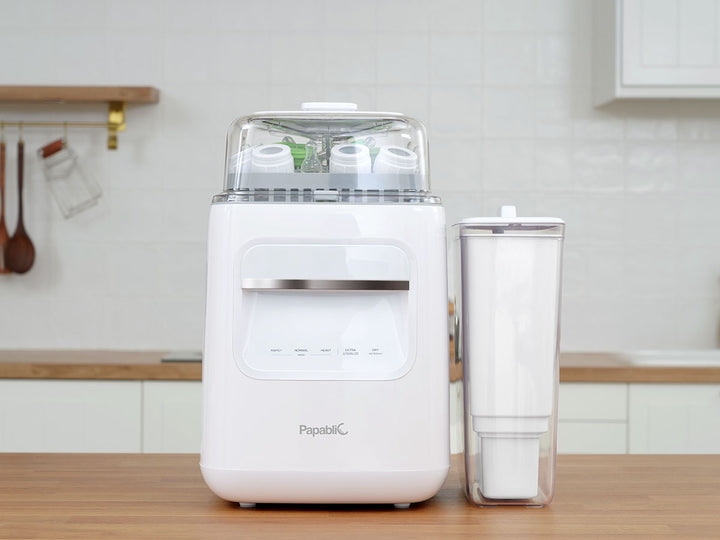
Papablic positions its SafeguardPlus™ Baby Bottle Washer System as a premium all-in-one system, and the spec stack explains why. The product page describes it as a 5-in-1 baby bottle cleaning system with built-in PurifyClean water purification, upgraded capacity for 8 bottles and wearable pumps, 72-hour hygienic storage, and 100% baby-safe materials. Papablic also says the system is designed to reduce 99.99% of harmful germs and is built around a filter-wash-sterilize-dry-store workflow. ([papablic.com])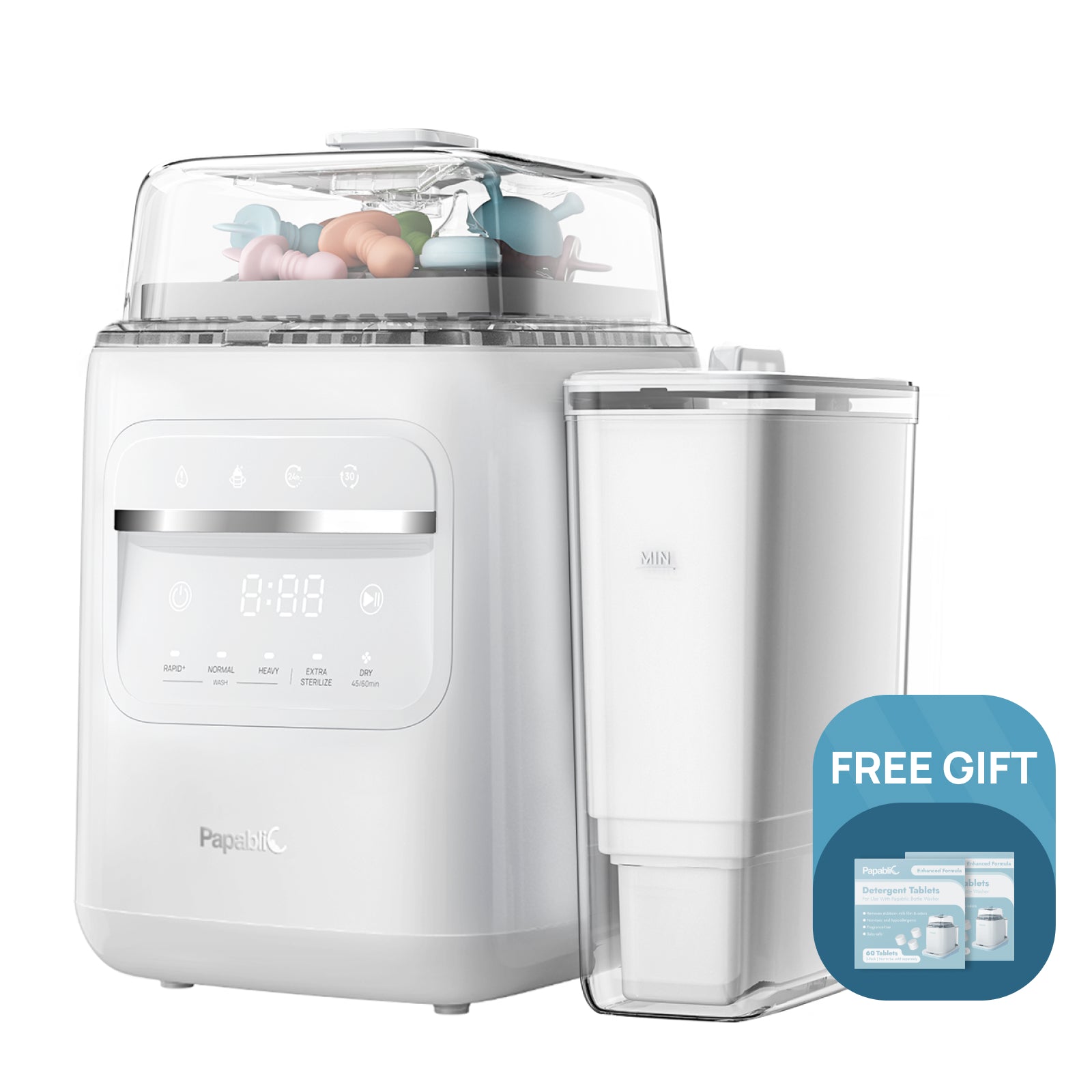
What stands out is not just the number of functions, but how those functions connect. Built-in water purification addresses one of the hidden variables behind bottle washer prices: the effect of incoming water quality on maintenance and cycle consistency. The 8-bottle capacity also matters because many premium claims sound generous until you try to fit bottles and pump parts together in the same load.
What to check:
- 5-in-1 workflow design
- Built-in PurifyClean water purification
- Fits up to 8 bottles and wearable pumps
- 72-hour hygienic storage mode
- Premium positioning aimed at routine relief
Best fit:
- Families washing multiple feeding items daily
- Homes using both bottles and pumps
- Parents who want fewer handoff steps
- Buyers comparing premium bottle washer prices on total value
Shop: Papablic SafeguardPlus™ Baby Bottle Washer System
Competitive Price Context
Price comparison gets more useful when you compare not only labels, but also what each system asks from you after purchase. That means checking recurring supplies, maintenance habits, load flexibility, and whether the machine really finishes the job.
Baby Brezza
Baby Brezza remains a premium reference point in this category. Its Bottle Washer Pro is positioned around strong wash performance, six cleaning modes, and an all-in-one wash, sterilize, and dry workflow. The brand also highlights 20 high-pressure spray jets and multiple rinse cycles. At the same time, Baby Brezza sells dedicated detergent tablets, descaling tablets, and a replacement HEPA filter, and its detergent page states that using another detergent can void the Bottle Washer Pro warranty. That makes ownership cost and supply lock-in part of the real comparison, not just sticker price. (babybrezza.com)
Momcozy
Momcozy applies mid-to-premium pressure by bundling broad features into bottle washer systems. Its KleanPal Pro page highlights automatic wash, sterilize, dry, and store functions with 26 spray jets, while the DeepClean D8 page emphasizes HydroJet360 cleaning, 112,000 Pa warm-water pressure, capacity for up to 8 bottles or 2 full pump-part sets, and official tablet pairing for best results. In other words, the value case is strong on feature bundling, but you still need to verify maintenance cadence and supply dependence before deciding that the bottle washer cost is truly lower over time. (momcozy.com)
Eufy
Eufy entered the category with a clearly premium, smart-home style position. Its February 2026 launch claims for the Bottle Washer S1 Pro include 3D HydroBlast cleaning, a built-in water softener, dual-fan drying, 10-bottle capacity, smart app control, and TÜV SUD hygiene certification claims tied to launch timing. That package can be appealing if hard water, higher load size, and smart controls matter to your routine. Still, because it is a newer entrant, buyers should weigh support maturity, replacement ecosystem, and real long-term upkeep alongside the headline features. (eufy.com)
Cost of Ownership Beyond Purchase Price
Most regret around bottle washer prices starts after checkout, not before. The machine may look like a good deal until you calculate the recurring supplies, the number of cycles you run each day, and the kitchen space it takes over. A smarter buying guide has to include those friction points.
Consumables and replacements
Recurring supplies can shift the math quickly, especially in the newborn stage when feeding item turnover is high.
What to check:
- Tablet or detergent requirement
- Filter replacement interval
- Descaling needs in hard water
- Availability of brand-approved supplies
Hard water usually increases maintenance frequency. If your area leaves visible mineral residue on kettles or faucets, expect your washer to need more regular attention too.
Time and labor savings
This is the part people underestimate. A bottle washer does not need to be free of recurring cost to be worth it. It needs to save enough labor to make your day run better.
Why it matters:
- Fewer sink sessions each day
- Less brushing of narrow parts
- Lower chance of rewashing after poor drying
- More predictable routine for shared caregiving
A high-quality bottle washer can also reduce the number of spare bottles you feel forced to own, because faster turnaround means you can reuse cleaned items sooner.
Counter space and utility use
Countertop appliances always compete with real kitchen tasks. If a machine interrupts meal prep, blocks access, or creates awkward loading steps, it may feel more expensive than it really is.
Common mistake:
- Buying for feature count without measuring kitchen workflow
What to check:
- Footprint beside your sink or prep zone
- Water tank access
- Lid clearance when open
- Noise and heat around repeated cycles
- Power and water use under heavy routines
Selection Guide
The best choice usually comes from matching the machine to your routine, not chasing the most impressive product page. If you keep four selection filters in view, you can compare bottle washer prices without getting distracted by minor features.
Capacity fit
Capacity should match your peak load, not your easiest day.
- Light use: smaller chamber may work
- Daily pumping: wider part support matters
- Mixed feeding: bottle and accessory balance matters
- Heavy use: larger loads reduce repeat cycles
Cycle coverage
A high-quality bottle washer should clean seams, collars, nipples, and pump parts without constant manual correction.
- Look for multi-angle spray design
- Check small-part stability
- Review whether pump accessories are supported
- Prioritize consistent results over extra modes
Drying performance
Drying decides whether the machine truly replaces your old rack-and-wait routine.
- Strong heated airflow matters
- Damp storage increases frustration
- Better drying shortens turnaround time
- Enclosed storage is only useful when parts are actually dry
Maintenance design
Maintenance should be realistic enough to sustain when you are tired.
| Factor | Best signal | Watch-out |
|---|---|---|
| Capacity fit | Matches peak loads | Overcrowded racks |
| Cycle coverage | Reaches seams | Manual pre-scrub needed |
| Drying strength | Dry after cycle | Damp valves remain |
| Maintenance | Fast weekly upkeep | Complex filter routine |
| Supply model | Easy replacements | Proprietary lock-in |
Best Practices and Pitfalls
The right bottle washer still needs a smart routine around it. Good habits improve cleaning outcomes, protect the machine, and help you get the full value from bottle washer cost over time.
Best Practices
A few habits make a clear difference, especially when your feeding routine changes week to week.
- Match machine size to your real routine, not your ideal one
- Check filter and supply replacement timing before buying
- Confirm pump-part compatibility before assuming all-in-one fit
- Load parts with airflow in mind, not just maximum density
- Build one repeatable cleaning rhythm for all caregivers
What this means:
If multiple adults handle feeding, a consistent loading and cycle routine matters almost as much as the machine itself. The more predictable the process, the lower the chance of missed cleaning, damp storage, or wasted repeat cycles.
Common Pitfalls to Avoid
The most expensive mistake is not buying the priciest machine. It is paying for a system that does not solve your actual friction.
- Judging value by sale price only
- Ignoring drying and storage workflow
- Assuming all bottle shapes fit equally well
- Underestimating hard-water maintenance
- Forgetting to compare supply lock-in
Common mistake:
Parents often focus on the wash claim and overlook drying strength. Yet if bottles or pump parts come out wet, the system has not fully replaced your old process. That is why a high-quality bottle washer should be judged by finished results, not by how many functions appear on the front panel.
Conclusion
Bottle washer prices make more sense when you treat them as workflow decisions, not simple appliance labels. The better question is not, "Which unit is cheapest?" It is, "Which system removes the most repeat labor from my daily feeding routine without creating new maintenance friction?"
For most households, the smartest move is to compare total bottle washer cost across capacity, drying quality, supply needs, and real compatibility with bottles and pump parts. If you buy around daily routine relief rather than hype, a high-quality bottle washer can return its value in cleaner cycles, fewer rewashes, and a calmer kitchen.
FAQ
What's the most affordable bottle washer with good performance?
The most affordable good option is usually the lowest model that still matches your real daily load and dries reliably. If a machine washes but leaves parts damp, it may cost less upfront but create more daily work. A good baseline is enough capacity for your common bottle count plus space for small accessories. In practice, strong drying and decent rack design matter more than an extra mode or two. If you only use bottles occasionally, an entry-tier unit can work. If you pump daily, mid-tier value often ends up being the smarter buy.
How much should I expect to spend on a high-quality bottle washer?
A high-quality bottle washer usually lives in the mid-tier to premium range because stronger washing, better drying, and broader compatibility cost more to build. The main drivers are spray coverage, heating design, load flexibility, and maintenance system quality. If you need support for bottles and pump parts in the same cycle, expect to shop above the entry level. Households with heavy daily use often benefit most from premium features because they save labor every single day. The right budget depends on whether you need occasional support or a true routine-replacement machine.
Is there a bottle washer that saves time and energy?
Yes, the biggest time savers combine washing, sterilizing, drying, and storage in one repeatable cycle. That setup removes several handoff steps, which is where a lot of daily time disappears. Time savings are strongest when the machine also handles pump parts well and dries thoroughly enough for quick reuse. Energy use still matters, but repeat manual washing also has a cost in time and attention. If your current routine involves sink washing, a drying rack, and a separate sterilizer, an all-in-one system usually creates the biggest workflow improvement.
How do I find a bottle washer that's easy to use?
Look for a machine that makes loading, tank access, and weekly maintenance simple enough to do when you are tired. Easy use often comes from clear controls, stable small-part holders, and a layout that does not force awkward hand placement. A good sign is when you can explain the routine to another caregiver in a minute or two. If the filter, water tank, or descaling process feels confusing at purchase time, it will feel worse during a busy week. Ease of use also includes whether bottles and pump parts fit naturally without trial-and-error loading.
What features should I look for in a bottle washer for my baby?
Start with spray coverage, drying performance, and item compatibility. Those three features affect whether the machine actually finishes the job without manual correction. Next, check capacity, filter design, and whether the system supports enclosed storage after the cycle. If you use breast pumps, pump-part handling should be a top priority rather than an afterthought. For homes with hard water, built-in filtration or easy descaling support can also make a noticeable difference. The best feature set is the one that aligns with your real feeding routine, not just the one with the longest marketing list.
What makes a bottle washer a smart choice for new parents?
A smart choice reduces repeated labor, supports hygiene consistency, and fits the pace of your daily feeding routine. New parents are often short on time and sleep, so equipment that removes extra steps can have outsized value. The right washer should help every caregiver follow the same simple process, which lowers mistakes and keeps routines steady. It should also fit your actual bottles and accessories instead of forcing separate cleaning methods. In short, the smartest machine is the one that turns a stressful repeat task into a dependable background process.
Does a premium bottle washer always justify the higher cost?
No, premium bottle washer cost only makes sense when you will use the added performance often enough to benefit from it. If you do one bottle cycle every few days, premium features may be more than you need. But if you are washing bottles and pump parts several times a day, better drying, larger loads, and stronger automation can save meaningful time and frustration. Premium models also make more sense in homes where multiple caregivers need a simple, reliable system. The key is matching the machine to your workload rather than buying the most advanced option by default.

