
You just put your six-week-old down after the fourth feeding of the night. Your kitchen sink is stacked with seven dirty bottles, each with milk film crusting around the threads. You think about the $300 bottle sterilizer sitting in your registry cart—unopened, unjudged. Your mother-in-law swears you need it. Your pediatrician shrugged. The mom group is split down the middle, half swearing by their countertop machines, half saying it's marketing nonsense and their dishwasher works fine.
You're exhausted. You want the right answer. But mostly, you want to stop second-guessing yourself at midnight while scrubbing nipple valves with a tiny brush.
What the Science Actually Says About Bottle Cleaning
Here's what gets lost in the registry noise: cleaning and sanitizing are not the same thing, and the rules have genuinely changed since your mom had babies.
The CDC distinguishes between daily cleaning (soap and water after every feeding) and sanitizing (extra germ removal using heat or bleach solution). You clean every time. You sanitize when it matters most.
Sanitizing is particularly important when your baby is younger than 2 months, was born prematurely, or has a weakened immune system. The American Academy of Pediatrics notes that parents today are less concerned with sterilization than previous generations, reflecting improved water safety and evolving understanding of infant immunity.
For healthy babies over two months? Daily sanitizing may not be necessary if bottles are cleaned carefully after each use.
Your Real Decision Points:
Age and health status. Newborns (especially preemies or babies with medical conditions) benefit from daily sanitizing. Your eight-month-old who's already licking the dog? Different story.
Water quality. If you're concerned about tap water safety, you may use bottled water or boil cold tap water for one minute, then cool it to room temperature before use. This matters for formula prep—less so for rinsing already-washed bottles.
Your capacity. Sleep deprivation is real. A system that works at 3 AM when you're running on fumes is better than the "perfect" method you'll skip because it's too complicated.
Pro Tip: If you use a dishwasher with hot water and a heated drying cycle or sanitizing setting, a separate sanitizing step is not necessary. Check your dishwasher manual—you might already own the tool you need.
The Hygiene Hypothesis (Or: Why Your Baby Doesn't Need a Bubble)
The science on infant immunity has shifted. Exposure to everyday microbes isn't just harmless—it helps build your baby's immune system. This doesn't mean you should skip washing bottles. It means you can relax about achieving hospital-grade sterility in your kitchen.
Experts recommend scrubbing nipples in hot, soapy water and rinsing thoroughly to remove all soap traces, with some suggesting boiling them for 5 minutes. But the sterile bottle you just sanitized? It begins picking up environmental germs the moment it's out of the sterilizer anyway.
Your goal isn't zero germs. It's safe feeding.
When a Dedicated Appliance Actually Makes Sense
Baby bottle cleaning systems aren't inherently gimmicks, but they're also not universally necessary. They solve specific pain points for specific families.
You might genuinely benefit if:
You're exclusively pumping or formula feeding and washing 8-12 bottles daily. The time savings compound fast. Hand-washing that volume while holding a crying baby is its own circle of hell.
Your baby needs daily sanitizing (young, preemie, immunocompromised) and you don't have a dishwasher with a sanitize cycle. Boiling water every single day gets old.
You want the mental load off your plate. Some parents find the automation—the certainty that bottles are clean and dry and ready—worth the counter space.
You probably don't need one if:
You have a reliable dishwasher with a sanitize setting. Dishwashers with hot water and heated drying cycles provide adequate sanitization.
Your baby is older, healthy, and you're comfortable with thorough hand-washing. A dedicated basin (not your sink), bottle brush, and drying rack will serve you fine.
You're minimizing stuff. Babies come with enough gear. If you can skip an appliance without sacrificing safety or your sanity, skip it.
Pro Tip: Place small bottle parts inside a closed-top basket or mesh laundry bag in the dishwasher so they don't end up in the filter. This simple hack can make dishwasher cleaning far more effective.
How Modern Systems Address the Real Frustrations
The registry paralysis comes from not knowing what you'll actually hate about bottle care until you're in it. Let me tell you: it's the milk film. It's the standing water in valve crevices. It's the bottles that never fully dry and start smelling weird. It's the 2 AM panic when you realize you're out of clean bottles.
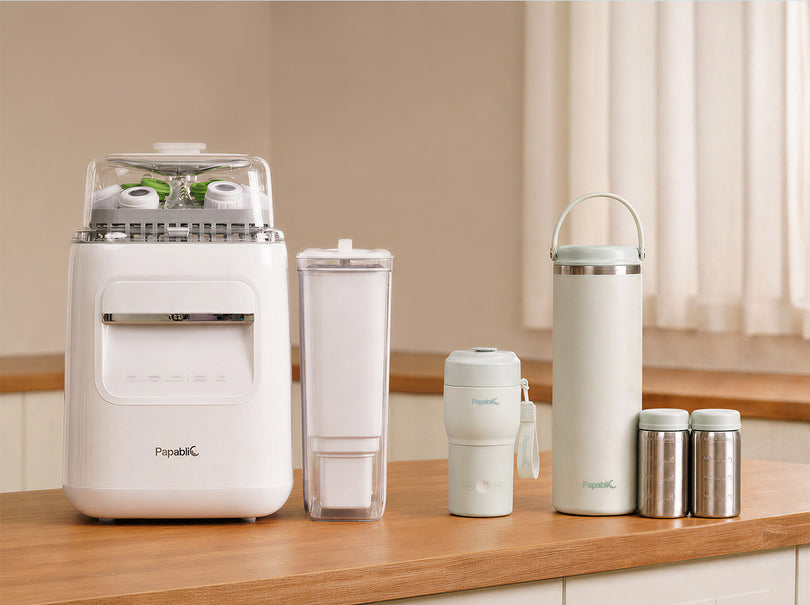
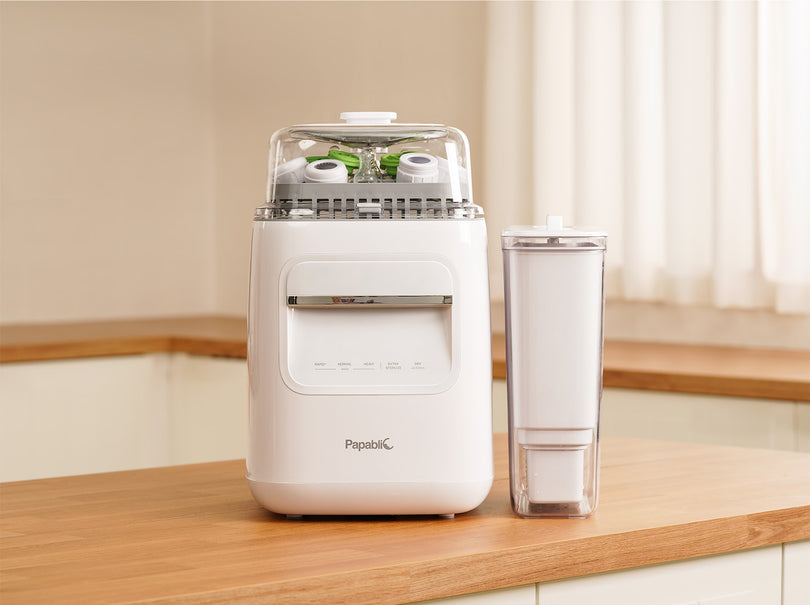
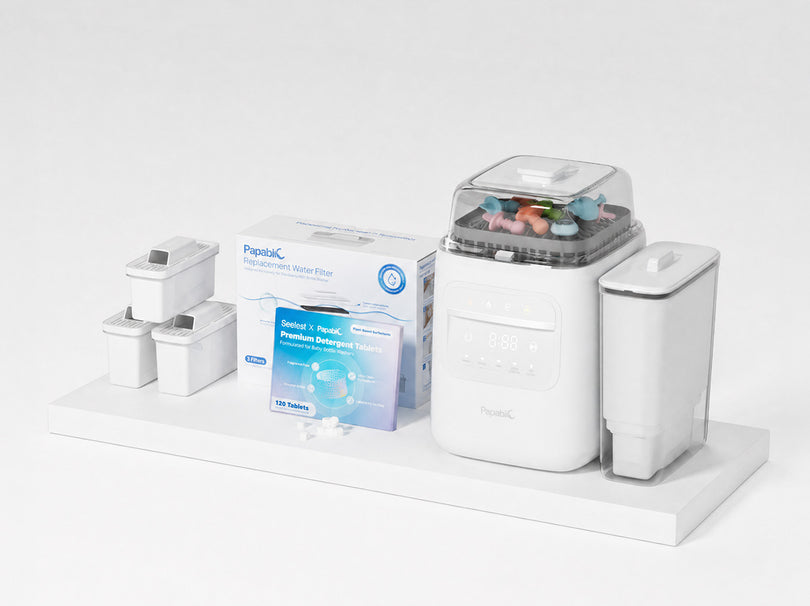
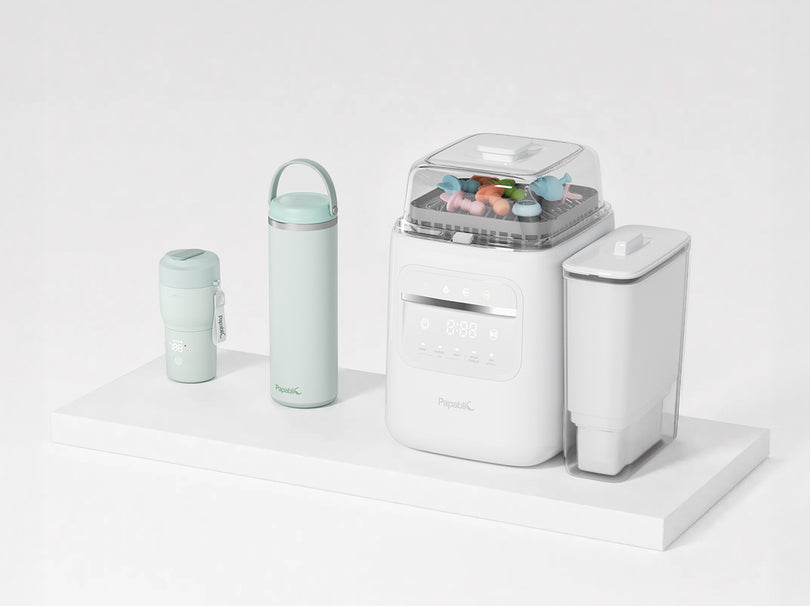
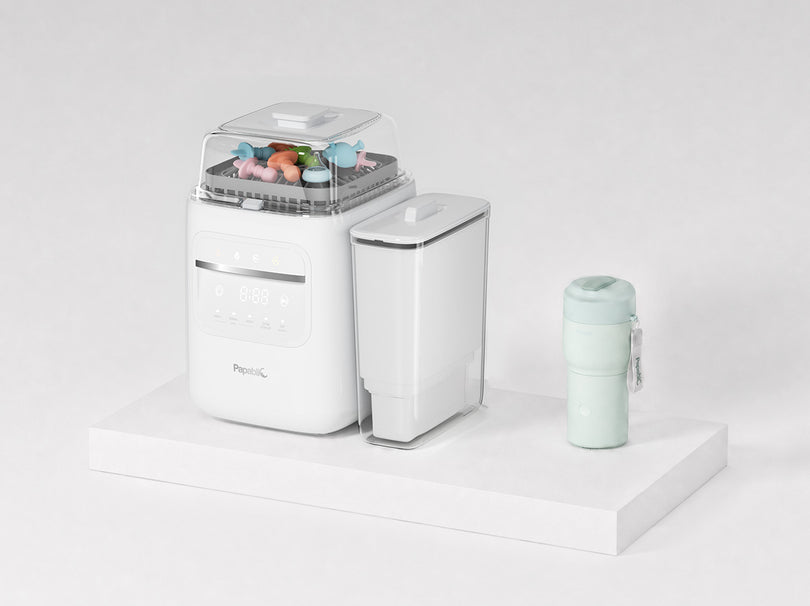
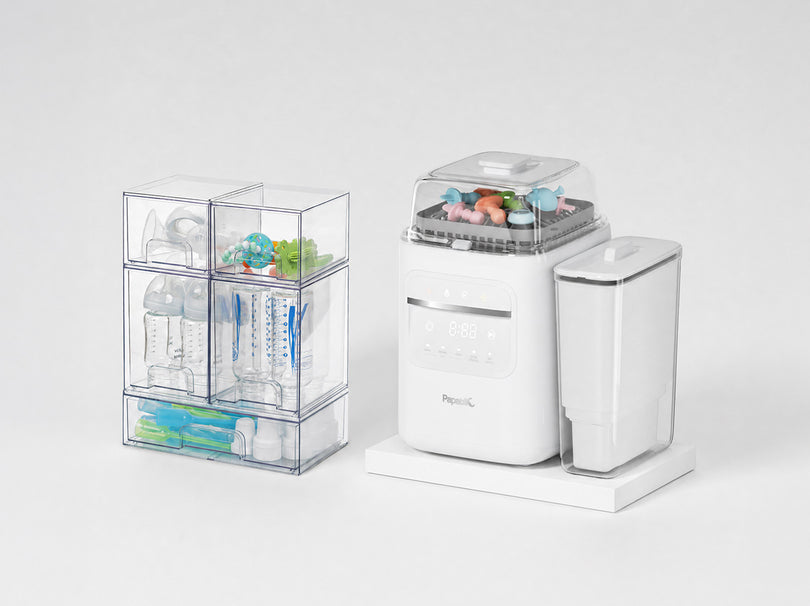
High-quality bottle cleaning systems like Papablic SafeguardPlus™ Baby Bottle Washer System tackle these specific problems. Features like built-in water purification address the "is my tap water safe?" anxiety without requiring you to research your local water report at 4 AM. Upgraded capacity (holding 8+ bottles plus pump parts) means you can batch-process a full day's worth of feeding gear at once instead of constantly running small loads.

Five-in-one functionality—washing, rinsing, sanitizing, drying, and storing—condenses what used to be a 45-minute multi-step process into something you can set and forget. The claim to reduce 99.99% of harmful germs aligns with what sanitizing cycles should achieve. Extended storage (like 72-hour sterile hold) means you can prep bottles in advance without worry.
These aren't magic. They're automation of tasks you'd otherwise do manually. The value proposition is time and peace of mind—can you get 30 extra minutes of sleep because you're not hand-washing bottles at midnight? Does knowing bottles are genuinely clean reduce the mental load?
For some families, absolutely. For others, it's an expensive solution to a problem they don't have.
What Your Lactation Consultant Wishes You Knew
After 15 years of supporting new parents, here's the pattern I see: parents who struggle most with bottle care are the ones trying to meet some imagined standard of perfection rather than building a system that works for their actual life.
The bottle care routine that works is the one you'll actually do consistently.
If a dedicated appliance removes decision fatigue ("Is this clean enough?") and buys you rest, it's not a gimmick—it's a tool. If you're fine with a basin, brush, and your dishwasher's sanitize cycle, you don't need to spend the money.
There is no virtuousness in suffering. If you can afford a system that makes feeding easier and you want it, get it. If you'd rather spend that money elsewhere (or nowhere), don't. Your baby needs fed, loved, and reasonably clean bottles. The method is up to you.
The Question No One Asks (But Should)
"What will make 3 AM feedings less awful?"
That's the real registry question. Maybe it's an appliance that handles the cleanup so you can stumble back to bed faster. Maybe it's a simple system you can operate half-asleep. Maybe it's just having enough bottles that you only deal with washing once a day.
The gimmick isn't the appliance itself. The gimmick is the idea that there's one right answer for every family. You know what you need. Trust that.
Your baby will be fine either way. You deserve a feeding routine that doesn't drain you further.
FAQ
Do I really need to sanitize bottles every day?
No, not for all babies. Daily sanitizing is particularly important when your baby is younger than 2 months, was born prematurely, or has a weakened immune system. For healthy older babies, thorough cleaning after each use is generally sufficient.
Can I just use my dishwasher instead of buying a sterilizer?
Yes, if it has the right settings. Dishwashers with hot water and a heated drying cycle or sanitizing setting provide adequate sanitization without requiring a separate step. Check your model's specifications to confirm.
How long can I keep sterilized bottles before I need to re-sanitize them?
It depends on storage. After sanitizing, bottles should be completely dry before storage in a clean, protected area like a closed kitchen cabinet. If stored properly and kept sealed, they can remain clean for 24 hours or more, but always inspect before use.
Is boiling bottles as effective as using a sterilizer?
Yes, boiling is effective. Experts recommend boiling bottles and nipples for at least 5 minutes to kill germs. However, boiling requires more hands-on time and attention, and there's a risk of damaging bottle parts if done improperly.
When can I stop sterilizing bottles altogether?
Gradually, as your baby's immune system matures. The CDC emphasizes that daily sanitizing may not be necessary for older, healthy babies if bottles are cleaned carefully after each use. Most parents transition away from regular sterilizing around 3-4 months for healthy, full-term babies, but continue thorough washing.