



The nightly bottle sterilizing routine can feel like just one more task on a massive end-of-day housekeeping list. If you’ve found yourself wondering when it’s safe to stop sterilizing your baby bottles, you’re not alone.
The answer is nuanced, and there’s no single universal stop date. It depends on your baby’s age, health, feeding method, water source, and which authority source you rely on for guidance.
This guide covers why early-month sterilizing is important, what the CDC recommends alongside other guidance from the NHS and AAP, the key factors that shift the timeline, and what proper hygiene should look like once you stop.
Why Sterilizing Matters Most in the Early Months
Both milk and formula are nutrient-rich, leaving their leftover residue ripe for bacterial breeding. In the newborn stage, a baby’s immune system is still developing, so it’s more vulnerable to infections caused by the bacteria that can form from milk residue, which can lead to diarrhea and vomiting.
While powdered formula may seem safer, it’s not sterile even when sealed, which can create another potential contamination source that raises the stakes.
The science of sterilization comes down to using high heat or steam to reach temperatures that kill germs that ordinary cleaning can leave behind. Sanitizing baby bottles daily is especially critical when a baby is under two months, born prematurely, or has a weakened immune system.
So, When Can You Stop Sterilizing Baby Bottles? What the Guidance Actually Says
The guidance on the appropriate time to stop sterilizing baby bottles varies depending on your source.
-
CDC: The CDC recommends sanitizing daily for healthy, full-term babies up to two months. They direct that sanitizing daily may not be necessary if the baby is past this age and healthy as long as items are cleaned carefully after each use.
-
NHS: Taking a more cautious approach, the UK’s NHS recommends sterilizing all feeding equipment until your baby is at least 12 months of age to protect against infection.
-
AAP: The American Association of Pediatricians guides parents to sterilize baby bottles before first use, and then use hot soapy water or a dishwasher sanitize cycle if your baby is healthy and born full-term. It does, however, recommend sanitizing pump parts, which could reasonably include the bottles pumped milk is stored in, at least once daily if your baby is less than 2 months old, born prematurely, or has a weak immune system due to medical treatment or illness.
The practical pattern that emerges among all recommendations is the guidance to sterilize bottles daily in the newborn weeks and taper sterilizing frequency between 3–12 months.
Understanding why sterilizing is important matters more than fixing a hard calendar date, because the stopping point should be risk-based and isn’t universal for every family.
5 Key Factors That Affect When You Can Stop
These five variables can impact the timeline of when you can stop sterilizing baby bottles.
Your Baby's Age and Health
For healthy full-term babies, their immune defenses strengthen notably after about two to three months, reducing the need for daily sterilizing. At around 12 months, their immune system is typically robust enough to move to thorough washing alone.
However, premature babies born before 37 weeks acquire fewer antibodies in utero, creating more vulnerable immune systems. The guidance for preemies or immune-compromised babies recommends using a sterilizer well past the newborn stage. Consult with your pediatrician to determine which timeline is safe for your baby.
Feeding Method
Powdered formula is not sterile and can create sticky nutrient-rich residue where bacteria can thrive. Reliance on formula can be one of the reasons some families sterilize bottles for longer.
If your baby takes bottles of expressed breast milk, there are opportunities for contamination within the pump parts and storage containers that trap moisture and residue. They need the same careful cleaning and daily sanitizing. Even breast milk itself can carry bacteria, and pump parts that touch milk warrant washing after every use and sanitizing at least once daily.
For families who combo feed, this method requires more equipment in the rotation, like bottles, pump kits, and nipples, creating more surfaces to keep germ-free.
Water Quality and Source
The AAP recommends only using water from a safe source as defined by your local health authorities.
If you're uncertain about the quality of your tap water, bring it to a rolling boil for one minute and then cool before use. Using treated or filtered water lowers the contaminant risk, but it still doesn't replace cleaning bottles after each feed.
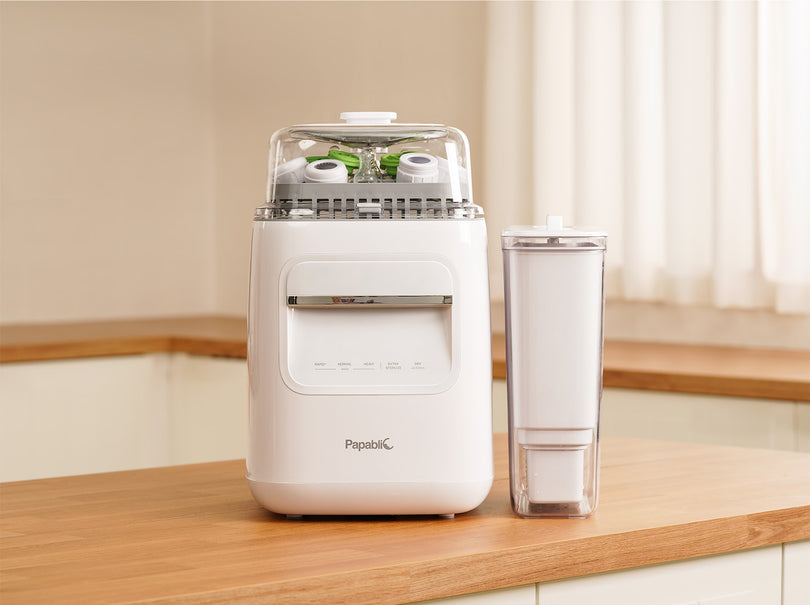
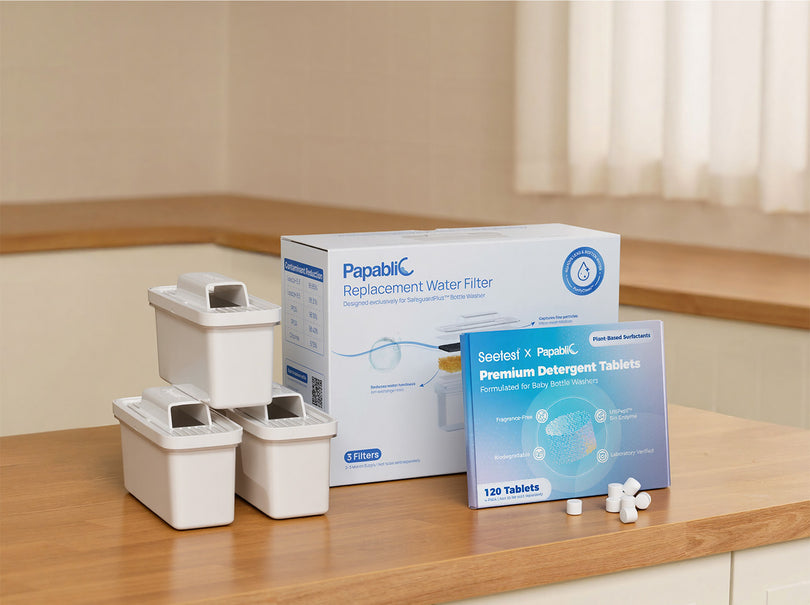
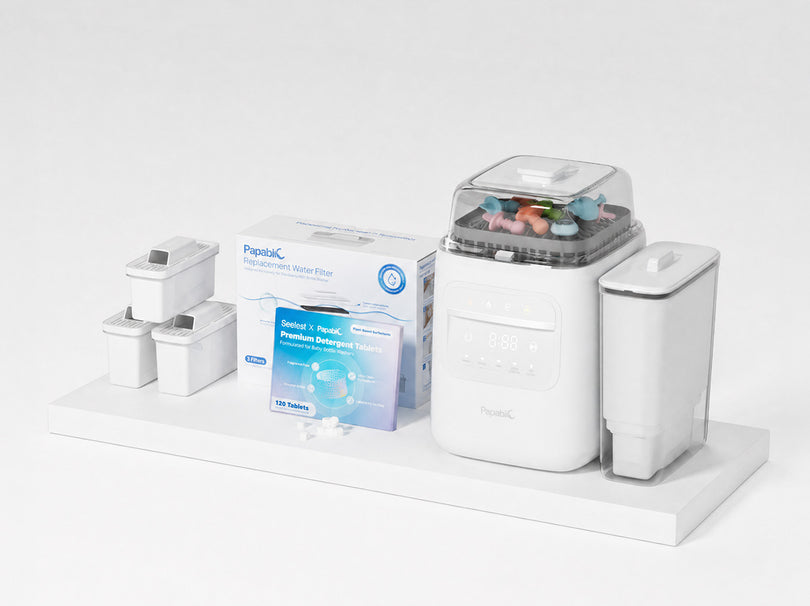
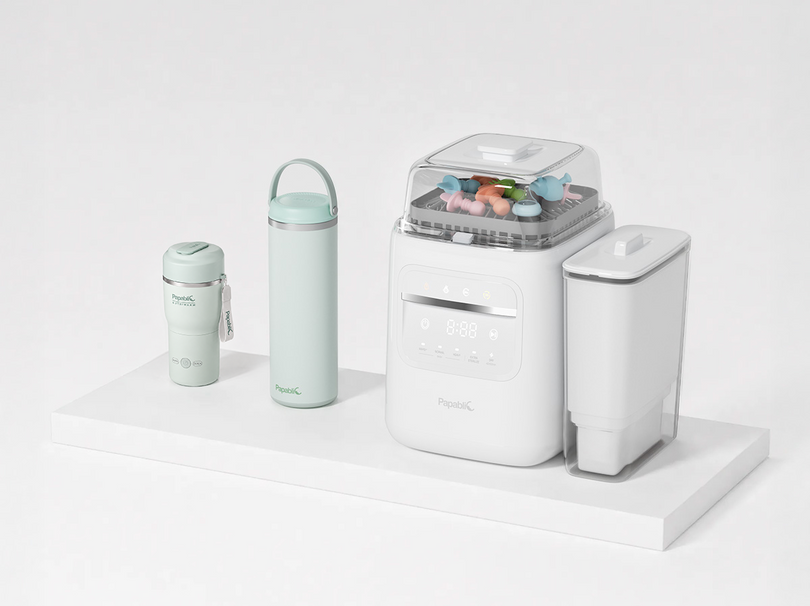
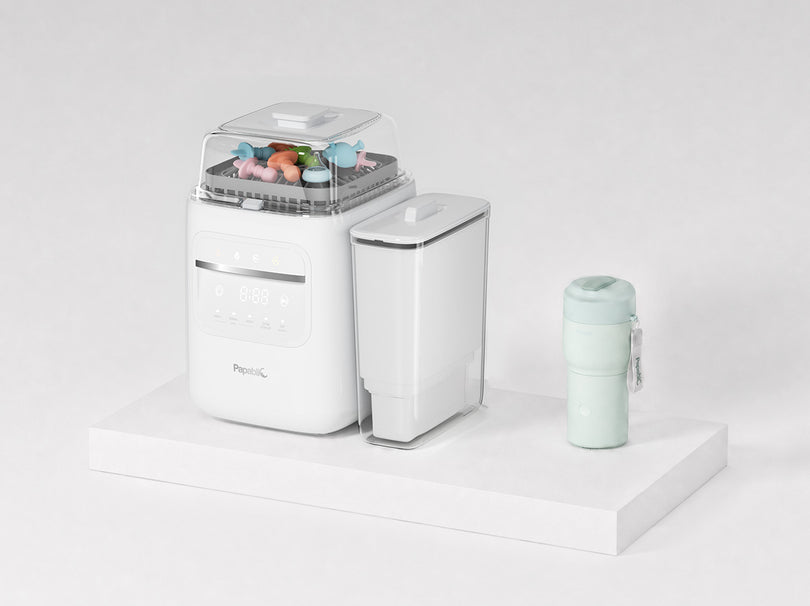
If boiling water every time feels like one more thing to remember, our Papablic SafeguardPlus™ Baby Bottle Washer System has a built-in PurifyClean™ filter that filters your tap water as part of the wash cycle itself. That way, you get an added layer of water filtration alongside the wash, sanitize, and dry steps, without adding a separate task to your routine.

In cases of an active boil-water/water safety advisory, or private well water use, the combination of sterilizing and using safe water matters more. These cases may justify continuing sterilization longer.
Everyday Cleaning and Drying Routine
If you choose to stop sterilizing your baby bottles every day, it's critical that you have a thorough everyday cleaning and drying routine, as this is what will control the bacteria day-to-day for healthy, full-term babies.
You should wash the bottles after every feed, using a dedicated bottle brush and wash basin reserved only for feeding items to avoid cross-contamination. Then air dry the bottle parts on a clean dishtowel or paper towel. While it's tempting to rub the parts dry with a cloth, that can actually transfer germs.
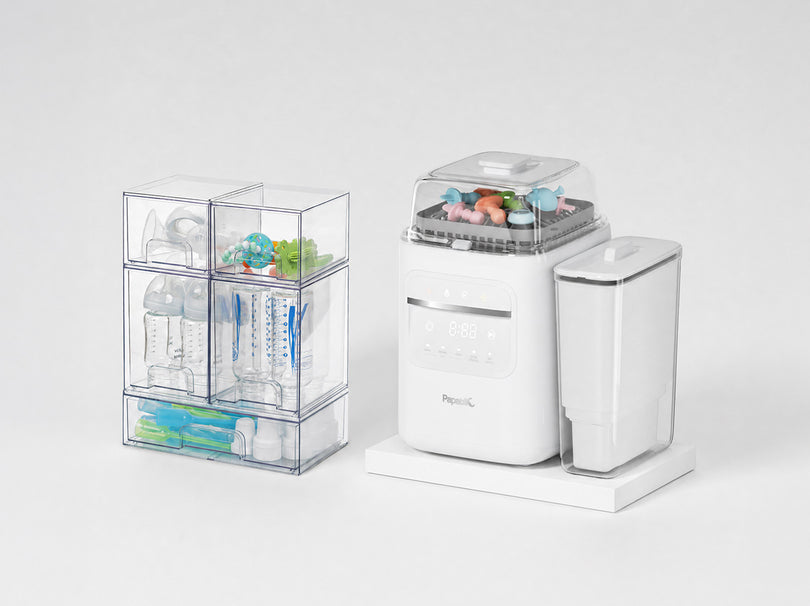
If you'd rather skip the nightly assembly line, we built the Papablic SafeguardPlus™ Baby Bottle Washer System to handle it for you. It filters, washes, sanitizes, dries, and stores up to 8 bottle sets in one cycle, so the routine above happens automatically.
Household Illness or Outbreak
After an illness in the household, you should temporarily resume sterilizing all bottles, nipples, and pacifiers daily to reduce your baby's risk of exposure or re-exposure.
Shared or daycare settings have higher communal germ exposure, so it’s sensible to continue sanitizing bottles in those settings, too.
What to Do Instead of Sterilizing Once You Stop
Once you stop sterilizing bottles daily, you should still clean them thoroughly after each feeding. Disassemble and wash all bottle parts in hot, soapy water with a dedicated brush, then air-dry fully and store them covered. You could also use a dishwasher’s hot-water cycle with heated drying to both clean and sanitize without the extra steps.
However, a dishwasher isn’t a perfect solution. Small parts like valves and nipples can slip through the rack or get trapped in tight crevices where residue and moisture linger, and a standard cycle without a sanitize setting may not reach a high enough temperature to sanitize effectively. Repeated cycles of high heat can also wear down certain plastics over time.
A bottle washer can take care of all of this for you in one go. Our guide to the best bottle washer breaks down what to look for, but the short version is that it should filter the water, then wash, sanitize, and dry every disassembled part in a single cycle.
Frequently Asked Questions
How Long Does the CDC Recommend Sterilizing Baby Bottles For?
The CDC recommends daily sanitizing for babies under two months old, premature infants, or babies with compromised immune systems. Daily sanitizing may not be necessary for older, healthy babies if the items are cleaned thoroughly after each use.
Is It Really Necessary to Sterilize Baby Bottles?
All reliable authorities, including the CDC, NHS, and AAP maintain that bottles should be sterilized at least once before use. After that, the guidance varies depending on the authority and the baby’s age and health. The CDC recommends sanitizing bottles daily for babies under two months old, with weakened immune systems, or premature infants.
At What Age Can I Stop Sterilizing Baby Bottles?
The CDC’s guidance says it is often fine to ease daily sterilizing after about 2–3 months if your baby is healthy and was born full-term. The NHS recommends continuing the practice daily for at least 12 months. Either way, confirm with your pediatrician based on your baby’s age, health, and water source.
Clean Bottles, Confident Feeding, Whatever Stage You're In
The guidelines around baby bottle sterilization recommend a gradual, risk-based shift. Extra diligence during the newborn period can ease into thorough washing as your baby grows and their immune system strengthens.
But even after easing up on daily sanitization, you should always clean your baby’s bottles after each feed, air dry them fully, and always use safe water to clean or mix with formula.
Our Papablic SafeguardPlus™ Baby Bottle Washer System can make this process simple, by filtering the water, and then washing, sterilizing, drying, and storing your baby bottles safely all within one piece of dedicated equipment.