





🎉 🎁 🛒
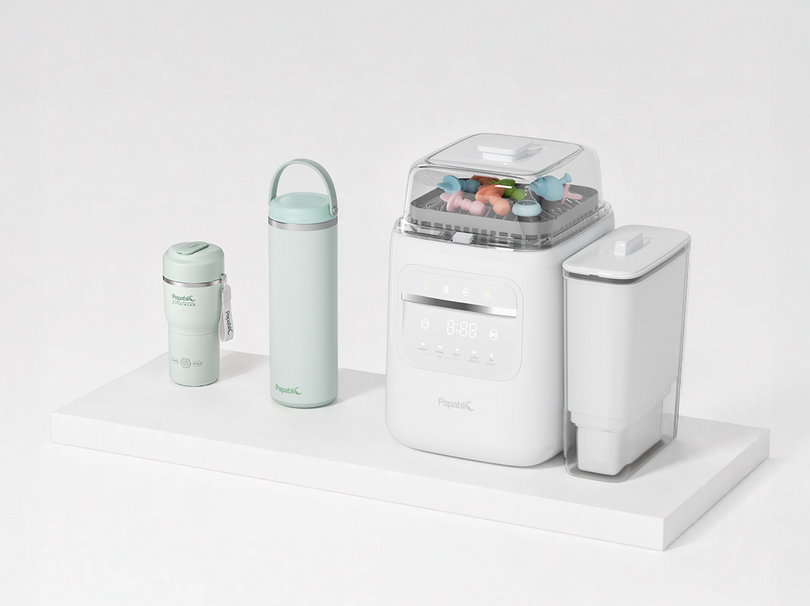
If you're upgrading your nursery setup during Black Friday 2026, visit the official Papablic website to save up to $180 and claim free gifts worth $189.99!
If your baby bottles are coming out with a faint white film—or you notice chalky spots forming on your washer’s heating plate and spray arms—hard water minerals are usually the culprit. Whenever tap water is heated and evaporated, calcium and magnesium slowly leave behind limescale.
Left alone, mineral buildup can dull bottle surfaces, slow down water flow, and make your machine work harder than it needs to. Here is a practical, step-by-step way to descale a baby bottle washer and keep hard water from taking over your routine.

🔍 Quick Overview: Descaling vs. Prevention
| Method | Best For | Pros | Cons |
| Descaling Tablets | Internal pipes & chamber | Safe for seals | Repeat every 1–4 weeks |
| Vinegar / Citric Acid | Heating plate spots | Cheap & fast | Can harm internal pumps |
| Distilled Water | Preventing scale | Zero mineral buildup | Expensive; heavy jugs |
| Built-In Filter (Papablic) | Tap water convenience | Spot-free; low upkeep | Swap filter every ~30 washes |
🧼 Step-by-Step: How to Safely Descale a Baby Bottle Washer
Before pouring anything into a bottle washer, check your user manual first. Many countertop bottle washers have internal pumps, sensors, and seals that behave differently from simple steam sterilizers, so it’s always smart to follow model-specific limits.
Step 1: Clear Out Parts and Rinse Loose Residue
Take out bottles, pump parts, racks, and removable spray arms or filters. Rinse off any trapped milk residue or debris under warm running water so nothing gets baked or pushed deeper during the cycle.
Step 2: Use a Descaling Tablet or Approved Descaling Solution
- Dedicated descaling tablets: Most bottle washers work well with manufacturer-approved descaling tablets or gentle citric acid solutions. Follow your manual on whether the tablet goes into the wash chamber or the water tank/reservoir.
- What to be careful with: While diluted white vinegar or citric acid is handy for wiping down stubborn spots, avoid pouring straight vinegar into water tanks or internal reservoirs unless your manual explicitly says it’s safe, as acid can wear down seals and parts over time.

Step 3: Run a Cleaning / Descale Cycle
Make sure the drain hose is positioned properly without kinks, close the lid, and run the machine’s self-clean, heavy wash, or descaling cycle.
Step 4: Wipe Stubborn Spots and Rinse Clean
If a few chalky spots remain around the heating plate, gasket edges, or water inlet, wipe them gently with a soft cloth or cotton swab dampened with mild descaling solution or diluted white vinegar, then wipe with clean water.
Step 5: Run a Fresh-Water Rinse and Air-Dry
If you used vinegar, citric acid, or any cleaning solution inside the chamber, run a plain-water rinse cycle afterward so no odor or residue stays behind. Afterward, leave the lid open for a bit so the inside dries completely.
⏱️ How Often Should You Descale? (Water Hardness & TDS Guide)
Descaling frequency depends directly on your local tap water hardness (measured in TDS / ppm) and how often you run washes.
If you use a machine with a built-in water filter like the Papablic SafeguardPlus™, you generally do not need frequent descaling because the filter traps hardness minerals before they build up—instead, you simply replace the filter regularly based on your water's TDS level and wash frequency.
| Water Hardness (TDS) | Unfiltered Descale | Filter Swap (Papablic) |
| 100–200 ppm (Most U.S. homes) | Every 3–4 weeks | Every 30–45 cycles |
| 201–300 ppm (Moderately hard) | Every 2 weeks | Every 15–30 cycles |
| 301–400+ ppm (Very hard) | Every 1–2 weeks | Use distilled water (350+ ppm) |
Common signs it’s time to clean or descale:
- Bottles and nipples dry with a cloudy, chalky haze.
- Spray arms lose pressure or leave milk film in corners.
- A lingering odor remains even after a normal wash (which often signals it’s time to descale or replace a saturated water filter).
🛡️ How to Prevent Hard Water Buildup (So You Descale Less)
Descaling fixes limescale after it forms, but stopping minerals before they enter the wash chamber saves far more time and money.
1. Cut Minerals Before They Hit the Wash
Standard bottle washers pump untreated tap water straight onto your bottles—forcing parents in hard-water areas to choose between frequent descaling or hauling heavy jugs of distilled water.
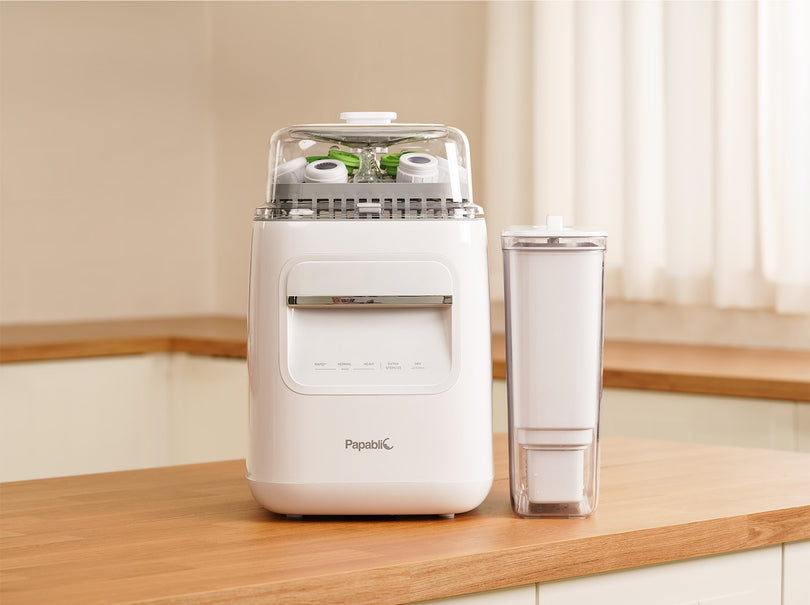
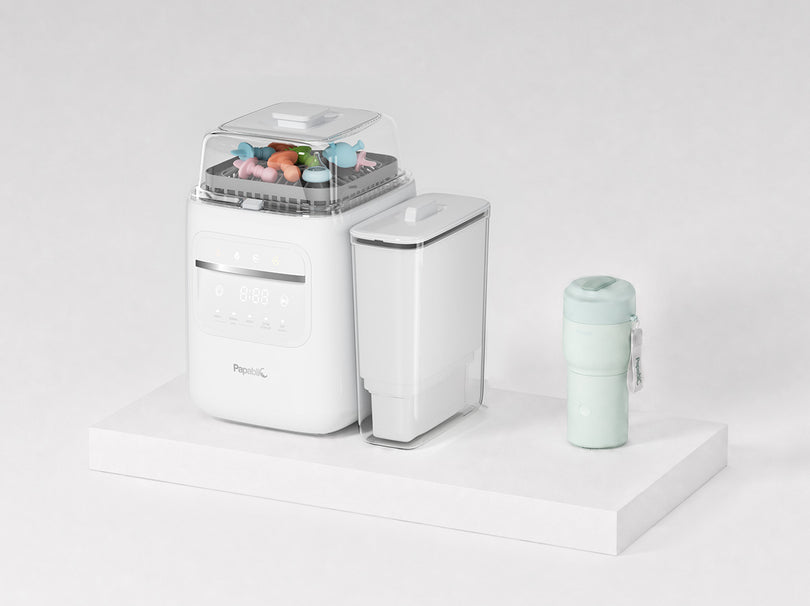
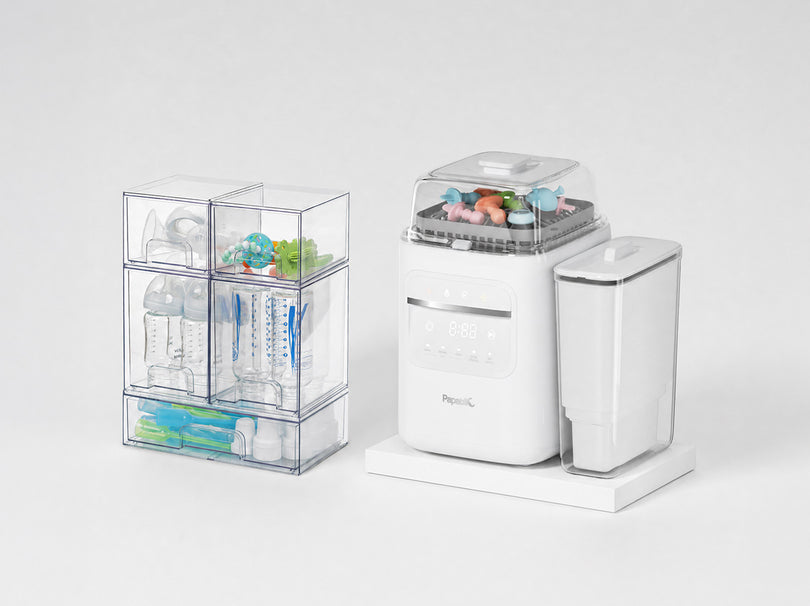
A machine with integrated filtration, like the Papablic SafeguardPlus™ (P8Plus), solves this at the source. Its 4-stage water filter softens tap water and reduces scale-causing minerals and lead before every wash—saving families roughly $800–$1,000 a year compared to buying bottled distilled water.
- 💡Black Friday 2026 Tip 🔥: If you're shopping during Black Friday, grab SafeguardPlus™ Filter & Tablet Refill Bundles alongside your washer to lock in lower maintenance costs for months.

2. Switch to Distilled Water in Extreme Hard-Water Areas (350+ ppm)
If you own a non-filtered bottle washer—or if your local tap water tests above 350–400 ppm TDS—using distilled or reverse-osmosis (RO) purified water prevents mineral buildup completely. While buying bottled water adds recurring cost, it keeps heating elements and spray nozzles clean in areas where tap water is too heavy for standard maintenance alone.
3. Empty Standing Water Daily
Avoid leaving unused tap water sitting in the supply tank between washes, and keep the lid slightly ajar after drying to prevent both mineral crusting and odors.
✅ Conclusion
Keeping hard water scale under control comes down to two habits: cleaning and descaling safely when buildup appears, and reducing mineral minerals before they reach your bottles. For parents who want less scrubbing, fewer cloudy bottles, and far less routine descaling, a filtered washer like the Papablic SafeguardPlus™ paired with scheduled filter swaps offers a simpler long-term routine—especially when stocking up on filters during Black Friday.
FAQs
Can I pour white vinegar into my baby bottle washer to descale it?
Only use diluted white vinegar on a cloth or cotton swab to wipe exposed heating plates or inlets. Do not pour vinegar directly into the water supply tank unless your manual specifically allows it, as acidic solutions can wear down internal pumps, seals, and water filters.
Why are my baby bottles coming out cloudy?
Cloudy residue is almost always dried calcium and magnesium from hard water—not leftover milk. Descaling your machine and switching to filtered or distilled water clears up mineral haze immediately.
Why does my bottle washer still smell after descaling?
If an odor lingers after a deep descale, your water filter may have reached its mineral capacity, or milk residue may be trapped inside spray arms. Scrub detachable spray arms and baskets, and install a fresh water filter.