





Republished from babylist

Bottle washers have become one of the more useful time-saving innovations in baby gear, taking a big chunk of daily cleanup off parents' plates. But not all washers are created equal. Some hold more bottles, others focus on drying or sanitizing, and newer models even filter the water used to wash them.
So which features are actually worth paying for? Here are five things to consider before choosing a bottle washer, including one thing that’s easily overlooked: the water you use to clean your bottles. Plus, we’ll take a closer look at how the Papablic SafeguardPlus handles a day’s worth of bottles for my formula-fed son.
1. Cleaning Performance: Does It Actually Get Everything Clean?
The biggest reason to buy a bottle washer is pretty obvious: You’re sick of wielding the bottle brush and want clean bottles without having to scrub them by hand. Bottles have plenty of places where milk residue can hide, especially around nipples, collars and any internal components like anti-colic vents or tubes. A good bottle washer should be able to reach those tricky areas without any pre-rinsing.
When comparing models, it’s not just about jet count or water pressure alone. Look at the full system overall: how the water jets are positioned for spray coverage, whether the washer has dedicated spaces for smaller parts and what types and lengths of cleaning cycles are available.

The Papablic SafeguardPlus completes a full wash, dry and sanitize cycle in about 1 hour and 22 minutes—roughly 8–10 minutes faster than previous models. It also offers three wash cycles depending on what you're dealing with: a 12-minute rapid wash, a 19-minute normal wash and a 45-minute heavy wash. The upgraded 12-minute rapid wash cuts seven minutes off of Papablic’s older bottle washer’s cycle and we love to see it, because when you’re juggling hungry babies and daily demands of life, every minute counts. The heavy wash cycle is there for messier situations, like discovering a forgotten bottle wedged under the car seat or one that's been sitting in the sink mingling with your leftovers since last night. (We've all been there: don’t smell it.) The normal cycle covers everyday cleanup, so you’ll likely be using it daily.


It's also worth knowing that a bottle, pump parts, and nipples can be clean and still look cloudy. Minerals in your water can leave behind spots or a hazy film, like you can see in the “before” part of the photo of our bottle nipples and pump parts above. Look for a bottle washer that incorporates built in filtration to tackle this specific buildup much better than your household dishwasher. Here’s a little bit more about why that matters.
2. Does it Filter the Water? (Because What's in Your Water Matters, Too)
Most of us think about detergent and water pressure when it comes to cleaning bottles. But the water itself matters, too. If you have hard water, you've probably noticed white spots on your dishes or chalky buildup around your faucets. That's caused by minerals like calcium and magnesium, which can also leave residue on bottles and inside your washer. And beyond minerals, tap water, while still safe to drink, can contain trace amounts of lead, chlorine (added to disinfect drinking water) and PFAS, sometimes called "forever chemicals" because they break down very slowly.

The Papablic SafeguardPlus tackles both water hardness and certain contaminants with its built-in PurifyClean water filtration system. According to Papablic, its filtration system has undergone independent testing by SGS, a third-party testing organization. It filters tap water in just one minute, reducing lead, PFAS, hardness minerals and other impurities before the wash begins. Papablic is so confident about water filtration that every order comes with a free TDS (Total Dissolved Solids) meter, which is a hand-held water testing device so you can test your water hardness before the machine filters it.
Editor’s note: I live in the suburbs of Los Angeles, and our water is notoriously hard. Check out the reading of the tap water BEFORE it was filtered through the SafeguardPlus—according to the TDS meter, water ranking between 300 and 400 will cause scale and mineral build up, and between 400 and 500 will taste unpleasant.
After running the water through the filter, I measured a TDS reading of around 20 ppm (significantly down from 300+). For me, the bigger takeaway is knowing that less mineral content is going into each wash, which can help reduce the mineral buildup that leads to cloudy water spots and limescale over time.

So why does this matter when it comes to washing bottles? For parents with hard water, it may mean fewer cloudy bottles and less limescale buildup over time, so parents can spend less time rewashing bottles or descaling their bottle washer. Bottle nipples come into contact with the baby‘s mouth, and pump parts come into contact with breast milk and mother’s skin—so keeping them as clean as possible makes sense.
3. Capacity: How Many Bottles Can You Wash at Once?
Bottle washer capacity can be surprisingly tricky. A machine might advertise room for several bottles, but that doesn't always tell you how many will fit alongside nipples, collars and other feeding accessories.
The SafeguardPlus holds eight baby bottles, with dedicated spaces for Dr. Brown's internal vent tubes (the green parts in the below photo) and room for all the nipples and lids on the top rack. For families feeding with bottles throughout the day, a larger capacity could mean running fewer loads. And if you're exclusively pumping or feeding multiples, being able to wash more at once may be especially helpful.
Before choosing a washer, think about how many bottles you typically use between washing sessions (for me with an 11-month-old also eating solids, we go through about 6 bottles per day.)

Also check compatibility with your specific bottle brand and size. A roomy washer isn't much help if your preferred bottles don't fit the way you expected. You also want to confirm the washer can safely wash all kinds of bottle materials: the SafeguardPlus handles it all, accommodating bottles of different brands, sizes, and materials—including plastic, glass, and silicone.
4. Drying & Sterilizing: What to Look For
Nobody likes grabbing a wet bottle– and a bottle washer’s built-in drying function means no drying by hand. Some machines leave behind droplets in bottle bottoms or around nipples, which means you may still need to allow extra air-drying time. This bottle washer has a dual-fan drying system (another upgrade from their previous generation of bottle washers), and because of that extra oomph from the second fan, now it can more thoroughly dry bottles, nipples and pump parts.
The Papablic SafeguardPlus goes a step further with steam sterilization and triple high-heat treatment that the brand says can reduce 99.99% of germs, which is backed by independent third-party testing. It also offers up to 72 hours of hygienic storage, keeping bottles dry and protected inside the machine until you're ready to use them.

Editor's note: You may hear the machine turn on every few hours while bottles are stored inside. That's the air-circulation system kicking in to help maintain hygienic storage conditions, not a new wash cycle starting. You can turn off the storage function if you'd prefer complete silence.
5. Setup and Maintenance: How Much Space & Upkeep Does it Need?
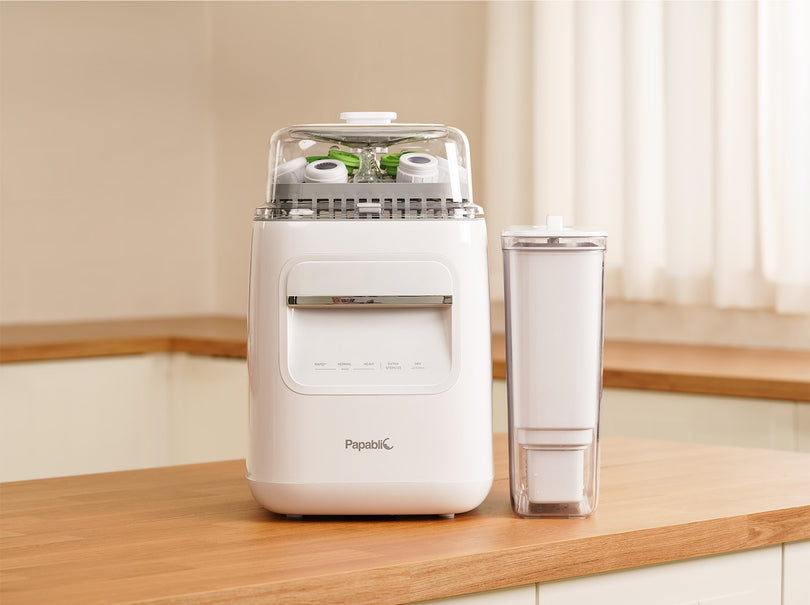
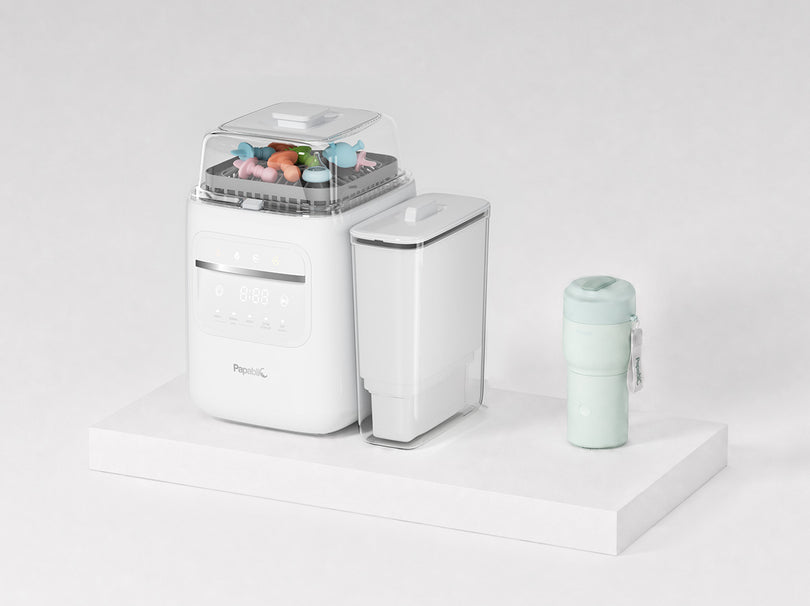
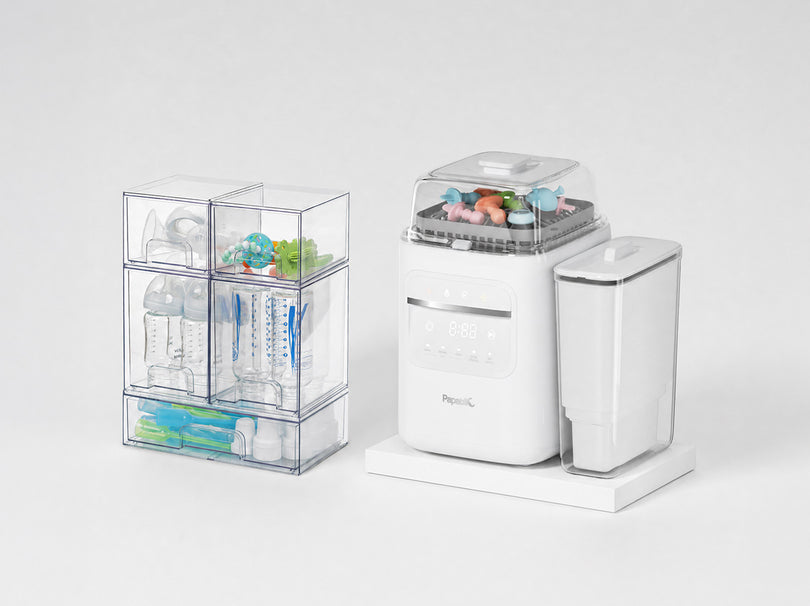
Before buying a bottle washer, think about where it's going to live. The Papablic SafeguardPlus is 17.1” tall and 10.7” wide, with a separate slim water tank that’s about 4.4” wide. The machine needs to be positioned near a sink so its drainage hose can empty the dirty water. You'll also need to manually fill the water tank, which is a lot easier when the sink is within reach. One unique thing about the Papablic water tank is that it is not attached to the main machine, so you have some flexibility in how you arrange it, which worked well for me in my tight kitchen (note water tank placed behind machine in the photo below).

And here's something else that's easy to forget when shopping for a bottle washer: The machine itself needs cleaning, too. Over time, hard-water minerals can accumulate on internal components, creating the chalky buildup known as limescale. How often you’ll actually need to scale your machine depends on a few factors, like how often you’re using the bottle washer, and local water conditions. The built-in filtration system helps reduce mineral buildup and the need to descale frequently compared with previous-generation bottle washers.
That doesn't mean you can skip descaling altogether, but it may mean less mineral residue to deal with along the way. The machine itself will also alert you when it’s time to change the filter; the hardness of your water is the biggest factor in how often you’ll need to replace it.
If your home has relatively soft water and you're not dealing with mineral buildup, you may want a machine that still offers the same solid and reliable cleaning performance at a lower price without built-in filtration. Just keep in mind that soft water doesn't necessarily mean contaminant-free water.
So, is a bottle washer worth it?
In my busy household with three kids, two dogs and two cats, a bottle washer absolutely makes sense: there’s plenty to clean up beyond bottles. But choosing the right washer for your family starts with what’s actually sitting beside your sink: how many bottles, how many vent pieces and, if you’re pumping, which parts need washing before your next session. For families looking for a more complete cleaning solution, especially those in hard-water areas, the SafeguardPlus’s built-in filtration is worth considering alongside capacity and drying.
The most useful upgrade is one that takes care of the parts of bottle washing you’re most ready to ditch—whether that’s scrubbing vent tubes, dealing with limescale or holding your nose while you tackling that forgotten bottle from the car. For me? I’m ready to hand off all of it; and with technology like this, I can. 💪
This article is sponsored by Papablic. Babylist’s free site, apps and emails are made possible by our sponsors. We limit our sponsored content to relevant partners that offer products and services we believe in and use ourselves.