
Table of contents
A water filter can sometimes develop an unusual odor during use. A slight odor from a new filter may be normal, while an odor that develops after repeated use can have several possible causes, including filter life, water conditions, filter media, cleaning, and storage.
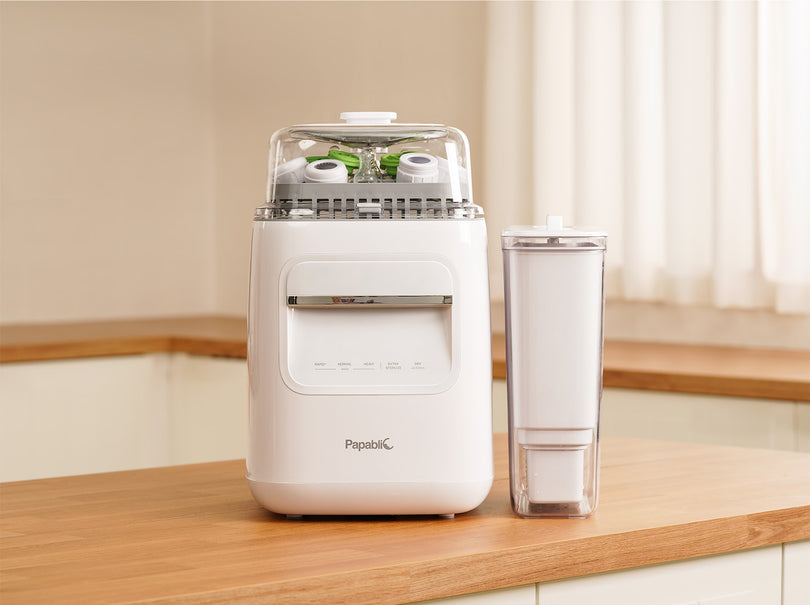
For the Papablic SafeguardPlus™(P8Plus) Baby Bottle Washer System, understanding what may be behind an odor can help you determine what to do next. Start by cleaning the system and rinsing the filter. If the odor persists after cleaning and rinsing, replace the filter.
Water quality is another important part of the picture. As tap water conditions vary from one household to another, filter life can also vary.
Why Does a Water Filter Develop an Odor?
There is not always one single reason why a water filter may develop an odor. Filtration media interact with substances in the water over time, while cleaning, moisture, storage, and the surrounding environment can also affect the condition of the filter.
Filter life
Water filters have a finite service life. Many filtration systems use carbon, charcoal, or other filtration media to reduce impurities. Some substances are mechanically trapped by the filter, while others adhere to the surface of the filter media. As the available capacity is used, the filter eventually needs to be replaced according to the manufacturer's guidance. (NSF — Changing Water Filters)
For SafeguardPlus™(P8Plus), the 30-cycle replacement guideline is based on average water conditions. It should be understood as a general baseline rather than a guarantee that every filter will last exactly 30 wash cycles.
Water quality
The water going into your filter can affect how quickly the filter reaches its capacity and how it performs over time. Tap water contains different levels and types of dissolved substances depending on where you live. When the filter has to remove higher levels of dissolved minerals and other impurities, it may reach capacity sooner. As the filter becomes more heavily used, changes in its condition can contribute to an unusual odor developing in the filter itself.
One useful way to understand your household water is TDS, or total dissolved solids, which measures the amount of dissolved material in water. Water hardness is related primarily to dissolved calcium and magnesium, while TDS covers a broader range of dissolved substances.
For SafeguardPlus™, filter life can therefore vary from one household to another. The 30-cycle replacement guideline is based on average water conditions, but filters may reach capacity sooner or later depending on local water quality and usage. In higher-TDS water, paying attention to filter condition and replacement timing becomes especially important.
Milk or other organic residues
Milk residue is another factor worth considering in a bottle-feeding environment. The U.S. Food and Drug Administration explains that milk is an excellent growth medium for many microorganisms because it is rich in nutrients, high in moisture, and relatively neutral in pH.
FAO guidance on dairy equipment similarly explains that milk residues left on utensils can provide favorable conditions for bacterial growth and recommends thorough cleaning and drying of milk-contact equipment.
This does not establish that milk particles are the direct cause of odor inside a filter. However, the general relationship between milk residue, microbial growth, and the need for thorough cleaning is well established, which is why keeping the bottle washer clean and dry is important.
Storage and usage
Moisture and storage conditions can also affect a water filter's condition. EPA guidance on household water treatment systems notes that bacteria can collect and multiply on the surface of carbon filters, and that periods of non-use can promote bacterial growth that may lead to unpleasant tastes or odors in filtered water.
For SafeguardPlus™, when a filter is not in use, avoid leaving it in conditions where moisture can remain trapped for extended periods.
How Long Does a Papablic SafeguardPlus Filter Last?
There is no single filter-life number that applies to every household. The Water TDS & Filter Life Guide estimates filter life according to the TDS range of the tap water.

These are estimated ranges, not fixed guarantees. Filter life varies by water quality and use.
The commonly referenced 30-cycle guideline therefore represents average water conditions rather than a universal replacement point. A household with lower-TDS water may see a longer filter life, while a household with higher-TDS water may need to replace the filter sooner.
What Should I Do If My Filter Smells?
If your filter develops a fishy or unusual odor after use, follow the maintenance steps below before assuming that the filter needs immediate replacement.
Step 1: Clean the system
Remove the filter and set it aside. Add one descaling tablet to the water tank, fill the tank with warm water at approximately 45°C / 113°F, and allow the tablet to dissolve fully. Run the Heavy Wash cycle, then leave the lid fully open so the system can air-dry completely.
If a strong odor remains, use the intensive odor-removal process: disassemble and scrub the spray arms and baskets, wipe the inner cavity and water tank with a cloth soaked in descaling solution, then run an empty Quick Wash cycle.

Step 2: Rinse the filter
After cleaning the system, check the filter.
Flush the filter under running water for 15 seconds. If you are installing a new filter, make sure it is properly seated in the water tank. Air trapped beneath the filter can cause it to float and prevent it from sitting properly.

Step 3: Run the machine before using it again
After rinsing the filter and completing the appropriate cleaning process, run the machine before returning to normal bottle-washing use.
Step 4: Replace the filter if the odor persists
If the odor remains after cleaning the system, rinsing the filter, and running the machine, replace the filter.
This sequence is important because an unusual odor does not automatically mean that the filter needs to be replaced immediately. Cleaning, filter condition, water quality, usage, and service life can all be relevant. You can also contact our support team if you need assistance.
When Should I Replace My Filter?
Filter replacement should be based on several factors rather than one fixed number.
- Persistent odor: If an unusual or fishy odor remains after the system has been properly cleaned and the filter has been rinsed, replace the filter.
- Number of wash cycles: The 30-cycle guideline is based on average water conditions, while the estimated lifespan varies according to TDS.
- Water condition: According to the official guide, estimated filter life ranges from 60 cycles at 000–100 TDS to 5–15 cycles at 301–400 TDS.
- Usage and maintenance: Frequent use, cleaning practices, and storage conditions can all affect the overall filter experience.
NSF also recommends following the manufacturer's instructions for when a specific filter should be changed because filter life varies by system and use.
How to Get More Life From Your Water Filter
Getting the most from your filter starts with regular system maintenance and paying attention to your household water conditions.
Keep the System Clean
Regular system cleaning is also important. Periodic deep descaling can help maintain washer performance and address mineral buildup. If a strong odor remains after cleaning, check the filter and make sure it is properly seated in the water tank. If the odor continues after cleaning, rinsing, and running the machine, the filter may need to be replaced.
Pay Attention to Your Water Quality
Your household water conditions can also affect how long a filter lasts. Filter-life guidance is based on TDS levels and average water conditions. If your water has a TDS level above 350 ppm and is significantly shortening filter life, distilled or low-TDS purified water is recommended without the filter.
Consider Buying a Multi-Filter Pack
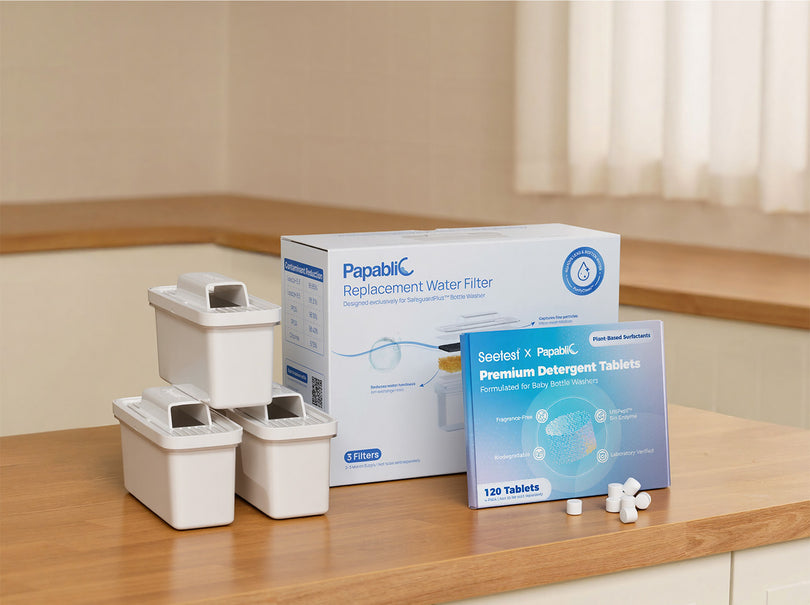
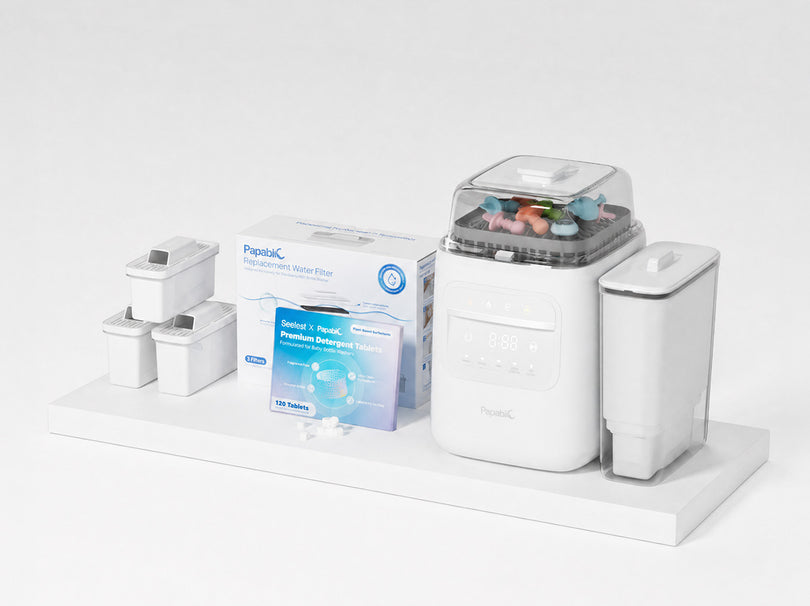
If you plan to use your SafeguardPlus™ regularly, consider purchasing a multi-filter pack when you buy your bottle washer. Having replacement filters available means you can replace a filter when it reaches the end of its useful life without interrupting your regular bottle-cleaning routine.
This can be especially convenient for households with higher-TDS or harder water, where a filter may reach capacity sooner. Keeping replacement filters on hand also means you can respond promptly if a filter needs to be replaced because of fishy odor or other signs that it has reached the end of its useful life.

- Shop the Papablic SafeguardPlus™ now and get a gift bundle worth $109.99.
- Limited to 200 units, first‑come, first‑served — this bonus offer ends once supplies are gone.
What Papablic Is Doing to Improve the Filter Experience
We continuously evaluate filter materials, performance, and service life across different water conditions.
Customer feedback helps us identify opportunities to further improve the SafeguardPlus™ filter experience. As improvements are validated and introduced, we will continue updating our product guidance so families have clear information about filter maintenance, replacement, and water-quality considerations.

FAQs
Why does my Papablic filter smell fishy?
A fishy or unusual odor can have several possible causes, including filter service life, water conditions, system maintenance, or other factors affecting the filter environment.
If an odor develops after use, fully rinse the filter and run the machine before using it again. If the odor persists after cleaning and rinsing, replace the filter.
Is an odor from a new water filter normal?
A slight odor from a new filter can be normal. Follow the filter-rinsing and installation instructions before use.
What should I do if my filter develops an odor after use?
Start by cleaning the SafeguardPlus™ system. Then fully rinse the filter under running water for 15 seconds and run the machine before using it again. If the odor persists, replace the filter. You can also contact our support team if you need assistance.
How long does a SafeguardPlus™ filter last?
Filter life varies according to water quality and usage. Under the official Water TDS & Filter Life Guide, estimated filter life ranges from 5–15 wash cycles for water with TDS of 301–400 ppm to up to 60 wash cycles for water with TDS of 000–100 ppm.
Does TDS affect filter life?
Yes. The filter-life guidance states that water conditions can affect how quickly the filter reaches capacity. In harder-water areas with TDS above 300 ppm, the filter may work harder to reduce higher levels of minerals, which can shorten its lifespan.
What if my water has a TDS above 350 ppm?
If high TDS is significantly shortening filter life, distilled or low-TDS purified water is recommended without the filter.
Can I use distilled water without the SafeguardPlus™ filter?
Yes. When high TDS is significantly shortening filter life, distilled or low-TDS purified water can be used without the filter.