




Staring at a sink full of bottle parts at 11 pm, you’ve probably wondered if the dishwasher could handle it instead of handwashing. The short answer is often yes, but with caveats around material, parts, and what happens after the cycle ends.
In this guide, we cover which bottle pieces are dishwasher safe, how to load them correctly, and the post-cycle steps that matter just as much as the wash itself.
Can Baby Bottles Go in the Dishwasher?
Most baby bottles can go in the dishwasher, but that doesn’t always mean the dishwasher is the best method.
Many plastic and glass bottles have dishwasher-safe labels, though smaller loose parts like valves, membranes, and silicone nipples can wear out due to high dishwasher heat cycles.
Check the manufacturer's label on your specific bottles before loading anything into the dishwasher. Materials vary, and so does heat tolerance. As a general guideline:
- Glass bottles: typically dishwasher-safe on any cycle, including high heat, without warping or degrading.
- Hard plastic bottles (BPA-free): usually safe on the top rack and away from direct heating elements.
- Silicone nipples and valves: often dishwasher safe, but wears down faster with repeated high heat cycles.
- Small parts (rings, membranes): easy to lose or melt if not contained.
|
Which Baby Bottles and Accessories Are Dishwasher Safe?
Glass bottles hold up better than plastic long-term because they won’t warp, develop surface scratches, or absorb odors from repeated dishwasher cycles the way plastic gradually does. If you’re deciding between materials for your next bottle purchase, our breakdown of glass vs. plastic baby bottles covers durability, weight, and cleaning differences.
Plastic bottles can be dishwasher-safe but need closer attention. When plastic bottles get cloudy or finely scratched from months of high-heat exposure, it creates more surface area for milk residue and bacteria to hide in.
|
Material |
Dishwasher Safe? |
Best Rack Position |
Watch Out For |
|
Glass |
Yes |
Top or bottom rack |
N/A |
|
Hard plastic (BPA-free) |
Usually |
Top rack only |
Cloudiness and surface scratches over time |
|
Silicone nipples and valves |
Often |
Top rack in a mesh bag |
Folding, trapped water pockets |
|
Small parts (rings, membranes) |
Yes |
Mesh bag only |
Slipping through rack slots or melting |
How to Wash Baby Bottles in the Dishwasher Safely
- Rinse. A quick rinse under running water removes the bulk of milk residue before the wash cycle bakes it on.
- Fully disassemble. Separate the bottle body, nipple, collar, and valve because anything left connected will create pockets that the spray arms can’t reach.
- Place small parts in a closed basket or mesh bag. Prevent them from falling into the filter and protect them against heating elements.
- Use a hot water cycle, ideally with heated dry. Higher temperatures kill more bacteria than cooler cycles and do a better job on milk residue.
- Separate from greasy cookware. Shared loads with oily pans or dishes increase the odds of residue transferring onto bottle surfaces.
- Let everything dry completely. Remove all components from the dishwasher and let them air dry before storage or use.
Common Dishwasher Mistakes That Leave Baby Bottles Dirty
Nina Spears (certified birth and postpartum doula, and founder of Baby Chick®) has seen these mistakes repeatedly with the families she works with. In the Reel below, she calls out three that come up specifically with bottle cleaning routines: never thinking about the water, washing but skipping sterilizing, and assuming that if a bottle looks clean, it is clean.
Here's what those mistakes, and a few others, look like in a dishwasher routine:
- Skipping the pre-rinse. Dried milk residue left behind can shield bacteria from the wash.
- Leaving parts assembled. The inside threads are one of the most bacteria-prone areas on the bottle, and leaving the parts attached prevents water from reaching those parts.
- Using a utensil basket. Small parts can easily slip through the slots and get lost in the filter or melt.
- Overcrowding. Leave room between bottles so the spray arms can reach every surface.
- Letting bottles sit wet. Pooled water inside a closed dishwasher (especially overnight) can create a damp environment that bacteria thrive in.
- Assuming a clean-looking bottle is a clean bottle. Milk residue and bacteria can hide in bottle threads, valve folds, and the micro-scratches that build up on plastic over time.
- Washing but skipping the sterilizing step. Dishwashers clean, and a hot cycle can help sanitize, but they don't sterilize. For newborns or after illness, a dedicated sterilizing step matters (more on that below).

Dishwasher vs. Handwashing: Which Cleans Baby Bottles Better?
Handwashing gives you direct visual control while cleaning. You can see residue, target threads and crevices with a dedicated bottle brush, and inspect each piece before it goes back into your rotation. It’s well suited to narrow-necked bottles or valves with unusual shapes that a dishwasher’s spray arms may miss.
Dishwashers provide consistency and convenience, especially when you have to wash several bottles per day. High water temperatures help reach areas a hand wash might miss, and a heated dry cycle reduces the amount of manual handling that can reintroduce germs after the wash is complete.
Neither is automatically better. Handwashing wins for intricate parts, dishwashers win for volume, and many parents use both depending on what the day looks like.
Bottle Washer vs Dishwasher: What Busy Parents Should Consider
A dedicated bottle washer is built specifically around the shape and size of feeding equipment. It sits in a category of its own, offering the convenience and consistency of a dishwasher with the precision and care of handwashing.
|
Dishwasher |
Bottle Washer |
Handwashing |
|
|
Designed for baby items |
No |
Yes |
Yes, with care |
|
Typical cycle time |
60–120 minutes |
15–25 minutes |
5–10 min per set |
|
Small parts handling |
Needs a basket or mesh bag |
Built in |
Full control |
|
Drying included |
Sometimes |
Usually built in |
Requires air dry |
|
Best for |
High-volume households |
Daily feeding routines |
Quick single washes |
Do You Still Need to Sterilize Baby Bottles After Dishwasher Cleaning?
The terms cleaning, sanitizing, and sterilizing are often used interchangeably, but they describe three different levels of germ removal.
Cleaning removes visible milk residue and dirt using soap and hot water or a dishwasher cycle.
Sanitizing reduces microorganisms like bacteria to safe levels, typically using heat or a sanitizing solution.
Sterilizing is the most thorough level. It eliminates the broadest range of microorganisms, usually through steam, boiling, or a dedicated sterilizing appliance cycle.
A dishwasher cleans, and if it has a hot-water cycle with heated drying, it can go a long way toward sanitizing too, but it’s not designed or certified to sterilize the way a dedicated sterilizer is.
If your baby is under 2 months old, was born early, or has a weakened immune system, the CDC advises sanitizing feeding items daily in addition to your normal cleaning routine.
For healthy babies outside that specific group, you can take a different approach to cleaning and sterilizing baby bottles. Thorough dishwasher cleaning is generally enough day to day, with sanitizing reserved for after an illness or if water quality is a concern.
Why Some Parents Choose a Dedicated Baby Bottle Washer
A standard dishwasher works for many families, but it shares loads with regular dishes, sprays in a generic pattern not specific to bottle shapes, and doesn’t include a built-in sterilizing function.
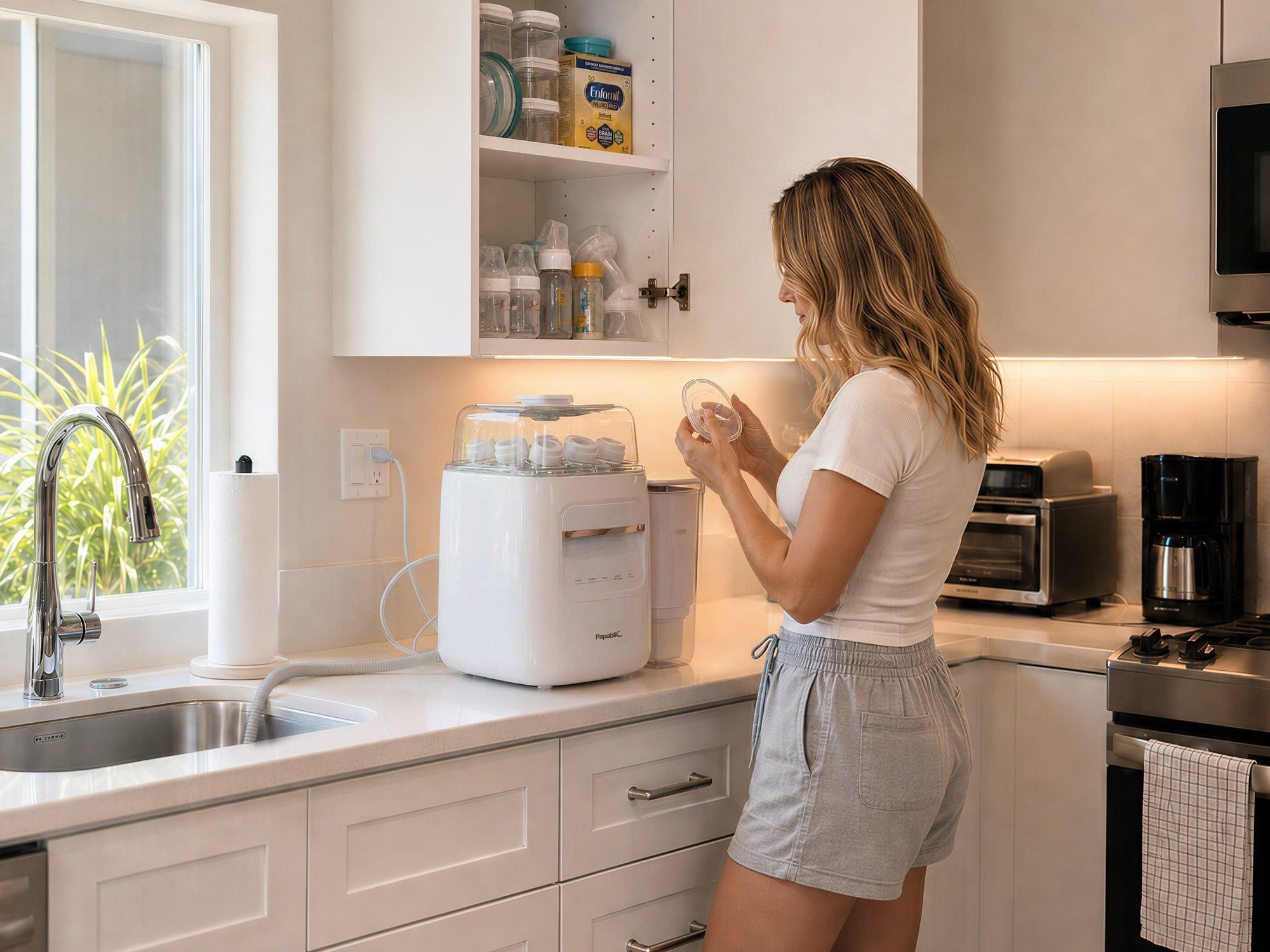
A dedicated bottle washer handles the full routine in one cycle, and ours is built specifically for baby feeding equipment.
The Variable Your Dishwasher Can't Control
Nina Spears' first mistake from the earlier Reel (“never thinking about the water”) points to something a dishwasher simply isn't designed to address.
Whether you're running a standard cycle or a high-temp sanitize program, the water going in is the same unfiltered tap water used for everything else in the kitchen.
Hard water minerals leave a residue that builds up on bottle surfaces with repeated cycles, and more surface texture means more places for milk residue to settle. It's also why many parents notice cloudy bottles over time, even with a consistent washing routine.
Why the SafeguardPlus™ Baby Bottle Washer System Takes a Different Approach
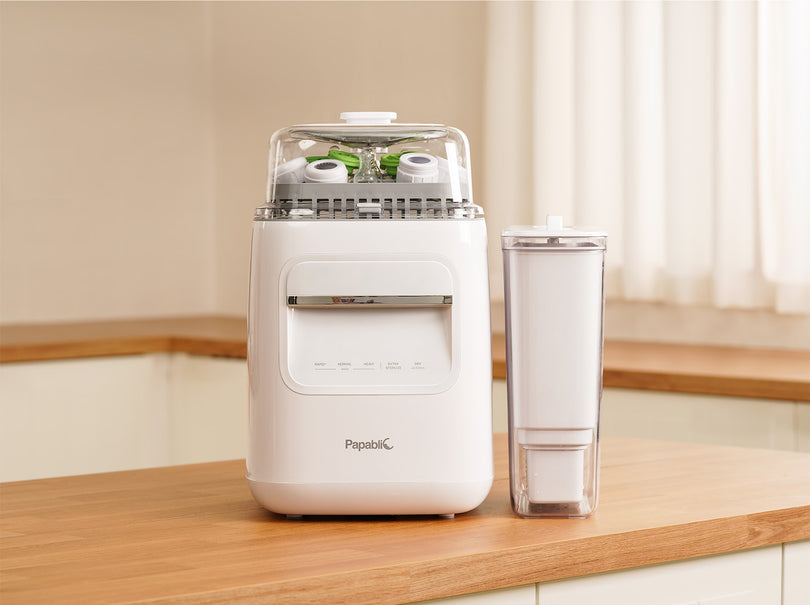
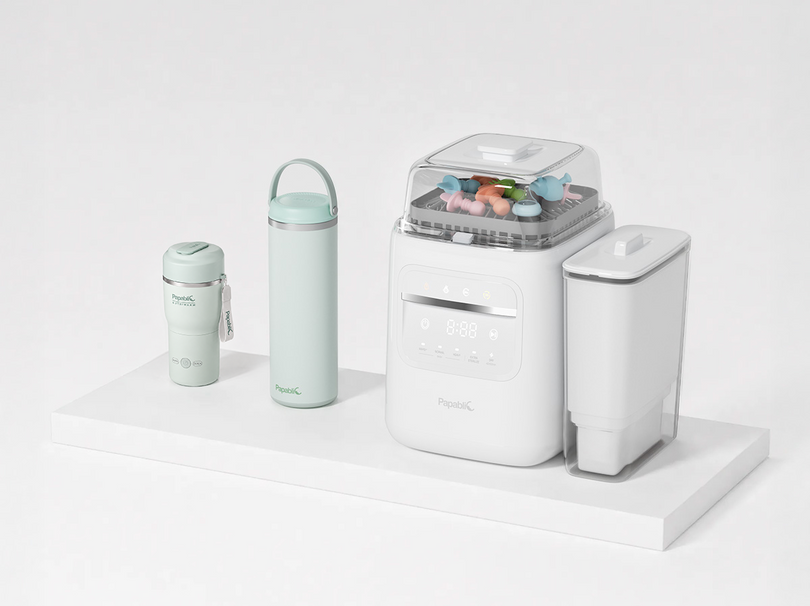
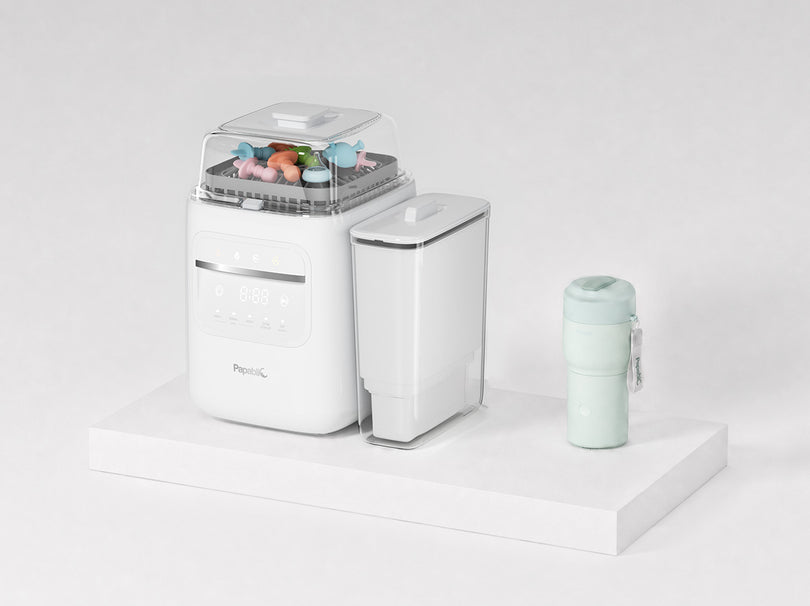
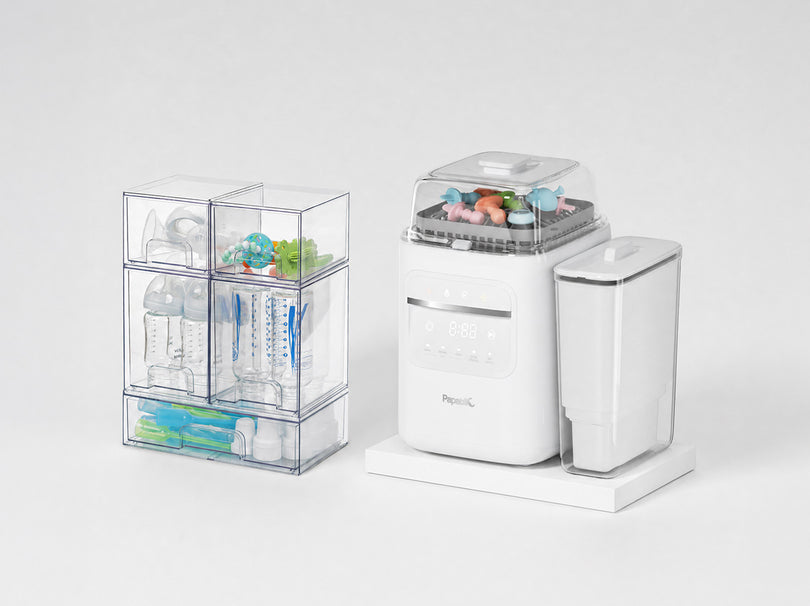
Our SafeguardPlus™ Baby Bottle Washer System is the first bottle washer with a built-in water filtration system. It filters tap water before the wash cycle even begins to address residue-causing minerals and contaminants like lead and PFAS before they even touch your baby’s bottles.
From there, it washes, sterilizes (eliminating 99.9% of harmful germs), and dries in one connected cycle. It can fit up to 8 sets of bottles at once and provides 72-hour hygienic storage afterward.
You won’t have to rely on a dishwasher’s mixed load or squeeze in an extra sterilizing step on an already busy day.

Frequently Asked Questions
Why Can't You Use a Dishwasher to Wash Baby Bottles?
In many cases, you can use a dishwasher for baby bottles as long as the parts have a dishwasher-safe label and are fully disassembled first. The one exception is small valves and membranes, which can slip through dishwasher racks or melt against the heating element if they’re not contained.
Can I Put My 3-Month-Old Bottles in the Dishwasher?
Yes, dishwasher-safe bottles are fine for a healthy 3-month-old once disassembled and rinsed. The CDC's daily sanitizing recommendation is for babies under 2 months; at 3 months, regular dishwasher cleaning is generally sufficient for healthy babies.
Does the Dishwasher Count as Sterilizing?
Not exactly. A hot-water dishwasher cycle cleans thoroughly and can help sanitize, but it’s not certified to sterilize the way a dedicated steam sterilizer is. If you need true sterilization, use a separate sterilizing step rather than relying on the dishwasher alone.
Wash Smarter, Dry Thoroughly, Feed With Confidence
Most baby bottles and accessories are safe to go in the dishwasher once you know which parts need a protective basket, how to load them, and what to do after the cycle ends. Rinse first, always disassemble, and let everything air dry fully before storage or use. These three habits can help you avoid most of the common mistakes that leave bottles less clean than they look.
If you want to skip the guesswork and extra steps, explore the SafeguardPlus™ Baby Bottle Washer and see how it fits into your feeding routine.