




You know cleaning and sterilizing your baby's bottles matters, but knowing that and feeling confident you're doing it right are two different things. Are you boiling long enough? Loading the sterilizer correctly? Using the right method for your baby's age?
It doesn't have to be complicated. In this guide, we walk through three methods parents rely on most (boiling, steam, and bleach solution), explain what cleaning, sanitizing, and sterilizing each do, and help you build a routine you can trust.
Cleaning, Sanitizing, and Sterilizing: What's the Difference?
These three terms get used interchangeably, but they mean different things. Getting them right matters for your baby's health.
-
Cleaning removes visible residue, milk film, and food particles from bottle parts. You do this with hot, soapy water and a bottle brush after every single feed. Cleaning alone doesn't kill bacteria, but it's the essential first step before anything else.
-
Sanitizing reduces bacteria to a safer level. Boiling water and bleach solutions both sanitize. For most healthy, full-term babies, regular cleaning plus daily sanitizing covers what's needed. It's the standard baseline for newborns especially.
- Sterilizing goes further, eliminating microorganisms at a higher level than sanitizing. Steam sterilization is the most common home method, and it's what dedicated bottle sterilizers use. For a deeper look at the process, our guide to the science of bottle sterilization explains exactly what happens at each stage.
How Often Should You Clean and Sterilize Baby Bottles?
For most healthy, full-term infants, washing bottles thoroughly after each feed is the foundation. Beyond that, sanitizing or sterilizing is recommended:
- Once daily for newborns under 2 months
- After your baby has been sick
- When using second-hand bottles for the first time
- Any time a bottle has been sitting unused for a few days
For parents of premature or NICU babies, the need for careful bottle hygiene is even more pressing, and daily sterilizing stays important for longer. The good news is that a consistent routine covers most of what's needed.
Quick Reference: When to Wash vs. Sanitize vs. Sterilize
|
Situation |
What to Do |
|
Newborn (under 2 months) |
Wash + sanitize or sterilize daily |
|
After illness |
Full sterilization cycle |
|
Second-hand bottles (first use) |
Full sterilization cycle |
|
Bottle unused for several days |
Full sterilization cycle |
|
Healthy infant (3–6+ months) |
Thorough washing; sterilize as needed |
Once your baby is older, the need for daily sanitizing decreases. Babies' immune systems develop gradually over the first year, and by around 3 to 6 months, most healthy, full-term infants have built enough immune function that daily sanitizing is no longer critical.
According to the CDC, daily sanitizing may not be necessary for older, healthy babies whose feeding items are cleaned carefully after each use. Regular cleaning takes over as the priority. For a full breakdown of why cleaning and sterilizing your baby bottles matters, we cover the reasoning in detail.

How to Clean Baby Bottles by Boiling
Boiling is a reliable, no-equipment method. Keep in mind that boiling sanitizes bottles rather than fully sterilizing them. It's very effective for healthy infants, though the temperature and contact time aren't as controlled as steam sterilization.
- Wash all bottle parts with hot soapy water and rinse thoroughly.
- Place all parts in a large pot and cover completely with cold water. Check for air pockets trapped inside nipples or valves.
- Bring the water to a full rolling boil over high heat.
- Boil for at least 5 minutes.
- Remove parts with clean tongs. Don't touch the insides of bottles, nipples, or caps.
- Place on a clean drying rack or fresh paper towel. Air dry fully — pat drying with a cloth can reintroduce bacteria.
Use boiled bottles within 24 hours after they're completely dry. Leaving them out too long gives bacteria a chance to resettle.
|
How to Sterilize Baby Bottles with Steam
Steam sterilization reaches higher temperatures than boiling water, making it a more thorough method for eliminating microorganisms from all bottle surfaces.
- Wash all bottle parts with hot soapy water and rinse thoroughly.
- Fill your steam sterilizer with the exact amount of water specified in its instructions. Too much or too little may affect the cycle.
- Load bottles and parts with openings facing down so steam can circulate through all surfaces.
- Run the full sterilization cycle as directed by the manufacturer.
- Leave the lid closed once the cycle finishes. Bottles stored sealed inside the sterilizer stay protected for longer.
- Remove and reassemble parts with clean, dry hands right before a feed.
Our Papablic Baby Bottle Sterilizer and Dryer is a straightforward steam sterilizer that handles the sterilizing and drying in one cycle. It's a solid choice when you want something reliable without the manual setup of stovetop boiling.
While the Papablic Baby Sterilizer & Dryer is one of our best-selling products, it only sterilizes and dries equipment. Of course, some parents may find this works for their routine, but many parents are opting for our latest product, the Papablic SafeguardPlus™ Baby Bottle Washer System, which goes one step further thanks to its washing feature and water filtration system.
Not sure which sterilization method is right for you? Our steam vs. UV sterilizer guide walks through the differences clearly.
How to Sanitize Baby Bottles with a Bleach Solution (Last Resort)
A diluted bleach solution is a CDC-approved sanitizing method and a practical option when boiling or steam sterilization isn't available — when travelling, during a power outage, or any time your usual setup isn't accessible. Use unscented bleach only.
- Wash all bottle parts with hot soapy water and rinse thoroughly.
- In a clean wash basin, mix 2 teaspoons of unscented liquid bleach per gallon (16 cups or 3.8 L) of water.
- Submerge all bottle parts fully. Check that no air pockets have formed inside nipples or valves.
- Soak for at least 2 minutes.
- Remove parts with clean tongs. Don't rinse — rinsing will recontaminate the bottle.
- Place on a clean drying rack and air dry completely.
Make a fresh bleach solution each time. Never mix bleach with other cleaning products.
Methods at a Glance
Not sure which method fits your situation? Here's a quick comparison:
|
Method |
Equipment needed |
Effectiveness |
Best for |
Avg. time |
|
Boiling |
Large pot, clean water, stove top |
Sanitization |
Healthy full-term babies |
Boil 5 minutes + air dry |
|
Steam sterilizer |
Sterilization |
Newborns, Premature babies, illness, immunocompromised infants |
12-minutes in rapid mode |
|
|
Bleach solution |
2 teaspoons unscented bleach, 1 (16 cups or 3.8 L) gallon water |
Sterilization |
When boiling or steam isn’t available |
Soak 2 minutes + air dry |
How a Dedicated Bottle Washer Goes Further
Boiling and bleach solutions work. But each manual method asks something of you: a pot, a timer, tongs you've cleaned, and attention to the stove. When you're in the throes of life with a newborn, that mental load adds up quickly.
There's a consistency issue with manual methods too. Boiling water doesn't guarantee the same contact time and temperature across every surface of every bottle part, particularly for shaped nipples, narrow valves, and vented bottle components. And even with the most careful routine, there's one variable that tends to get overlooked entirely.
The Gap Most Parents Don't Think About: The Water Itself
Bottle washers solved the convenience factor for a lot of families. But many parents still notice cloudy bottles in time, even with regular washing. The culprit is often the water.
Leslie Brewer, CRNP, put it plainly:
"Tap water isn't always as 'clean' as we assume — it can contain things like heavy metals (including lead), PFAS, and mineral buildup that can affect how well bottles are actually cleaned. And there's no safe level of lead exposure for babies. So it's not just how you clean bottles — it's what you're cleaning them with."
That's the gap most bottle washers on the market don't address. You can wash and sterilize thoroughly, but if the water itself carries contaminants or mineral buildup, you haven't fully solved the problem.
Nina Spears, a birth and postpartum doula with 15 years of experience, reviewed the SafeguardPlus™ system after testing it with real families. Her full SafeguardPlus™ review on Baby Chick explains why she now recommends it to her clients, particularly for the water filtration and the convenience it offers in those early newborn weeks.
Why the SafeguardPlus™ Baby Bottle Washer System Takes a Different Approach
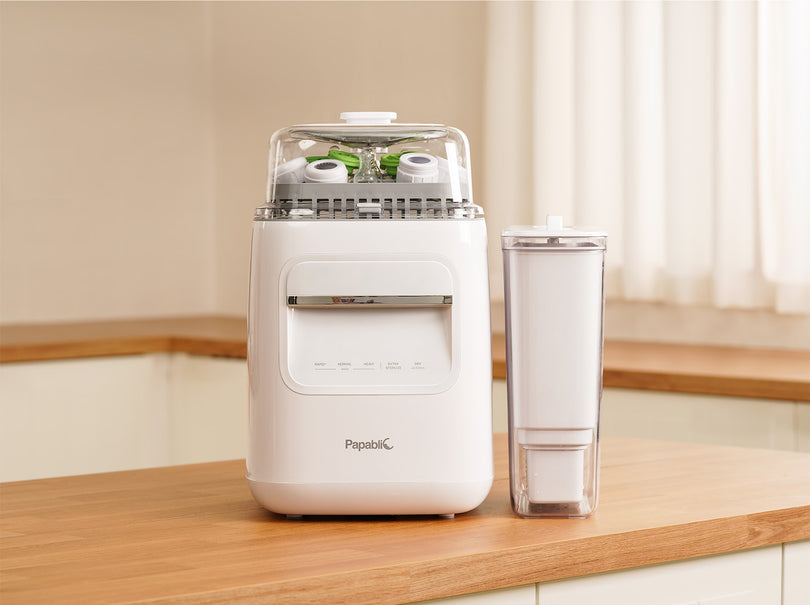
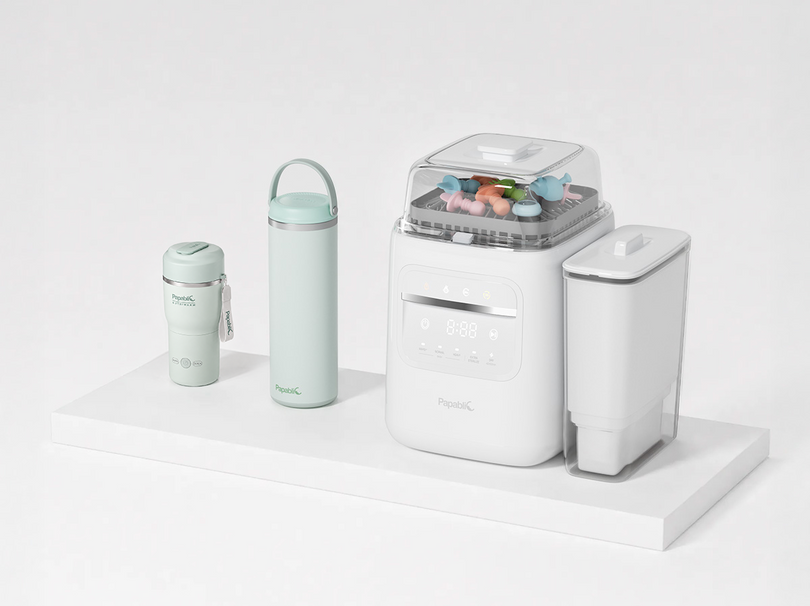
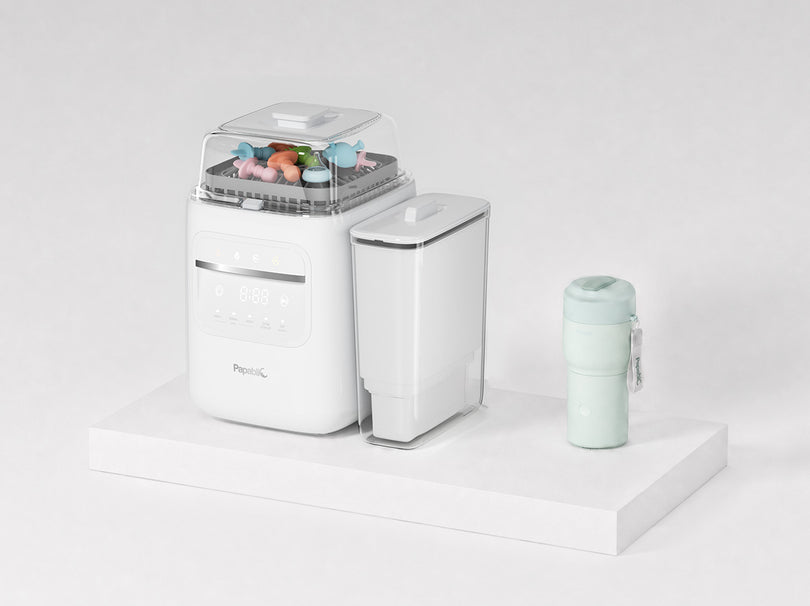
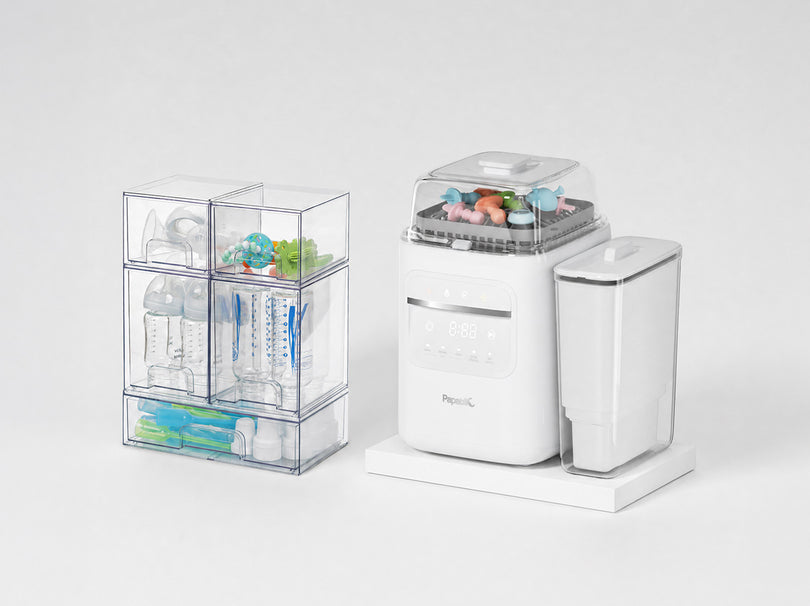
Our SafeguardPlus™ Baby Bottle Washer System is the first and only bottle washer with a built-in water filtration system (PurifyClean™). It's a 5-in-1 countertop unit that filters the water, washes, sterilizes with steam, dries, and stores in one automated cycle.
That last point matters. Most bottle washers stop at washing. The SafeguardPlus™ undergoes the full cycle — filtered water in, clean, sterile, dry, stored bottles out.
Load the bottles, press start, walk away. You can wash up to 8 bottle sets per cycle with equipment staying protected for up to 72 hours inside the sealed unit, so you're not scrambling to use them the moment the cycle ends.
No pots on the stove. No tongs. No timing. For parents who want to know it's handled every single time, the SafeguardPlus™ is the most practical upgrade in the feeding routine.
Still unsure if a dedicated bottle sterilizer is worth it? Read our article on why using a dedicated bottle sterilizer is the way forward.

Frequently Asked Questions
Is It Really Necessary to Sanitize Baby Bottles?
For newborns and babies with compromised immune systems, daily sanitizing is strongly recommended. For older, healthy infants, thorough cleaning after every feed is the most important habit, with sanitizing added after illness or periods of non-use. It's not mandatory for every family, but it's one of the simplest ways to support your baby's health in those early months.
Does the CDC Recommend Sterilizing Baby Bottles?
The CDC recommends sanitizing bottles and feeding items at least once daily for infants under 3 months, babies born prematurely, or those with weakened immune systems. For healthy older infants, thorough cleaning is the primary recommendation, with sanitizing as an added layer when needed after illness or extended storage.
What Is the Safest Way to Sterilize Baby Bottles?
Steam sterilization is the most widely recommended home method. It reaches higher temperatures than boiling and, when used with a dedicated sterilizer, delivers consistent results across all bottle parts. A purpose-built steam sterilizer removes the variability that comes with stovetop methods, making it the most reliable option for consistent sterilization.
How Long Do Sterilized Bottles Stay Sterile?
Properly stored sterilized bottles stay protected for up to 24 hours when kept sealed in a sterilizer or clean covered container. Left open on a counter, that window is much shorter. Bottles kept inside the sealed SafeguardPlus™ unit stay protected for up to 72 hours.
Clean, Sterilize, Dry, and Store — All in One Cycle
Keeping bottles clean comes down to three consistent habits: washing after every feed, sanitizing or sterilizing regularly, and storing bottles somewhere clean and sealed.
In principle, straightforward. Factor in fragmented sleep, a crying baby, and laundry piling up — there's a lot on any parent's plate.
Our SafeguardPlus™ Baby Bottle Washer System handles water filtration, washing, sterilizing, drying, and storing in a single automated cycle for all your bottles, pacifiers, and more. To cover every part of your feeding routine, explore our full baby bottle cleaning and feeding system.