

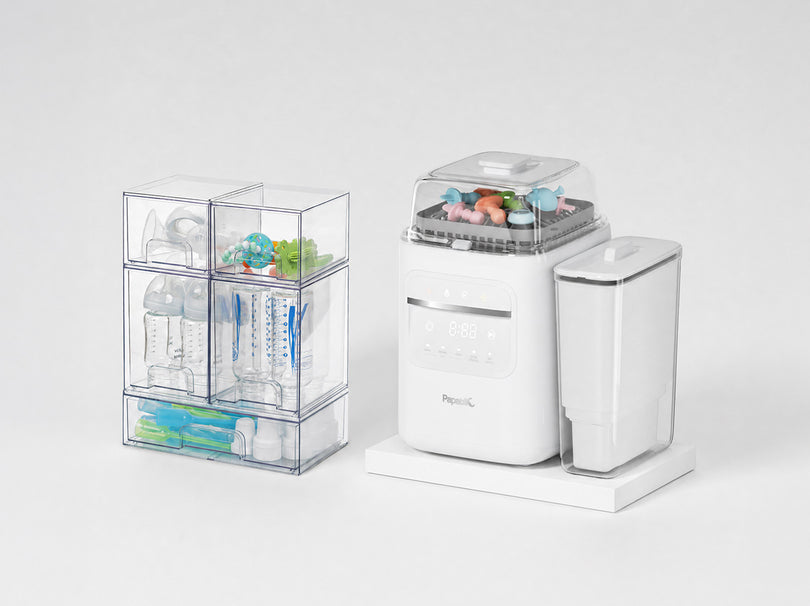

Every bottle, pump part, and warmer in your kitchen is made from something, and that something decides how it handles heat, washing, and daily wear. Get it wrong and parts warp, cloud over, or wear out faster than they should. We put together this baby feeding gear safety guide to walk you through what silicone, polypropylene (PP), and glass can and can't handle, plus where stainless steel fits in.
Key Takeaways
-
Glass and stainless steel handle repeated heat exposure with the least wear over time.
-
Food-grade silicone tolerates high heat well but can absorb odors and residue if it sits too long between washes.
-
PP is durable for daily use but warps faster under repeated high-heat cycles than glass or silicone.
-
Breast milk should warm gently, not boil, to help protect its nutrients.
-
Sorting parts by material before every wash cycle is the biggest source of hidden mental load for parents.
Why Material Matters for Cleaning: Silicone, PP & Glass Care
How you clean baby bottles depends heavily on what they're made from. A method that's perfectly fine for glass, like a rolling boil, can shorten the life of a plastic valve or cloud a PP bottle over a few months.
Each material also breaks down differently. Glass and stainless steel are non-porous, so they don't hold onto odors or residue. Silicone is flexible and heat-stable but porous enough to soak up milk fats and soap fragrance if it isn't rinsed right away. PP is lightweight and shatterproof but has the lowest ceiling for repeated high-heat exposure of the three.
|
Material |
Daily Wash |
Sterilizing |
Dishwasher |
Watch For |
|
Silicone |
Warm water and mild soap |
Boiling or steam, generally fine |
Top rack |
Odor and residue buildup if left wet |
|
Polypropylene (PP) |
Warm water and mild soap |
Steam preferred over boiling |
Top rack only |
Warping, clouding, or cracking over time |
|
Glass |
Warm water and mild soap |
Boiling, steam, or UV |
Top or bottom rack |
Chipping or breakage from drops |
|
Stainless Steel |
Warm water and mild soap |
Not typically needed for storage bottles |
Top rack |
Dents from heavy impact |
Silicone: What It Can and Can't Handle
Can silicone handle high heat? Yes, food-grade silicone is one of the more heat-stable materials used in feeding gear, but quality varies between brands and grades.
Where You'll Find It
Silicone shows up in nipples, pacifiers, some full bottles, breast pump flanges, and swaddle-style bottle sleeves. It's popular because it flexes without cracking and rarely shatters if dropped.
Heat Tolerance
Food-grade silicone generally holds its shape and integrity at high temperatures, well above the boiling point of water, without losing durability. The tradeoff is that its slightly porous surface can trap milk residue and soap fragrance if pieces sit wet after a wash instead of drying fully. That's more of a hygiene concern than a heat concern, but it's worth building into your routine when you clean baby bottles and their softer parts.
Polypropylene (PP): What It Can and Can't Handle
Is PP dishwasher safe? Generally yes on the top rack, but repeated exposure to high heat over many cycles is where PP starts to show its age faster than glass or silicone.
Where You'll Find It
PP is one of the most common materials in baby bottles, formula dispensers, and many breast pump parts, largely because it's lightweight, inexpensive, and shatterproof.
Heat Tolerance
PP holds up fine to occasional boiling water or a steam sterilizer, but it has a lower practical ceiling than glass. Run it through a standard heated-dry dishwasher cycle over and over, mixed in with greasy pots and pans, and you'll start to see warping, clouding, or a cracked seam well before the bottle's expected lifespan is up. That's part of the case for a dedicated approach instead of relying on the family dishwasher for every load.
Glass: What It Can and Can't Handle
Is glass the most heat-stable material for baby bottles? Among the common options, yes, borosilicate glass tolerates high heat and rapid temperature swings better than silicone or PP.
Where You'll Find It
Glass shows up in baby bottles, formula and breast milk mixing pitchers, and some storage containers. Parents choosing between glass or plastic for daily use often land on glass specifically for this heat stability, paired with a silicone sleeve for grip and drop protection.
Heat Tolerance
Borosilicate glass can go from the freezer to boiling water without cracking, which makes it forgiving during sterilizing and daily washing. It won't warp, and it doesn't pick up scratches the way plastic can over time. The obvious tradeoff is weight and breakage risk if it's dropped on a hard floor, which is why so many glass bottles ship with a protective silicone sleeve.
Stainless Steel: The Lower-Risk Option for Breastmilk Storage
Is stainless steel a safer material for storing breast milk than plastic? For material safety specifically, yes: it's non-porous, doesn't leach, and has no warping threshold to track.
Where You'll Find It
Stainless steel is most common in breast milk storage bottles, coolers, and some travel feeding containers, where holding a stable cold temperature matters as much as the material itself.
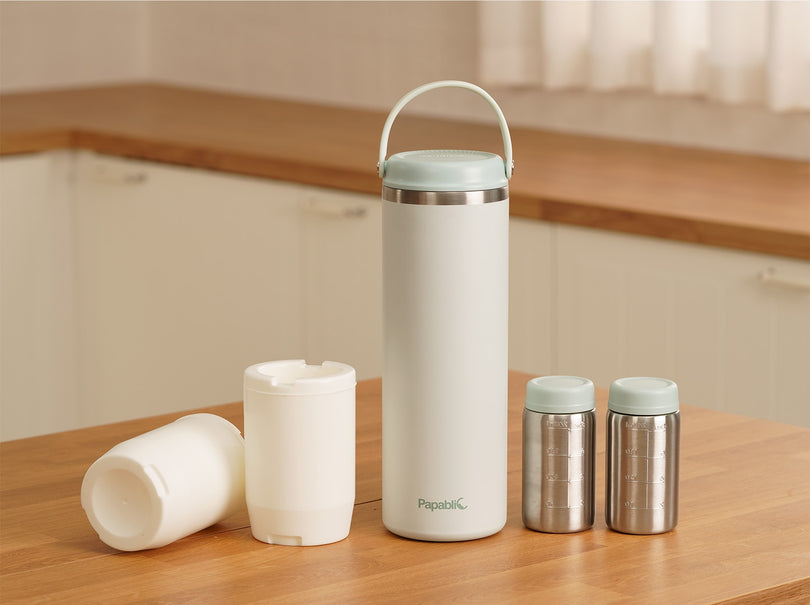
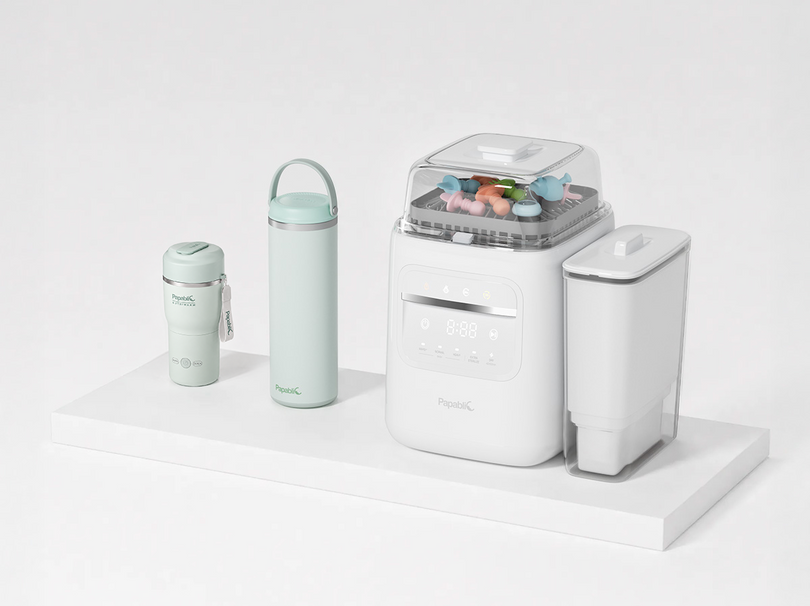
The Papablic CapsuleChill™ Breast Milk Cooler uses stainless steel instead of plastic sleeves or bags, so there's no warping threshold to track or wear pattern to inspect over time. It's lead-free and BPA-free, and it's built to hold milk below the 40°F the CDC recommends for refrigerated storage, all day, whether you're at home or out running errands.
For parents weighing low-toxicity, extra-safety materials for feeding gear, the Papablic CapsuleChill™ Cooler gives you one less material rule to remember when you're already tracking feeding times, ounces, and nap schedules.

Getting the Warming Temperature Right
Does overheating breast milk damage its nutrients? Yes, and it's one of the easiest mistakes to make with a fast warmer or a pot of boiling water on the stove.
Traditional warming methods can run hot enough to create uneven heat pockets in the bottle, which risks scalding a baby's mouth on one sip and serving lukewarm milk on the next. The CDC specifically advises against microwaving or stovetop heating for this reason, recommending a bowl of warm water or gentle running water instead.
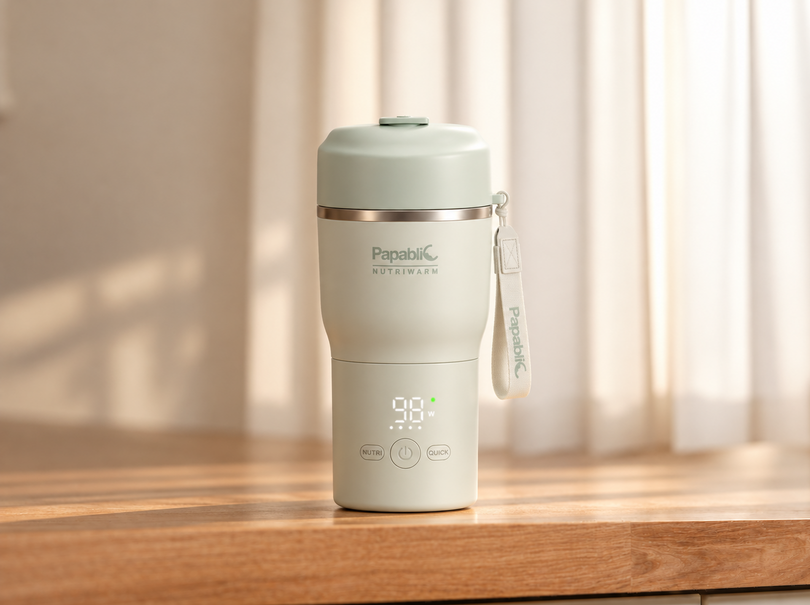
The Papablic NutriWarm™ Portable Bottle Warmer follows that same idea: it thaws and warms milk gently without overheating, protecting the nutrients in every feed, and brings 4 oz of cold milk to 98°F in about 2 minutes 30 seconds. Built-in sterilization lets you sterilize pacifiers and other small feeding essentials on the go, and the wide opening and compact size make filling and cleanup easier.

Sorting Parts by Material Every Time You Clean
Do you really need to sort feeding gear by material before every wash? Yes, running silicone nipples, PP bottles, and glass containers through the same hot cycle is exactly how the more heat-sensitive pieces end up warped or clouded first.
PP pieces feel it fastest, especially the thin valves and membranes in breast pump parts, a common complaint from parents who run them through the same dishwasher cycle as pots and pans, heated-dry setting and all. Once a valve warps even slightly, a pump can lose suction, and a bottle nipple can start to leak.
Silicone and glass hold up better under the same conditions, but mixing all three into one load still means checking each piece afterward for wear. Hand-sorting silicone, PP, and glass before every single wash is exactly the kind of invisible task that adds up: remembering which rack, which cycle, which parts survived last time.
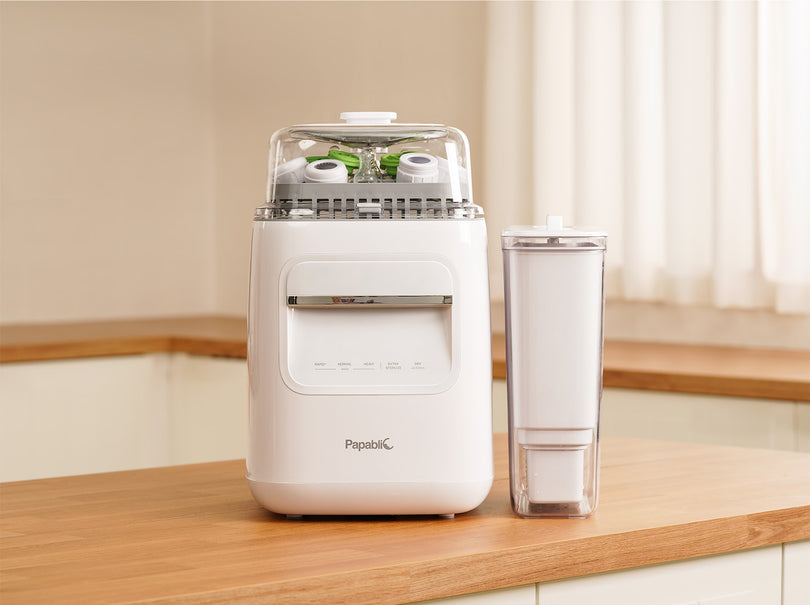
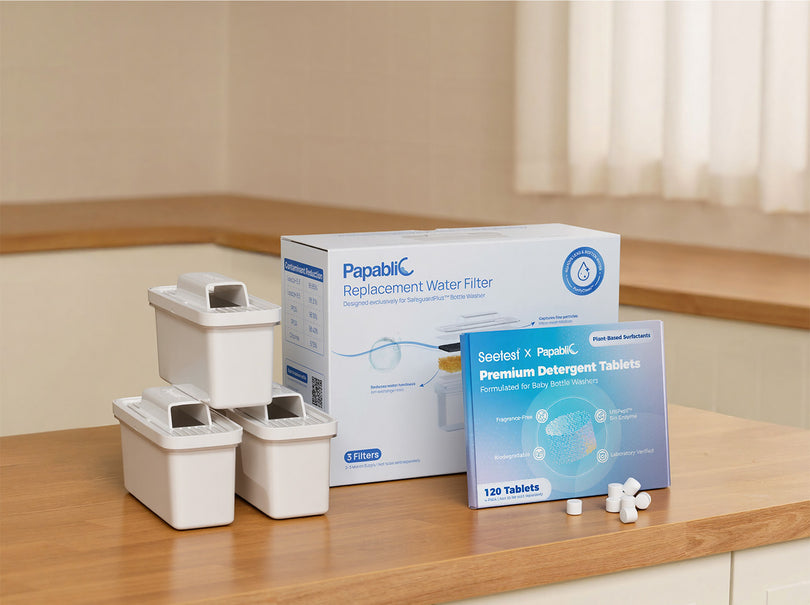
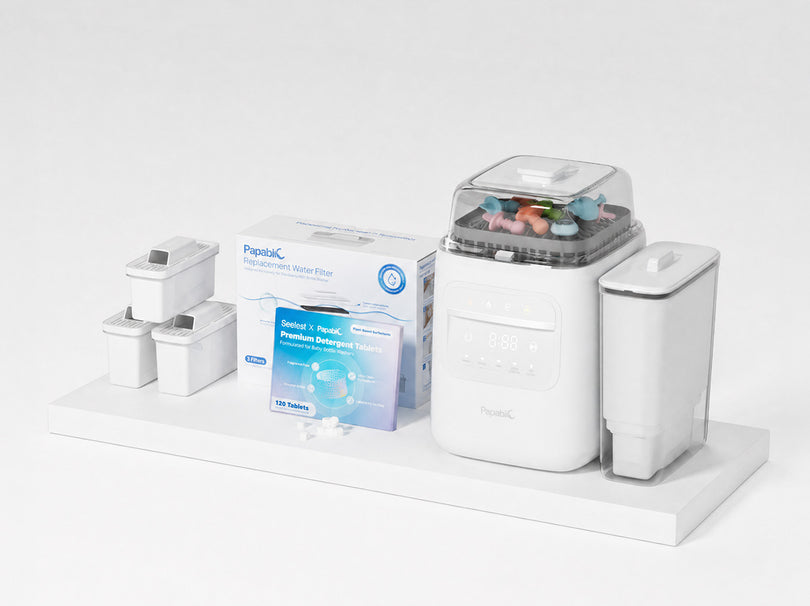
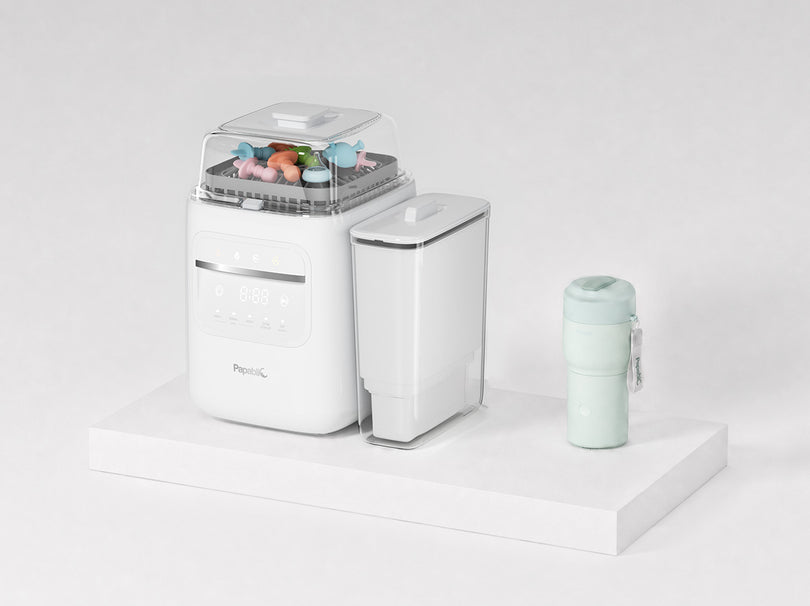
The Papablic SafeguardPlus™ Baby Bottle Washer System takes that sorting problem off your plate. Its built-in PurifyClean™ water filter softens the water and removes contaminants before a single drop touches a bottle part, so cleaning starts with genuinely clean water instead of whatever's coming out of the tap.
From there, a 360° dual-spray wash and steam bottle sterilization cycle reach a 99.99% germ reduction across silicone, PP, and glass parts alike, in one load, without the guesswork of hand-checking each piece for warping afterward.

Frequently Asked Questions
Can I Put All My Pump Parts in the Dishwasher?
Most PP pump parts are top-rack dishwasher safe, but repeated heated-dry cycles can warp valves and membranes faster than hand washing or a dedicated bottle washer would. Check your specific pump's manual, since some silicone parts handle it better than the PP pieces do. If you notice a part looking cloudy or misshapen, replace it, since a warped valve can affect suction.
What Temperature Warps Silicone Baby Bottle Parts?
Food-grade silicone tolerates far higher heat than PP and rarely warps from ordinary sterilizing or dishwasher cycles. Lower-grade silicone blends are more likely to degrade with repeated heat exposure, which is one more reason to check for a food-grade label. Odor and residue buildup, not warping, are the more common silicone complaints.
Is Stainless Steel Safer Than Plastic for Storing Breastmilk?
For material safety, stainless steel has an edge because it's non-porous, doesn't leach, and never develops a warping threshold the way plastic can. It won't crack like glass if it's dropped, either. That combination is why it's become a popular choice for breast milk storage bottles and coolers.
One Cycle, Every Material, No Sorting Required
Silicone, PP, and glass each ask for something a little different, and stainless steel sidesteps most of those rules entirely for milk storage. The short version: match your cleaning method to the material, warm milk gently instead of fast, and don't let pump parts sit in a hot dishwasher cycle they weren't built for.
We built the Papablic SafeguardPlus™ Washer so you don't have to remember which rule applies to which part. The Papablic SafeguardPlus™ Smart Feeding System bundles the washer, the cooler, and the warmer into one system built around the same material-safety rules this guide just walked through.