





You finally have your baby in your arms. The pregnancy is over. So why does your back hurt more than it did when you were nine months pregnant and waddling to the bathroom at 3 a.m.?
You're not imagining it. You're not being dramatic. And you are absolutely not the only one lying in bed at night wondering if your spine is just going to feel like this forever. This is one of the most common and least-talked-about postpartum experiences there is, and you deserve a real explanation — not just a "give it time" and a pat on the back (no pun intended).
Let's get into what's actually happening in your body, and what you can genuinely do about it.
Your Body Just Did Something Extraordinary — And It's Still Recovering
Here's something worth sitting with for a moment: your body spent nine months fundamentally reorganizing its structure to grow and carry a human being. Then it delivered that human. That is not a small thing. The expectation that your back would feel better the moment the baby arrived is, unfortunately, not how biology works.
The vast majority of women who experience postpartum back pain develop symptoms because of pregnancy-related changes to the musculoskeletal system that simply don't resolve immediately after delivery. (Spine-health) The process of returning to your pre-pregnancy state takes time — sometimes a frustratingly long time.
The Real Reasons Your Back Is Screaming
The Relaxin Hangover
During pregnancy, your body produces a hormone called relaxin, which loosens your ligaments and joints — particularly in the pelvis — to prepare for birth. It's a genuinely brilliant piece of engineering. The problem is, after childbirth, these hormone levels drop suddenly, leaving the joints and tissues unstable for six to eight weeks. (Pain Treatment MD)Your ligaments haven't "snapped back" yet, which means your lower back is picking up a lot of slack that your joints and connective tissue would normally handle.
Relaxin can remain detectable in the body for up to 12 months postpartum, keeping pelvic ligaments looser than normal and causing the lower back to bear significantly more mechanical stress. (Eureka Health) If you're breastfeeding, this effect can be prolonged further.
Your Core Is Essentially Offline
Think of your abdominal muscles as a natural back brace. When they're working properly, they take a significant load off your spine. After pregnancy, ultrasound studies show that deep core muscles — specifically the transversus abdominis and multifidus — shrink noticeably during the third trimester and can take nine to twelve months to recover without targeted exercise. (Eureka Health) Your back is compensating for a support system that's just not there yet.
Diastasis Recti: The Culprit Nobody Warned You About
This one matters and doesn't get nearly enough attention in postpartum conversations. Diastasis recti is the separation of your rectus abdominis muscles — the two parallel bands running down the middle of your abdomen.
Diastasis recti can weaken the abdominal muscles, causing lower back pain and making it difficult to lift objects or perform other routine daily activities. One study found that 45% of women have diastasis recti at six months postpartum.
You can do a simple self-check: lie on your back with your knees bent, lift your shoulders slightly, and press your fingers gently along the midline of your abdomen. If you feel a gap wider than two fingers, bring it up with your provider or a pelvic floor physical therapist. This is treatable — it's just often missed.
Pro Tip: Skip the crunches and sit-ups entirely if you suspect diastasis recti. These movements can make the separation worse, not better. A pelvic floor PT can teach you "transverse abdominal breathing" — a gentler technique that starts rebuilding core support from the inside out, without putting dangerous pressure on the healing linea alba.
The Posture Problem No One Talks About
A pelvic floor physical therapist at Hinge Health put it plainly: "Postpartum low back pain is very common because your body is doing things it's not used to doing, like carrying a baby and sitting to feed for hours a day, while trying to recover from your pregnancy and birth."
Think about what your feeding sessions actually look like. Shoulders rounded forward. Neck craned down. The same position, for 20, 40, sometimes 60 minutes at a stretch, multiple times a day. Your upper and lower back muscles are holding a static position under load, for hours every single day. Breastfeeding without back support, carrying the baby on one hip, hunching over the changing table — each of these individually is manageable. Combined, all day, on minimal sleep? Your back is working overtime.
The Epidural Factor (For Some Moms)
If you had an epidural, it's possible to experience localized soreness or aching at the injection site that can linger for weeks. This is different from the broader muscular postpartum back pain, but it's worth mentioning to your provider if you have a specific, pinpointed ache in your mid-to-lower back.
How Long Is This Going to Last?
Honestly? It varies. Postpartum back pain usually lasts for around six months but may, in some cases, continue for longer. (Spine-health) Between 25% and 43% of women report persistent lower back pain beyond three months postpartum. (Mainstay Medical) That's not said to discourage you — it's said so you stop feeling like something is uniquely wrong with you. This is a real, common, documented experience.
The good news is that most cases do improve, especially with intentional recovery.
What Actually Helps
Pelvic Floor Physical Therapy — Sooner Than You Think
This is the one recommendation that consistently comes up across every major medical source on postpartum recovery. A pelvic floor physical therapist (PFPT) can assess your diastasis recti, your core function, and your overall movement patterns, and create a plan specific to your body. They're not just for incontinence. They're for exactly this.
A physical therapist can recommend stretches to help prevent stiffness and tightness, as well as exercises to strengthen your core, pelvic floor, and mid-back and upper back muscles. Many now offer telehealth appointments, which is a genuine lifesaver when leaving the house feels like a military operation.
Movement — The Right Kind, Done Gently
Walking is your friend. It's low impact, it's real movement, and it helps your body restore healthy muscle activation patterns without putting you at risk. Low-impact exercises like walking, yoga, or stretching are safe as long as you don't overdo it — and you can gradually work your way up to exercises that strengthen your back and abdominal muscles. (Integratedneurologyservices)
Avoid jumping back into high-impact workouts before your body is ready. The pressure to "bounce back" is everywhere, and it is not doing any of us any favors.
Small Posture Fixes That Add Up
- When feeding, support your lower back with a firm pillow or a nursing pillow — the couch cushions aren't going to cut it.
- When lifting your baby from the crib, exhale on the lift, engage your core gently, and keep the baby close to your body. Bending from the waist, repeatedly, dozens of times a day, is a major contributor to the ache.
- When bottle-feeding or pumping, try to change your position every 15–20 minutes instead of staying frozen in one spot.
Pro Tip: The Mayo Clinic's research on postpartum back pain highlights that rehabilitative ultrasound imaging can now identify the specific source of your lower back pain — including which muscles are failing to fire correctly — helping physical therapists create far more targeted recovery plans than standard exercises alone. If your pain is persistent, ask your provider about this option.
Heat, Rest, and Not Pretending You're Fine
A warm pack on your lower back between feeds can meaningfully reduce muscle tension. Ibuprofen is generally considered compatible with breastfeeding (always confirm with your provider), and taking the medication about 30 minutes before a feeding can help manage pain during what's often your most uncomfortable time.
One Less Thing to Stand Over at the Sink
Here's something your back will thank you for: every time you stand hunched over a sink scrubbing bottles, you're adding one more round of prolonged forward flexion to an already overloaded back. It's not the scrubbing itself — it's the sustained, static posture repeated multiple times a day, for months.
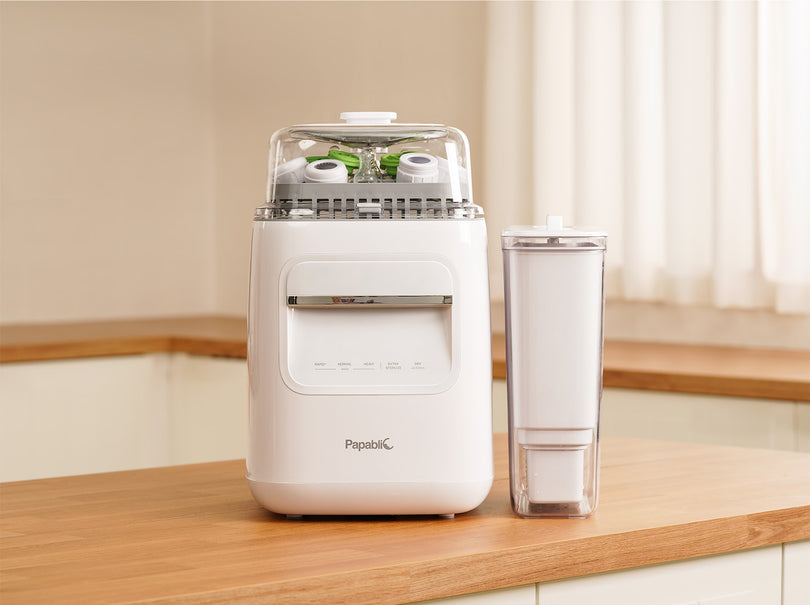
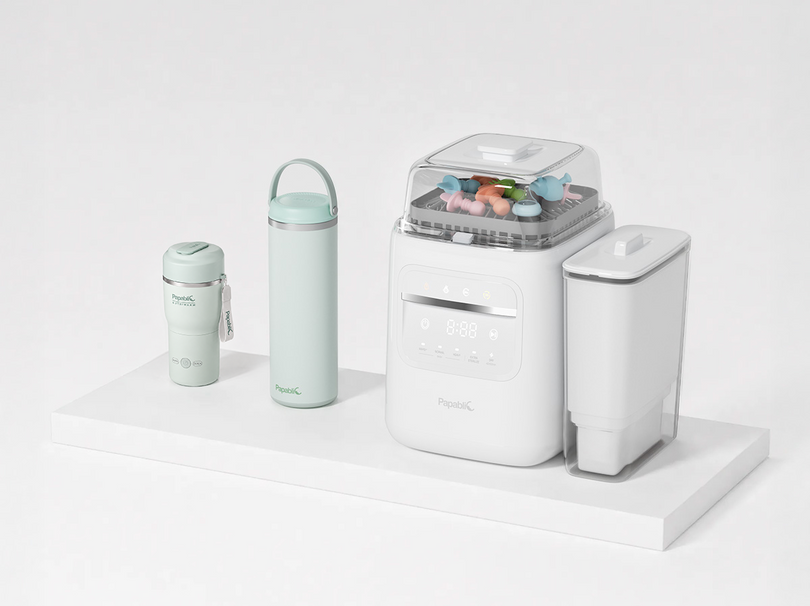
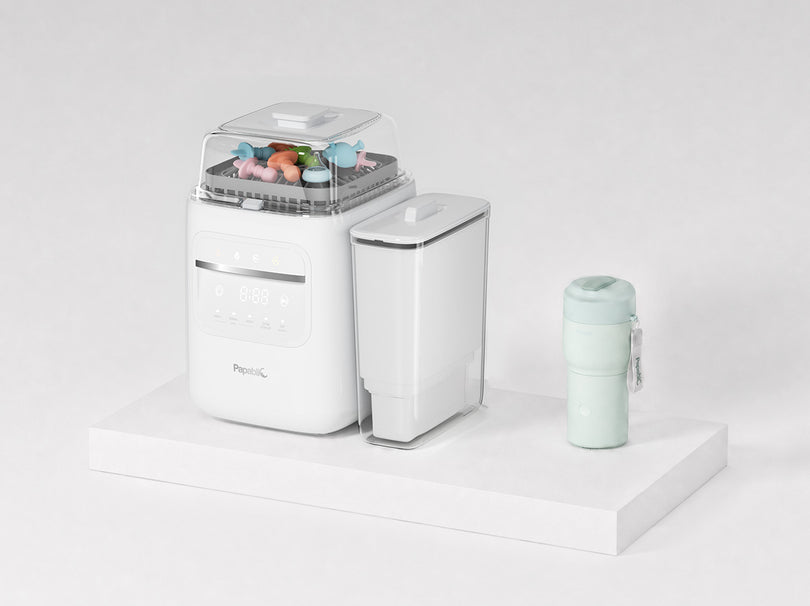
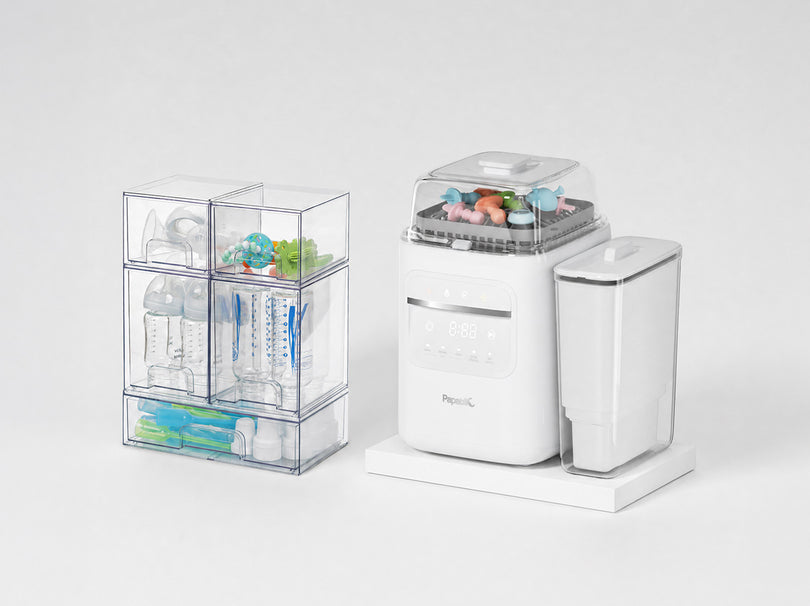
This is exactly why, after recommending it to so many exhausted moms in my practice, I can't leave out the Papablic SafeguardPlus™ Baby Bottle Washer System. It handles washing, sterilizing, and 72-hour hygienic storage in one place — which means you're not bending over a sink five times a day, and you're not standing hunched under fluorescent kitchen lights at midnight doing the job manually. It cleans up to eight bottles and wearable pumps in one cycle, reduces 99.99% of harmful germs, and uses 100% baby-safe materials. The peace of mind of knowing everything is clean and stored safely — without you having to be the one doing it — is worth more than any spec sheet can communicate when you're this tired and this sore.
When to See a Doctor Right Away
Most postpartum back pain is muscular and hormonal. But some symptoms warrant prompt medical attention:
- Fever above 100.4°F combined with back pain — this can signal an infection, particularly after a C-section
- Numbness, tingling, or weakness that radiates down one or both legs
- Pain that is rapidly worsening, not just lingering
- Loss of bladder or bowel control alongside back pain
These are not typical postpartum symptoms and should be evaluated quickly.
A Gentle Word Before You Go
Your body is not broken. It is not betraying you. It carried, grew, and delivered a life — and it is still in the process of coming back to itself. That takes time, and it takes support, and it takes someone occasionally telling you that what you're feeling is real and documented and not at all in your head.
Be patient with the woman in the mirror. She's doing more than she knows.
Frequently Asked Questions
Is it normal to have back pain several months after giving birth?
Yes. Research consistently shows that between a quarter and nearly half of postpartum women report persistent lower back pain beyond the three-month mark. Most cases do improve with time, gentle movement, and targeted physical therapy — but it's worth discussing with your provider if the pain is worsening or affecting your daily function.
Can breastfeeding make postpartum back pain worse?
Yes. The hormone relaxin, which loosens joints and ligaments during pregnancy, can remain elevated while you're breastfeeding — prolonging the period of joint instability. The prolonged sitting and forward-hunched posture of nursing sessions also places repeated mechanical strain on the upper and lower back muscles.
Does diastasis recti always cause back pain?
No. Abdominal separation doesn't always produce pain on its own, but it can significantly weaken the core muscles that support your spine, making back pain much more likely. A pelvic floor physical therapist can check for it and design a safe exercise program to address it.
Can I take pain medication for postpartum back pain while breastfeeding?
Yes, with guidance. Ibuprofen is generally considered compatible with breastfeeding, but you should confirm the timing and dosage with your provider or pharmacist. Acetaminophen is another commonly used option. Avoid stronger medications without explicit medical advice.
Will postpartum back pain go away on its own without treatment?
Yes, in many cases — but "on its own" often takes considerably longer without intervention. Targeted pelvic floor physical therapy, gentle core exercises, and posture adjustments during baby care have all been shown to meaningfully speed up recovery. Waiting passively, particularly if diastasis recti or significant core weakness is involved, tends to extend the pain rather than resolve it.
This article is written for informational purposes and does not constitute medical advice. Always consult your healthcare provider or a licensed pelvic floor physical therapist regarding your specific postpartum recovery.
References
- Mayo Clinic. Ultrasound Treatment Available for Postpartum, Pregnancy-Related Low Back Pain. https://www.mayoclinic.org/medical-professionals/physical-medicine-rehabilitation/news/ultrasound-treatment-available-for-postpartum-pregnancy-related-low-back-pain/MAC-20431417
- Cleveland Clinic. Diastasis Recti (Abdominal Separation): Causes & Treatment. https://my.clevelandclinic.org/health/diseases/22346-diastasis-recti
- Spine-Health. Back Pain After Pregnancy. https://www.spine-health.com/conditions/pregnancy-and-back-pain/back-pain-after-pregnancy
- Hinge Health. Baby Ergonomics & Postpartum Back Pain. https://www.hingehealth.com/resources/articles/baby-ergonomics-postpartum-back-pain/
- PMC / NCBI. Pain Management for Postpartum Pain: A Narrative Review. https://pmc.ncbi.nlm.nih.gov/articles/PMC12577590/
- Mainstay Medical. Understanding and Managing Lower Back Pain After Pregnancy. https://mainstaymedical.com/lower-back-pain-after-pregnancy/