




You're standing in the baby store at 8 months pregnant, staring at a wall of gadgets you've never heard of—bottle warmers with Bluetooth, diaper pails that cost more than your monthly grocery bill, wipe warmers that promise to prevent midnight meltdowns. Your registry is 47 pages long and you're starting to panic because you have no idea which of these things will actually save your sanity at 3 AM, and which will just collect dust in the nursery corner.
I've been there. After 15 years as a lactation consultant and three kids of my own, I can tell you this: the baby gear industrial complex wants you to believe you need everything. You don't.
The Non-Negotiables: What Actually Matters
Let's start with what you absolutely cannot skip—the stuff backed by real safety data, not marketing copy.
Safe Sleep Setup
The CDC and American Academy of Pediatrics both emphasize that your baby's sleep environment directly impacts their risk of sleep-related deaths, which claim around 3,700 infants each year in the United States. Here's what that means in practical terms:
You need:
- A firm, flat crib or bassinet that meets current safety standards
- Fitted sheets (nothing else in the crib—no bumpers, blankets, or stuffed animals)
- A safe place in your room for baby to sleep, ideally for the first six months
Research shows that room-sharing without bed-sharing can decrease SIDS risk by as much as 50%.
You can skip:
- Fancy sleep positioners or wedges
- Crib bumpers (they're actually dangerous, not decorative)
- That $400 "smart" bassinet unless you've got money burning a hole in your pocket
Pro Tip: Before you buy a used crib or bassinet, check the Consumer Product Safety Commission website at cpsc.gov for recalls. Many older cribs have been recalled for missing parts or spacing issues that can trap a baby's head.
Feeding Supplies That Won't Make You Want to Scream
Whether you're breastfeeding, formula feeding, or doing both, you need equipment that's actually clean. Not "looks clean." Actually, scientifically, remove-harmful-bacteria clean.
The CDC recommends that if your baby is under 2 months old, was born prematurely, or has a weakened immune system, you should sanitize bottles and feeding equipment daily. That's not helicopter parenting—that's protecting an immune system that's still figuring out how to work.
You need:
- 8-10 bottles if you're exclusively bottle-feeding (fewer if you're combo feeding)
- A way to properly clean and sanitize them that doesn't make you want to cry
- Bottle brushes that you replace every few months
Here's where most parents hit the wall: bottles need to be cleaned after every single feeding, and traditional methods require disassembling every part, scrubbing with hot soapy water, and then boiling or steaming for sanitization. When you're doing this 8-12 times a day in those early weeks, it becomes soul-crushing.
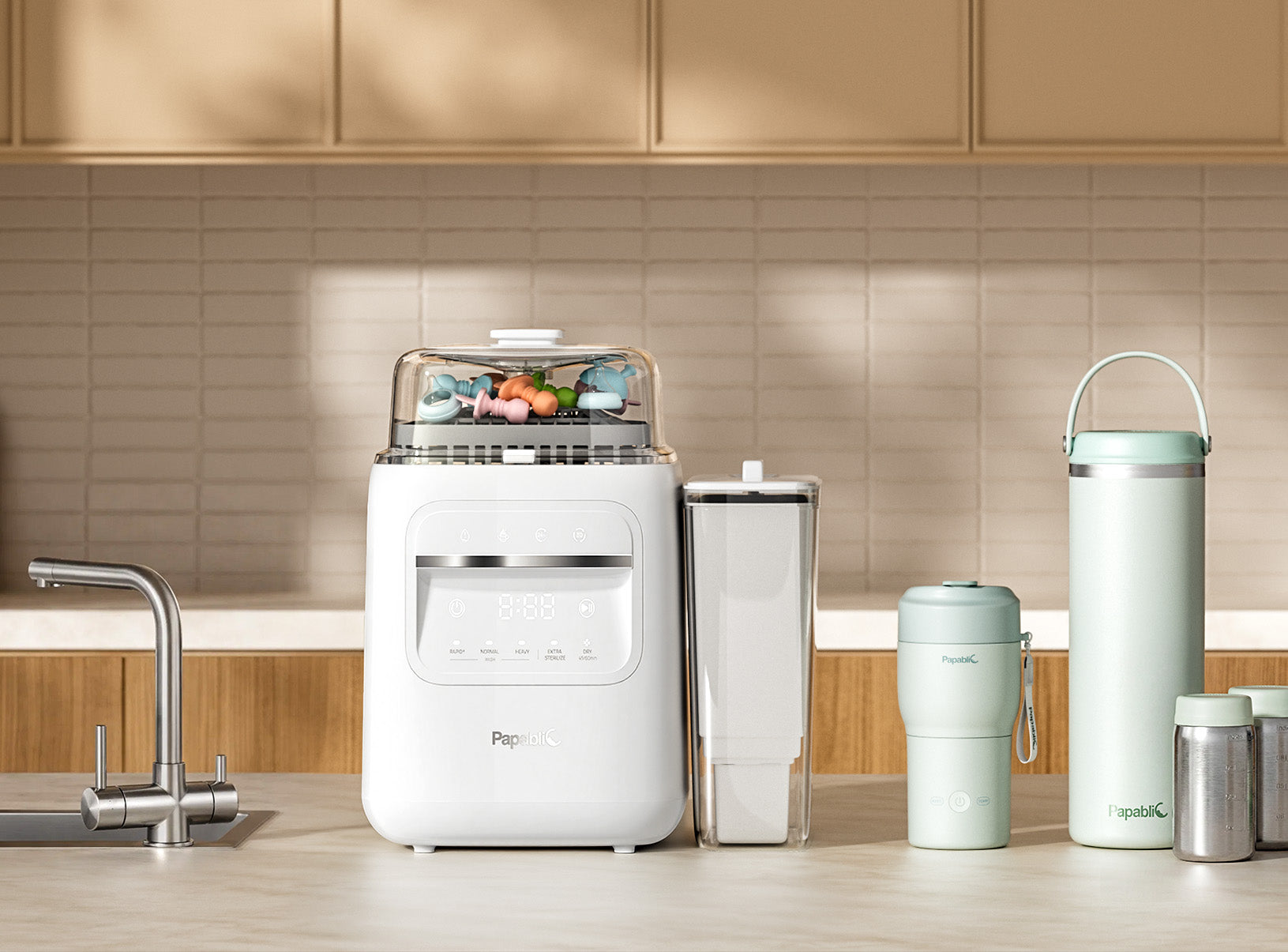
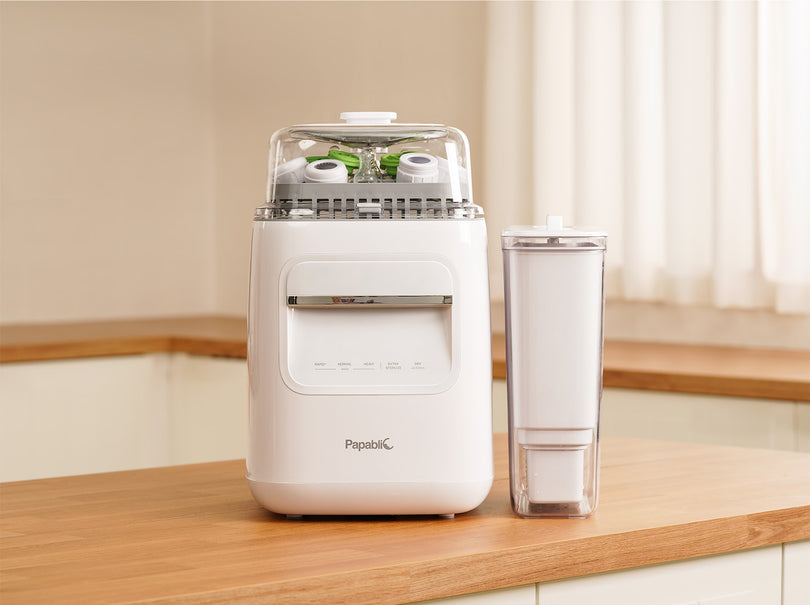
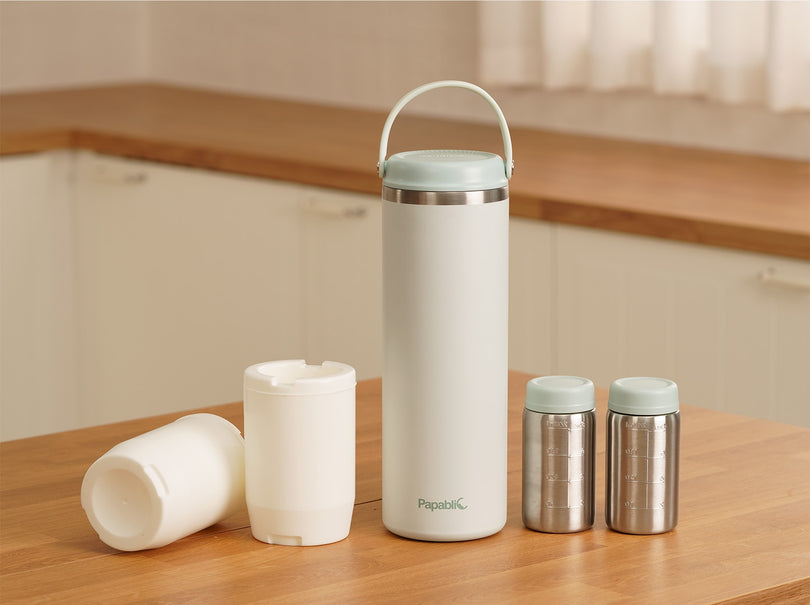
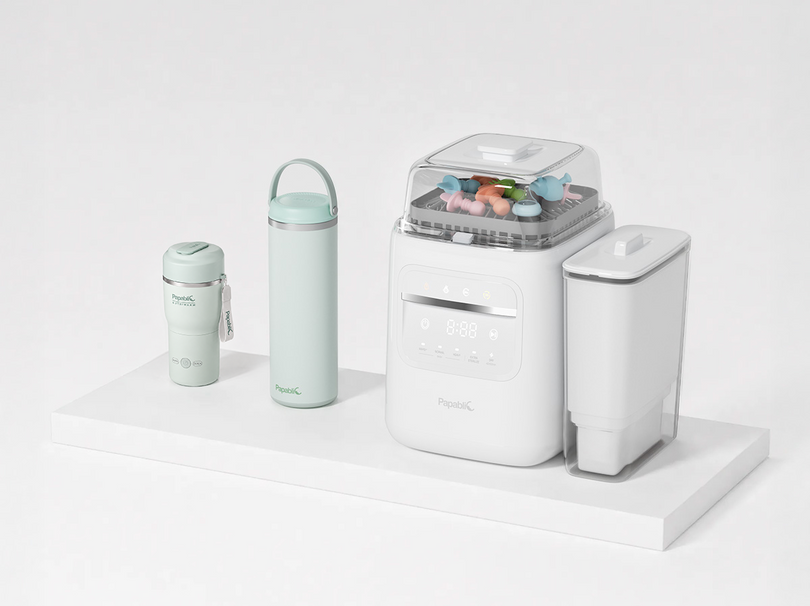
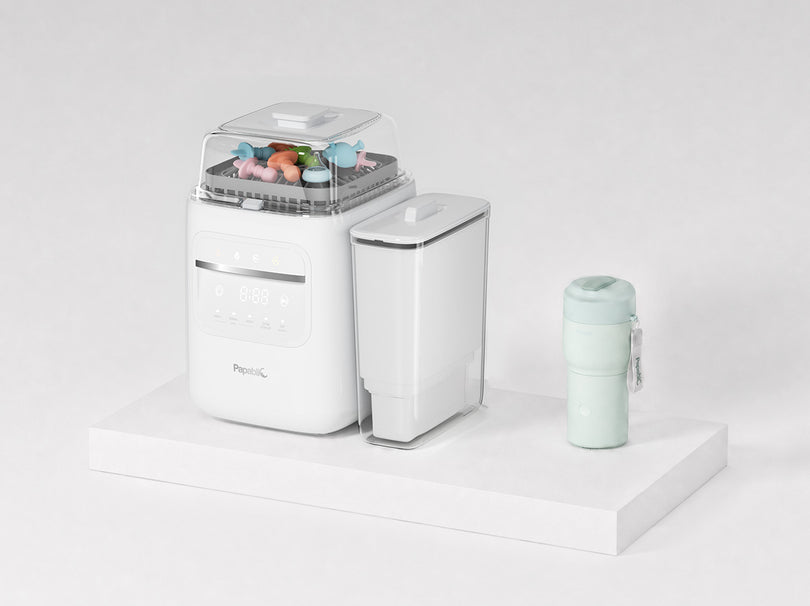
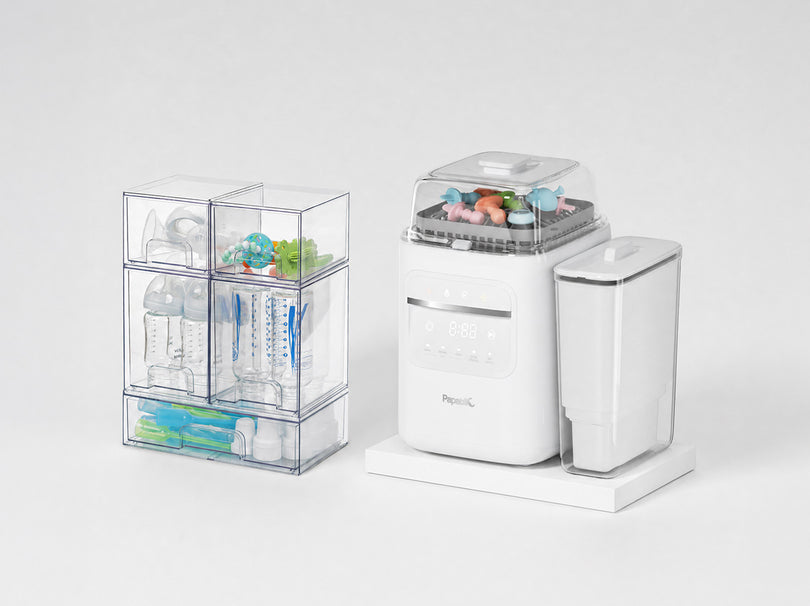
This is exactly why some parents are turning to systems like the Papablic SafeguardPlus™ Baby Bottle Washer System. It handles the washing, sterilizing, and 72-hour sterile storage in one unit—which means you're not standing at the sink at midnight, elbow-deep in soapy water, wondering if you scrubbed that nipple valve thoroughly enough. The peace of mind of knowing your bottles are genuinely clean (we're talking 99.99% germ reduction, hospital-grade clean) can buy you back 20-30 minutes of sleep. And in those early weeks? That's everything.
You can skip:
- Individual bottle warmers (a bowl of warm water works fine)
- Specialty formula mixing systems (your arm and a clean bottle work great)
- 47 different bottle brands "to see which one baby likes"—start with 2-3 and go from there
Diapers, Wipes, and the Reality of Baby Poop
You'll need diapers. Lots of them. Newborns go through 10-12 diapers a day, and yes, you will become a person who discusses the color and consistency of poop with other adults.
You need:
- A reliable diaper supply (size newborn and size 1)
- Wipes (fragrance-free to start)
- A changing pad
- Diaper cream for inevitable rashes
You can skip:
- The $300 diaper pail with special refill cartridges—a regular trash can with a lid works
- Wipe warmers (they can actually encourage bacterial growth if not cleaned properly)
- Fancy changing tables (a changing pad on your dresser is safer and takes up less space)
Pro Tip: Stock up on size 1 diapers, not newborn. Many babies outgrow newborn diapers within 2-3 weeks, and you'll end up with a closet full of unused diapers. Size 1 will carry you through months 1-4 for most babies.
The Middle Ground: Helpful But Not Essential
Baby Carriers and Strollers
A good baby carrier can be a game-changer when you need to eat lunch with both hands or when your baby only naps while being held (spoiler: this will probably be your baby at some point).
Worth considering:
- One structured carrier (many parents love the Ergobaby or Lillebaby)
- A basic stroller for longer walks
You can skip:
- The $1,200 stroller system with all the attachments
- Multiple carriers "for different occasions"—one good one is enough
Clothes Reality Check
Babies grow at a terrifying rate. Your newborn will likely wear each outfit 2-3 times before outgrowing it.
You need:
- 7-10 onesies in each size
- A few sleepers for night
- Weather-appropriate outer layers
You can skip:
- Those tiny jeans and button-up shirts (impossible to change a diaper in)
- Socks for newborns (they just fall off)
- Shoes until baby is actually walking
What You Can Absolutely Skip (No Matter What Your Mother-in-Law Says)
Baby towels with animal ears: Regular towels work. Your baby doesn't care.
Diaper genies and specialty trash systems: Unless you live in a studio apartment, take the dirty diapers outside daily.
Bottle drying racks that cost $40: A clean dish towel works fine.
Baby food makers: A fork and a bowl will mash most foods just fine when the time comes.
Themed nursery furniture sets: Your baby won't remember their nursery. Buy what's functional and safe, not what looks good on Pinterest.
The Hidden Essentials Nobody Tells You About
Multiple changing pad covers: Because blowouts happen, and they happen when you just washed the last clean cover.
A good water bottle for yourself: Breastfeeding or not, you'll be dehydrated those first few weeks.
Realistic expectations: Your house will be a mess. You'll wear the same shirt three days in a row. You'll cry for no reason and also because there's a very good reason (you're exhausted). This is all normal.
Support: Whether that's a lactation consultant, a postpartum doula, your mom, your best friend, or a therapist—having someone to talk to who won't judge you is worth more than any gadget.
The Bottom Line
Every parent's situation is different—your budget, your space, your support system, and your baby's temperament all matter. But if I could go back and tell my newly-pregnant self one thing, it would be this: you need less stuff and more sleep than you think. Spend your money on the things that genuinely make your life easier and safer. Everything else is just noise.
Your baby doesn't need a perfectly curated nursery or the latest gadget. They need to be safe, fed, clean, and loved. You've already got three of those four covered before you buy a single thing. The rest? You'll figure it out, one exhausted, beautiful day at a time.
FAQ
Do I really need to sterilize bottles every day?
Yes, for babies under 2 months old, premature infants, or babies with compromised immune systems. The CDC recommends daily sanitizing for these vulnerable groups because their immune systems are still developing and more susceptible to infections from bacteria that can grow in bottles. For healthy babies over 2 months with access to clean water, thorough washing with hot soapy water after each feeding is usually sufficient.
Can I skip buying a crib and just use a bassinet?
No, not long-term. Bassinets are only safe until your baby can roll over, push up, or reaches the weight limit (usually around 3-4 months or 15-20 pounds). You'll need a full-size crib that meets current safety standards for when your baby outgrows the bassinet, so budget for this from the start.
Is a bottle warmer necessary?
No. The AAP notes that you can safely warm bottles by placing them in a bowl of warm water. This method is free, takes just a few minutes, and doesn't require counter space for another appliance. If you're regularly preparing bottles in the middle of the night and want convenience, a warmer can be helpful but is definitely not essential.
Do I need special baby laundry detergent?
No. Regular fragrance-free, dye-free detergent works fine for most babies. Only switch to a specialty baby detergent if your baby develops skin irritation or has been diagnosed with sensitive skin or eczema by your pediatrician. Don't spend extra money on something you might not need.
Should I buy a changing table?
No, not necessarily. A changing pad secured on top of a dresser works just as well and saves space. The American Academy of Pediatrics emphasizes that the key safety feature is never leaving your baby unattended during changes—the furniture itself matters less than your attention and having supplies within arm's reach.
References
- American Academy of Pediatrics. (2022). "How to Keep Your Sleeping Baby Safe: AAP Policy Explained." HealthyChildren.org. https://www.healthychildren.org/English/ages-stages/baby/sleep/Pages/a-parents-guide-to-safe-sleep.aspx
- Centers for Disease Control and Prevention. (2025). "Providing Care for Babies to Sleep Safely." CDC SUID and SIDS. https://www.cdc.gov/sudden-infant-death/sleep-safely/index.html
- Centers for Disease Control and Prevention. (2025). "How to Clean, Sanitize, and Store Infant Feeding Items." CDC Water, Sanitation, and Hygiene. https://www.cdc.gov/hygiene/about/clean-sanitize-store-infant-feeding-items.html
- American Academy of Pediatrics. (2026). "Newborn and Infant Breastfeeding." AAP Patient Care. https://www.aap.org/en/patient-care/newborn-and-infant-nutrition/newborn-and-infant-breastfeeding/
- Texas Children's Hospital. (2018). "Best practices for baby bottle sterilization." https://www.texaschildrens.org/content/wellness/best-practices-for-baby-bottle-sterilization
- American Academy of Pediatrics. "How to Sterilize and Warm Baby Bottles Safely." HealthyChildren.org. https://www.healthychildren.org/English/ages-stages/baby/formula-feeding/Pages/How-to-Sterilize-and-Warm-Baby-Bottles-Safely.aspx