


Introduction
If you’ve recently searched terms like “PFAS in water,” “what are forever chemicals,” or even “does reverse osmosis remove PFAS,” you’re not alone. Across the U.S., more parents are becoming aware of PFAS — so-called “forever chemicals” — and their potential impact on health, especially for babies. But here’s what many parents don’t realize: PFAS exposure doesn’t stop at water. It extends into everyday baby feeding routines.
What is PFAS?
PFAS stands for per- and polyfluoroalkyl substances — a group of thousands of synthetic chemicals used in products like nonstick cookware, food packaging, waterproof clothing, and industrial processes. They’re often called “forever chemicals” because they don’t break down easily and can accumulate in the body over time.
The U.S. Environmental Protection Agency notes that PFAS have been widely detected in drinking water across the U.S., and studies have found these chemicals present in the blood of people worldwide.
PFAS in Water & Why Matters?
The U.S. Environmental Protection Agency identifies drinking water as a primary source of PFAS exposure, while the Centers for Disease Control and Prevention notes potential impacts on child development.
A large U.S. study analyzing over 11,000 births found that PFAS-contaminated water was associated with increased risk of premature birth, higher likelihood of low birth weight, and up to 191% increase in infant mortality in high-exposure areas. For new parents, that’s not just environmental news — it’s personal.
Infants Are More Vulnerable
Compared to adults, babies face a higher risk from environmental exposure.At the same time, their immune systems are still developing, and PFAS exposure has been linked to changes in infant immune cell development. Because early life is a critical stage for growth, exposure may also impact hormonal balance and overall developmental processes.
PFAS and Baby Feeding: Where Exposure Actually Happens
Most parents focus on water filtration, which is important, but exposure doesn’t stop there. In everyday feeding routines, babies are exposed through multiple pathways, including mixing formula with tap water, storing milk in bottles, and reusing bottles multiple times daily. The Centers for Disease Control and Prevention notes that infants may be exposed through formula prepared with contaminated water, reinforcing feeding as a key exposure pathway.
The key issue is that residue inside baby bottles can act as a carrier for contaminants, making feeding equipment an often-overlooked source of repeated exposure.
The Hidden Risks in Baby Bottles
After every feeding, bottles are exposed to milk fats, protein film, and mineral deposits that can build up in hard-to-reach areas. Over time, this residue can trap particles and contaminants, turning each reuse into a repeated exposure point—even if you’re using filtered water.
That’s why reducing exposure isn’t just about water quality, but also about how clean every bottle is before each use. While most methods remove visible residue, what matters just as much is what’s left behind—microscopic buildup and potential contaminants from the cleaning process itself.
A More Complete Solution for Safer Baby Feeding
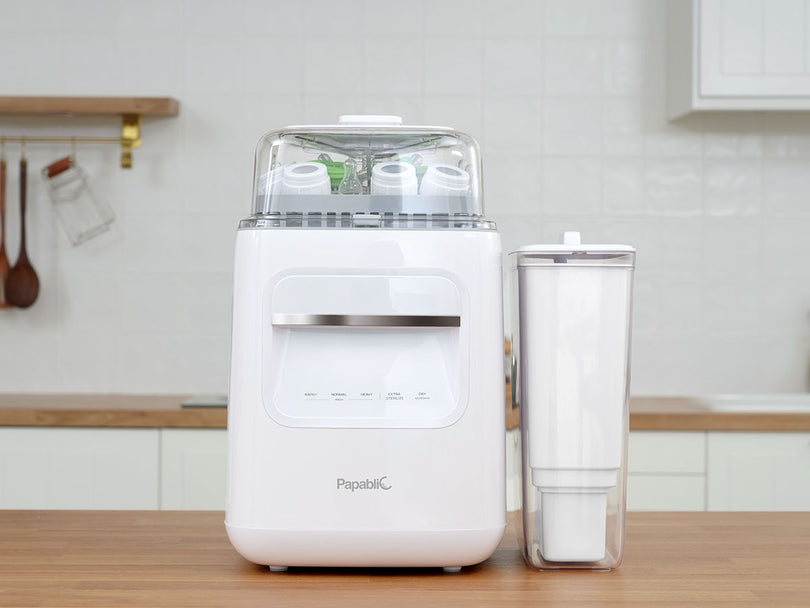
That’s where a dedicated system like the Papablic SafeguardPlus™ Baby Bottle Washer System stands apart. Instead of treating bottle cleaning as a simple rinse, it’s designed as a multi-layer protection system that addresses both residue removal and water quality during cleaning.

Shop:Papablic SafeguardPlus Baby Bottle Washer System
Four-Stage Deep Filtration System
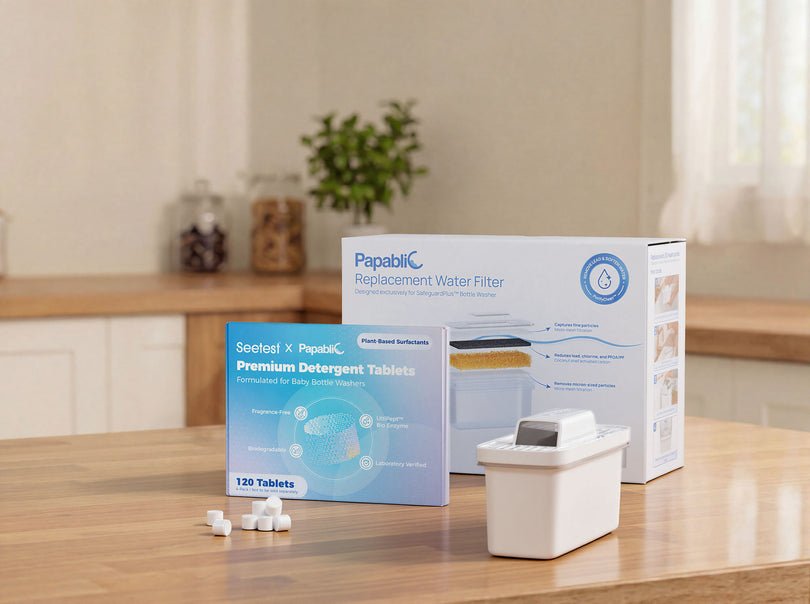
Every wash cycle uses advanced filtration to help reduce unwanted substances and chemicals, such as lead, PFAS and water hardness. This built- in filter helps to add an extra layer of feeding safety and reassurance.
Why Built-in Filter Matters & How it Works
The U.S. Food and Drug Administration emphasizes thorough cleaning of infant feeding equipment to reduce contamination risks, while the U.S. Environmental Protection Agency highlights the importance of water quality in maintaining safe and effective cleaning.
With TDS levels reduced to below 15 ppm, the result is a cleaner, more controlled washing environment for every bottle.
Built for What Parents Are Worried About
For families concerned about long-term exposure, the system is designed to address key risks, including up to 99.85% reduction in lead and up to 98% reduction in PFOA/PFOS, which are key PFAS compounds.
The U.S. Environmental Protection Agency identifies both lead and PFAS as contaminants of concern in drinking water, while the Centers for Disease Control and Prevention highlights that infants are especially vulnerable to environmental exposures.
Water filtration technologies such as activated carbon and ion-exchange resins are also widely recognized, including by NSF International, for their role in reducing contaminants in water.
This doesn’t replace safe water practices — but it adds an extra layer of protection where it matters most: the consistency in daily feeding routines.
The Bottom Line: Safer Feeding is Built on Consistency
PFAS exposure may begin with water—but what matters most is what happens next.
Because every bottle is washed, reused, and refilled, feeding isn’t a one-time decision. It’s a daily routine—one that can either reduce exposure over time or quietly allow it to continue.
You may not be able to control every source of exposure. But you can control the consistency of your feeding environment - Safer water. More thorough cleaning. Smarter protection at every step.
Start with What You Can Control
Safer feeding doesn’t come from a single choice—it comes from repeated ones.
By staying aware and choosing the right support at each step, you can meaningfully reduce everyday exposure over time. That’s why systems like the Papablic SafeguardPlus™ Baby Bottle Washer are designed to support not just clean bottles—but a more consistent, safer feeding routine.
Because safer feeding doesn’t start when you pour. It starts with what you clean—every single time.
FAQ
What are “forever chemicals”?
“Forever chemicals” is a common term for PFAS, a group of synthetic chemicals that do not break down easily in the environment or the human body. Because of their persistence, they can accumulate over time and are now widely detected in water, soil, and even human blood.
Can PFAS get into baby bottles?
PFAS are not typically “created” inside bottles, but they can be introduced through water used for formula or cleaning. In addition, residue buildup inside bottles may trap particles and increase repeated exposure if bottles are not cleaned thoroughly.
Does boiling water remove PFAS?
No, boiling water does not remove PFAS. In fact, boiling may concentrate these chemicals as water evaporates. To reduce PFAS in water, more advanced filtration methods such as reverse osmosis or activated carbon are typically recommended.
Does reverse osmosis remove PFAS?
Yes, reverse osmosis is considered one of the more effective methods for reducing PFAS in drinking water. However, even with filtered water, maintaining clean feeding equipment is still important to avoid reintroducing contaminants through residue buildup.
Are babies more at risk from PFAS exposure?
Yes, infants are considered more vulnerable because they consume more water relative to their body weight and are still in critical stages of growth and development. Early exposure may have a greater impact compared to adults.
What is the best way to reduce PFAS exposure in baby feeding?
Reducing exposure usually involves a combination of steps, including using filtered water, choosing safer materials, and ensuring bottles are cleaned thoroughly after every use. A dedicated bottle cleaning system can help reduce residue buildup and improve overall hygiene in daily feeding routines.
Is washing baby bottles in a dishwasher safe?
Dishwashers can help with general cleaning, but they are not specifically designed for baby feeding residue. Milk fats and protein film may still remain, and detergent residues can also be a concern. Consistent and thorough cleaning is key.
Why does bottle residue matter for baby safety?
Residue such as milk film and mineral buildup can accumulate over time and create surfaces where particles and contaminants may linger. This can increase repeated exposure during feeding if bottles are not properly cleaned.

