





It's 2 AM. The baby is fed, finally settled, and you're standing at the kitchen sink rinsing out bottles — back hunched, shoulders curled forward, eyes half-closed. Your lower back is screaming at you in a way it's been screaming for weeks now. You figured it would just get better on its own. After all, the baby is out. Wasn't that supposed to be the end of the aching?
Here's the thing nobody really prepares you for: that postpartum back pain you're white-knuckling through isn't just a random inconvenience. Some of it is coming from the things you're doing every single day — things that feel completely unavoidable, like washing dishes, feeding your baby, or picking them up from the crib. You're not doing anything wrong. You're just doing everything in a body that is still very much in recovery mode, in ways nobody taught you to adjust.
Let's talk about what's actually happening and how to take the pressure off — literally.
Why Your Back Is Still Hurting (And Why That's Normal)
Between 25 and 43% of women report persistent lower back pain beyond three months postpartum. (Mainstay Medical) You are far from alone in this. During pregnancy, hormones like relaxin, estrogen, and progesterone loosen your joints to prepare your body for delivery. After childbirth, those hormone levels drop suddenly, leaving joints and tissues unstable for six to eight weeks. (Pain Treatment MD) Your abdominal muscles, which spent nine months stretching to accommodate a whole growing human, are also significantly weakened — and those are the muscles your back depends on for support every second of every day.
The result? Your back is overworked, under-supported, and being pushed through dozens of repetitive physical demands it's not ready for. The good news is that a handful of small adjustments to your daily routine can meaningfully change how you feel.
5 Everyday Habits That Are Making Your Postpartum Back Pain Worse
Habit 1: Hunching Over Your Baby During Feedings
Whether you're breastfeeding or bottle-feeding, the scene tends to look the same: you curled down toward your baby, shoulders rolled forward, chin tucked into your chest. It feels natural, even tender. But holding that position for 20 to 40 minutes at a time, multiple times a day, is quietly building a case of what physical therapists call Upper Cross Syndrome — a muscular imbalance where your chest and neck tighten while your upper back and shoulders weaken.
The American College of Obstetricians and Gynecologists (ACOG) recommends relaxing your shoulders, using a pillow to support your arms, keeping your back supported, and looking up while feeding when possible — because looking down too much can hurt your neck.
The fix: Bring your baby up to your breast or the bottle, not the other way around. Use a nursing pillow in your lap so the weight lands there, not on your arms and spine. Prop your feet up on a footstool to reduce the pull on your lower back. Set a small reminder to roll your shoulders back every 10 minutes.
Habit 2: Bending at the Waist to Pick Up Your Baby
It takes maybe three seconds. You reach over the crib rail or lean down to the floor, round your back, scoop up your baby, and straighten up. You do this twenty-something times a day. Each individual movement feels harmless. Cumulatively, it's one of the biggest sources of postpartum lower back strain.
Physical therapists recommend exhaling during the lift, keeping your baby close to your body, and taking a moment to find a stance that decreases strain on your lower back before lifting — like resting one foot on a footstool or staggering your legs as if you're doing a mini lunge.
The fix: Every time you go to pick up your baby, pause for one breath first. Bend at your knees, not your waist. Engage your core (think: gently draw your belly button in before you lift), keep your back straight, and bring your baby to your chest before you stand. Always bend at the knees and keep the back straight when lifting your baby or any other object — this technique protects your back muscles from strain.(Wildhawkphysicaltherapy)
Habit 3: Standing at the Sink Bent Over Bottles
This one is sneaky because it doesn't look like exercise. It doesn't feel particularly strenuous. You're just washing bottles. But standing hunched over a sink — back curved, arms extended, neck dropped — while your stabilizing muscles are still in post-pregnancy recovery mode is genuinely one of the most aggravating positions your spine can be in. Do it for 10 minutes, three times a day, for weeks, and you'll feel exactly where it's coming from.
Prolonged standing without proper support is among the activities most commonly identified as exacerbating lower back pain in postpartum women. (Mainstay Medical)
The fix: If you must hand-wash, place one foot up on a step stool to tilt your pelvis into a more neutral position. Better yet — consider eliminating this task entirely from your recovery period. More on that below.
Habit 4: Staying Locked in One Position for Too Long
The 3 AM feeding session where you sit completely still for 45 minutes. The afternoon where you spend two hours on the couch scrolling because the baby finally napped on your chest. Static posture — whether sitting or standing — quietly tightens the hip flexors and compresses the lumbar spine. Your body needs movement, even tiny amounts of it, to keep blood circulating through the muscles supporting your back.
Research shows that staying in one position for too long, whether sitting or standing, can make postpartum back pain worse.
The fix: Set a gentle timer — even every 30 minutes — to do something small. Stand and shift your weight. Do three slow hip circles. Walk to the kitchen and back. Even micro-movements throughout the day make a measurable difference in how your back holds up by evening. (AIRROSTI)
Habit 5: Carrying Your Baby Propped on One Hip
It feels completely natural, and at some point it becomes totally unconscious — you just always hold the baby on your left hip because your right hand is doing something else. The problem is that loading one side of your body repeatedly creates a postural imbalance that pulls your pelvis sideways and compresses the lumbar discs on that side.
Postpartum-related back pain is frequently the result of what therapists call "mom posture" — shoulders rounded, head jutted forward, pelvis tilted — which can develop into Upper Cross Syndrome, a muscular imbalance condition caused by prolonged periods of poor posture.
The fix: Alternate hips every time you pick your baby up — make it a rule. Even better, use a well-fitted baby carrier that distributes weight across both shoulders and your hips evenly. Your back will thank you within days.
The One Task You Should Stop Doing By Hand Right Now
Of the five habits above, the sink habit is the one I hear about most from the new moms I work with — and it's the one with the easiest, most complete solution.
If you're formula-feeding or pumping, you're washing and sterilizing bottles around the clock. That's a lot of time bent over a sink, or crouched over a sterilizer on the counter, or reaching around in a dishwasher rack. It is genuinely not compatible with a body that is actively trying to heal.
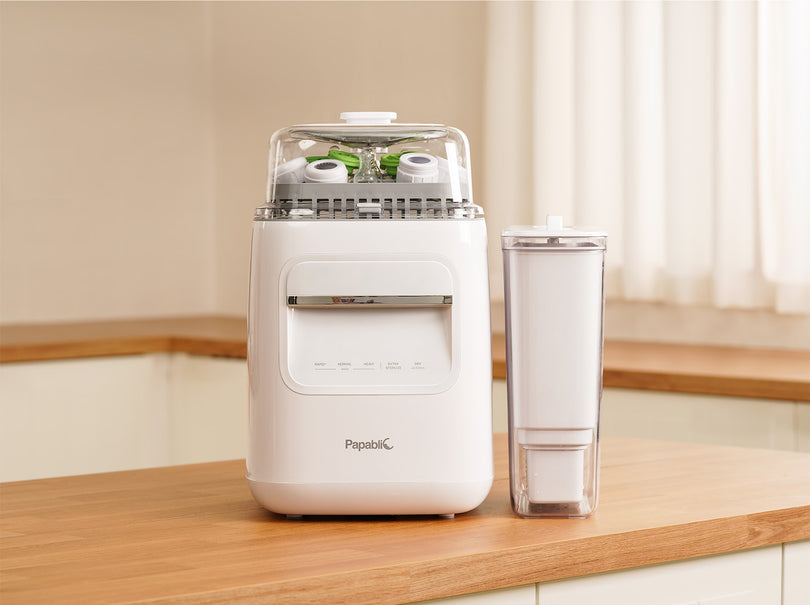
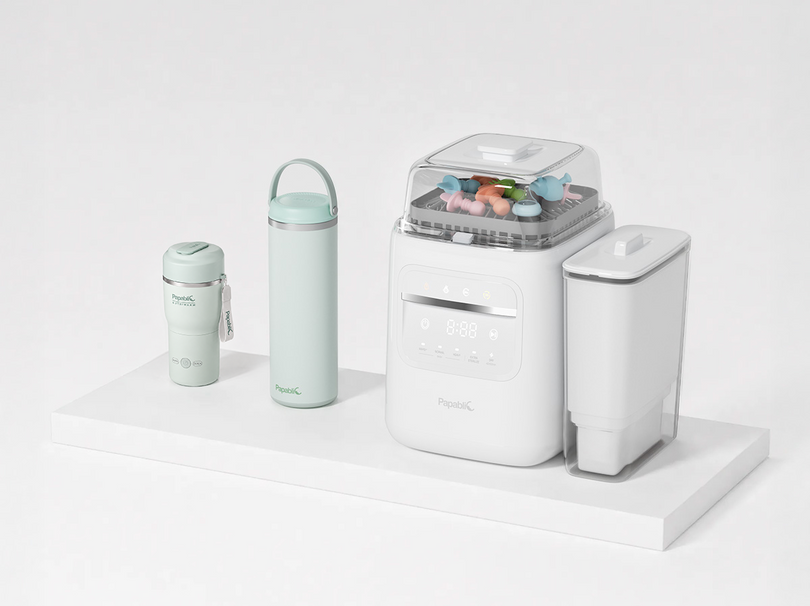
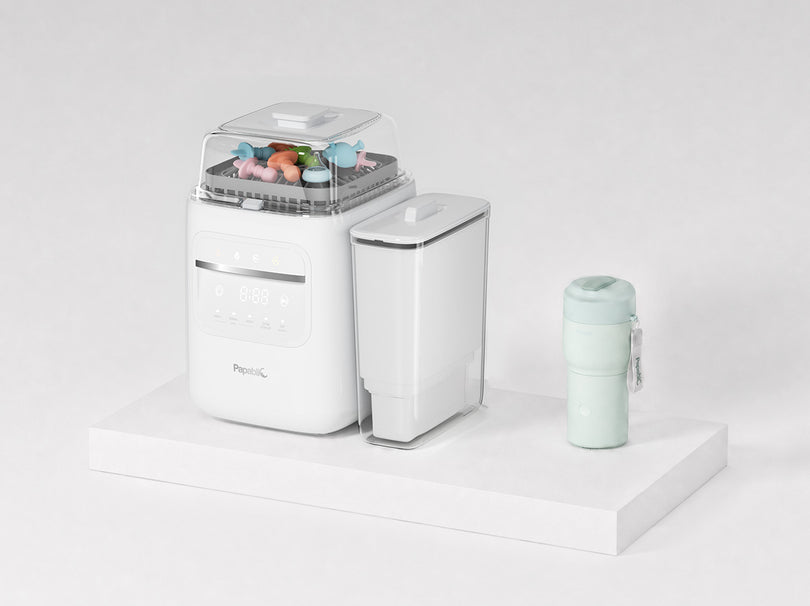
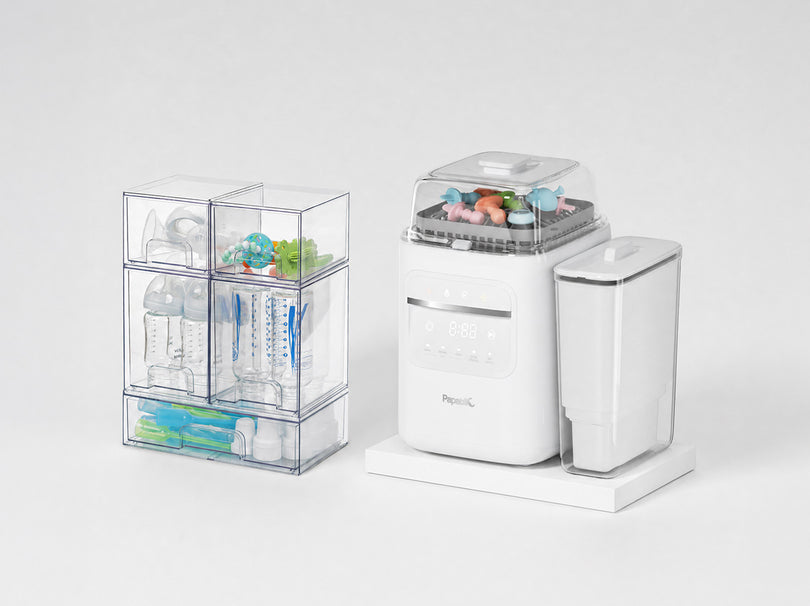
The Papablic SafeguardPlus™ Baby Bottle Washer System handles filtering, cleaning, sterilizing, drying, and storing in one automated cycle — meaning you load it once, upright, and walk away. It's specifically designed for one-handed use with no bending or straining required, which isn't a nice-to-have when you're postpartum — it's actually meaningful for your recovery. Instead of hovering over a sink at midnight with a bottle brush, you get to sit down, elevate your feet, and let your back rest. That 15 minutes matters more than it sounds when you're running on three hours of sleep.
When to See a Professional
The ACOG recommends speaking with your ob-gyn if back, neck, or joint pain is affecting your daily life — depending on your situation, they may suggest working with a physical therapist. Don't wait until you can barely stand. If your pain is getting worse instead of slowly improving, if you feel numbness or tingling traveling down your leg, or if the pain is accompanied by a fever, contact your provider right away. Postpartum back pain that persists without improvement beyond six months warrants a professional evaluation.
A pelvic floor physical therapist is often the most targeted resource available to postpartum women — they work specifically on the deep core and pelvic stability muscles that underpin spinal health, and they can identify issues a general practitioner might miss.
Mayo Clinic recommends starting postpartum exercise slowly and building up gradually — stop if you feel pain, and begin with something low-impact and simple, like a daily walk. Avoid jumping back into high-intensity workouts early, even when you're feeling the urge to reclaim your pre-pregnancy body. Your connective tissue is still being influenced by relaxin for weeks after birth, and pushing too hard before your body is ready creates setbacks, not progress.
The days are long, the nights are longer, and healing is happening even when it doesn't feel like it — even when your back aches and the sink is full and the baby is crying and you're doing your absolute best. Rest one foot on that step stool. Switch the hip. Sit all the way back in the chair. Small things, done gently, a hundred times a day — that's where recovery actually lives.
FAQ
Does postpartum back pain eventually go away on its own?
Yes, for most women. The majority of postpartum back pain resolves within six months of giving birth as hormone levels stabilize and muscle strength is gradually rebuilt — but this timeline can extend significantly if aggravating habits aren't addressed.
Can breastfeeding posture really cause that much back pain?
Yes. Holding a hunched, forward-leaning position for multiple long feeding sessions every day places sustained strain on your cervical spine and upper back, and over weeks this creates real muscular imbalance and pain patterns.
Is it safe to take ibuprofen for postpartum back pain while breastfeeding?
Yes, with your provider's guidance. Ibuprofen is generally considered compatible with breastfeeding and is commonly recommended by ob-gyns for postpartum pain management — but always confirm with your specific healthcare provider before starting any medication regimen.
Should I start doing core exercises right after birth?
No. While gentle movements like pelvic tilts are appropriate fairly quickly, high-intensity core training should wait until you have clearance from your healthcare provider — particularly if you have diastasis recti (abdominal muscle separation), which is common postpartum and requires specific rehabilitation.
Does having a C-section make postpartum back pain more likely?
Yes. The combination of spinal anesthesia, altered posture during recovery, and surgical trauma to the abdominal wall can all contribute to back pain after a cesarean — and because the core is directly affected by the incision, abdominal support during recovery is particularly important.