
The baby is finally — finally — asleep. You should be sleeping too. But instead, you're standing at the sink in a milk-splattered shirt, scrubbing the inside of a tiny bottle nipple with a brush that keeps slipping out of your pruney hands. There are four more bottles waiting on the counter. The drying rack is full. You're so tired your eyes are stinging, and somewhere in the back of your mind, you know you have maybe four hours before this whole cycle starts over again.
This is the part nobody puts on the baby shower invitation.
The dirty truth is that bottle-cleaning — the dismantling, scrubbing, rinsing, sanitizing, and waiting for things to actually dry — can easily swallow 45 to 60 minutes of your evening. And that time? It was supposed to be yours. That exhaustion you feel standing at that sink is completely valid. It isn't a small thing. Let's talk about what you actually need to do, what you don't, and how to get some of those precious minutes back.
What the CDC Actually Says About Cleaning Baby Bottles
One of the most anxiety-inducing parts of new parenthood is not knowing if you're doing enough. So let's ground this in what the experts actually recommend — and where there's a little more breathing room than you might think.
Cleaning vs. Sanitizing: They're Not the Same Thing
These two words get used like they mean the same thing, but they don't, and knowing the difference can genuinely reduce your mental load.
- Cleaning means using soap and hot water to remove milk residue and most germs. The CDC recommends cleaning all infant feeding items after every single feeding — bottles, nipples, rings, caps, valves, everything.
- Sanitizing is an extra step that uses heat (boiling, steam, or a dishwasher's sanitizing cycle) or a diluted bleach solution to kill significantly more germs after cleaning.
When Is Daily Sanitizing Non-Negotiable?
The CDC is clear on this: daily sanitizing is particularly important if your baby falls into any of these categories:
- Under 2 months old
- Born prematurely
- Has a weakened immune system due to illness or medical treatment
For healthy babies older than 2 months with access to clean municipal water, the CDC acknowledges that daily sanitizing may not always be necessary — as long as bottles are cleaned carefully after every feeding. The American Academy of Pediatrics echoes this, placing more emphasis on thorough cleaning and safe formula preparation and storage than on rigidly scheduled sterilization.
That said, most pediatric experts — and most lactation consultants, including me — still recommend at least once-daily sanitizing in the early weeks as a practical safety net. Newborn immune systems are genuinely immature, and milk residue in the crevices of a nipple is a warm, nutritious growth medium for bacteria. It isn't worth the risk when your baby is that small.
The Real Problem: It's Not the Rules. It's the Process.
The guidelines themselves aren't the issue. The issue is that following them by hand, correctly, every single day, is genuinely hard with a newborn in the house.
Here's what doing it manually actually requires, step by step:
- Disassemble every bottle completely (rings, valves, membranes — all of it)
- Wash each part in hot, soapy water using a separate basin (the CDC specifically advises against washing directly in your sink, where bacteria from raw food and general use can contaminate feeding items)
- Rinse thoroughly
- Boil for 5 minutes, or steam, or run through a dishwasher's full sanitizing cycle
- Air-dry completely on an unused dish towel or rack — the CDC is explicit that patting dry with a regular dish towel can transfer germs back onto the items you just cleaned
- Store in a clean, covered area
Every single feeding. Every single day. With a newborn who feeds 8 to 12 times in 24 hours, it's not hard to see why this routine can feel like it's slowly taking something from you.
A Quick Reference: Bottle Cleaning Methods at a Glance
| Method | Cleans? | Sanitizes? | Dries Safely? | Time Investment |
|---|---|---|---|---|
| Hand washing only | ✅ | ❌ | Slow (air dry) | High |
| Dishwasher (hot + heated dry) | ✅ | ✅ (if sanitize cycle) | ✅ | Medium |
| Boiling water | ✅ (pre-wash needed) | ✅ | ❌ (separate step) | High |
| Electric steam sterilizer | ✅ (pre-wash needed) | ✅ | Partial | Medium |
| All-in-one washer/sterilizer/dryer | ✅ | ✅ | ✅ | Low |
How to Reclaim Your Evenings Without Cutting Corners on Safety
Here's the honest advice I give to every exhausted parent I work with: protect your process, but make it easier to execute. Cutting the quality of cleaning out of exhaustion is how you end up with a sick baby. But finding a smarter system? That's just good postpartum self-care.
A few things that help:
- Rinse bottles immediately after feeding so milk doesn't dry and bake on — dried milk residue takes significantly more scrubbing to remove, and it's where bacteria lingers.
- Batch your sanitizing — do one thorough sanitizing cycle at night rather than after every single feed.
- Keep everything you need in one place. Hunting for the bottle brush at midnight adds up.
- If you're using a separate basin for hand washing (as the CDC recommends), clean that every few days too. A dirty brush in a dirty basin defeats the entire purpose.
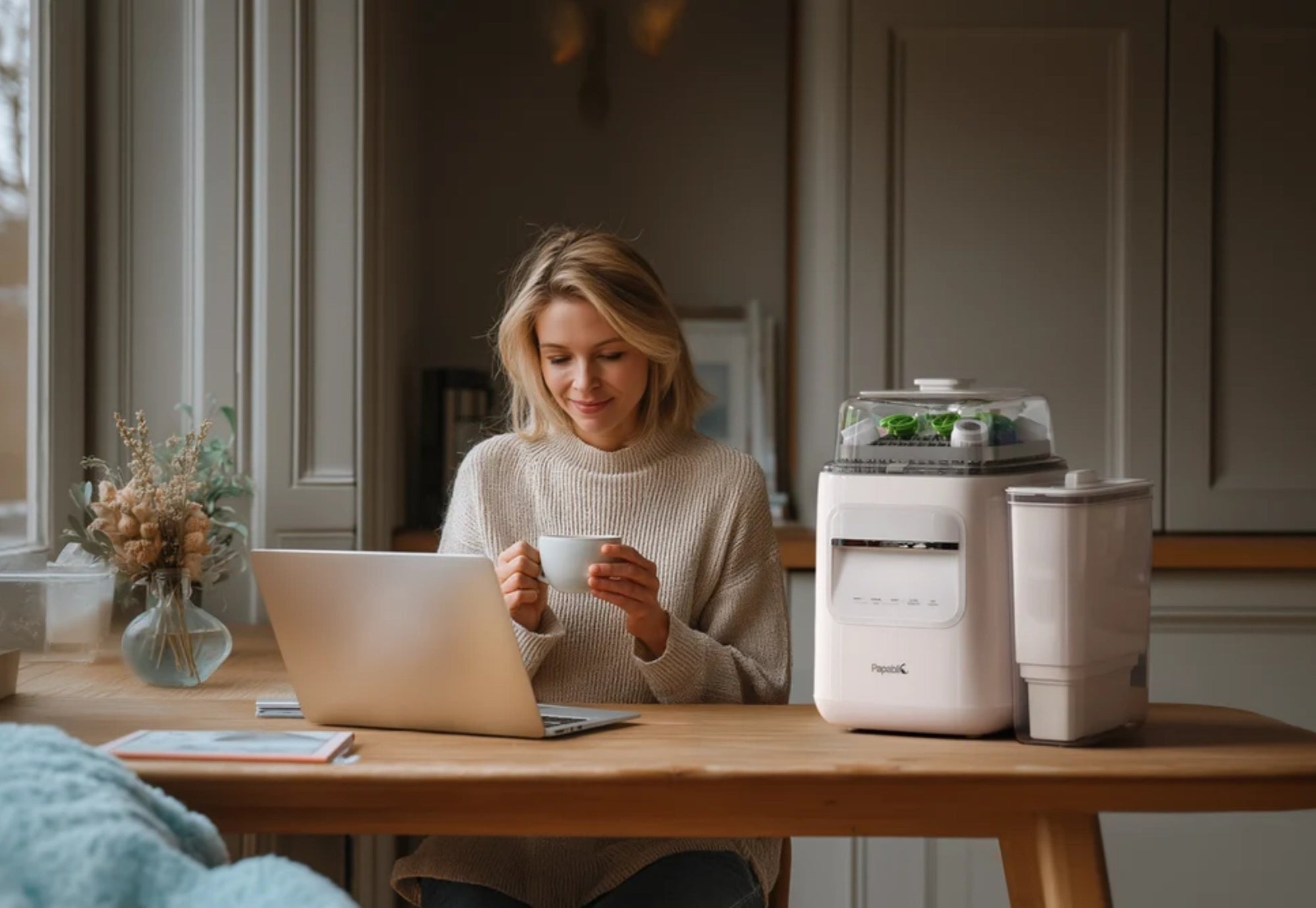
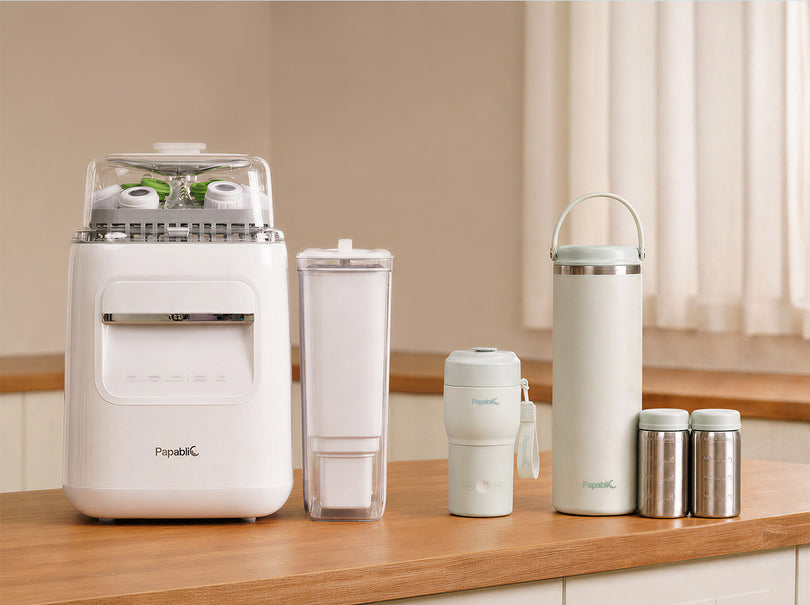
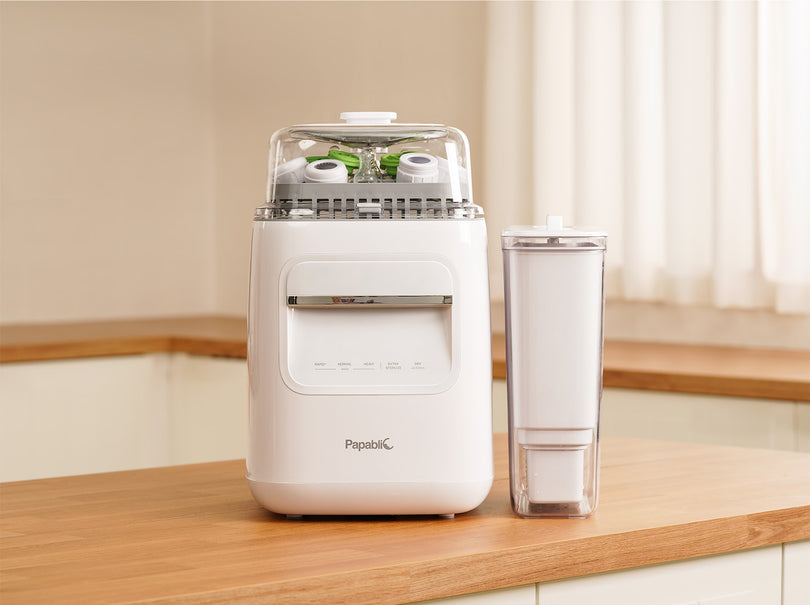
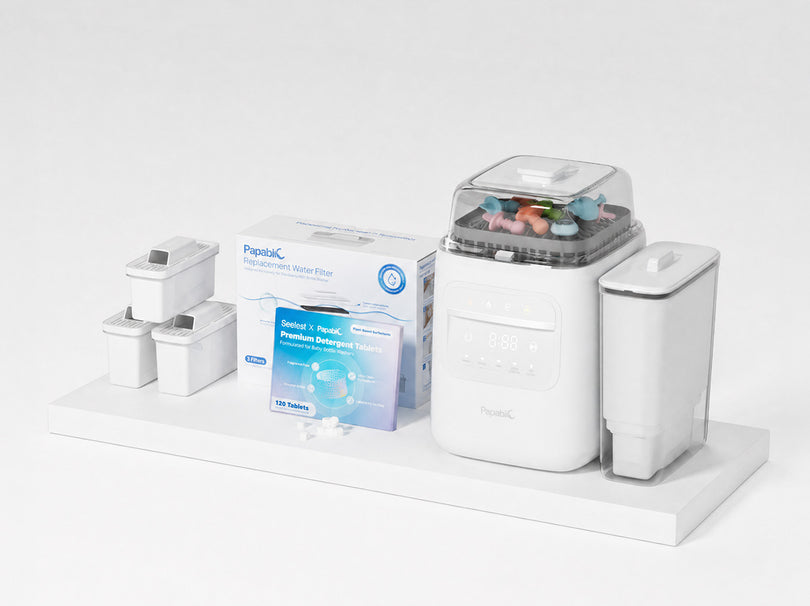
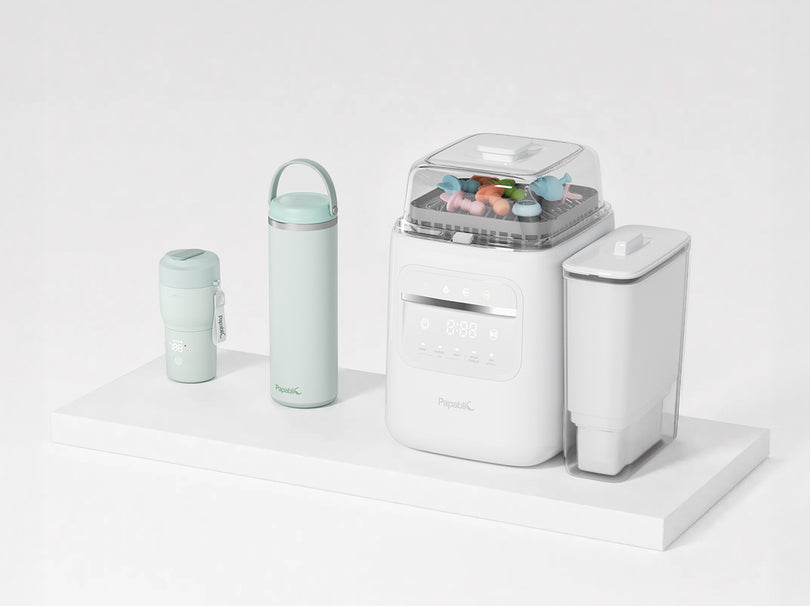
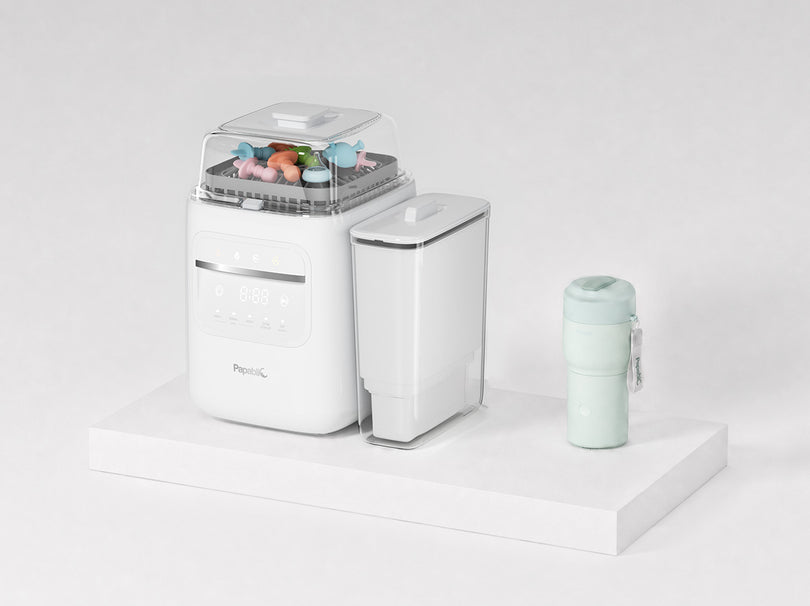
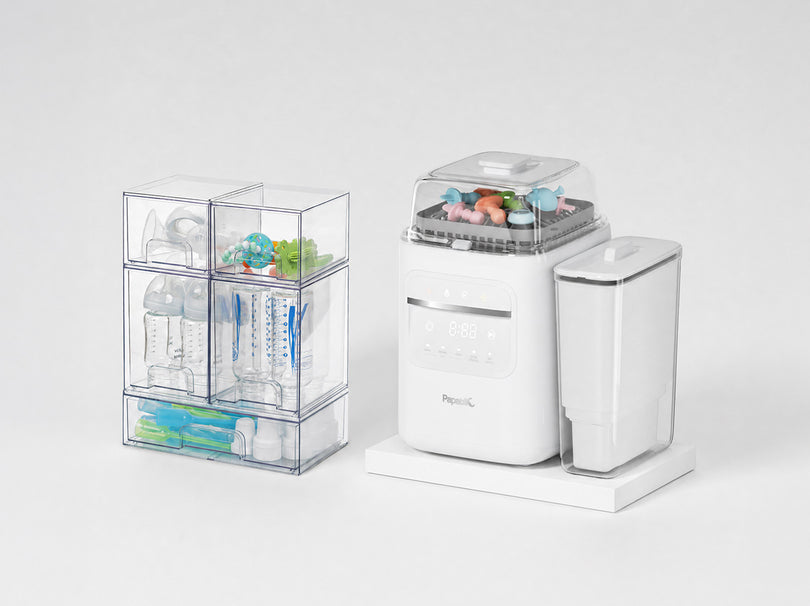
One thing that made a measurable difference for a lot of the moms I see in those first bleary weeks: moving from a multi-step manual process to the Papablic SafeguardPlus™ Baby Bottle Washer System. It handles the wash, the sterilize, the dry, and the store in a single automated cycle. The dual rotating spray arms reach inside every bottle corner, which matters because that's exactly where stubborn milk residue hides — the parts a standard bottle brush can miss when your hands are shaking from sleep deprivation at 11 PM.
The one-handed operation is a detail that sounds small until you're healing from a C-section, nursing a baby on one arm, or simply so depleted that bending over a sink feels like a lot to ask. Those 30 to 40 minutes you'd spend at the sink? You can lie down instead. That's not a luxury. That's postpartum recovery.
How to Store Clean Bottles Correctly (The Step Most Parents Skip)
You did everything right. You cleaned, you sanitized, you waited for everything to dry. Don't undo it by storing bottles incorrectly.
- Bottles must be completely dry before storing — any remaining moisture creates the conditions bacteria need to grow
- Store in a clean, covered container or cabinet, away from dust, pets, and general kitchen traffic
- Do not store bottles near diaper changing areas
- If a sanitized bottle sits for more than 24 hours without being used in an opened sterilizer, give it a quick rinse before the next use
FAQ
Does my baby's bottle need to be sterilized after every single feeding?
No. The CDC recommends cleaning bottles thoroughly with soap and hot water after every feeding, but a full sanitizing step is recommended once daily — or more frequently if your baby is under 2 months, was born prematurely, or has a compromised immune system.
Is it safe to dry baby bottles with a regular dish towel?
No. The CDC specifically advises against this. Dish towels can transfer germs back onto freshly cleaned and sanitized bottles. Always air-dry on a clean, unused surface or paper towel.
Can I wash baby bottles directly in my kitchen sink?
No. The CDC recommends using a separate wash basin rather than the kitchen sink, which can harbor bacteria from food preparation and general household use that may contaminate feeding items.
Do I need to sanitize bottles if my baby is older than 2 months and healthy?
Not necessarily, according to CDC guidelines — provided bottles are cleaned carefully and thoroughly after every feeding. That said, many pediatric practitioners still recommend at least once-daily sanitizing in the first several months as a reasonable precaution.
Is an all-in-one bottle washer and sterilizer genuinely safer than hand washing?
Yes, generally. Automated systems like the Papablic SafeguardPlus™ Baby Bottle Washer System can consistently reach temperatures and spray coverage that are difficult to replicate by hand — especially when you're exhausted and rushing. Lab-tested cleaning performance removes milk residue far more effectively than hand washing alone, and eliminating a tired parent from the equation reduces the chance of a step being skipped or rushed.