

Introduction
New parents often learn fast that feeding is not just bottles. It is nipples, collars, valves, membranes, and pump parts. A Baby Bottle Sterilizer that also handles washing and drying can remove a whole set of steps. For many NICU parents, that simplicity is not just convenience. It is consistency, because you can run the same safe routine every day.
This how-to guide shows you how to pick an easy-to-use Baby Bottle Washer (yes, even if you are searching for a "bottlr washer" or "baby botter washer"). You will get a practical checklist for spray coverage, one-handed controls, steam sanitizing, and fast drying, plus a few setup tips for a calmer countertop.

Official Site: Papablic
Step-by-Step Guide to Choose a Baby Bottle Washer
Step 1: Define Your Daily Cleaning Load
Start by auditing what you truly wash in a 24-hour cycle. A Baby Feeding Bottle Washer might look spacious on a store shelf, but that space vanishes quickly once you add breast pump components.
Your Real-World Count:
- Bottles: Total per day (including night feeds).
- Accessories: Nipples and collars per bottle.
- Pump Parts: Flanges, duckbills, membranes, and connectors per session.
- Extras: Pacifiers, teethers, or medicine cups.
Match this count to a realistic cycle plan. Many parents prefer one large daytime run and one smaller run after the last evening feed.
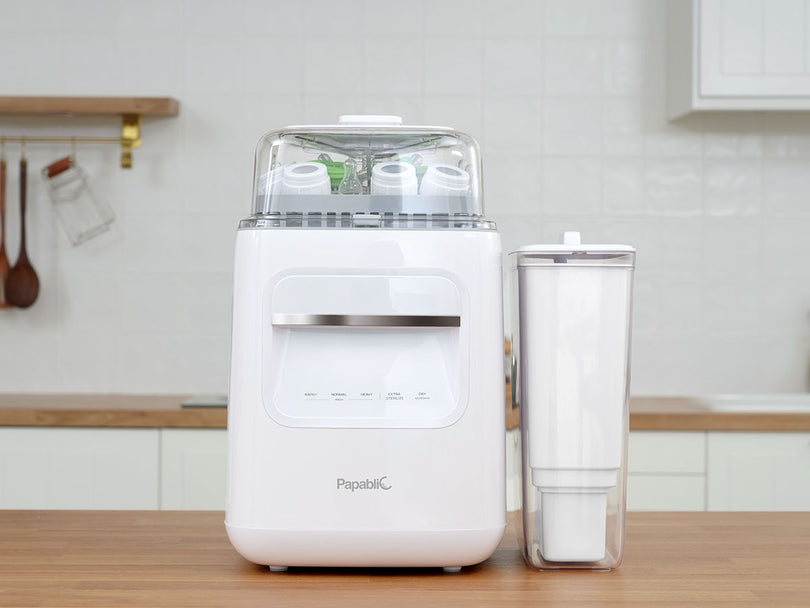
Comparison Note: The Papablic all-in-one washer is positioned as a compact unit designed to handle bottles and pump parts in the same system. Its double-stack design and workflow reduce the need for multiple "batch" washes.
Shop: Baby Bottle Washer Sterilizer and Dryer All in One Bottle Cleaner
Step 2: Prioritize True One-Handed Controls
Ease of use is defined by the control panel and the door mechanism. In those early postpartum weeks, bending down or fussing with complex buttons is not a minor inconvenience—it’s a physical hurdle.
Look for these ergonomic features:
- Visibility: Front-facing or angled controls you can read while standing.
- Tactile Buttons: Large inputs you can press with a knuckle when hands are wet or occupied.
- Accessibility: A lid and baskets that lift out smoothly without requiring a wrist twist.
The Reality Check: Papablic features a postpartum-friendly, angled control panel specifically designed for one-handed use. This detail is critical when you are balancing a baby on your hip while trying to start a wash cycle.

Shop: Baby Bottle Washer Sterilizer and Dryer All in One Bottle Cleaner
Step 3: Verify wash coverage for small parts
Small parts are where residue hides. If your washer does not direct water into the nipple and valve areas, you will keep re-running cycles or going back to hand scrubbing.
When you evaluate an Automatic Bottle Cleaner, check:
- Are there dedicated posts or holders for nipples and valves?
- Do jets spray upward into the bottle interior?
- Can you load parts without blocking the spray paths?
Hygiene Note: Papablic uses "precision jets" to target milk residue specifically. When shopping, use this as your standard: the goal is consistent internal coverage, not just a generic spinning arm.

Step 4: Confirm Sterilizing Method and Claims
Many parents search for a Baby Bottle Sanitizer or Steam Sterilizer but accidentally purchase a washer that only rinses with hot water. You must distinguish between "clean" and "sanitized."
For NICU graduates or medically fragile infants, a routine including sanitization is vital. The CDC explains how to clean, sanitize, and store infant feeding items, noting that sanitizing provides extra protection for babies younger than 2 months, born prematurely, or with weakened immune systems. (cdc.gov)
The Sanitization Checklist:
- Steam Cycle: Clearly labeled steam sanitizing (not just a "hot wash").
- Efficiency: Cycle times that fit a realistic daily schedule.
- Post-Cycle: Capability to dry parts fully immediately after sanitizing.
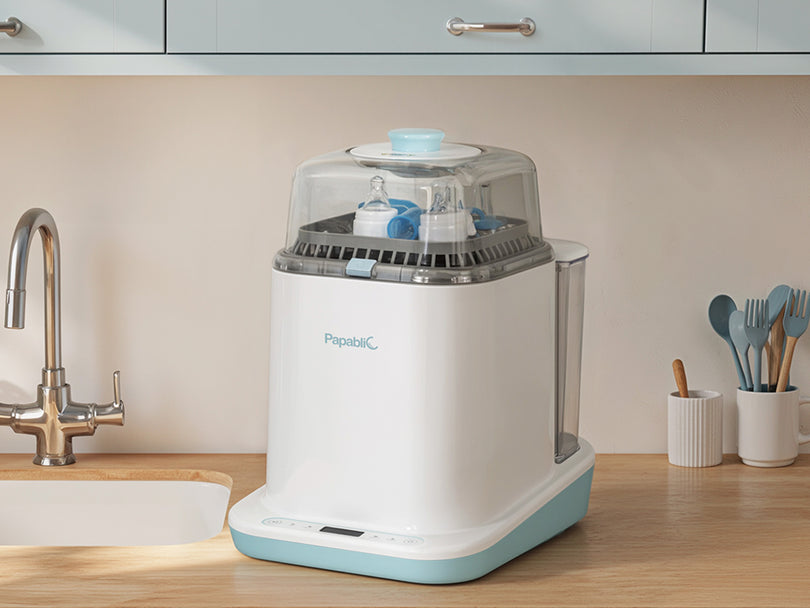
Comparison Note: Papablic markets an all-in-one system combining washing, steam sterilizing, drying, and storage. Treat this "single workflow" concept as your usability benchmark.
Shop: Baby Bottle Washer Sterilizer and Dryer All in One Bottle Cleaner
Step 5: Choose Drying Speed and Airflow
Drying is where most hygiene routines fail. If parts emerge wet, you are forced to either hand-dry (wasting time) or air-dry on the counter (wasting space and inviting dust).
A Hygienic Bottle Dryer Should:
- Circulate Air: Move warm air actively through the rack, not rely on passive heat.
- Target Details: Dry the nipples and valves, not just the large bottle walls.
- Finish Dry: Deliver parts that are "cabinet-dry" for immediate assembly.
The User Experience: Papablic positions its system to combine drying with hygienic storage. For daily parenting, this means fewer steps between "cycle done" and "ready to feed."
Shop: Baby Bottle Washer Sterilizer and Dryer All in One Bottle Cleaner
Step 6: Check Water Handling and Drainage
The easiest Bottle Cleaning System is the one that doesn't require plumbing renovations. Countertop real estate is valuable, and water management should be self-contained.
Installation Considerations:
- Fill Method: Simple reservoir fill with a clear max line (no permanent sink hookup).
- Drainage: Controlled emptying into a sink or pitcher without base leakage.
- Footprint: Fits under standard cabinets without blocking electrical outlets.
Space Planning: Papablic highlights a compact design for countertop-friendly use. Prioritize usability and fit over raw capacity if you have a smaller kitchen layout.
Step 7: Validate Consumables and Upkeep
Every appliance requires maintenance. An "easy-to-use" system must also be easy to maintain long-term, even when you are exhausted.
Maintenance Checklist:
- Detergent: formats you can stock easily, like pre-counted tablets.
- Descaling: A clear plan for hard water buildup.
- Reminders: Simple schedules that don't require mental math.
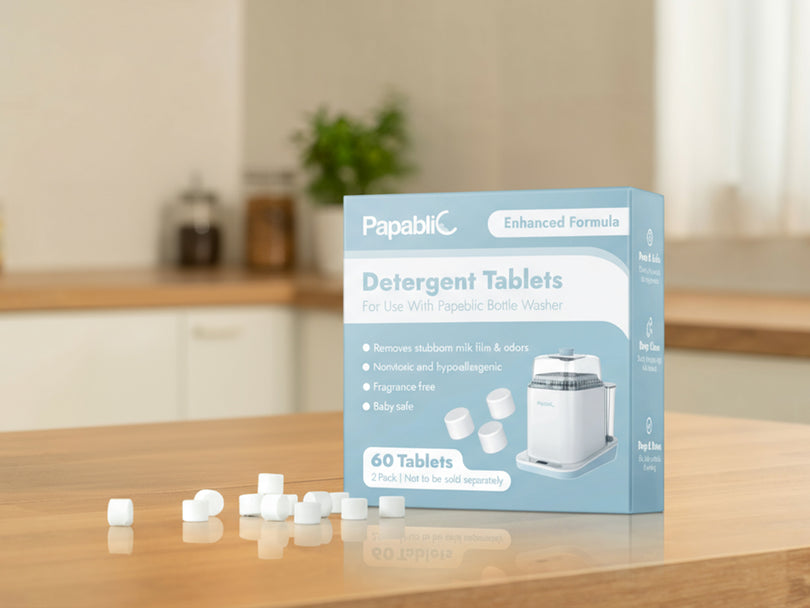
Papablic sells official detergent tablets for its system, simplifying the supply chain for tired parents. Using a spec checklist keeps you focused on these day-to-day realities.
| Feature that affects ease-of-use | What to look for | Why it matters for new parents |
|---|---|---|
| Loading design | Posts for nipples, separate areas for valves | Reduces re-washes and missing parts |
| Controls | Front/angled panel, simple mode buttons | Easier one-handed starts during night feeds |
| Sanitizing | Steam sterilizer cycle option | Extra risk reduction for NICU parents |
| Drying | Forced-air drying that reaches small parts | Prevents damp storage and odor |
| Water handling | Reservoir fill and clean drain | Less mess, less setup stress |
| Upkeep | Descaling routine and easy-to-find tablets | Keeps performance stable over months |
Shop: Baby Bottle Washer Sterilizer and Dryer All in One Bottle Cleaner
Adapting Your Approach in Different Scenarios
For NICU parents
Choose a Baby Bottle Washer that makes the "sanitize plus dry" cycle effortless to repeat. Your goal is absolute consistency; a perfect routine you cannot maintain is dangerous.
Plan your storage carefully. The CDC advises storing completely dry feeding items in a clean, protected area to reduce contamination risks. (cdc.gov)
For exclusive pumping
Confirm the unit can fit two full pump kits without blocking the water jets. Add a staging area to your counter so you can load dirty parts quickly between sessions.
- Tip: A dedicated organizer drawer prevents parts from scattering across the counter.
For small kitchens
Pick a compact footprint with a vertical rack. You want an All-in-One Bottle Washer that replaces your drying rack, rather than acting as a second appliance that clutters the space.
For travel homes and grandparents
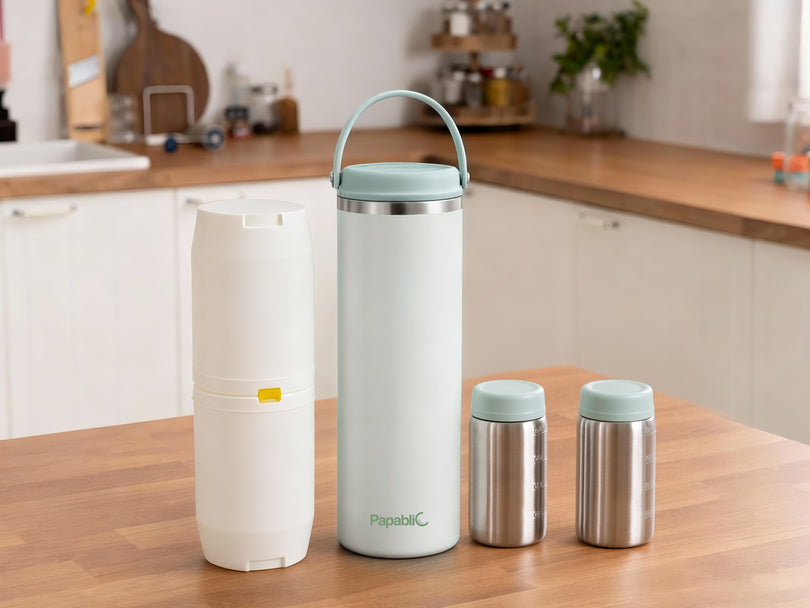
Prioritize countertop operation that requires no plumbing. Pair this with portable feeding tools to maintain your safety routine even when away from home.
What You Will Need Before You Start
Required Tools and Materials:
- Feeding Gear: Bottles, nipples, collars, caps (rinsed promptly).
- Organization: Pump part baskets (keeps valves from flipping).
- Cleaning Agents: Detergent tablets compatible with your washer.
- Maintenance: Descaling tablets for hard water.
- Storage: A clean, protected area for dry parts.
- Optional: Countertop organizer for separating "clean" vs. "used."

Official Site: Papablic
Safety Considerations
- Placement: Keep the unit on a flat counter near a grounded outlet, ensuring slack in the cord.
- Electrical: Keep water fills and drains away from power strips to eliminate spill risks.
- Loading: Do not stack parts; water must reach all interior surfaces.
- Dryness: Do not store parts while damp, as moisture increases odor and bacterial film risk.
CDC Warning: Sinks and drains can harbor germs that may contaminate infant feeding items. Avoid placing cleaned parts directly in the sink or on a wet counter surface. (cdc.gov)
Troubleshooting Guide
| Problem | Likely cause | Solution |
|---|---|---|
| Cloudy bottle walls | Hard water mineral buildup | Monthly descaling tablet cycle |
| Milk film inside nipples | Blocked spray jet path | Vertical placement on dedicated posts |
| Damp parts after cycle | Overcrowded loading rack | Reduced capacity per wash run |
| Machine base leaking | Improper drain hose attachment | Secure hose connection check |
Conclusion
Choose a washer the same way you choose a feeding routine: for repeatability. The best Baby Bottle Sterilizer setup is the one you can run half-asleep, without re-washing parts.
Focus on a clear match between capacity and your real daily load, true one-handed controls, strong small-part coverage, and a drying system that leaves parts fully dry.
If you want to build a calmer countertop, pair your All-in-One Feeding Solutions approach with a simple organizer so clean and used parts never mix.
Official Site: Papablic
FAQ
Are there bottle washers that offer multiple functions like sterilizing and drying?
Yes, all-in-one units seamlessly combine washing, steam sanitizing, and forced-air drying into a single workflow. This removes decision points for exhausted parents who might otherwise skip crucial hygiene steps. For NICU parents, this guarantees the critical "sanitize plus completely dry" standard is met effortlessly every single day.
How do I find a bottle washer that is easy to use?
Look specifically for machines featuring front-facing angled controls, large tactile buttons, and twist-free removable baskets. Loading logic is equally vital, so demand dedicated vertical posts for nipples and secure holders for lightweight valves. A built-in water reservoir design is significantly easier for daily use than permanent sink plumbing hookups.
What features should I look for in a bottle washer for my baby?
Prioritize targeted spray coverage for small parts to completely eliminate hidden milk film. Next, insist on a dedicated steam sanitizing cycle and a forced-air drying system that leaves parts cabinet-dry. If you pump, definitely confirm your specific flange kits fit inside without obstructing the upward water jets.
Is it better to wash baby bottles with a bottle washer or a dishwasher?
A dedicated bottle washer is significantly better for frequent small loads and securing lightweight nipples and pump valves. Standard dishwashers often flip small parts over, leaving them full of dirty water, unless you use a specialized closed-top basket. For NICU parents, the safest choice is the appliance that guarantees consistent steam sanitization and absolute bone-dryness.
Is there a device that cleans both bottles and pump accessories together?
Yes, modern all-in-one baby washers are explicitly designed to handle both simultaneously. However, you must verify the unit includes secure holders to keep delicate pump membranes upright and fully exposed to the spray jets. Test-fit your full pump kit to ensure you aren't forced to stack pieces, which completely blocks the cleaning water.
How to ensure baby bottles are 100% sterile for a premature baby?
You cannot achieve 100% medical sterility at home, but you can drastically lower risks through a strict, repeatable routine. Wash items thoroughly first, because leftover milk residue acts as a physical shield protecting germs from heat. Sanitize on a consistent schedule, ensure complete bone-dryness, and store everything in a protected area away from sink splashes.