


Introduction
You pull the dishwasher rack out and see it immediately: a silicone nipple flipped upside down, filled with gray, lukewarm water that smells faintly of last night's lasagna. It creates a sharp pit in your stomach—is that cloudy film inside the anti-colic valve actually safe for a newborn's fragile immune system? You are looking for hygiene certainty, but you are staring at a "clean" dish that requires a second wash by hand.
This isn't just about your appliance settings. In this guide, we compare the dedicated Baby Bottle Washer against the standard household dishwasher to see which one truly eliminates milk residue and keeps pump parts mold-free. We will help you decide if a specialized machine is the solution to your 2 a.m. feeding anxiety.
Understanding Papablic Bottle Washer

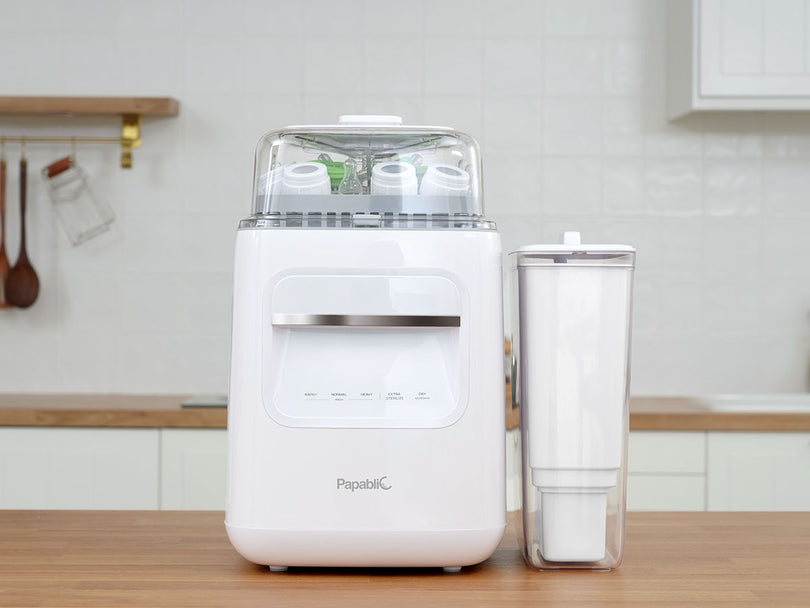
The Papablic Baby Bottle Washer is an all-in-one countertop system built specifically for the chaos of daily feeding. It is not just a miniaturized dishwasher; it is a 4-in-1 system that cleans, sterilizes, dries, and stores. The design focuses on high capacity in a small footprint, holding 4+ bottles or 2 full pump kits.
This matters because the internal racks are engineered for lightweight plastics that usually flip over in a standard machine. The goal is to remove fatty milk residue from tight corners without you having to pre-scrub every single piece.
Key features for tired parents:
- 4-in-1 workflow: Cleans, sterilizes, dries, and stores in one button press.
- Postpartum-friendly: Simple controls designed for one-handed use while holding a baby.
- Dry finish: Eliminates the "damp parts" problem so you can store immediately.
The strategic advantage here is routine consistency. You aren't rearranging greasy dinner plates to fit delicate valves. You load dirty milk items, and you get dry, sterile parts back. The trade-off is counter space and the need to maintain a separate device.
Shop: https://papablic.com/products/baby-bottle-washer-sterilizer-and-dryer-all-in-one-bottle-cleaner
Understanding Dishwashers
Dishwashers are miracles of kitchen throughput, designed to blast food off ceramic and metal. If you already run a full load every night, tossing bottles in seems efficient. However, they are built for heavy, stable items, not lightweight polypropylene parts.
Where dishwashers struggle with baby gear:
- Geometry issues: Spray arms often miss the deep corners of narrow-neck bottles.
- Retention: Small valves and nipples can slip through racks or flip over, filling with dirty water.
- Drying limits: Plastics cool quickly, often leaving you with dripping wet parts that need towel drying.
A dishwasher excels at volume. If you have a large family and run high-heat cycles daily, it can work. But for NICU parents or pumping moms, the variability of "did it actually clean inside the flange?" can be a major stressor.
Head-to-Head Comparison
Cleaning performance on milk residue
Papablic: This machine is built around the specific geometry of bottle necks and pump valves. Papablic markets its Baby Bottle Washer to target milk residue explicitly. Because every jet is aimed at a bottle or part, you don't get "shadow zones" where water can't reach.
Dishwasher: A dishwasher removes soil well if the water hits it. The problem is placement. If a nipple falls over or a bottle is shielded by a large bowl, the spray is blocked. You might find a thin, cloudy film left inside the bottle shoulder, forcing you to re-wash by hand.
Winner: Papablic for consistency with narrow crevices and lightweight parts.
Sanitizing and sterilizing confidence
Papablic: This unit treats sterilizing as a default step, not an extra setting. It combines wash, sterilize, and dry into a locked routine. For parents managing a compromised immune system, this "set it and forget it" confidence is crucial.
Dishwasher: Many dishwashers have an NSF/ANSI 184 certified sanitizing cycle (NSF). This is effective for reducing bacteria, but it relies on you selecting the right high-heat cycle every time. It also doesn't necessarily mean "sterilizing" in the way a steam chamber does.
Winner: Papablic for automated, baby-specific hygiene assurance.
Drying and storage
Papablic: Drying is often the dealbreaker. A Bottle Sterilizer and Dryer changes your workflow by ensuring parts are bone-dry. Papablic’s system allows you to leave parts in the machine, acting as a sterile storage cabinet until the next feed.
Dishwasher: Plastics are notorious for staying wet in dishwashers. Even with heated dry, water pools in the rim of bottle collars and the tip of nipples. This forces you to handle clean parts with a towel or air-dry them on a counter, which re-introduces dust and kitchen germs.
Winner: Papablic for preventing moisture-related bacteria growth.
Convenience, throughput, and workflow fit
Papablic: The convenience here is separation. You aren't negotiating space with salsa-covered bowls. It fits the rhythm of a pumping schedule—wash, wear, repeat—without waiting for the dishwasher to fill up.
Dishwasher: The convenience is scale. If you generate 40 dirty dishes a day, adding bottles is easy. But if you need that one specific flange right now, running a two-hour dishwasher cycle for three items feels wasteful.
Winner: Split decision. Dishwashers for batch scale; Papablic for rapid, dedicated turnover.
Which Should You Choose?
Quick comparison table
| Feature/Dimension | Papablic Bottle Washer | Dishwasher |
|---|---|---|
| Primary Job | Dedicated bottle cleaning system | Mixed household dish cleaning |
| Functions | 4-in-1 (Clean, Sterilize, Dry, Store) | Wash (Sanitize dependent on cycle) |
| Capacity (as stated by Papablic) | 4+ bottles or 2 full pump kits | Varies by dishwasher size and rack layout |
| Small parts (nipples, valves) | Designed for baby parts and tight geometry | Placement-sensitive; can flip/pool water |
| Drying outcome | Designed for dry parts plus storage | Plastics often retain droplets; may need extra handling |
| Best for | NICU parents, exclusive pumping, high-frequency feeding | Big household loads, budget-focused setups |
| Limitation | Counter space, added appliance maintenance | Variable results across models/cycles; mixed-load contamination risk |
Choose Papablic if you want a NICU-style routine at home
If you are a NICU parent or recently discharged, hygiene anxiety is real. You want a Quick Bottle Sterilizer workflow that removes variables. Choose this if you are exclusively pumping and need to turn around kits multiple times a day.
It is also the right choice if you hate the "wet part" problem. The Fast Drying Baby Bottle Sterilizer function means no more shaking water out of tubes at 3 a.m.
Choose based on bottle count and timing, not just features
Select Papablic if:
- You need predictable turnaround between feeds.
- You want an All-in-One Bottle Washer to act as a sterile cabinet.
Select a Dishwasher if:
- You have enough bottles to last 24 hours without washing.
- You are disciplined about pre-rinsing food debris.
Decision steps (simple, practical)
- Define Hygiene Goal: Do you need to just clean, or do you need to sterilize? (CDC highlights the difference).
- Count Inventory: Map your bottles and pump parts per 24 hours.
- Audit Drying: If you hate towel-drying nipples, prioritize a dryer-equipped unit.
- Check Space: Measure your counter vs. your dishwasher capacity.
Mistakes to avoid (whichever method you pick)
- The Wet Storage Trap: Never store damp parts in a closed bin; it breeds mold.
- The "Magic" Box Fallacy: Don't trust a machine without checking for residue first.
- Overcrowding: If water can't circulate, it can't clean.
Conclusion
A dishwasher can clean baby bottles effectively if you have the right habits, the right cycle, and enough patience to dry plastics by hand. It is a practical choice for established families with high daily dish volume. But for the specific, high-stakes hygiene of the newborn phase, it often falls short on consistency.
The Papablic All-in-One Bottle Washer wins on repeatability. It targets the pain points that actually keep you up at night: milk film in valves, wet storage risks, and the mental load of managing a separate sanitizing step. If you want a feeding-first routine that guarantees a dry, sterile bottle every time you reach for one, the specialized tool is the better investment.
FAQ
Does a bottle washer clean baby bottles more thoroughly than a dishwasher?
Yes, typically a dedicated bottle washer cleans small parts more thoroughly because the jets are specifically positioned to flush out narrow nipples and valves. Dishwashers are designed for flat plates and open bowls, meaning spray arms often miss the deep crevices of a bottle or pump flange. Additionally, bottle washers prevent lightweight parts from flipping over and filling with dirty water, a common issue in standard dishwashers.
Whats the difference between sanitize and sterilize for baby bottles?
Sanitizing reduces bacteria to a safe level, while sterilizing kills a wider range of microorganisms using higher heat or steam. For a healthy 6-month-old, sanitizing is usually sufficient, but for newborns or premature babies, sterilizing offers a critical extra layer of protection. An Automatic Bottle Cleaner with a steam cycle automates this higher standard so you don't have to boil water manually.
Can I wash pump parts and bottle nipples in the dishwasher every day?
Yes, you can, provided you use a secure mesh basket to keep small parts from falling into the heating element or drain. However, be aware that the high heat and harsh detergents of a dishwasher can sometimes degrade silicone parts faster than a specialized bottle washer. You must also ensure they dry completely, as dishwasher drying cycles often leave plastics wet.
Why do baby bottle parts come out wet after a dishwasher sanitize cycle?
Plastic parts come out wet because they have low thermal mass and cool down faster than the dishwasher interior, causing condensation to settle on them. Unlike ceramic plates that hold heat and self-dry, silicone nipples and plastic collars trap this moisture in their curves. A dedicated Bottle Sterilizer and Dryer uses forced hot air specifically to solve this issue.
Which is better for NICU parents: a bottle washer or a dishwasher?
A dedicated bottle washer is generally better for NICU parents because it eliminates cross-contamination risks from food waste and guarantees a sterile storage environment. The consistency of a "wash, sterilize, dry" cycle reduces the mental load and fear of human error during a high-stress time. It ensures that every single feed comes from a controlled, sanitary source.
How do I avoid cross-contamination if I use a dishwasher for baby bottles?
To avoid cross-contamination, always pre-rinse heavy food soils from your other dishes before running the load with baby bottles. Place baby items in a dedicated top-rack basket to keep them separated from grease and large debris. Most importantly, do not let clean baby parts sit in a damp, warm dishwasher for hours after the cycle finishes.
Do I still need to pre-rinse bottles before using an all-in-one bottle washer?
Yes, a quick rinse is recommended to remove the bulk of the milk fat and prevent odors from developing in the machine's filter. While the washer handles the heavy lifting of scrubbing and sanitizing, a 5-second rinse prevents milk proteins from drying out and becoming stubborn glue. Think of it as protecting your machine so it can protect your baby.

