




Introduction
Still doing the midnight sink shuffle because valves, nipples, and pump parts keep piling up faster than you can wash them? The confusion usually hits when you realize a regular dishwasher load feels too big and too slow, but handwashing feels endless, and you are never fully sure you got every last milk film out of the tight corners.
Getting the wrong baby bottle washer costs you twice: once in wasted cycle time (because you re-run loads or still scrub by hand), and again in hygiene risk when parts come out damp or with residue trapped in seams. This guide helps you set a confident budget for a high-performing Baby Bottle Washer by breaking down real cost drivers, the features that actually change outcomes, and a decision path that fits new parents and NICU parents.
Official Site: Papablic
Understand the True Cost of Clean
Map Out Your Three Real Expenses
Before selecting a price tier, you must separate the financial costs into three distinct buckets. Ignoring these leads to underbuying the machine or overpaying for features you ignore.
- Upfront hardware cost: The device, specialized racks, and pump adapters.
- Ongoing supplies: Detergent tablets, HEPA filters, and mineral descaling solutions.
- Utility drain: The raw electricity and hot water consumed per cycle.
Supplies are the ultimate hidden lever in your budget. A Bottle Cleaning System requiring proprietary tablets feels convenient, but you must calculate that daily expense before committing.
Separate Washing from Sanitizing and Drying
Most frustrating appliance purchases happen when parents mix up three entirely different physical processes.
- Washing: Physically blasting away sticky milk fats and protein films.
- Sanitizing: Using lethal steam to destroy surviving microscopic pathogens.
- Drying: Evaporating all moisture to stop mold and bacteria from returning.
An All-in-One Bottle Washer saves time, but only if the drying stage works flawlessly. Damp bottle collars force you to air-dry on a rack, completely ruining the convenience you paid for.
Match Your Budget to Your Vulnerability Profile
Your baby's immune status completely dictates what features are worth your money. Healthy newborns require fast turnaround times and automated scrubbing. NICU graduates demand daily steam sanitization and totally sterile storage environments.
A 2025 rapid evidence summary confirmed that strict sterilization drastically reduces bacteria on bottles and teats. (assets.publishing.service.gov.uk) When handling higher-hygiene routines, precision matters more than a budget price tag.
Pick a Workflow That Actually Fits Your Kitchen
Map your physical kitchen reality before swiping your credit card. Sink setups are great for single items but terrible for evening batches. Dishwashers are good for bulk, but lightweight baby parts often flip over and melt.
Counter stations create a dedicated Smart Baby Bottle Station away from dirty dishes. Investing in All-in-One Feeding Solutions limits your mental load, so you just load the greasy parts, press a button, and walk away.
Navigate the Price Tiers Without Regret
Entry tier: pay for basic washing, not perfect drying
The Entry Tier: Expect Damp Corners
Entry-level models offer basic spray washing but severely lack drying horsepower. They reduce your time spent scrubbing with a bristle brush, but you must tolerate air-drying.
Watch out for these cheap-tier red flags:
- Weak jets that miss the inside of anti-colic straws.
- Leftover soap film coating the silicone.
- Cool-air fans that leave puddles in the bottle bases.
Many parents regret cheaping out here. You essentially pay for an overpriced pre-rinse basin.
The Mid-Tier: Genuine All-in-One Convenience
Mid-tier machines introduce targeted jet patterns, secure accessory racks, and aggressive heated drying. This is where an Automatic Bottle Cleaner actually replaces the sink.
Crucial upgrades worth paying for:
- Strategic spray paths hitting internal bottle shoulders.
- A legitimate, high-heat steam sterilization phase.
- Forced-air drying optimized for tight plastic crevices.
If you are balancing the costs of Bottle Warmers alongside a washer, this tier provides the best overall functional value.
The Premium Tier: Paying for Total Peace of Mind
Premium devices justify their hefty price tags by eliminating edge-case failures. You are paying for zero damp valves, zero missed milk pockets, and zero necessary re-washes.
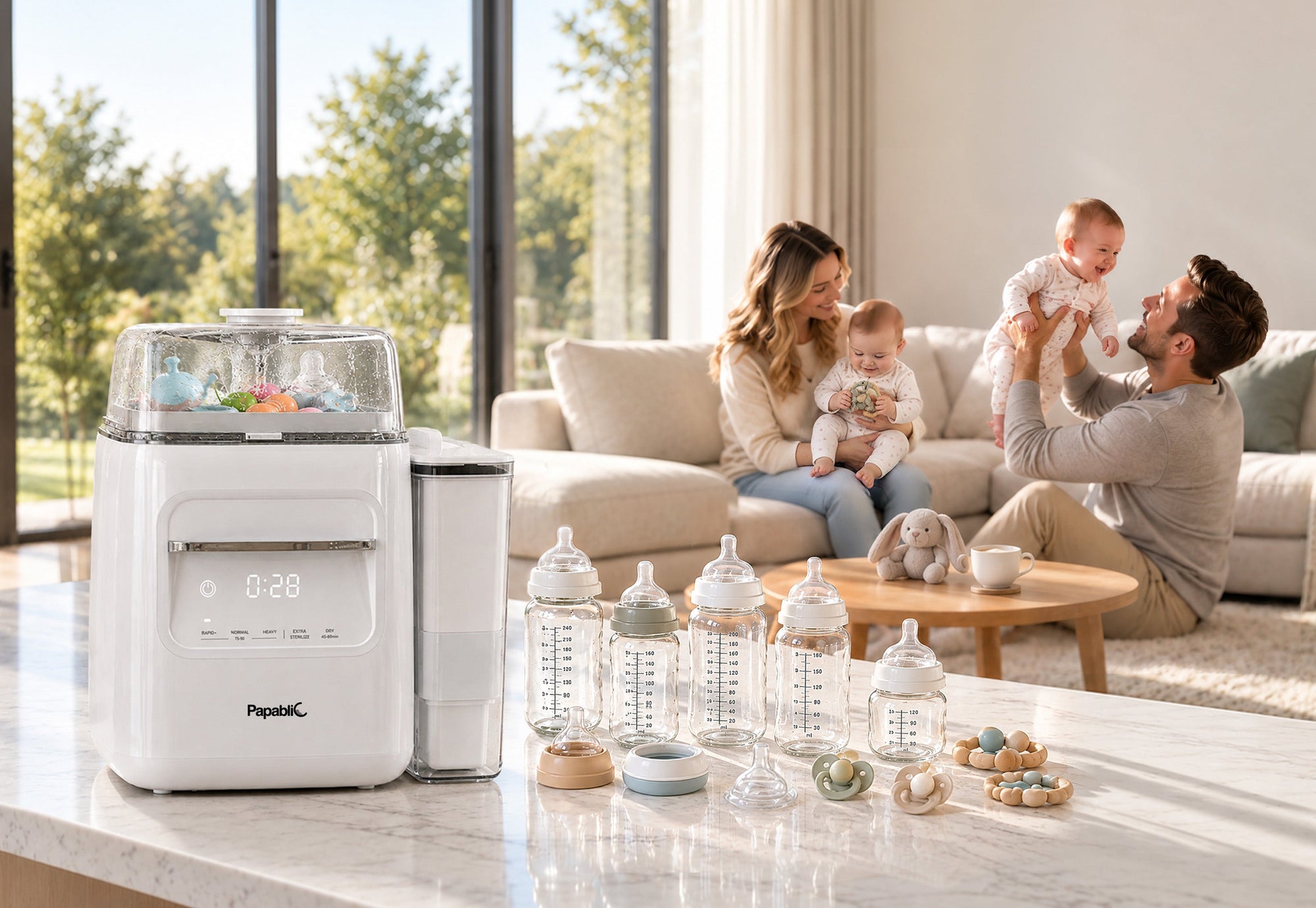
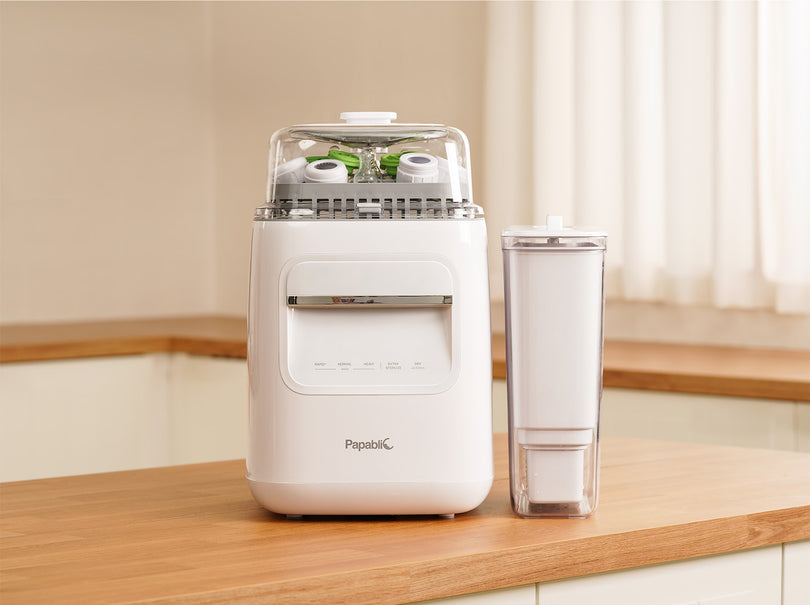
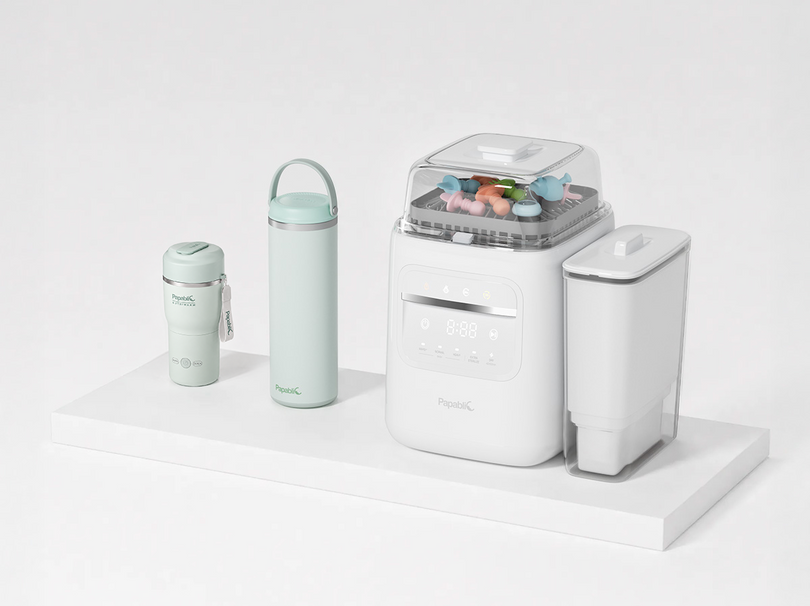
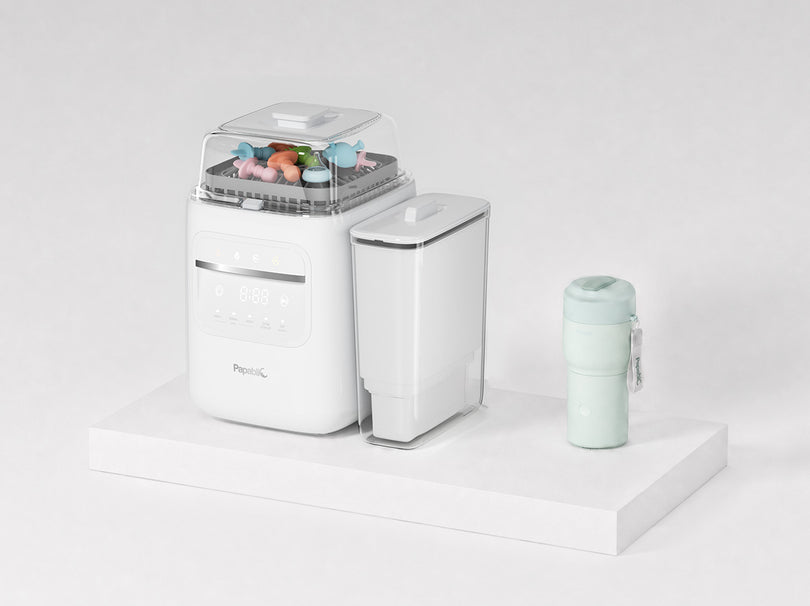
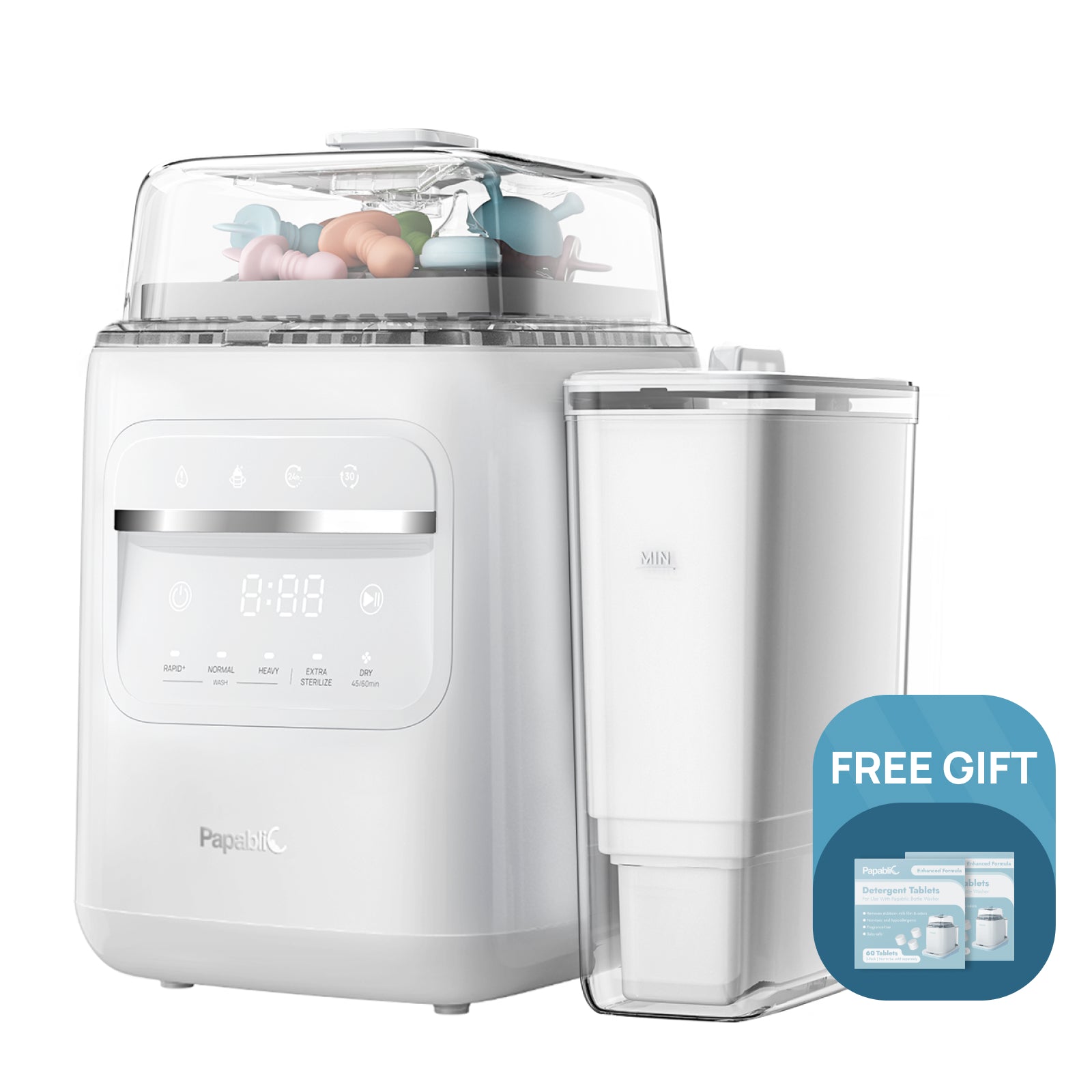
Papablic designed the SafeguardPlus as a 5-in-1 system to purify your tap water directly via PurifyClean technology. It easily holds 8 bottles plus complex wearable pumps, securing them in hygienic storage afterward. (papablic.com)

Stop Paying Premium Prices for Weak Drying
Drying performance makes or breaks the entire appliance. If you buy a premium Bottle Washer with Sterilizer, refuse to accept vague marketing claims about drying speed.
Demand these specific design signals:
- Direct air paths blasting directly into the bottle cavity.
- Filtration systems blocking kitchen dust from entering.
- Spaced racking that prevents overlapping plastic walls.
If you constantly find trapped water inside your pump flanges, you paid a premium price for entry-tier engineering.
Calculate the Total Cost of Ownership
Budget for the Hidden Consumables
Total cost of ownership is dictated by daily repetition. You might run up to six loads daily during the grueling newborn phase.
You must factor in these recurring hits:
- Detergent tablets: Consumed per cycle.
- Air and water filters: Required to keep the machine sanitary.
- Descaling agents: Vital for hard-water regions.
Papablic openly states their SafeguardPlus filter requires replacement every 30 cycles, providing automated screen reminders so scale does not ruin the machine. (papablic.com)
Be Honest About Your Daily Cycle Count
Do not base your budget on your easiest day. Plan for the heavy-demand cluster-feeding days.
Load reality check:
- 1-2 cycles: Mostly nursing directly, occasional bottles.
- 3-4 cycles: Heavy mixed feeding or standard pumping.
- 5+ cycles: Twins, exclusive pumping, and endless top-ups.
High-capacity machines let you batch-wash effectively. Running fewer, larger cycles aggressively drops your annual detergent and utility costs.
Factor in Appliance Uptime and Warranties
Never calculate value strictly by the checkout price. Focus heavily on appliance uptime.
Key reliability costs:
- Wear items: Internal silicone seals degrade in humid, high-heat environments.
- Filter costs: Spikes quickly if you live in heavy mineral-water areas.
- Warranty speed: Crucial when your primary wash system breaks at 10 p.m.
When investing in Newborn Essentials, a reliable machine that never requires manual troubleshooting is always worth the upfront premium.
Spot High-Performance Features Instantly
Demand Relentless High-Pressure Jet Coverage
A true Baby Bottle Washer conquers thick milk fat using precise geometry, not just blind water pressure. Sour milk loves hiding deep inside anti-colic inserts.
Look for these mechanical traits:
- Multi-directional jets firing directly up into the glass.
- Lidded containment baskets for flight-risk nipples.
- Tiered racks eliminating blocked shadow zones.
Top brands like Baby Brezza back up their 20-jet systems with independent ATP laboratory testing, physically proving the removal of stubborn organic milk residues. (babybrezza.co.uk)
Know When Lethal Steam is Mandatory
Steam sanitization is a critical defense line, not a marketing gimmick. It fundamentally alters your safety routine when boiling massive pots of water becomes impossible.
Steam is absolutely non-negotiable for:
- Vulnerable preemies needing hospital-grade protection.
- Heavy formula users dealing with baked-on powder film.
- Shared caregiving environments demanding strict consistency.
Remember, steam only works on clean surfaces. If the wash cycle failed to remove the fat, the sterilizer simply bakes the dirty milk right into the plastic.
Insist on Bone-Dry Airflow
Drying is the ultimate workflow enabler. Perfect drying allows you to safely lock the gear inside the machine until the next feeding.
Verify these critical drying features:
- Heated airflow piercing directly into deep membranes.
- Filtration protecting wet parts from floating dust.
- Angled prongs preventing pooled water on flat bases.
The Papablic SafeguardPlus™ Baby Bottle Washer System touts double the drying horsepower and seamless 72-hour hygienic storage, specifically targeting parents exhausted by damp countertop racks. (papablic.com)
Maximize Your Countertop Real Estate
Match Appliance Capacity to Peak Hunger
Never judge a machine's capacity by heavily staged marketing photos. Judge it by your 2 a.m. sink load.
Frequent feeders need ultra-fast wash cycle times. Exclusive pumpers require wide racks for massive plastic flanges. Combo feeders need space for both bulky cups and tall bottles.
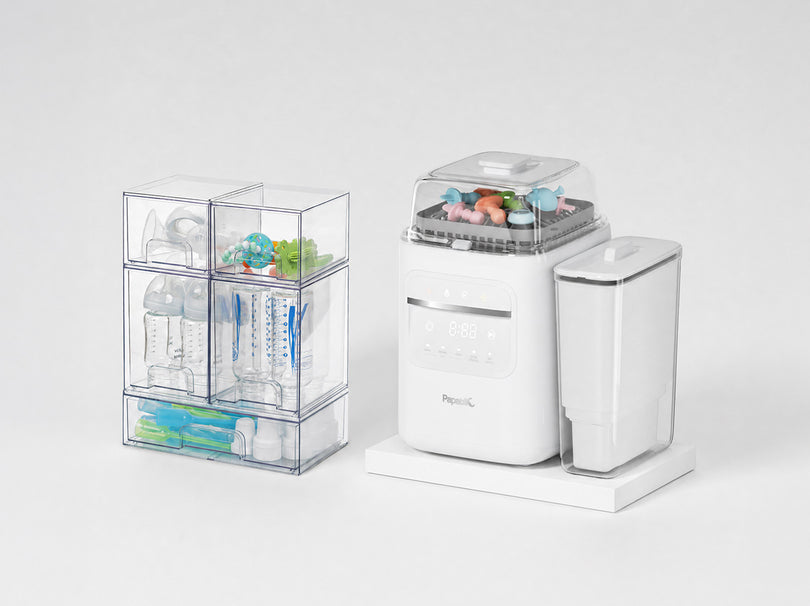
Papablic’s SafeguardPlus™ Baby Bottle Washer System upgraded its chamber to swallow 8 bottles alongside wearable pump cups. That massive capacity actively prevents dangerous rack overcrowding. (papablic.com)
Ensure Your Exact Pump Parts Actually Fit
The biggest buyer's remorse comes from buying an Automatic Bottle Cleaner that perfectly washes bottles but completely mangles breast pump parts.
Before buying, physically verify:
- Secure cages stopping valves from blowing away.
- Vertical clearance for your tallest glass bottles.
- Dedicated anchor points for oddly shaped Smart breast pumps.
Shrink Your Bottle Collection With Faster Turns
A highly efficient washer actually saves you money by reducing how many spare bottles you must buy. Fast turnaround times eliminate cabinet clutter.
Follow a predictable daily batch rhythm:
- Morning: Rapid wash and dry.
- Midday: Wash and dry only to save time.
- Evening: Full deep wash, sanitize, and lock in storage.
If your machine constantly leaves parts damp, you will be forced to buy backup bottles, entirely defeating the purpose of your Baby Feeding System.
Master Safe Handling and Storage Mechanics
Isolate the Dirty Sink from Clean Storage
A flawless hygiene routine prevents you from accidentally re-contaminating freshly blasted gear.
Keep your zones separated:
- Dirty Zone: A dedicated, washable bin far from clean parts.
- Wash Zone: The washer itself.
- Clean Zone: A sealed cabinet or the appliance's storage mode.
The 2025 FDA infant formula strategy heavily emphasizes that strict, separated cleaning and thorough drying are mandatory for safe handling routines. (fda.gov)
Eliminate Moisture to Halt Germ Growth
Moisture is a dangerous risk multiplier. Damp valves and nipples sitting in a warm, closed space become a thriving breeding ground for bacteria.
If you rely on a Hygienic Bottle Dryer or a Bottle Sterilizer and Dryer, physically inspect the parts. If water remains inside concave nipples, you must shorten your load size or reposition the pieces for better airflow.
Lock Down Your NICU Daily Routine
NICU parents must set a significantly higher baseline for safety. The goal is strict, automated repeatability.
A bulletproof daily plan includes:
- A full wash cycle removing all protein residue.
- A mandatory daily steam sanitize step.
- A complete, bone-dry finish before storage.
Papablic targets this exact need with built-in water purification that strips out lead, PFAS, and hard minerals straight from the tap. (papablic.com)
Choose the Perfect Machine for Your Budget
Base the Choice on Your Sanitize Frequency
Your needed sanitization frequency dictates the entire purchase. Occasional sanitizers can survive with basic washers.
Daily sanitizers, like NICU families, require a robust Bottle Washer with Sterilizer. Heavy pumpers running multi-cycle days need industrial-level reliability. Do not skip the sterilize step when you are tired—let the machine do it.
Audit Your Tolerance for Slow Cycle Times
Cycle time dictates your stress levels because a newborn's hunger is relentless. A slow, two-hour cycle is perfectly fine if you own dozens of spare bottles.
If you hate owning extra bottles and despise countertop clutter, pay the premium for rapid wash-and-dry cycles. If your budget is tight, you must accept longer run times and buy a few backup bottles.
Reject the Normalcy of Puddles
Drying quality separates the cheap gadgets from the true time-savers. If you frequently see droplets inside collars or pooled water in silicone crevices, your machine is failing.
A weak "all-in-one" machine is effectively just a pricey washing basin that forces you to use a drying rack. Budget up for a system that treats bone-dry results as a mandatory baseline.
Map Out the Supplies Lock-In
Some brands financially trap you by requiring highly specific detergent tablets.
| Decision factor | Low priority if... | High priority if... | What to check |
|---|---|---|---|
| Tablet lock-in | 1 cycle/day | 3+ cycles/day | Tablet cost per cycle |
| Filter replacements | Soft water area | Hard water area | Replacement cadence |
| Drying strength | You air-dry anyway | You want closed storage | Damp spots after cycle |
| Capacity | Mostly bottles | Pump parts + bottles | Rack layout options |
When assembling your Feeding Essentials, doing this simple math stops you from buying a cheap unit that quietly bleeds your wallet dry every single month.
Best Practices and Pitfalls for Flawless Washes
Best practices
Even the best Bottle Cleaning System requires smart user habits to perform perfectly.
Daily loading tips:
- Pre-rinse heavy fat: Quickly blast off thick breast milk chunks.
- Clean filters frequently: Clogged grates destroy water pressure.
- Utilize closed storage: Keep the lid shut to maintain the sterile zone.
- Enforce spacing gaps: Leave room for hot air to circulate freely.
Remember that a Steam Sterilizer only works on clean plastic. Poor loading guarantees poor sanitizing.
Common pitfalls to avoid
Most failures are workflow issues, not machine defects.
- Do not towel-dry after sanitizing: Towels can reintroduce germs and lint.
- Do not ignore standing water pockets: Reposition parts so water can drain.
- Do not run with blocked spray paths: Small parts can fall and shield jets.
- Do not overstuff the rack: Coverage drops sharply when items touch.
If you want a truly hands-off Automatic Bottle Cleaner, your loading pattern matters as much as the feature list.
Conclusion
A high-quality Baby Bottle Washer pays for itself the moment it eliminates hand-scrubbing, safely steam sanitizes, and leaves your gear bone-dry for immediate use. Your biggest financial mistake will be chasing the lowest upfront price tag while entirely ignoring weak drying motors and expensive proprietary detergent tablets.
Match the machine to your reality. New parents need speed and simplicity, while NICU families require flawless daily sanitizing. Map out your true cycle count, respect your countertop limits, and invest in a system that permanently ends your midnight sink shuffle.
Official Site: Papablic
FAQ
How much should I expect to spend on a high-quality bottle washer?
Expect to spend a premium for consistent bone-dry results, multi-directional spray, and integrated steam sanitization. Cheap models fail to dry complex pump parts, forcing you to air-dry anyway. Heavy daily users must factor in recurring filter and tablet costs alongside the machine's sticker price. For NICU parents, investing in a robust washer with a sterilizer eliminates the dangerous guesswork of handwashing.
Is a bottle washer worth it compared with handwashing or dishwasher?
Yes, it is worth the investment for managing small, frequent loads and complex pump parts. Handwashing tiredly at 2 a.m. guarantees missed milk film hidden inside anti-colic straws. Standard dishwashers melt lightweight baby parts and run too slowly to keep up with newborn feeding schedules. Dedicated baby washers use specialized geometry to blast tight silicone crevices effortlessly.
What features should I look for in a baby bottle washer?
Prioritize high-pressure jet coverage aimed directly at specialized nipple and valve baskets. Next, demand a high-heat steam sterilization phase to ensure a true baby bottle sanitizer workflow. Evaluate the drying motor heavily, because damp parts completely defeat the purpose of automated cleaning. Finally, ensure the internal rack accommodates your specific breast pump flanges without overlapping.
How do I choose the right cycle speed without sacrificing hygiene?
Select the absolute shortest cycle that successfully removes heavy fat from your deepest bottle crevices. Test your machine by loading sticky duckbill valves and visually inspecting them for cloudy film afterward. If residue survives, you must either increase the cycle length, reduce the crowded rack, or pre-rinse your gear. Many parents run rapid wash-and-dry modes during the day, saving the deep sanitize cycles for nighttime.
How can I reduce ongoing costs of using a bottle washer?
Batch your dirty bottles together to run fewer, fully loaded cycles each day. Consumable tablets and filters burn out based on cycle count, not the number of bottles inside. Keep your internal spray nozzles clear of debris to prevent needing wasteful re-washes. If you live in a hard water area, descale the machine religiously to protect the expensive heating element.
Is it better to wash baby bottles with a bottle washer or a dishwasher?
A dedicated bottle washer is drastically better for high-frequency newborn schedules and intricate silicone valves. Dishwashers are fantastic for massive bulk loads, provided you secure small pieces in locking baskets and run high-heat sanitizing modes. However, dishwashers take hours to finish, which clashes horribly with a baby's rapid feeding demands. Countertop bottle cleaning systems deliver clean, dry gear exactly when you need it.
Do I still need a separate baby bottle sterilizer if I have an all-in-one unit?
No, you do not need a standalone sterilizer if your machine features a verified steam or sanitize mode. Ensure your appliance aggressively washes away the milk proteins first, as steam cannot sterilize through a layer of grease. All-in-one units with strong drying motors also provide safe, closed storage environments. Standalone sterilizers are mostly relegated to backup travel duty once you own a premium washer.
How do I know if my bottles are actually getting clean inside?
The interior plastic will literally squeak under your thumb and smell completely neutral. Any lingering cloudy film, greasy texture, or sour milk odor indicates a failed wash cycle. If residue persists, stop overcrowding the rack and ensure the bottle openings are positioned directly over the water jets. Consistent hygiene comes from disciplined, spaced-out loading patterns.