




Introduction
You jam that wide-neck anti-colic bottle into the rack, only to realize the washer lid is a quarter-inch from closing. You try angling the glass, but then the silicone vent stack tips over, trapping a murky pool of formula water inside. When your feeding gear physically clashes with your machine, you end up hand-washing half the load anyway.
Take a breath—this sizing puzzle is entirely solvable once you map out your exact measurements. Forcing the wrong fit blocks crucial water jets, leaving hidden milk film on your baby's gear that easily harbors bacteria. In this guide, we will break down how to measure your bottles, load intricate pump parts, and choose a washer that handles your true daily capacity.

Official Site: Papablic
The Reality of Washer Rack Compatibility
Measure Height, Diameter, and Base Geometry
The fastest way to predict a good fit is to ignore brand names and focus on raw measurements. Every Automatic Bottle Cleaner has strict physical limits for vertical clearance and horizontal spacing.
You only need to track three specific dimensions for your gear:
- Standing height: Measure from the base to the top of the collar ring.
- Widest diameter: Measure the bulbous shoulder on wide-neck bottles.
- Base footprint: Check if the bottom sits securely on the rack prongs.
If a bottle barely clears the lid, machine vibrations will shift it out of place. A bottle crammed against the sidewall completely blocks the cleaning spray.
Categorize Your Vents, Nipples, and Valves
The bottle body is easy to fit. The true nightmare is the pile of silicone nipples, vent inserts, and tiny duckbill valves. These intricate pieces feature narrow channels where sour milk easily clings.
To load safely, sort your small parts into three distinct groups:
- Open parts: Wide collars and caps that drain easily.
- Channel parts: Long anti-colic straws and narrow vents.
- Membrane parts: Flimsy silicone flaps that love to flip over.
Your goal is maximum spray exposure, not just trapping them in a basket. If a membrane folds shut, the water jets will completely miss the dirty contact surface.
Evaluate Tiers, Baskets, and Anchors
A functional Baby Bottle Washer solves a complex geometry problem using strategic rack tiers. You need specialized anchors to keep bottles inverted and secure while high-pressure jets hit the interior walls.
When analyzing a machine's rack architecture, look for these features:
- Bottle anchors: Tall posts to prevent tipping.
- Lidded baskets: Crucial enclosures to stop small valves from flying.
- Edge clearance: Extra buffer room for wide-neck models.
Do not compare these to standard dishwashers. Baby-specific washers use targeted jets built specifically for pumping adapters and thick silicone nipples.
Demand Real Hygiene: Wash, Sanitize, and Dry
Parents often expect one machine to seamlessly clean, sanitize, and dry. However, those are three entirely separate mechanical processes.
- Washing: Strips away greasy milk fat.
- Sanitizing: Uses lethal steam to crush lingering microbes.
- Drying: Eliminates moisture to prevent newly formed bacteria.
The CDC notes that frequent sanitizing and thorough drying are mandatory for babies under two months or those born prematurely. For NICU parents, bone-dry parts are not a luxury—they are a critical risk-control measure.
Module 1 Measure Your True Bottle Footprint

Compatibility issues start when you trust the phrase "fits most bottles." You assume your glass bottle is standard, only to watch the lid smash into the dome cap. One piece always ends up lying sideways, collecting dirty rinse water.
Stop guessing and measure the bottles exactly how you load them:
- Collar height: Base to the top edge (without the nipple).
- Assembled height: Base to nipple tip, if washed together.
- Maximum width: Across the widest plastic shoulder.
If your bottle sits within a half-inch of the lid, consider it a risky fit. To shop smarter, save a quick "bottle math" note on your phone with your tallest pump kit and widest bottle dimensions.
How Papablic SafeguardPlus™ Baby Bottle Washer System Maximizes Space
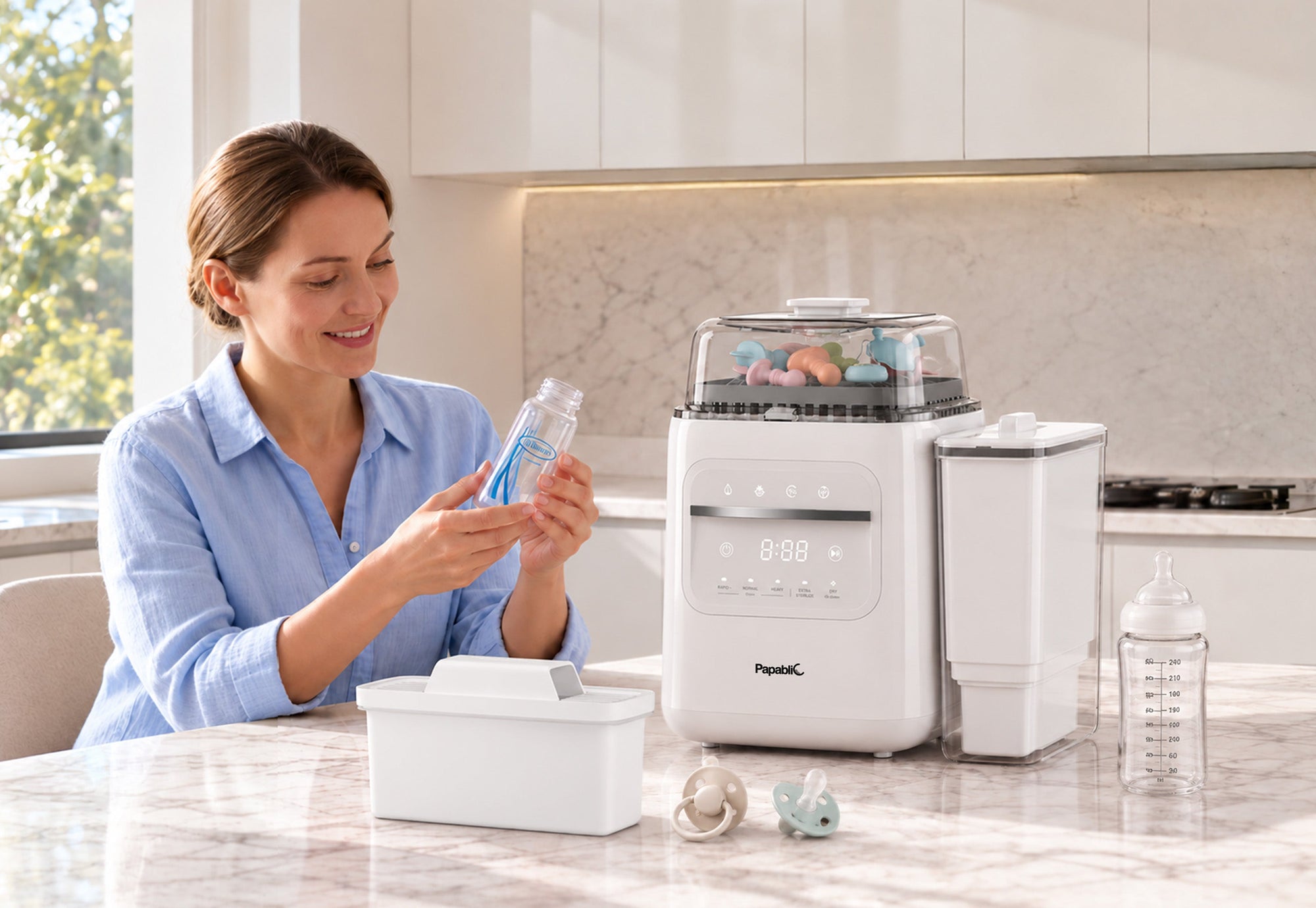
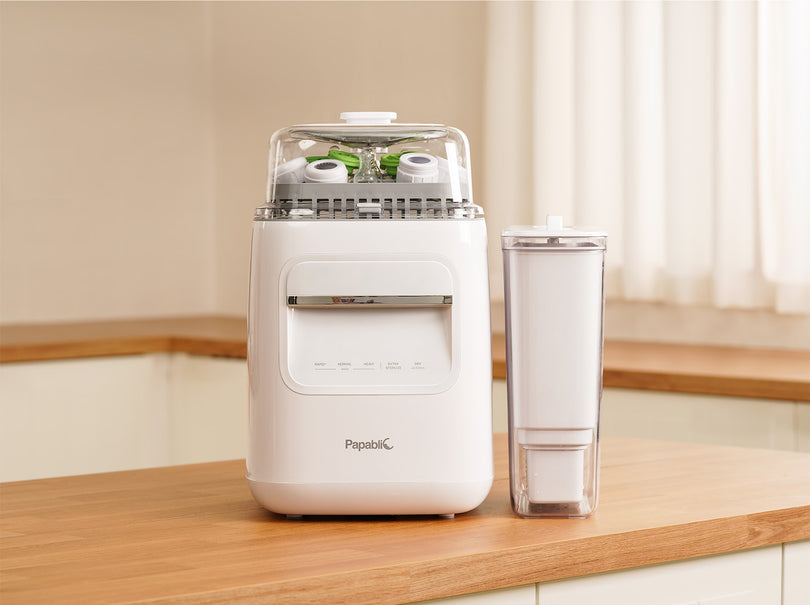
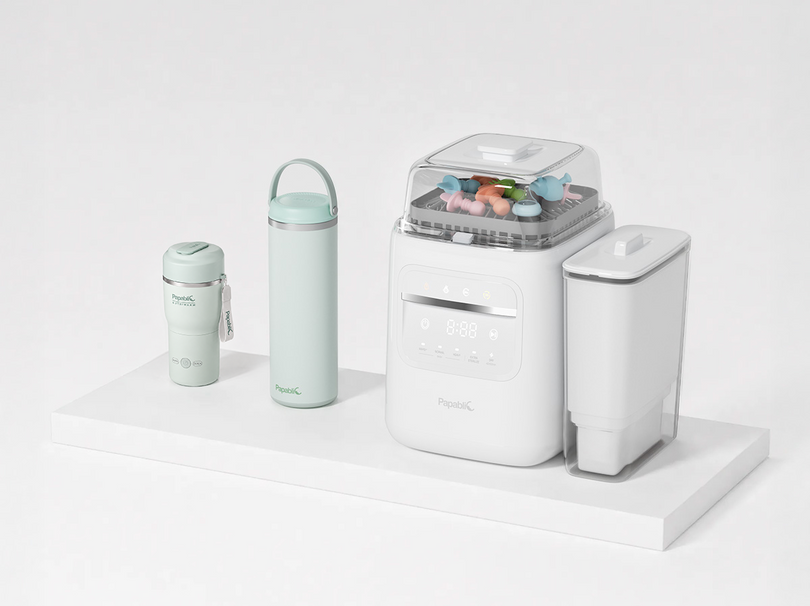
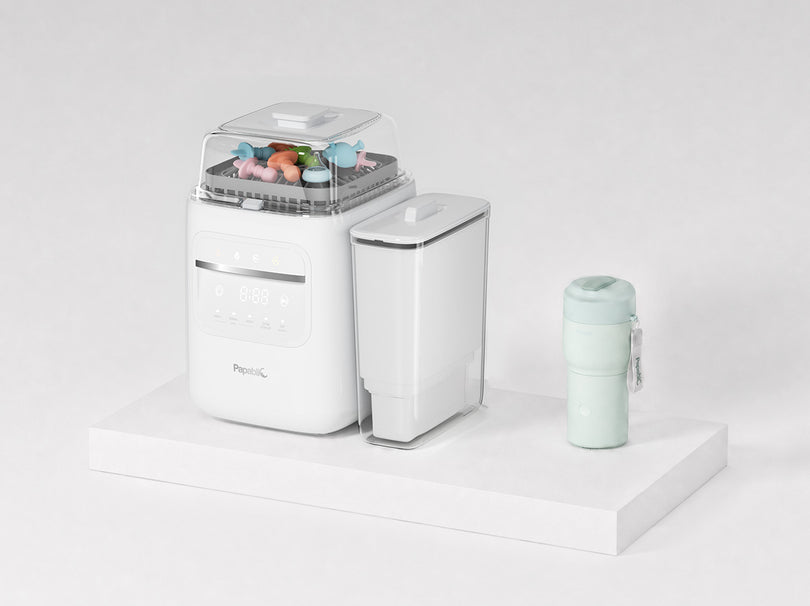
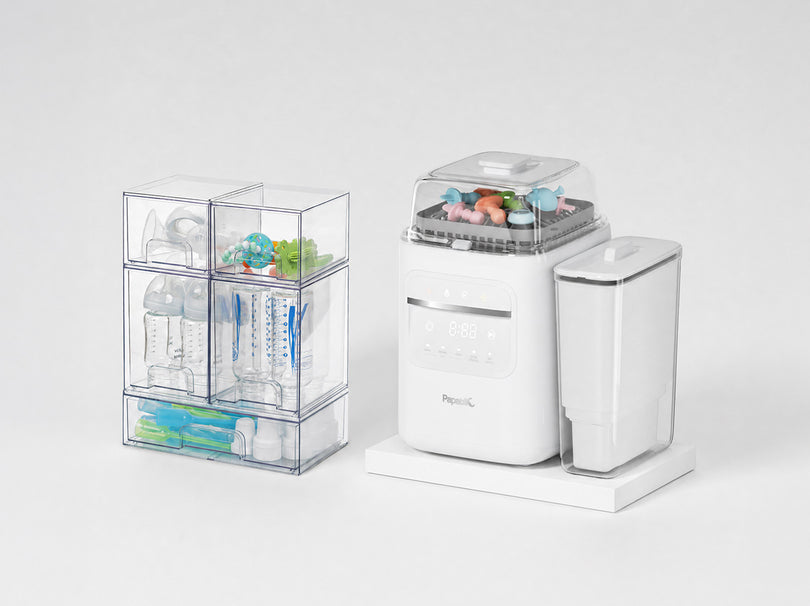
When mixing wide-neck bottles and bulky pump flanges, stabilization matters as much as raw height. The Papablic SafeguardPlus™ Baby Bottle Washer System acts as a heavy-duty Bottle Cleaning System.
It comfortably holds 8 bottle sets plus wearable pump parts. The 5-in-1 workflow (filter, wash, sterilize, dry, store) provides massive spatial relief. When you have enough usable rack space, you are never tempted to dangerously overcrowd your daily load.
Shop: Papablic SafeguardPlus™ Baby Bottle Washer System
Module 2 Plan for High-Volume Feeding Days
You never feel machine capacity limits at noon. You feel them during the 3 a.m. cluster-feed when the sink is overflowing with sticky plastic. Always plan your purchase around your absolute maximum daily load.
Calculate your peak washing demand using these averages:
- Daily feeds: Newborns demand 8 to 12 bottles.
- Bottle rotation: Keep 6 to 12 bottles to avoid washing anxiety.
- Pumping sessions: Exclusive pumpers run 6 to 10 sets daily.
Test your worst-case scenario visually. If you cannot load your evening bottles alongside your wearable cups without stacking them, you need a larger machine.
Build a Smart Baby Bottle Station
A true Smart Baby Bottle Station prevents mental fatigue. It turns chaotic kitchen clutter into a highly predictable, one-way hygiene assembly line.
- Establish a dedicated dirty-drop zone.
- Toss tiny valves straight into the wash basket.
- Run the machine at the exact same time every night.
This strict routine is a massive mental relief for NICU parents juggling fortified feeds, medications, and exhausted nerves.
Module 3: Exposing Small Parts to Direct Spray
Those tiny, intricate parts cause every "why is this still cloudy" moment. A valve might physically fit inside the machine, but if it flips over, it blocks the spray and traps murky water.
Perform this rapid three-second check before pressing start:
- Zero nesting: Never stack vents inside nipples.
- Secure flaps: Weigh down lightweight silicone membranes.
- Drain paths clear: Ensure all cups are angled downward.
The CDC advises placing tiny items in a secure, closed basket. This stops high-pressure jets from blasting duckbill valves into the dirty filter grate below.
The Ultimate Small-Parts Compatibility Test
Many brands claim to be an Automatic Bottle Cleaner, but their true value lies in small-parts management. If you use complex anti-colic systems, your washer choice must center entirely around the quality of the accessory basket.
Ensuring 360-Degree Coverage
Papablic highlights its aggressive "360-degree deep clean" coverage within the SafeguardPlus model. It blasts every nook and curve while housing bottles and pump parts simultaneously.
However, practical physics still apply. Even the strongest jets cannot penetrate a folded silicone membrane. Always load items to maximize direct spray exposure.
Shop: Papablic SafeguardPlus™ Baby Bottle Washer System
Module 4: Match Sanitizing Power to Your Baby's Risk
Boiling parts is not a forever rule; it is a calculated risk decision. Healthy, older babies often thrive with just hot water and heated drying. However, vulnerability completely changes the baseline.
The CDC states that daily sanitizing and thorough drying are required for premature infants or those under two months old. This removes lingering pathogens that basic washing misses.
A Bottle Washer with Sterilizer and a Hygienic Bottle Dryer minimizes how often you touch the parts. Fewer manual transfers mean fewer chances for cross-contamination.
Prioritizing Steam and Bone-Dry Storage
Do not just look for cycle speed. If your goal is protecting a vulnerable newborn, focus strictly on risk-control mechanics.
- Sustained steam step: Kills microbes after the wash cycle ends.
- Bone-dry finishing: Fast drying baby bottle sterilizer tech leaves zero droplets.
- Sealed storage: Locks parts away from airborne kitchen dust.
The Papablic SafeguardPlus handles this beautifully. It runs a 5-in-1 workflow that finishes with a secure 72-hour hygienic storage mode.
Shop: Papablic SafeguardPlus™ Baby Bottle Washer System
Module 5: Fitting the Machine Into Your Kitchen Reality
A machine might fit your bottles perfectly, but it also has to physically fit inside your kitchen without causing daily frustration.
Measure these four hard constraints before purchasing:
- Depth footprint: Must clear the sink without blocking wall outlets.
- Vertical lid path: Ensure cabinet bottoms do not block the door.
- Rear venting: Leave space so steam does not warp your drywall.
- Water access: Ensure filling the tank does not drip everywhere.
Design a strict one-way workflow. Dirty bottles go in the bin, small parts hit the basket, and clean bottles move directly to the cabinet.
Assign Kitchen Roles to Prevent Missed Cycles
Sleep deprivation guarantees someone will forget to press start. Splitting the chore prevents the dreaded morning realization that nothing is clean.
- Partner A: Loads the rack and starts the cycle.
- Partner B: Unloads the dry parts and stores them securely.
Treat this handoff like a flight checklist. It removes the mental burden from the primary feeding parent.

How to Choose a Baby Bottle Washer by Fit
Prevent Frustrating Lid Collisions
Height limits are entirely non-negotiable. If your assembled bottles are too tall, you must disassemble every vent stack or load them sideways, which ruins the wash quality.
Follow these measuring rules:
- Washing fully assembled? Measure from base to nipple tip.
- Washing stripped parts? Measure the tallest plastic body.
- Always leave a half-inch buffer for water vibration.
Stop Wide-Neck Side Collisions
Wide-neck bottles fit the pegs, but their bulky shoulders easily crash into neighboring items. This crowding blocks water jets and creates blind spots.
If you exclusively use wide-neck silicone bottles, prioritize spacing over raw bottle counts. A machine holding four perfectly spaced bottles cleans better than one cramming six.
Secure Complex Anti-Colic Vents
If your baby requires anti-colic systems, a secure top basket is a mandatory feature. It prevents delicate straws and membranes from flipping face-down in the water.
Ensure the basket features:
- A tight, locking lid.
- Holes small enough to trap duckbill valves.
- A flat base to prevent silicone pieces from nesting.
Choose Between Wash-Only and Steam-Dry Combos
Align your purchase with your most hated kitchen bottleneck.
- Hate scrubbing? Focus heavily on powerful internal wash jets.
- Hate puddles? Prioritize a high-heat, hygienic drying cycle.
- Need risk control? Demand an all-in-one steam and dry combo.
The CDC confirms that standard dishwashers with a heated sanitizing dry cycle can safely replace standalone boiling.
Quick decision table
| Scenario | Bottles per day | Parts complexity | Best cycle focus | Loading priority |
|---|---|---|---|---|
| Full-term, mostly bottles | 6-10 | Low | Wash + dry | Bottle spacing |
| Exclusive pumping | 6-12 | High | Wash + basket control | Small parts exposure |
| NICU parents | 8-12 | High | Wash + Steam Sterilizer + dry | Min handling steps |
| Wide-neck heavy | 6-10 | Medium | Wash coverage | Side clearance |
Daily Loading Best Practices and Hidden Pitfalls
Expert Loading Strategies
Perfect wash results come from smart geometry, not excessively long cycles.
- Break down stacks: Anti-colic vents add hidden height and trap residue.
- Isolate silicone: Spread out flimsy membranes so they do not overlap.
- Enforce spacing: Leave visible gaps between every plastic bottle body.
- Lock the lid: Store dry items inside the machine rather than on open counters.
Hard water easily destroys heating plates. Papablic highly recommends utilizing distilled water to prevent limescale crust and changing the SafeguardPlus filter every 30 cycles.
Common Loading Mistakes
Desperate, sleep-deprived parents make these loading errors constantly.
- Trusting "fits all" labels: Always measure your specific bottle brand.
- Greedy overpacking: Blocked jets leave behind dangerous milk fats.
- Free-floating valves: Loose parts flip over and harbor dirty water.
- Towel drying: Hand towels wipe fresh bacteria right back onto clean nipples.
Final Thoughts on Perfecting Your Fit
A Baby Bottle Washer does not have to fit every brand on the market; it only needs to fit your exact daily rotation. When you correctly measure your gear and secure your delicate pump parts, you instantly eliminate those frustrating, half-clean rewashes.
If you demand a single, trusted station that washes, steam sanitizes, dries, and safely stores your gear, prioritize your countertop footprint first. Match the rack geometry to your unique bottles, and take back your evening hours.
Official Site: Papablic
Frequently Asked Questions
Do bottle washers fit all baby bottles?
No, compatibility depends heavily on bottle height, maximum diameter, and specific rack stability. A wide-neck bottle may technically fit but perform poorly if it crowds neighboring items and blocks water jets. Always measure your assembled height and widest shoulder to ensure your bottles sit cleanly within the rack's usable clearance.
Can one device wash sanitize and dry bottles?
Yes, premium countertop systems combine washing, steam sanitizing, and hot-air drying into a single uninterrupted workflow. This significantly reduces manual handling, stopping you from touching sanitized parts with unwashed hands or dirty kitchen towels. Ensure your chosen machine produces bone-dry parts, as lingering dampness breeds new bacteria instantly.
What features matter most for NICU parents?
Consistent steam sanitizing, complete bone-dry cycles, and secure small-part baskets are mandatory for NICU families. You must isolate tiny valves and membranes so they do not flip and trap dirty wash water during the cycle. Built-in sterile storage is also vital, allowing clean parts to remain sealed until the next critical feed.
Can I clean pump parts and bottles together?
Yes, provided the machine features dedicated small-part baskets to isolate lightweight pump membranes from heavy bottles. Pump adapters are notoriously prone to flipping over, which creates blind spots that the water jets cannot penetrate. Always leave ample space between large bottle bodies so the spray reaches the interior walls evenly.
How do I handle intricate anti-colic vent systems?
Fully disassemble every vent stack and place membranes flat within a secure top basket. Assembled stacks easily trap milk residue inside deep, narrow silicone channels. After the cycle finishes, quickly visually inspect the narrow straws to ensure no stray water droplets remain trapped inside.
Which method cleans narrow-opening bottles best?
A dedicated baby washer with vertical, high-pressure internal jets provides the deepest clean for narrow openings. You must carefully align the bottle opening directly over the spray nozzle to prevent the water from deflecting off the inner collar. Handwashing with a long-handled brush remains a reliable backup for unusually tall glass bottles.
Is steam sterilization necessary for all babies?
No, steam sterilization is primarily required for infants under two months, premature babies, or those with compromised immunity. For healthy, older babies, a thorough high-heat wash and complete drying cycle effectively manage daily bacterial risks. However, automated steam cycles offer incredible peace of mind when household sickness strikes.