


Introduction
You stare at a sink full of sticky pump flanges, squinting at the cloudy milk film trapped inside a tiny silicone duckbill valve. You mentally calculate if you can get away with just a hot rinse, gambling that the greasy residue won't upset your baby's stomach tomorrow. Choosing the wrong washing setup isn't just a minor annoyance—it directly threatens your already fragile sleep schedule.
It is nothing to stress about. Leaving damp parts to air-dry breeds bacteria and quietly steals your confidence, but finding an appliance that actually cleans and dries changes your entire daily routine. In this guide, we will break down exactly how to pick a Baby Bottle Washer or Bottle Sterilizer and Dryer that matches your real life, comparing actual capacity and practical trade-offs.
Time-Saving Picks You Can Actually Keep Up With
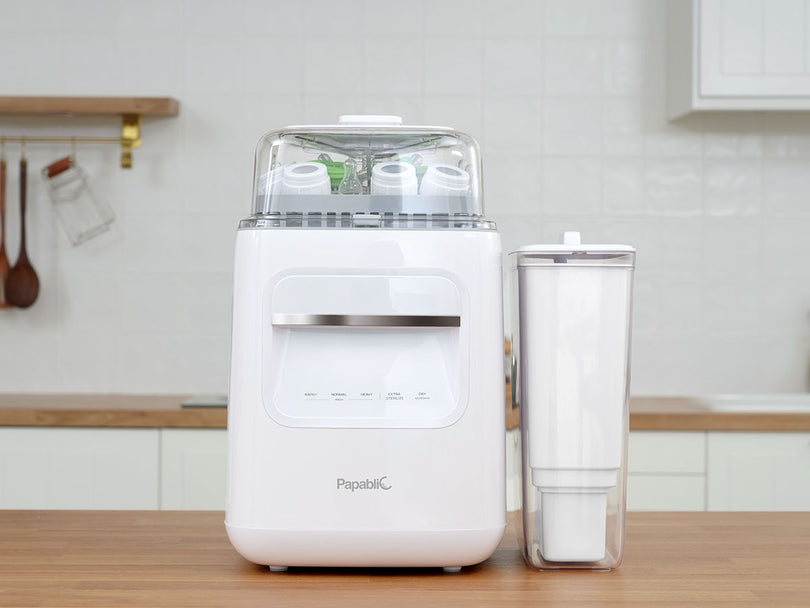
1. Papablic SafeguardPlus™ Baby Bottle Washer System
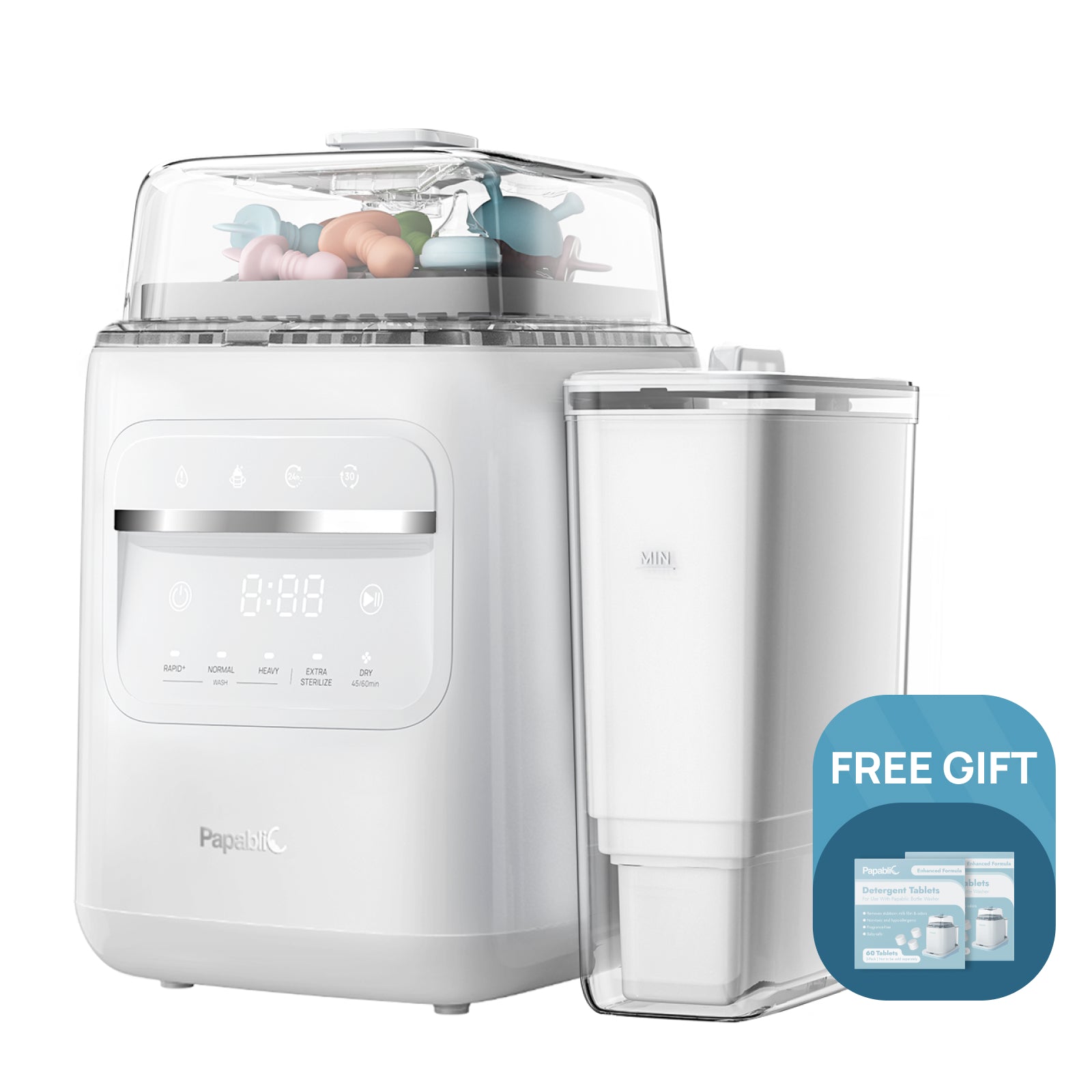
If you are a new parent who keeps falling behind on washing (or you are doing high-frequency pumping), this is the most "set it and forget it" pick in the group. The Papablic SafeguardPlus™ Baby Bottle Washer System is an All-in-One Bottle Washer designed to handle the messiest part of the workflow: removing residue first, then finishing with a Bottle Washer with Sterilizer and dry cycle, so you are not stuck air-drying tiny parts on a towel.
- Best for: high-volume days, NICU parents' routines, and heavy pump-part rotation
- What it does: all-in-one wash + sterilize + dry + storage workflow in one counter system
- Key feature: built-in PurifyClean™ water purification (targets lead, PFAS, and hard minerals)
- Capacity callout: upgraded capacity for up to 8 bottles plus wearable pumps
- Hygiene callout: claims to reduce 99.99% harmful germs
- Storage window callout: 72-hour hygienic storage (helpful when you cannot unload immediately)
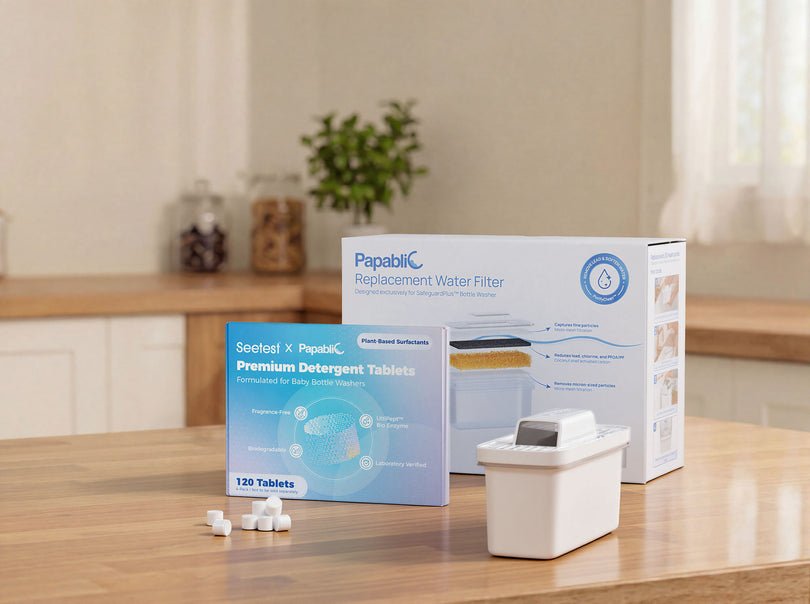
- Maintenance reality: filter replacement reminder; filter replacement interval stated as every 30 wash cycles
Why it wins: For an Automatic Bottle Cleaner to actually save you time, it has to reduce re-washing and reduce handling. The built-in water purification is a real workflow advantage in hard-water areas because scale and film are a common reason parents re-run cycles or hand-rinse parts anyway. If your goal is an All-in-One Feeding Solutions setup that keeps bottles fully dry and ready for the next feed, this one is built around that "always ready" cadence.
Shop: Papablic SafeguardPlus™ Baby Bottle Washer System
2. Bottle Washer™ All-In-One Baby Bottle Washer Sterilizer Dryer

If your biggest pain is juggling the sink setup (and you want to run a cycle anywhere in the kitchen without hoses), this All-in-One Bottle Washer is built around portability and flexible placement. The Bottle Washer Pro™ is an Automatic Bottle Cleaner that combines washing, steam sterilising, and drying, so you do not have to split the job across the sink plus a separate Baby Bottle Sterilizer.
- Best for: smaller loads, tighter kitchens, and parents who want a tank-based setup
- What it does: wash + sterilise + dry in one unit
- Drying and storage: dries with HEPA-filtered air; items can stay sterilised inside for 72 hours
- Water setup: removable clean and dirty water tanks (no sink hook-up or drain hose)
- Capacity callout: holds up to 4 bottles plus pump parts, sippy cups, and accessories
- Coverage detail: uses high-pressure spray jets intended to clean inside and out
- Wearable pump note: wearable pump parts may require an additional rack (sold separately)
Why it wins: For many new parents, capacity is less important than friction. The tank system removes the "I cannot start a cycle because the sink is busy" problem, which is a real reason routines break down. If you want a Baby Feeding Bottle Washer that can live where you prep bottles (not necessarily where your sink is), this design is optimised for that.
Shop: Bottle Washer Pro™
3. Dr. Brown's™ Bottle Sterilizer and Dryer
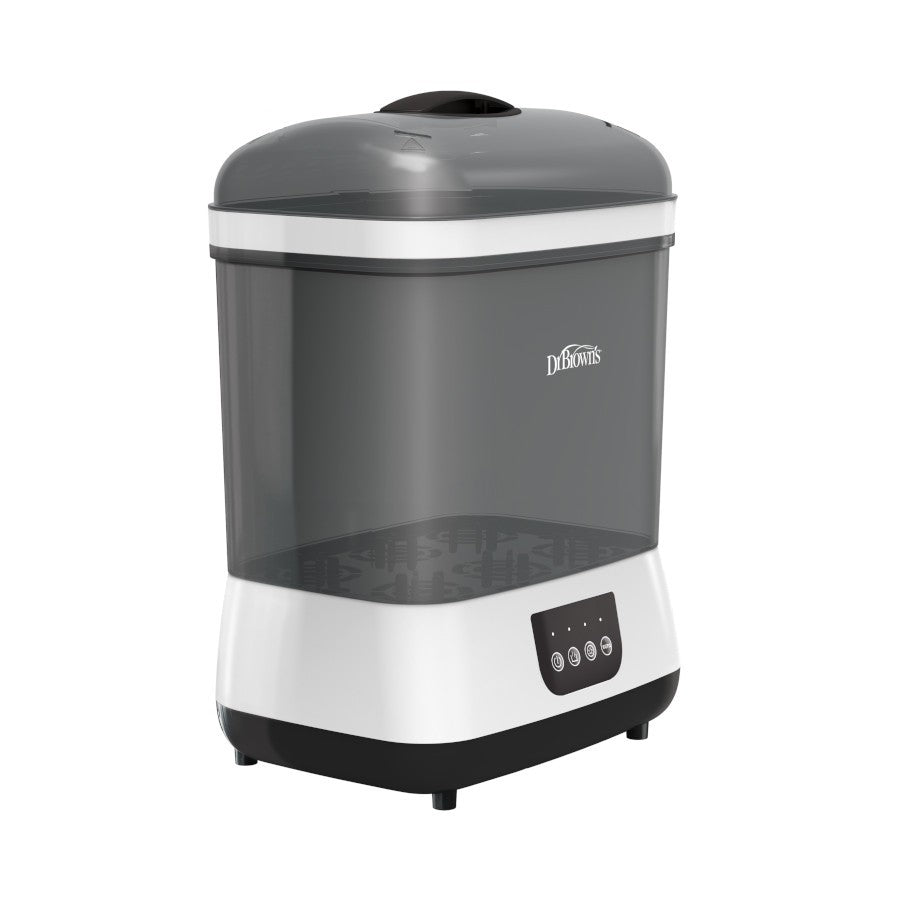
If you do not mind hand-washing (or you already have a system for the cleaning step) but you hate waiting for parts to air-dry, this is the most direct "finish faster" option. This product is not a Baby Bottle Washer. It is a Bottle Sterilizer and Dryer that steam-sterilises and then dries, which can remove the most annoying bottleneck in many newborn setups: damp nipples, wet valves, and bottles you do not want to reassemble yet.
- Best for: parents who already wash by hand, but want a faster, cleaner finish
- What it does: steam sterilise + dry (sterilise only, dry only, or combo)
- Capacity callout: steam sterilise and dry up to six bottles at once (also fits pump parts, pacifiers, teethers)
- Hygiene claim: eliminates 99.9% of bacteria, mould, and yeast that cause thrush
- Storage window callout: contents can stay sterilised up to 24 hours if the lid stays unopened
- Set up detail: fill with distilled water to the fill line (measuring cup included)
- Safety feature: auto shut-off to prevent overheating
Why it wins: A Fast Drying Baby Bottle Sterilizer is sometimes the difference between "I can keep up" and "I am always behind." If your bottles are clean but never fully dry when you need them, a Hygienic Bottle Dryer with a sterilise function can tighten your whole workflow without adding more steps.
Shop: Dr. Brown's™ Bottle Sterilizer and Dryer
Buying Guide: How to Choose Without Overthinking
The fastest way to choose a Baby Bottle Washer is to start with the step you dread most. Do you hate scrubbing milk film out of bottles and hard-to-reach pump parts? Then you want a true Automatic Bottle Cleaner (a washer) that does the cleaning step. Do you mostly hate the end of the process (wet parts and cluttered drying racks)? Then a Bottle Sterilizer and Dryer or a Quick Bottle Sterilizer with strong drying can be enough.
In 2026, more parents are building a "station" approach, where washing, drying, and storage happen in one predictable place. That is why All-in-One Feeding Solutions and all-in-one counter appliances keep trending: they reduce touch points and decision fatigue when you are tired.
Key factors to decide fast
- Capacity: match your peak 6-12 hour window
- Drying power: fully dry nipples and valves
- Water setup: tanks vs sink vs purification
- Storage window: 24 hours vs 72 hours
- Consumables: filters, tablets, descaling cycles
- Parts fit: pump parts, wearable pumps, baskets
Practical tips that save time
- Run one quick daytime cycle for bottles, one overnight full cycle for pump parts.
- Keep a second set of nipples and valves so you are not waiting for drying.
- Load for airflow: do not nest parts or stack shields.
- If you see film, reduce crowding before changing detergents.
Evidence matters most when you are NICU parents or your baby is higher-risk. The CDC notes that sanitising feeding items at least daily can provide extra protection, especially in higher-risk situations. According to the CDC, sanitising all items at least once every day is recommended for extra protection.
For formula workflows, handling and timing discipline matter because bacteria can grow quickly in prepared formula under the wrong conditions. The FDA emphasises safer handling and discard windows once a bottle has been offered to an infant, which is one reason parents lean into consistent cleaning routines instead of "catching up later." According to the FDA, leftover formula should be used within 2 hours after being offered or discarded.
Common mistakes to avoid
- Buying a small capacity for the pumping schedules
- Treating sterilise-dry as "washing"
- Ignoring hard-water scale until performance drops
- Overpacking racks so water cannot reach surfaces
- Unloading before items are fully dry
Comparison Table
Quick side-by-side pick in 30 seconds
| Pick | What it does | Capacity callout | Storage window callout | Best for | Trade-offs |
|---|---|---|---|---|---|
| Papablic SafeguardPlus™ Baby Bottle Washer System | Wash + sterilize + dry + storage | Up to 8 bottles + pumps | 72-hour hygienic storage | High-volume, NICU parents routines | Filter changes every 30 cycles |
| Bottle Washer Pro™ | Wash + steam sterilize + dry | Up to 4 bottles + parts | 72 hours inside | Small loads, tank-based setup | Wearables may need extra rack |
| Dr. Brown's™ Sterilizer and Dryer | Steam sterilize + dry | Up to 6 bottles | Up to 24 hours | You already hand-wash | Not a Baby Bottle Washer |
Conclusion
If you want the closest thing to a "Smart Baby Bottle Station" that handles the whole dirty-to-ready path with fewer compromises, start with the Papablic SafeguardPlus™ Baby Bottle Washer System. It is the most aligned with high-throughput newborn schedules and the consistency that NICU parents often prefer.
If you want an All-in-One Bottle Washer with a smaller load size and a flexible tank setup you can place anywhere, Bottle Washer Pro™ is the compact-style alternative. If you are satisfied with hand-washing but want a faster finish, the Dr. Brown's™ Bottle Sterilizer and Dryer is a straightforward way to get truly dry parts without a counter full of racks.
Official Site: Papablic
FAQ
Do I need a bottle washer if I already have a dishwasher?
A dishwasher can work well if it uses hot water and a heated dry or sanitise setting, and if you can secure small parts in a basket so they do not flip or trap water. The biggest advantage of a dedicated Baby Bottle Washer is reducing daily handling because fewer tiny parts get touched, misplaced, or left damp. If your dishwasher runs 2 to 4 hours, a counter Automatic Bottle Cleaner can also shorten the time you are waiting for clean parts. For NICU parents or high-frequency pumping, the real win is consistency, not convenience.
What is the difference between a bottle washer and a bottle sterilizer and dryer?
A bottle washer is built to do the cleaning step, using spray action and detergent to remove milk residue before any sterilize step. A bottle sterilizer and dryer assumes you have already cleaned everything and focuses on steam sterilisation plus drying. If you routinely find dried-on film in bottles or you hate brushing valves and nipples, prioritise an All-in-One Bottle Washer or Baby Feeding Bottle Washer. If scrubbing is not the issue, but drying and finishing are, a Fast Drying Baby Bottle Sterilizer can be enough.
How many bottles should the machine hold for a newborn routine?
A good rule is to size for your most chaotic window, usually overnight plus the first morning feed, rather than a full day. Many new parents go through 6 to 10 bottle uses in 24 hours, but pumping can add multiple sets of parts on top of that. A smaller machine can still work if you run 2 cycles per day, but that adds scheduling friction when you are exhausted. If you are NICU parents or exclusively pumping, prioritise capacity that also fits pump parts, not just bottles.
Why do bottles sometimes come out cloudy or with residue?
Cloudiness is often mineral scale from hard water, especially after heated cycles, and residue can also happen when the detergent does not fully dissolve. Overloading is another common cause because parts nest together and block spray coverage, so milk film stays in seams and threads. If you see repeat residue, reduce crowding and aim for better airflow so parts dry fully. Also, plan on periodic descaling if your water is hard, because scale can build up on heating plates and internal pathways.
Is steam sterilization enough, or should I use UV sterilization?
Steam sterilization is widely used because it can reach internal surfaces and small passages when items are properly cleaned and arranged. UV sterilization can be convenient, but it depends on line-of-sight exposure and clean surfaces, so shadows and trapped moisture can reduce real-world effectiveness. For most families, the bigger day-to-day win is reliable cleaning plus a Hygienic Bottle Dryer outcome, because moisture left on parts can undo your work during storage. Choose the method you will realistically run daily without shortcuts.
How often should I run sterilize-and-dry cycles if my baby is in the NICU or immunocompromised?
You should follow your clinician's guidance first because risk profiles and protocols vary by baby and situation. In higher-risk routines, many parents aim for a predictable cadence, such as a daily sterilise step paired with fully dry storage, because it reduces uncertainty when you are already stressed. The practical order matters: remove residue first, then sterilise, then dry completely before storage. If you keep skipping cycles due to time, upsizing capacity or using an All-in-One Bottle Washer can make consistency easier.
What should I look for if I also use pump parts and wearable pumps?
Look for rack layouts that prevent small valves and membranes from flipping, nesting, or collecting water, because those are the parts that stay wet and trap residue. Wearable pumps usually have more pieces and awkward shapes, so spray coverage and drying performance matter more than raw bottle count. Check for an interior storage window (24 or 72 hours) so you are not forced to unload immediately after every cycle. If you pump 6 to 10 times per day early on, the right system reduces handling and mental load rather than adding more sorting.

