



Introduction
It is 2 a.m. and your baby is finally asleep. You stare at a massive pile of crusty bottles filling your sink. The exhaustion hits you like a physical weight. Enter the Baby Bottle Washer. It is a pure sanity-saver for tired parents. Let’s find the best value for your budget in 2026. We will skip the flashy gimmicks. You need a reliable feeding workflow. You need clean, dry, and safe bottles.
Bringing home a preemie? Supporting NICU parents? Hygiene becomes even more critical. The CDC demands daily sanitizing for vulnerable babies. Thorough air-drying is an absolute must. Never towel-dry your baby's gear. Towels spread dangerous kitchen germs directly onto clean nipples.
Official Site: Papablic
Introduction
A Baby Bottle Washer can be a game-changer for new parents by turning a repetitive, high-friction task into a predictable routine. With feeding cycles every 2 to 4 hours, the real challenge is not just the effort but the mental load of ensuring bottles are truly clean, dry, and ready for the next feed.
Handwashing often misses thin milk film in bottle threads, nipples, and pump parts, while drying can become a bottleneck. A clean but wet bottle isn't fully ready, as moisture supports bacterial growth and can cause musty odors. This guide helps you make a budget-friendly, performance-based decision in 2026 by comparing bottle washers on cycle time, residue control, sterilization method, and drying system—ensuring you don’t overpay for features you won’t use. The goal is a workflow that keeps you calm, even at 2 a.m.
If you are a NICU family or supporting NICU parents, the routine often needs extra structure. The CDC notes that sanitizing infant feeding items daily is especially important when a baby is under 2 months old, born prematurely, or has a weakened immune system, and it also stresses the importance of letting items air-dry thoroughly (not towel-drying) to avoid reintroducing germs.
Official Site: Papablic

What to Look For: The Basics
Cleaning vs sanitizing vs sterilizing
It is easy to mix these up when exhausted. Knowing the difference protects your baby.
- Cleaning blasts away visible milk and grease.
- Sanitizing knocks bacteria down to safe levels. Sanitize daily for newborns.
- Sterilizing uses high heat to destroy 99.9% of germs.
Here's the deal: get a machine that does all three. It removes the mental load entirely.
Residue risk: fats, proteins, and biofilm
Breastmilk and formula are incredibly sticky. Fats and proteins cling desperately to plastic. This residue hides where your brush cannot reach:
- Tight bottle neck threads.
- Collar rings and silicone bases.
- Tiny anti-colic vent tubes.
- Delicate pump valves and membranes.
Missed residue turns into a "biofilm." Bacteria thrive on this cloudy, sour-smelling layer. High-pressure spray jets blast this residue away. Superficial, fast cycles will fail you.
Why You Need Built-In Drying
Moisture is the enemy. Wet parts breed mold in your cabinets. The CDC explicitly warns against towel-drying.
Dish towels transfer kitchen germs onto clean bottles. A built-in dryer is a non-negotiable hygiene step. It is the difference between safe bottles and frantically shaking wet parts.
Finding Your Routine
The best value doesn't mean the cheapest box on the shelf; it means finding a machine that perfectly syncs with your exhausting daily rhythm.
- Newborn feeding: You are feeding around the clock. You need fast turnarounds and a machine that efficiently handles smaller, frequent partial loads without wasting water.
- Exclusive pumping: Your life is dominated by tiny flanges and duckbills. The ideal system prevents you from losing tiny valves down the drain and keeps these delicate parts separated and blasted clean.
- Daycare prep: You are a batch-working pro. You need predictable staging and a large-capacity machine that preps tomorrow's massive haul in one evening cycle.
Automated wash cycles soften the ride of early parenthood. Getting away from the sink speeds up your physical recovery.
Daily newborn feeding workflow

Surviving the newborn phase demands fail-proof routines. It must work when you operate it one-handed.
Try this simple staging approach:
Step 1: Pre-rinse quickly (just 10 to 20 seconds). A quick splash under the tap prevents milk fat from cementing onto the plastic if you cannot run a full cycle right away.
- Step 2: Batch by the next 6 to 8 hours. Stop washing single bottles. Load the machine with enough gear to get you through the next feeding block to maximize efficiency.
- Step 3: Choose a cycle based on readiness. If the next feed is imminent, prioritize a shorter wash combined with an ultra-effective dry cycle.
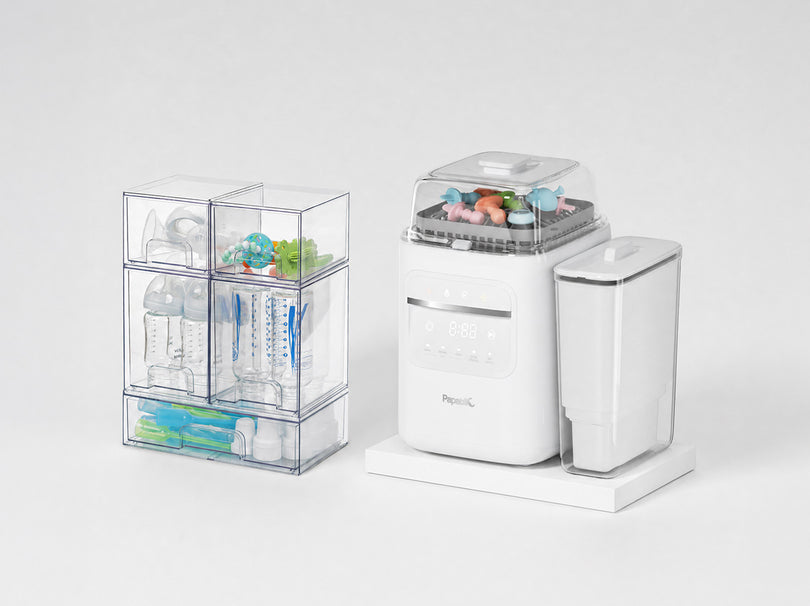
- Step 4: Store in a clean zone. Leave your pristine parts safely inside the closed washer unit, or move them directly to a protected bin once fully dry to avoid kitchen dust.
Here is why this strategy saves you: washing isn't usually the bottleneck—waiting for things to dry is. When you pull wet parts out too early and throw them on a towel, you are just adding extra, unhygienic steps to your already busy day.
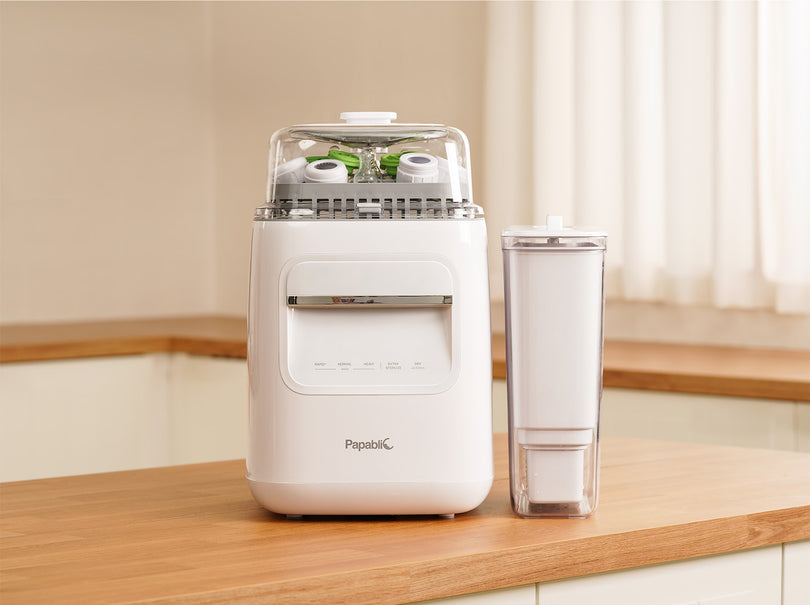
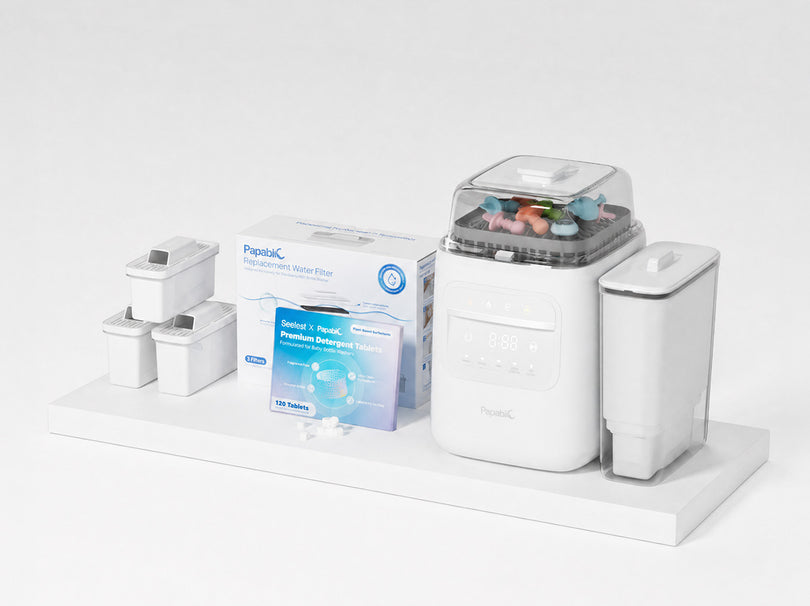
Papablic Performance Specs:
- 26 precision jets
- 25,000 Pa water pressure
- 99.99% sterilization in 19 minutes
- Fits 6 bottles and 2 pump kits
Higher jet counts mean a safer, deeper clean.
Shop: Papablic Baby Bottle Washer Sterilizer and Dryer All in One Bottle Cleaner
NICU-style hygiene routine
If you are a NICU parent bringing home a medically fragile infant, the anxiety around germs is overwhelming. The goal here isn't to exhaust yourself with panic-cleaning; it is to establish a strict, hospital-grade routine that you can actually sustain without burning out.
A reliable NICU-level routine boils down to three core pillars: strict separation, consistent frequency, and rigorous handling discipline.
- Separate clean and dirty zones
- The dirty zone: Limit this strictly to used bottles, sticky pump parts, and a dedicated wash basin (never toss them into the raw kitchen sink).
- The clean zone: Keep this sacred with a fresh dry rack, the closed interior of your washer, or sealed, sterile containers.
- Decide a sanitizing cadence you can follow
- For premature or immunocompromised babies, daily steam sanitizing provides an essential, non-negotiable layer of defense.
- The CDC explicitly mandates daily sanitizing as a critical safety measure for babies under 2 months, preemies, or those with weakened immune systems to prevent severe infections. CDC
How Papablic supports this routine:
The Papablic system automates this entire loop. You never risk cross-contamination from touching wet parts. The angled control panel also saves your aching back.
Shop: Papablic Baby Bottle Washer Sterilizer and Dryer All in One Bottle Cleaner
Pump parts and small accessories

Pump parts are where many cleaning systems fail, even when bottles look fine. The reason is geometry.
- Valves and membranes are thin and can fold or stick together.
- Flanges have curves that trap film.
- Wearable pump parts have chambers that need direct spray paths.
Use this setup method for any Bottle Cleaning System:
- Step 1: Disassemble completely. If you leave membranes attached, water flow will not reach the contact surfaces.
- Step 2: Use a small-part basket or a dedicated top zone. Small silicone parts should not bounce around.
- Step 3: Prioritize spacing over capacity. A half load with good spray paths is better than a full load with blocked jets.
- Step 4: Inspect the “milk line” areas. Focus on flange tunnels, duckbills, and backflow protectors.
The CDC also includes small feeding items and pump parts in its infant feeding hygiene guidance, and it emphasizes sanitizing pump parts at least once daily for extra protection in higher-risk scenarios. CDC
How Papablic fits this module (capacity and organization):
Papablic highlights a double-stack design and the ability to handle two full pump kits per cycle. In real use, this matters because you can run a pump-parts-focused load without sacrificing bottles.
The 26-jet, high-pressure approach is also well aligned with pump-part cleaning, because many parts rely on internal flow rather than surface scrubbing. When you compare an Automatic Bottle Cleaner, look for a rack design that keeps valves upright and prevents nesting.
Shop: Papablic Baby Bottle Washer Sterilizer and Dryer All in One Bottle Cleaner
Travel and backup scenarios
Routines break. Power goes out. You stay with family. A daycare bag comes home with surprise bottles. This is when a calm backup plan protects your feeding schedule.
Build a two-layer strategy:
Layer 1: Minimal-manual method (fast and realistic)
- Use a dedicated wash basin, not the sink.
- Use a brush for threads and nipples.
- Air-dry on a clean surface, protected from splashes.
The CDC specifically warns not to place feeding items or pump parts directly in the sink because sinks and drains can contaminate them. CDC
Layer 2: Heat-based option when you need extra confidence
- Boiling works if parts are boil-safe.
- Steam systems work if you can follow the manufacturer timing.
- A Quick Bottle Sterilizer cycle is helpful when you need bottles ready for the next feed window.
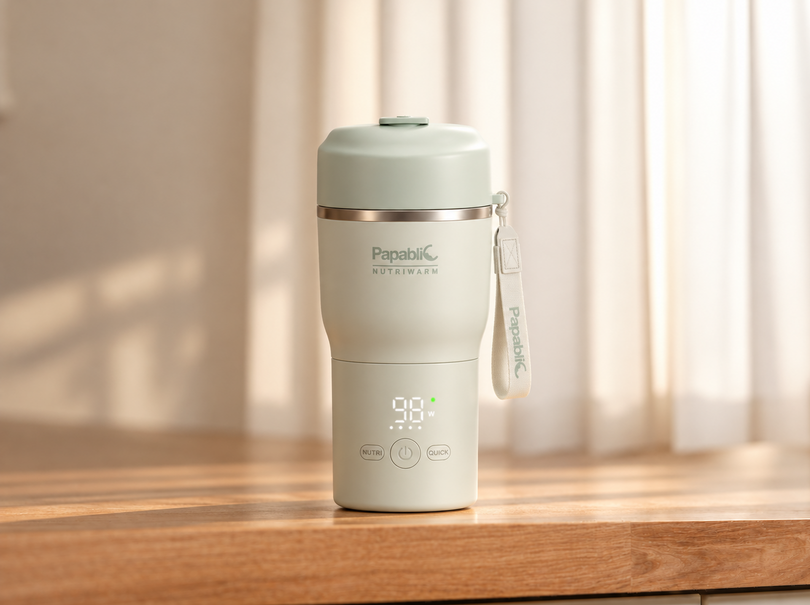
If you also travel with warming needs, look for Portable Bottle Warmer or On-the-Go Bottle Warmer solutions that keep your feeding plan intact, even when cleaning options are limited. In a true travel setup, you are not trying to replicate your home system. You are trying to reduce variables.
How Papablic fits this module (use-anywhere practicality):
Papablics integrated wash-sterilize-dry approach supports continuity when your countertop space is limited. When you return home after travel, you can also run one recovery cycle that resets all bottles and pump parts without extra sink time.
Shop: Papablic Baby Bottle Washer Sterilizer and Dryer All in One Bottle Cleaner
Quick comparison table for decision-making
| Scenario | Priority | Trade-Off |
|---|---|---|
| Newborn partial loads | Short cycles; reliable drying | Wasted capacity on small runs |
| NICU high-risk routine | Steam sanitize; closed storage | Longer total run times |
| Exclusive pumping | Rack layout; direct valve spray | Extra setup and loading time |
| Daycare batch prep | Maximum capacity; dry stability | Requires overnight running |
Conclusion
Whether you are navigating the chaotic newborn days or carefully managing a high-risk NICU parent routine, prioritize these three non-negotiables: aggressive milk residue removal, an automated Bottle Washer with Sterilizer flow that runs consistently, and a dedicated high-heat drying system that completely finishes the job safely.
Official Site: Papablic
FAQ
How much should I expect to spend on a high-quality bottle washer?
Expect a higher upfront cost than brushes, but the value depends on performance features, not on price alone. The biggest drivers are usually wash coverage (jets and rack geometry), sterilizing options, and drying speed. If you only need help with drying, a bottle sterilizer and dryer may meet your needs without full washing. If you need consistent residue removal across many parts, an automatic bottle cleaner can offer better time savings.
Is a bottle washer worth it in the long run compared with handwashing or dishwasher?
It can be worth it if you wash multiple times daily, need consistent results, or have limited sink time. Handwashing often fails at the same points: bottle threads, nipples, and pump valves, especially when you are tired. Dishwashers can work well when parts are dishwasher-safe, but small parts may flip or pool water, which extends drying time. A dedicated system is often most helpful when it produces fully dry parts that are ready for the next feeding window.
What’s the most affordable bottle washer with good performance?
The best value is typically the unit that matches your daily volume with the shortest effective cycle and dependable drying, without paying for unused modes. For many families, the most expensive mistake is choosing a unit that cannot dry small parts well, because you then add air-drying time and extra handling. If you run multiple partial loads, you may prefer faster cycles even if total capacity is smaller. If you batch once or twice per day, prioritize capacity and consistent outcomes over raw speed.

