






Loved by Real Parents
★★★★★
Real stories and everyday moments from real Papablic families.

No Cloudy Bottles
Dealing With Hard Water & Cloudy Bottles as a New Mom
Hard water always left my bottles looking cloudy. With SafeguardPlus, they come out crystal clear—and the difference is easy to see.

Higher Standard
A Preemie Mom’s Feeding Routine
With a preemie, bottle hygiene mattered even more to me. Having filtered-water cleaning and bottles ready for every feed gave me one less thing to worry about.

Time Saver
An Exclusive Pumper’s Daily Routine
Before SafeguardPlus, I felt like I was constantly washing bottles. Now I can fit everything in at once and spend more time enjoying my baby instead of standing at the sink.

Convenience
A First-Time Dad on Bottle Duty
My wife had a work trip, so it was just me and our 4-month-old for a few days. What I appreciated most wasn't just the cleaning. It was not having to think about it. With a baby, there's already enough on your plate, and this bottle washer took one task completely off mine.

Night Feeding
A Dad’s Break From 2AM Bottle Duty
Night feedings are exhausting enough. Being able to load bottles and let SafeguardPlus handle the cleaning has made our daily routine so much easier.


Subscribe & Save 15%
Unlock early access to sales, feeding guides, and free gift chances.(Excludes SafeguardPlus™ Washer Pre-sale.)
FAQs
Product
Water
Filter & Replacement
Usage & Maintainance
Purchase
What's the difference between the new SafeguardPlus™ and the older model?
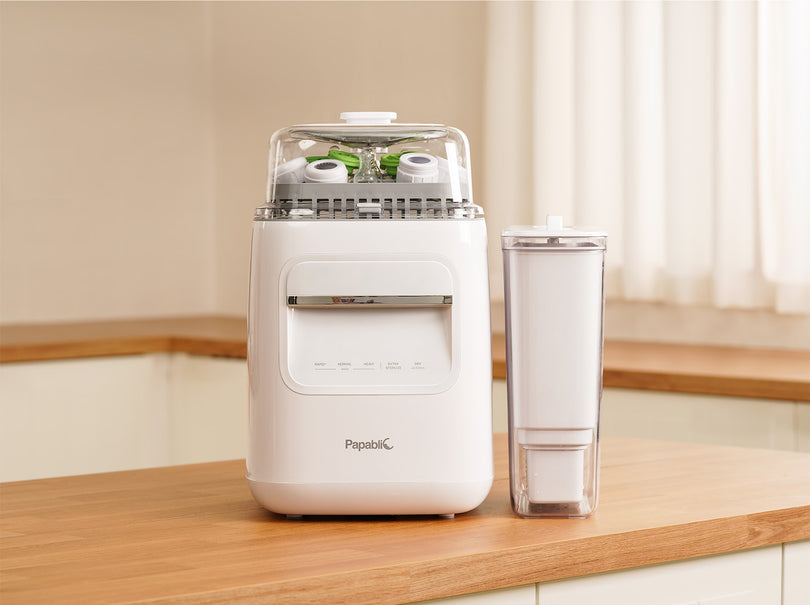
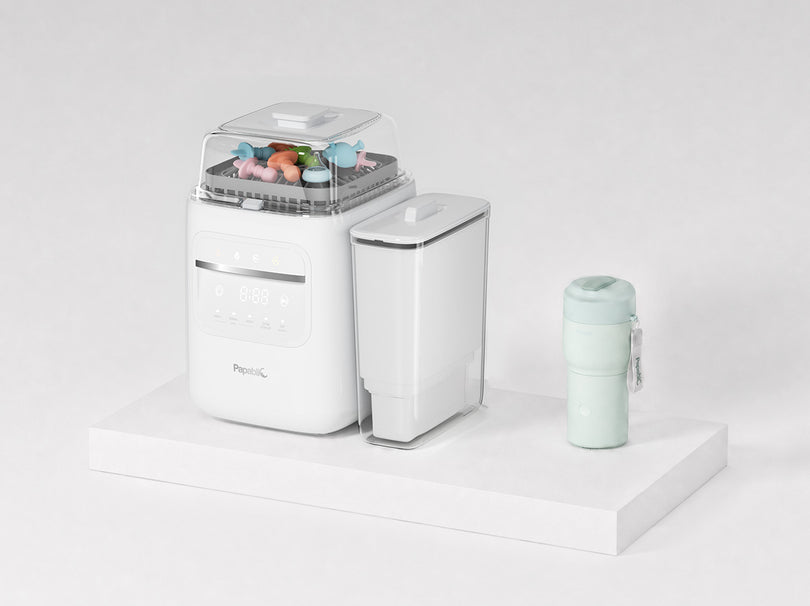
The SafeguardPlus™ baby bottle washer is upgraded for higher feeding safety and hygiene in below key ways:
- Built-in water purification removes lead, PFAS, and hard minerals, safer at the source.
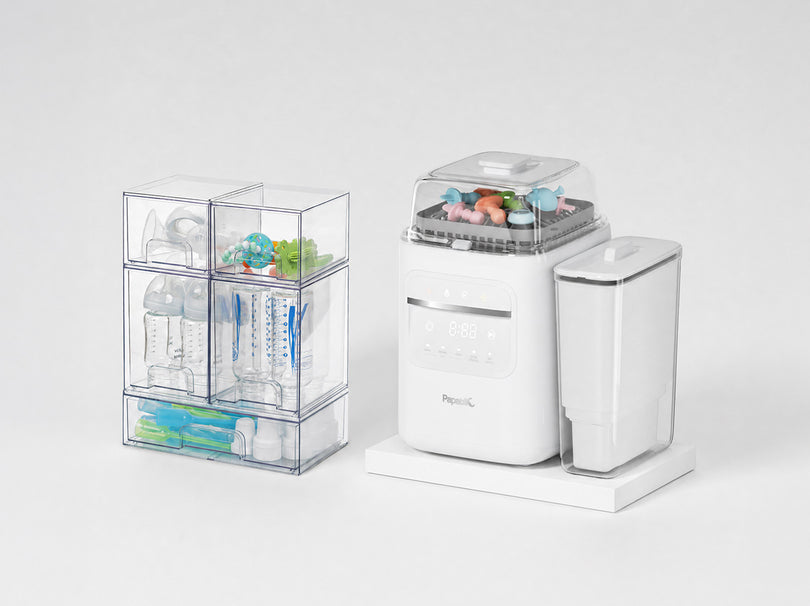
- Larger capacity for 8 bottle sets, pump parts.
- 360° deep clean reaches every nook and curve.
- Twice the drying power ensures fully dry, spotless bottles.
What materials is SafeguardPlus™ made of?
The main materials are PP plastic, Tritan™ plastic, stainless steel, and silicone. All parts that come into contact with bottles are made of food‑contact‑safe materials. Our materials do not contain BPS, BPF, phthalates, or PVC.
Can it clean different types and sizes of baby bottles?
Yes. SafeguardPlus™ is designed to clean most baby bottles and feeding accessories, including glass, silicone, plastic, and stainless steel bottles. It fits a wide range of bottle sizes and works with popular brands like Dr. Brown’s and Evenflo.
How can I check my home's water quality?
- Lead: Check your local government’s website using your ZIP code.
- Hardness: Use a TDS meter to test mineral levels. We recommend use water under 50 ppm or distilled water to prevent limescale build-up.
Can I use a home water filter system with the bottle washer?
It depends, but we recommend using the built-in purification system to ensure long-term safety for your newborn. It is designed to remove harmful contaminants like lead, PFAS and hardness, meeting the highest standards for infant health. Some home filters may not effectively remove these substances, so for best results, we recommend using the washer’s dedicated filtration system.
If I buy the version with a filter, do I still need distilled water?
No – the built-in filter removes lead, PFAS, and hardness, so you can use regular tap water. No distilled water needed.
How often should I replace the filter?
We recommend replacing the filter every 30 wash cycles as a general guideline, based on average U.S. water conditions. Actual filter life may vary depending on your local water quality and usage frequency. Harder water and more frequent use can shorten filter life.
For detailed replacement guidance, please visit the SafeguardPlus product page.
Why does my new filter have a slight odor?
A slight odor from a new filter is normal and may come from the filter materials or packaging. It does not indicate a safety concern; our filters undergo rigorous safety testing for baby feeding.
Rinse thoroughly with clean water before use; the odor should fade with use.
If the odor is strong or persists after several wash cycles, it may be related to harder water or frequent use. Please contact our support team if you need assistance.
Why is the new filter wet/condensation is present in the bag?
The brand-new filter is rinsed with purified water before packaging, which may cause harmless condensation inside the bag.
Why are there small particles on the filter surface?
You may occasionally notice small resin or activated carbon particles on the new filter surface. This can happen during production when tiny particles stick to the filter. They are completely safe for drinking water contact - simply rinse before use.
Does the built-in filtration system reduce the need for descaling?
Yes. The built-in PurifyClean™ filtration system helps reduce mineral buildup, which can significantly lower the need for frequent descaling. For best performance, replace the filter as recommended based on your water quality and usage frequency.
Do I need to use cleaning tablets with the bottle washer?
- The washer can run with water alone, but we recommend using a tablet for a more thorough clean.
- Breast milk and formula contain fats that don’t fully rinse away with water alone.
- A tablet helps break down grease and invisible buildup, so items are deeply cleaned—not just rinsed.
For a higher standard of baby feeding hygiene, using a tablet is best for everyday use.
What voltage does SafeguardPlus™ support?
SafeguardPlus™ is designed for US standard voltage only: 120V, 60Hz. It does not support 220V/240V directly.
Is SafeguardPlus™ eligible for HSA/FSA reimbursement?
We are unable to guarantee HSA/FSA eligibility. From our research, baby bottle washers are generally considered ineligible for reimbursement by HSA/FSA plans.