
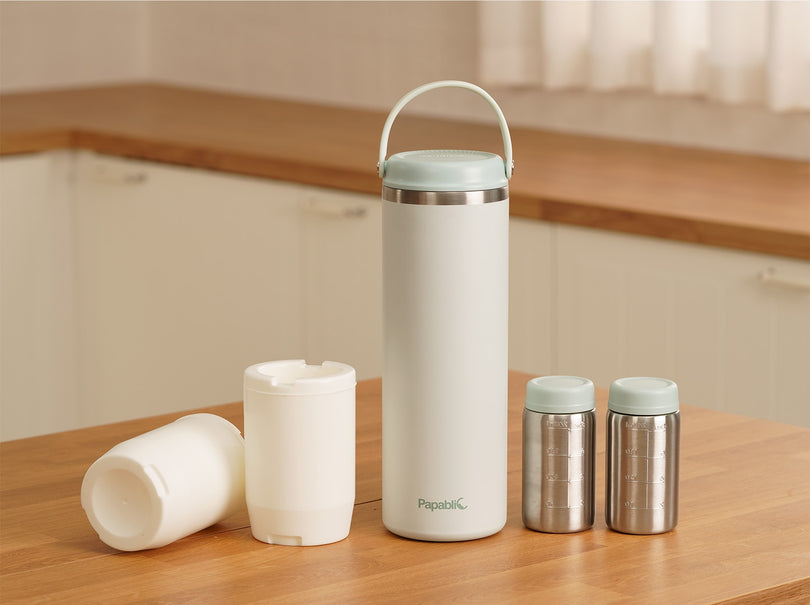




Introduction
If you’ve ever faced a counter full of tiny baby parts in the middle of the night, you know how chaotic cleaning can get. Missing a step can leave parts damp, germy, or lost. This guide walks you through an easy routine to wash, sanitize, dry, and store all bottles and pump accessories safely. Tips for higher-risk babies and NICU parents help make every session stress-free and consistent. What matters most when you want everything washed and dry fast.
Are you solving time, safety, or both?
If your routine breaks at the sink, you are usually fighting one of three problems: time, hygiene, or the combination. Naming your real bottleneck first makes your All-in-One Feeding Solutions decision much easier.
- Time first: You want fewer steps, less hand scrubbing, and a predictable finish time.
- Safety first: You want stronger germ reduction and less handling after the wash.
- Both: You want items fully dry and protected, so they do not get re-contaminated overnight.
Sanitizing vs sterilizing: what are you actually buying?
If you are shopping for a Bottle Washer with a sterilizer or a Steam Sterilizer, it helps to separate marketing words from the outcome you need in your kitchen.
According to the CDC, if you use a dishwasher with hot water and a heated drying cycle (or sanitizing setting) to clean infant feeding items, a separate sanitizing step is not necessary. Also, NSF explains that NSF/ANSI 184 dishwashers are evaluated to achieve a minimum 99.999 percent (5-log) reduction of bacteria on the sanitizing cycle.
- Sanitizing is typically about reducing germs to a safer level.
- Sterilizing is often used more broadly in consumer products, but your practical goal is consistent, repeatable hygiene plus fully dry parts.
- Drying is the nightly bottleneck: damp valves and nipples are where odor and rewash cycles start.
Product picks: wash and dry small baby accessories at once
By priority: all-in-one washer systems first
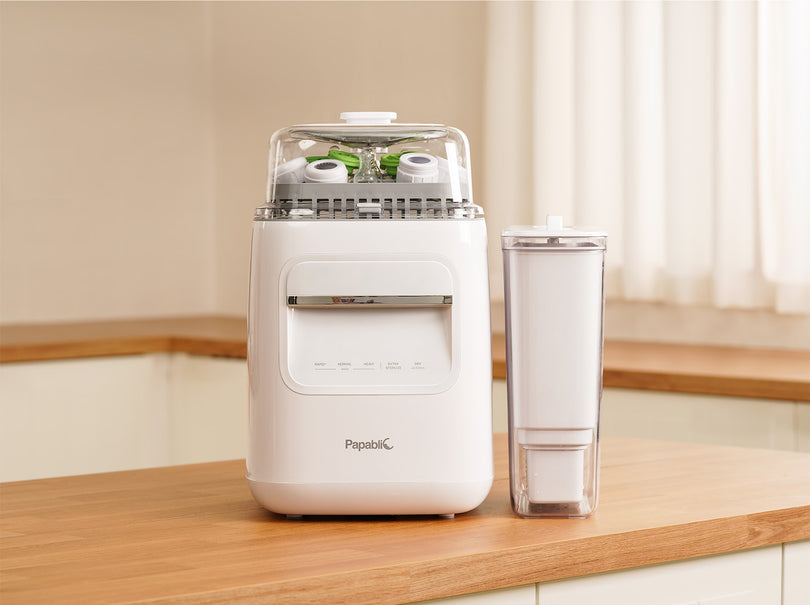
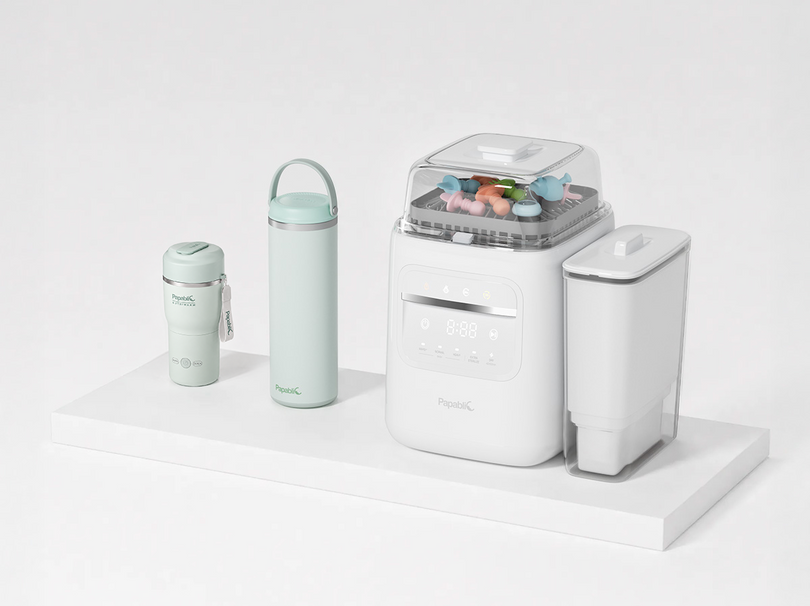
If you are trying to stop the sink pileup entirely, a Baby Bottle Washer (or Automatic Bottle Cleaner) with built-in drying is the most direct upgrade. These are the picks that most naturally become a Smart Baby Bottle Station because they combine cleaning, sanitizing, and Hygienic Bottle Dryer behavior in one place.
1: Papablic SafeguardPlus™ Baby Bottle Washer System
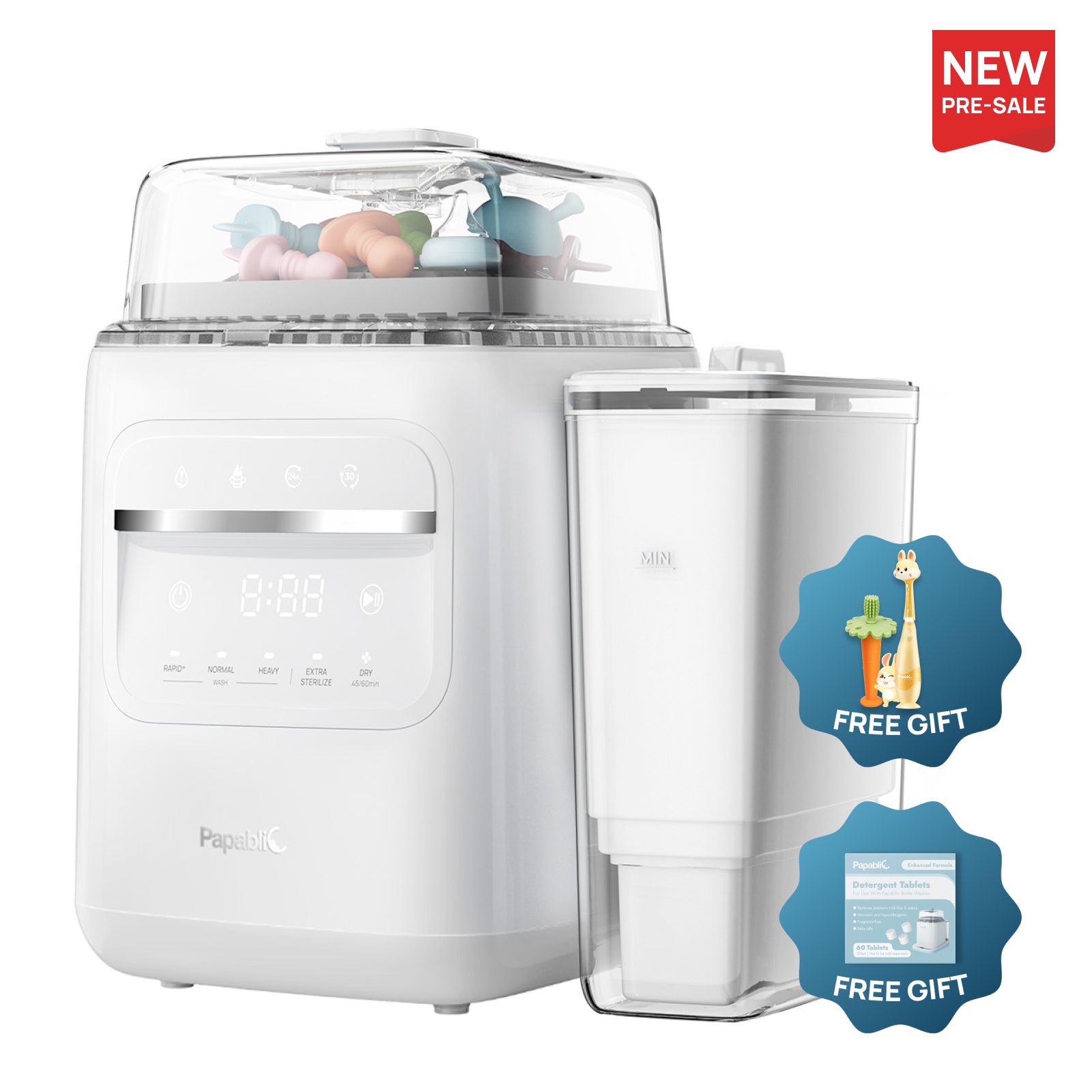
If you are a NICU parent or you simply want the safest, most safety-forward All-in-One Bottle Washer approach, this is the system built around that mindset. The key idea is reducing variables: water quality, missed spots in small parts, and the classic problem of putting away items that are still slightly damp.
- Best for: NICU parents; higher hygiene routines
- Type: Baby Feeding Bottle Washer (all-in-one washer system)
- Built-in PurifyClean™: water purification to reduce water-quality worries
- Capacity claim: up to 8 bottles plus wearable pumps
- System claim: 5-in-1 bottle cleaning system
- Hygiene claims: reduce 99.99% harmful germs; 72-hour hygienic storage
- Materials claim: 100% baby safe materials
Shop: Papablic SafeguardPlus™ Baby Bottle Washer System
Why it wins: If your top priority is reducing rewash risk for tiny accessories, the added water purification plus built-in drying and storage is a clean, simple way to keep your routine consistent. It is especially useful when you need an Automatic Bottle Cleaner workflow that does not depend on how tired you are that night.
2: Papablic Standard Baby Bottle Washer System

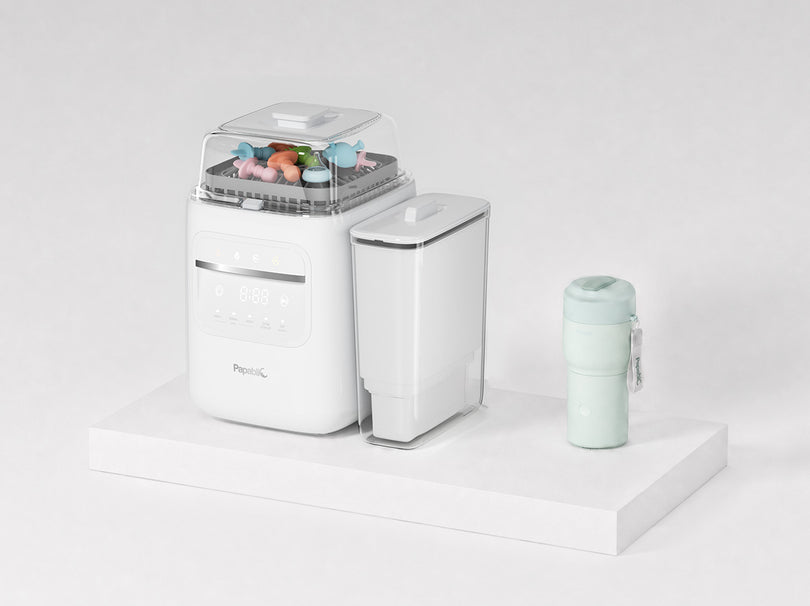
If you are a new parent who wants a sink-free routine without overthinking water filters, this is the daily-driver pick. The biggest practical benefit is that it keeps your Feeding Essentials in one place: you load, run, and unload into a dry environment, which reduces the usual countertop chaos.
- Best for: new parents who want a sink-free setup
- Type: Baby Bottle Cleaner / Bottle Cleaning System
- Integrated water tank: designed for easy, sink-free use (no filter)
- Capacity claim: up to 8 bottles plus wearable pumps
- System claim: 4-in-1 baby bottle cleaning system
- Hygiene claims: reduce 99.99% harmful germs; 72-hour hygienic storage
- Workflow fit: strong option for an All-in-One Bottle Washer station
Shop: Papablic Standard Baby Bottle Washer System
Why it wins: When your goal is to stop losing time to hand washing and air drying, a sink-free Baby Bottle Washer is the shortest path to a calmer night routine. It is also a solid foundation if you plan to add Bottle Warmers or a Breast Milk Cooler nearby for a full Baby Feeding System.
3: Papablic Compact Baby Bottle Washer System
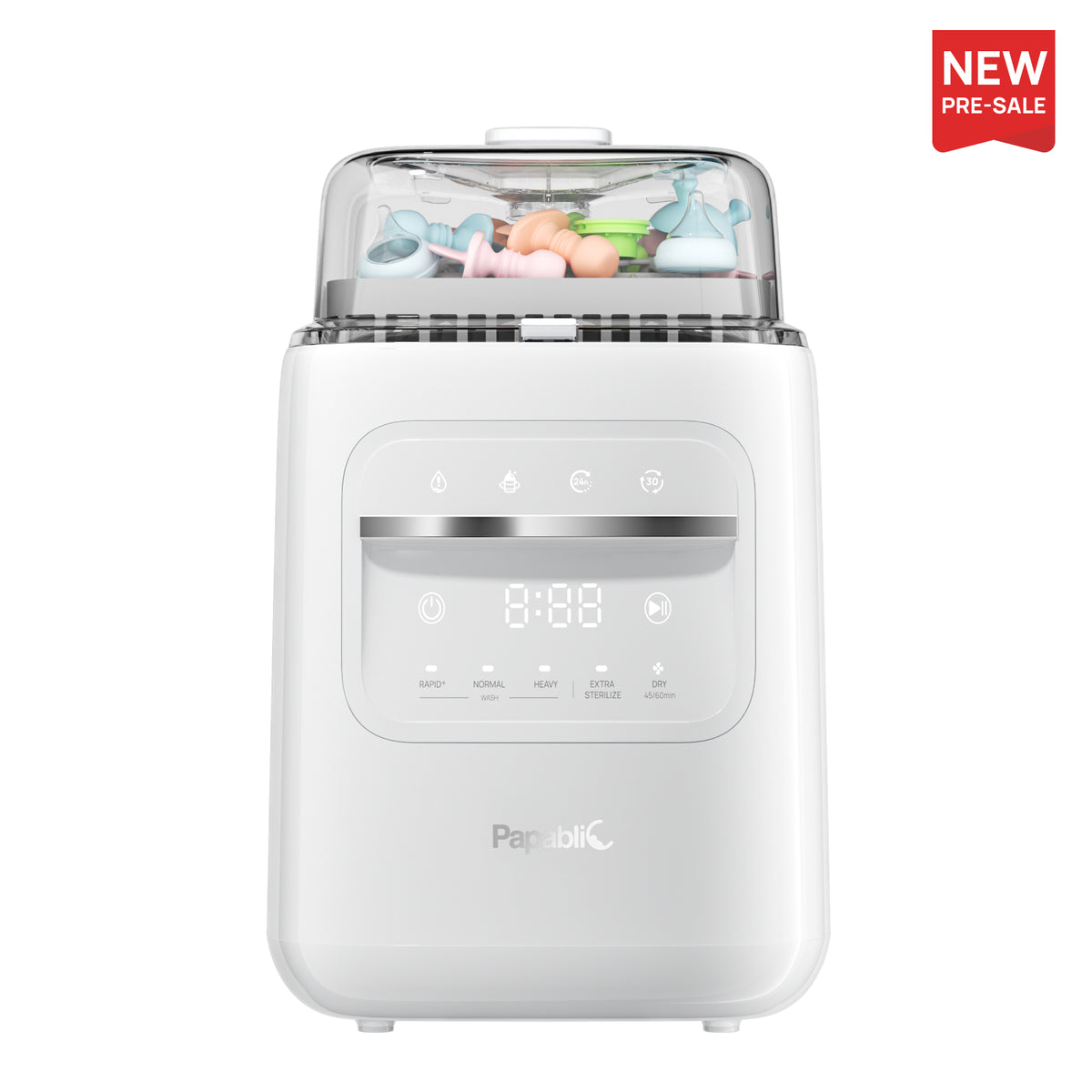
If your counter space is tight or you already have your own preferred water setup, compact is not a downgrade; it is a workflow decision. This pick is aimed at parents who want the same core wash-and-dry concept, but need an easier fit next to a Changing Pads area or wherever you prep bottles.
- Best for: parents with their own water setup
- Type: Automatic Bottle Cleaner/washer system
- Compact footprint: designed for smaller-space routines
- Capacity claim: up to 8 bottles plus wearable pumps
- System claim: 4-in-1 baby bottle cleaning system
- Hygiene claims: reduce 99.99% harmful germs; 72-hour hygienic storage
- Practical note: good for small accessories if you load them spread out
Shop: Papablic Compact Baby Bottle Washer System
Why it wins: If you want an All-in-One Bottle Washer outcome but cannot dedicate a big counter zone, compact helps you stay consistent. Consistency is what protects you from the late-night failure mode: damp parts that smell by morning.
If you already wash elsewhere: sterilizer and dryer picks
If you are already happy with how you wash (hand wash or dishwasher), then the most useful upgrade is usually the Hygienic Bottle Dryer step. This is where many new parents get stuck, because small parts trap water in tight channels.
4: 5 in 1 Baby Bottle Sterilizer and Dryer
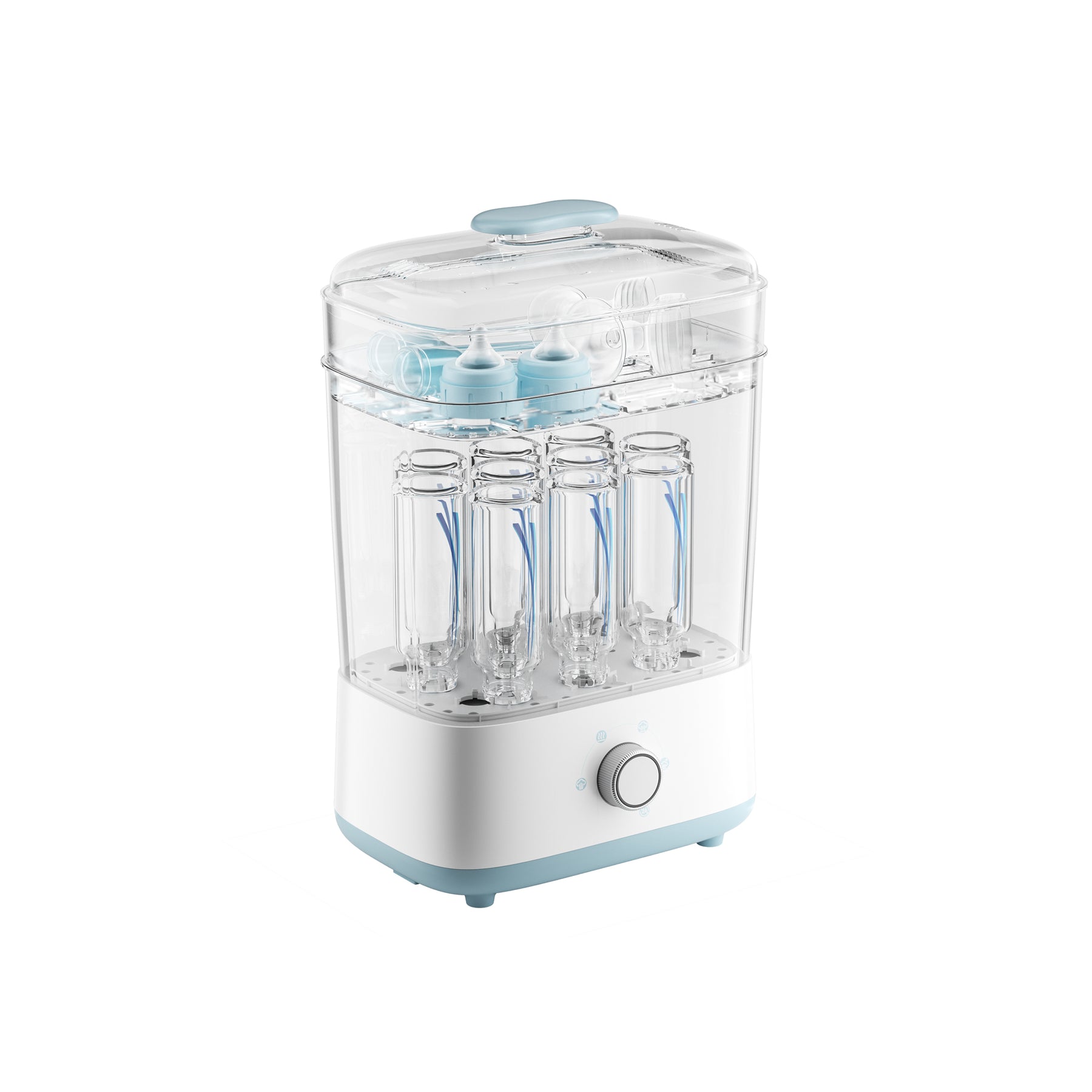
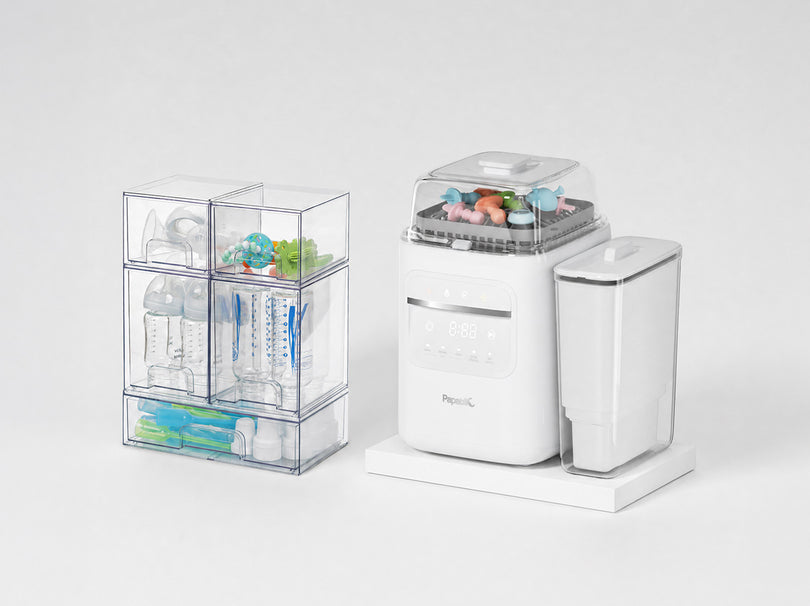
If your main issue is that bottles and accessories never fully dry on the rack, a Bottle Sterilizer and Dryer can be the most efficient fix. This pick is positioned as a Steam Sterilizer plus hot-air dryer, which is exactly what you want when nipples and valves keep staying damp.
- Best for: fast drying after hand washing
- Type: Baby Bottle Sterilizer; Fast Drying Baby Bottle Sterilizer
- Cycle claim: clean-from-start-to-finish in 30 minutes (sterilize, dry, deodorize)
- Storage claim: keeps items in a sterilized environment for over 24 hours
- Capacity claim: up to 11 bottles plus accessories (stacking options)
- Coating claim: exclusive ceramic coating for easier cleaning and less residue
Shop: 5-in-1 Baby Bottle Sterilizer and Dryer
Why it wins: If you already have washing covered, the fastest quality-of-life win is reliable drying. A Quick Bottle Sterilizer plus hot-air dry is also a strong add-on for NICU parents who want an extra hygiene step without adding more handwork.
Competitor context: where Papablic typically competes
You may also see these competitor categories while shopping for a Baby Bottle Washer, Bottle Washer with Sterilizer, or Automatic Bottle Cleaner. Use these notes as a quick decision filter.
5: Baby Brezza (category: bottle washer sanitizer dryer)
- Compare for: similar all-in-one convenience
- Check: how securely small parts are contained during wash
- Decide by: accessory capacity and drying strength
- Watch for: whether your pump parts layout blocks the spray
6: Momcozy (category: bottle washer/cleaning systems)
- Compare for: price sensitivity vs features
- Check: how pump parts sit and whether valves flip
- Decide by: residue control and drying consistency
- Watch for: whether small accessories dry fully
Comparison Table
Quick comparison: who should pick what?
| Pick | Type | Best for | Capacity callout | Key hygiene angle | Trade-offs | Product link |
|---|---|---|---|---|---|---|
| Papablic SafeguardPlus™ Baby Bottle Washer System | All-in-One Bottle Washer | NICU parents | 8 bottles, wearable pumps | PurifyClean(TM) purification | Filter replacements to manage | Shop: Papablic SafeguardPlus(TM) Baby Bottle Washer System |
| Papablic Standard Baby Bottle Washer System | Baby Bottle Washer | new parents | 8 bottles, wearable pumps | Integrated water tank | Needs dedicated counter space | Shop: Papablic Standard Baby Bottle Washer System |
| Papablic Compact Baby Bottle Washer System | Automatic Bottle Cleaner | small kitchens | 8 bottles, wearable pumps | Compact footprint | Less room for bulky extras | Shop: Papablic Compact Baby Bottle Washer System |
| 5 in 1 Baby Bottle Sterilizer and Dryer | Bottle Sterilizer and Dryer | dry-first upgrades | Up to 11 bottles | Steam plus hot-air dry | Still need a wash step | Shop: 5 in 1 Baby Bottle Sterilizer and Dryer |
| Baby Brezza (bottle washer category) | Washer system category | alt all-in-one option | Varies by model | Convenience-first | Model-to-model differences | Shop: Baby Brezza |
| Momcozy (bottle washer category) | Washer system category | value-first shopping | Varies by model | Feature trade-offs | Drying consistency varies | Shop: Momcozy |
Buying Guide: how to choose the safest, simplest system
1) Accessory reality check: what must fit every night?
If your accessories do not fit in a stable way, the whole idea of an All-in-One Bottle Washer falls apart. The small-part reality is what determines whether you wake up to a clean station or a rewash problem.
- Count daily sets (nipples, valves, inserts), not just bottle count
- Look for secure small-part containment so pieces do not flip or nest
- Plan space for pump parts if you pump daily
- Load accessories spread out, so water and airflow can reach all sides
2) What does your water situation look like?
Water is a hidden variable in Baby Bottle Disinfection routines. If you are seeing spots, scale, or inconsistent results, you may not have a detergent problem; you may have a water problem.
- For sink-free routines, an integrated tank reduces daily hassle
- For extra peace of mind, purification can reduce source-water concerns
- If you have hard water, plan a scale-prevention routine (and do not ignore it)
3) Do you need dry storage, not just drying?
Drying is important, but storage is what protects you between feeds. This is especially useful for NICU parents and any household trying to minimize handling.
- Dry storage reduces moisture-smell cycles
- A closed interior reduces kitchen re-contamination
- If you prep bottles in batches, storage keeps your station ready
Practical tips that keep you from re-washing
If you want the simplest day-to-day routine, build your schedule around when you need the next clean set, not around when you have free time.
- Run your Bottle Cleaning System before the last feed, so everything is ready.
- Keep one backup set of nipples and valves to avoid panic cycles
- Do a quick post-cycle check: are valves and nipples fully dry?
Common mistakes to avoid
Most failures happen because the airflow or spray cannot reach where it needs to.
- Overloading so spray arms cannot reach all surfaces
- Nesting small parts (valves inside flanges, nipples stacked together)
- Putting away parts that are still damp
Conclusion
If you want the safest Smart Baby Bottle Station for NICU parents, start with the Papablic SafeguardPlus(TM) Baby Bottle Washer System for an all-in-one workflow plus PurifyClean(TM) water purification. If you want a simpler sink-free routine for new parents, the Papablic Standard Baby Bottle Washer System is the straightforward daily driver, while the Compact version fits better when counter space is the limiting factor.
If you already like how you wash and your real problem is drying, a dedicated Bottle Sterilizer and Dryer can remove the biggest nightly bottleneck: damp nipples, valves, and other small accessories that never seem to finish air-drying.
Official Site: Papablic
FAQ
How often should I sanitize bottles and small accessories?
For NICU parents or medically fragile babies, more frequent sanitizing is common because your risk tolerance is lower. For most healthy babies, consistent washing plus full drying usually becomes the practical baseline after the early weeks. The key is to avoid storing damp parts, because moisture lets odor and residue return quickly. If your baby is under 2 months, premature, or immunocompromised, ask your pediatrician what schedule they want you to follow.
What is the biggest reason small parts still smell after washing?
Small parts smell most often because water stays trapped in narrow channels like valve openings and nipple tips. Even when an Automatic Bottle Cleaner removes milk residue, incomplete drying leaves a damp film that can smell by morning. Separate parts so airflow can reach every surface, and avoid stacking or nesting. If the smell persists, reduce the load size and confirm each piece is fully dry before storage.
Can I wash pump parts and bottle accessories in one load?
Yes, as long as your setup can hold pump parts securely while still letting water and air reach all sides. The common failure mode is crowding, where flanges block spray or tiny valves flip and end up sheltered from airflow. If pumping is daily, choose an All-in-One Bottle Washer that explicitly supports wearable pumps or pump parts capacity. When in doubt, run a slightly lighter load and gain reliability.
What should I do if I see water spots or scale on bottles?
Water spots usually point to minerals in your water, and scale can build up in machines and reduce consistency over time. Start by checking whether the spots wipe off easily (often cosmetic) or feel crusty (more like scale). Use the softest water option your system supports and keep the unit clean on a regular schedule, especially if your home has hard water. If scale keeps coming back, reduce mineral exposure and avoid letting water sit in the unit between cycles.
Is a dryer-only setup enough for new parents?
A Hygienic Bottle Dryer or Bottle Sterilizer and Dryer can be enough if washing is already fast and consistent in your home. The big win is getting nipples, valves, and pump parts fully dry before the next feed, because those are the pieces that cause rewash cycles. If you are constantly behind on bottles, a true All-in-One Bottle Washer reduces steps and decision fatigue. Choose based on where your routine breaks most often: washing time or drying time.
How do I keep tiny accessories from getting lost during a wash cycle?
Use a dedicated small-parts basket or built-in compartments that keep nipples, valves, and caps separated. Pieces get lost when they flip, slide, or nest under larger parts, so stable placement matters as much as wash power. After the cycle, do a quick inventory check before you put parts away, so you do not discover a missing valve at night. Keeping one spare set of your smallest parts is a simple backup plan that prevents stressful last-minute washing.
What is the safest way to set up a one-counter feeding station?
Keep your Smart Baby Bottle Station layout simple: dirty zone on one side, clean and dry zone on the other, and avoid crossing tools between them. Store detergent tablets, brushes, and any wash accessories away from where you place clean nipples and valves. If you add extras like Portable Bottle Warmers or a Breast Milk Cooler, keep them in the clean zone so you do not drip water onto feeding gear. A tidy station reduces mistakes when you are tired, which is the real safety advantage.