

Introduction
You know the feeling: standing at the kitchen sink, staring at a drying rack that looks like a plastic forest. You just spent twenty minutes scrubbing, yet nothing is actually ready to use. The nipples are still dripping, condensation is trapped in the anti-colic valves, and your baby needs a feed in ten minutes.
The bottleneck isn't just the washing; it is the drying and sanitizing gap. For parents of preemies or newborns under 2 months, this isn't just a nuisance—it is a safety hurdle.
You need a machine that closes the loop. This guide compares three top-tier solutions that turn "wet and waiting" into "sterile and ready," giving you back your counter space—and your peace of mind.
Official Site: Papablic
Top Picks: Bottle Washers That Sterilize and Dry
1. The "NICU-Level" Peace of Mind: Papablic All-in-One
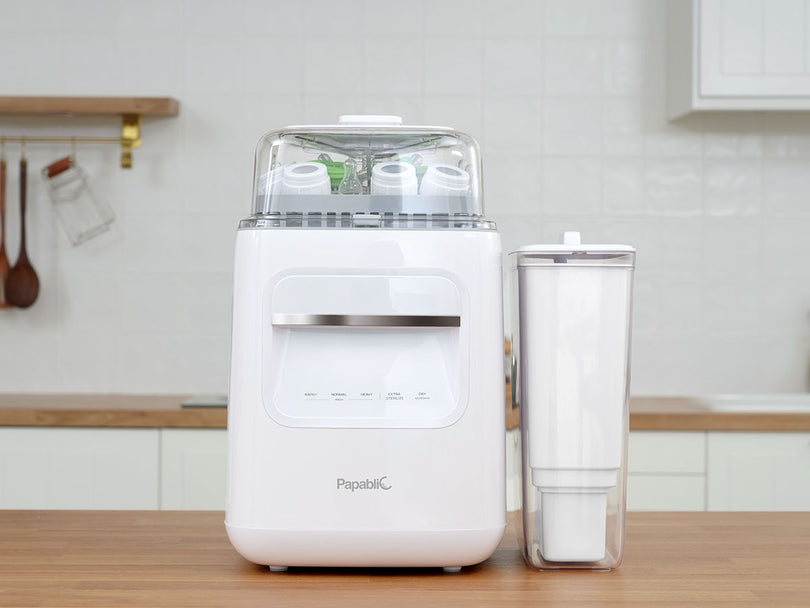
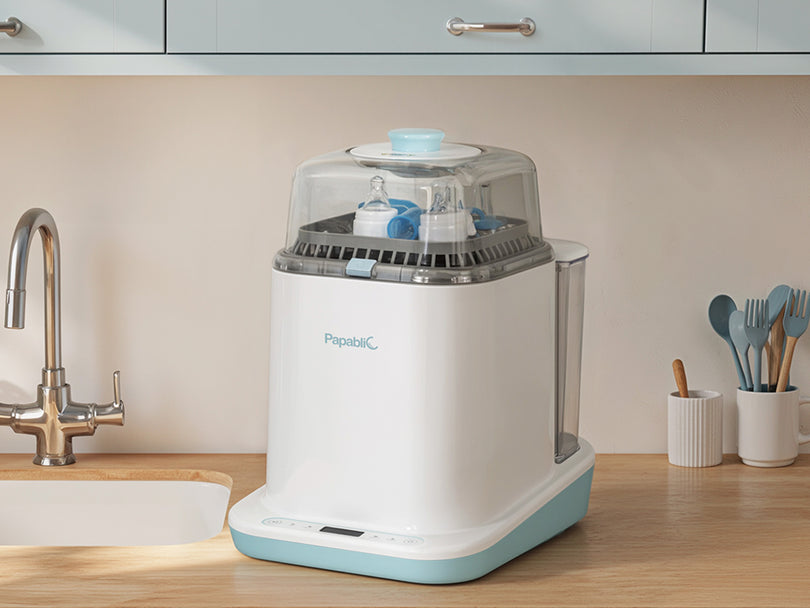
This machine is built for the parent who needs absolute certainty. If your counter is covered in pump parts, valves, and bottles, the Papablic Baby Bottle Washer offers a complete "hands-off" workflow.

Why It Changes the Game
It doesn't just splash water; it attacks residue. With 26 precision jets and high-pressure washing (25,000Pa), it scours milk fat from every crevice before blasting the load with steam and hot air.
- The Workflow: Load dirty → Wash + Sterilize + Dry → Store.
- The Capacity: A double-stack design fits up to 6 bottles plus 2 full pump kits.
- The Promise: 99.99% sterilization in 19 minutes.
- Best For:
- NICU graduates requiring strict hygiene.
- Exclusive pumpers with endless parts.
- Parents tired of the "wash-rinse-repeat" loop.
- Shop Papablic All-in-One
2. The "Countertop Convenience": Baby Brezza Bottle Washer Pro
If plumbing isn't an option, or you want a system that feels like a premium coffee maker, the Baby Brezza is a strong contender. It uses removable tanks, meaning you can set it up anywhere—even in the nursery.
Set It and Forget It
You skip the sink entirely. This unit washes, sterilizes with steam, and dries with HEPA-filtered air. It’s designed to replace the bottle brush, freeing you up to actually hold your baby instead of scrubbing plastic. Key Features:
- No Plumbing: Uses clean/dirty water tanks.
- Hygiene: 20 high-pressure jets + HEPA drying.
- Capacity: 4 bottles + pump parts per cycle. Check Price on Baby Brezza
3. The "Sterilize Only" Classic: Philips Avent Advanced
Sometimes, you don't mind washing, but you hate the drying wait. The Philips Avent is not a washer, but it excels at the final two steps: sterilizing and drying.
Fast & Flexible
If you already hand-wash, this machine finishes the job in just 10 minutes. It uses pure steam to kill 99.9% of germs and keeps contents sterile for 24 hours if the lid remains closed.
- Speed: 10-minute cycle.
- Storage: sterile storage for up to 24 hours.
- Design: Drip tray prevents burnt milk odors. View Philips Avent Sterilizer
Buying Guide: Choosing Your Sanity Saver
The "True Wash" vs. "Steam Only" Decision
Do you hate scrubbing milk residue?
- Get a Washer (Option 1 or 2): These machines have jets that physically remove milk fat.
- Get a Sterilizer (Option 3): Only if you are okay with hand-scrubbing every bottle first.
The Drying Factor
Drying is not a luxury; it's a hygiene requirement. Moisture trapped in a nipple or valve is a breeding ground for bacteria. A machine with a dedicated Fast Drying stage ensures you aren't assembling damp gear for the next feed.
The "Pump Part" Reality
If you are pumping, your volume doubles. Look for a machine with a double-layer rack (like the Papablic). Standard sterilizers often struggle to fit bulky flanges and bottles simultaneously without blocking steam flow.
Timeliness note for 2026 parents:
- Preterm birth remains common at the population level. For example, the March of Dimes report card shows the 2024 preterm birth rate at 10.4% for the third year in a row. March of Dimes
Practical tips for cleaner, drier cycles
Pre-rinse heavy milk residue when needed.
- If milk has dried onto a bottle wall, a quick rinse can help any Baby Bottle Cleaner perform more consistently.
- Next, load so jets or spray nozzles can hit the interior surfaces, not the back side of another bottle.
Descale on schedule to keep heat efficient.
- Steam systems rely on heat transfer. Scale buildup can slow cycles and increase odor.
- If your water is hard, consider using distilled water if the manufacturer allows it.
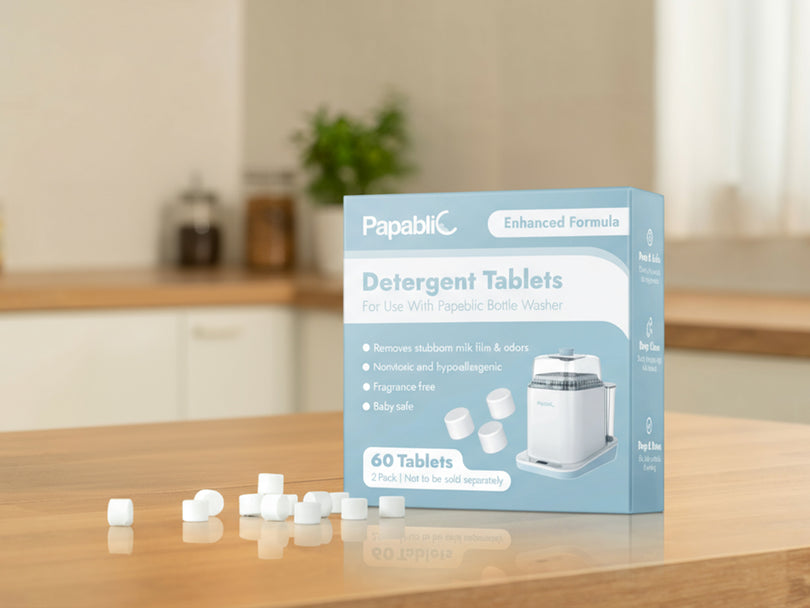
Use the right detergent format for the machine.
- Some washers are designed around tablets and a specific dosage.
- Consistent detergent use can also help reduce slick residue that sometimes lingers on silicone.
Comparison Table
Quick spec snapshot for busy parents
| Pick | Function | Capacity | Notable claim | Plumbing | Best For |
|---|---|---|---|---|---|
| Papablic All-in-One | Wash + Sterilize + Dry | 6 Bottles + Pump Kits | 26 jets, 25,000Pa; 99.99% sterilization in 19 minutes | No (Tank system) | Heavy duty / NICU |
| Baby Brezza Pro | Wash + Sterilize + Dry | 4 Bottles + Accessories | 20 spray jets; dries with HEPA-filtered air | No (Tank system) | Convenience / Small spaces |
| Philips Avent Advanced | Sterilize + Dry ONLY | 6 Bottles | Sterilizes in about 10 minutes; stays sterile up to 24 hours with lid closed | N/A | Hand-washers |
Conclusion
If you want a Baby Bottle Washer that supports NICU parents with a repeatable wash-steam-dry routine, Papablic is the strongest all-in-one style pick in this top 3. If you want an Automatic Bottle Cleaner approach with removable tanks and HEPA-filtered drying, Baby Brezza is a straightforward set-and-forget alternative. If you hand-wash but want a quick Steam Sterilizer step with closed-lid storage, Philips Avent is a strong sterilizer-only option.
Official Site: Papablic
FAQ
Are there bottle washers that offer multiple functions like sterilizing and drying?
Yes, modern "all-in-one" countertop models handle washing, steam sterilization, and hot air drying in a single continuous cycle. This integration is critical because it ensures no step is skipped—washing strips milk residue, steam kills pathogens, and heat drying prevents bacterial regrowth in moisture traps inside nipples and valves.
What features should I look for in a bottle washer for my baby?
Prioritize high-pressure interior jets, a dedicated steam cycle, and HEPA-filtered hot air drying. Jets must have enough force to reach deep into nipples and anti-colic vents to strip fatty milk residue, while active drying is non-negotiable to prevent mold. Also, check that the rack fits your specific breast pump flanges, not just standard bottles.
What is the best bottle washer for sterilization and drying?
The best choice depends entirely on your willingness to hand-scrub. If you want to eliminate sink time completely, choose a full All-in-One Washer that physically removes residue for you. If you prefer the control of hand-washing but hate the clutter of a drying rack, a dedicated Sterilizer-Dryer combo is a faster, more compact solution for the final hygiene step.
Is it better to wash baby bottles with a bottle washer or a dishwasher?
A dedicated bottle washer is generally superior for small, lightweight parts. Household dishwashers often flip nipples and valves over, filling them with dirty wash water ("pooling") rather than cleaning them. Dedicated washers use specialized racks to lock these tiny items in place and use targeted water jets to clean inside narrow bottle necks that standard dishwasher spray arms often miss.
How to ensure baby bottles are 100% sterile for a premature baby?
You must physically remove all milk residue before steaming, as milk fat can shield bacteria from heat. The "wash" step is critical; steam cannot effectively penetrate caked-on milk. Once the cycle finishes, handle items only with clean tongs or freshly washed hands, and keep the machine's lid closed to create a sterile storage environment until the next feed.
How to ensure baby bottles are dry without waiting hours on a rack?
Use a machine with active hot air drying (fan-forced) rather than relying on passive gravity drying. Passive drying often leaves moisture trapped in the tip of the nipple, which attracts bacteria. To maximize efficiency, shake off excess water before loading and ensure no two parts are "nesting" (touching), which blocks the airflow needed for complete dryness.

