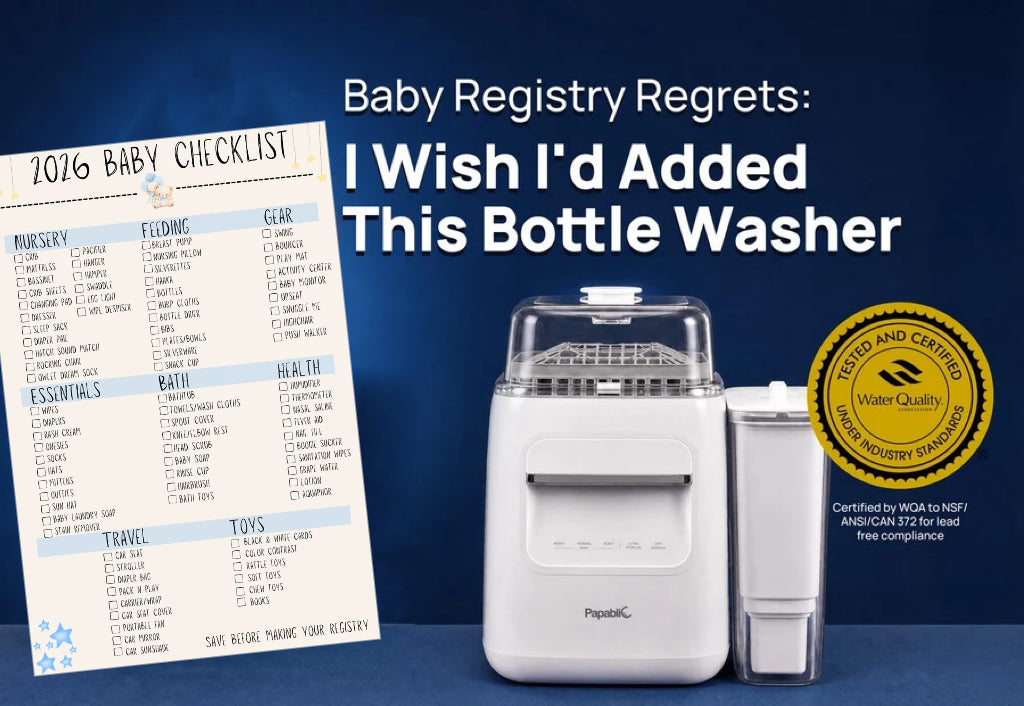

There's no shortage of bottle washers on the market. The harder part is knowing which features actually matter, and which ones just look good in a spec sheet.
In this guide, we break down what to look for in a bottle washer, why water quality is the most overlooked factor in bottle hygiene, and which product we'd recommend above everything else in 2026.
What Actually Makes a Baby Bottle Washer Worth It?
Most bottle washers on the market handle the core job reasonably well: they wash, they often dry, and they do it faster than hand-washing.
But what makes a baby bottle washer worth their weight in gold?
Get Back More Time
Life with a newborn means a lot of washing. Every bottle gets cleaned after every feed, and it doesn't stop there. Pump parts, pacifiers, teething toys, and anything else that goes near your baby's mouth all need regular cleaning too. That's a lot of time at the sink, layered on top of all the other dishes you have to do day-to-day.
A Dedicated Washing Experience
A bottle washer is dedicated to washing anything that goes into your baby’s mouth. Relying on a baby bottle washer removes the need for fitting baby bottles, nipples, pump parts, and more into your regular dishwasher and saves you from having to run an entire dishwashing cycle for small items.
Hands-Off Washing
Not only do you get more time back with a baby bottle washer, but you get hand-off bottle washing. Simply load the baby bottle washer, click a button, and let the hard work be done for you. Your hands can be used to do other things that need your attention like laundry, cooking, or holding your baby.
Cleaning With Water You Trust
Most parents don't think twice about the water they use to wash bottles. It comes out of the tap, it goes into the washer, and the assumption is that clean water means clean bottles. But tap water carries more than you might expect: minerals that leave residue, chlorine, and in some areas, trace contaminants that don't disappear in a standard wash cycle.
The water you clean with matters as much as how you clean. A bottle washer with built-in water filtration means every wash starts with filtered water, so you're not unknowingly adding anything back into the bottles you've just cleaned.
Our Pick for 2026: The SafeguardPlus™ Baby Bottle Washer System
Washing and sterilizing bottles by hand works. It just doesn't work consistently.
Boiling takes a lot of time and attention while many dedicated bottle washers only clean bottles and don’t sanitize or sterilize.
Even more, tap water can carry minerals, chlorine, and in some areas, trace amounts of lead and other heavy metals. The EPA regulates more than 90 contaminants in public drinking water, including lead, arsenic, and PFAS. Pour that water into a standard bottle washer or use it to boil your bottles and those contaminants are present at every clean.
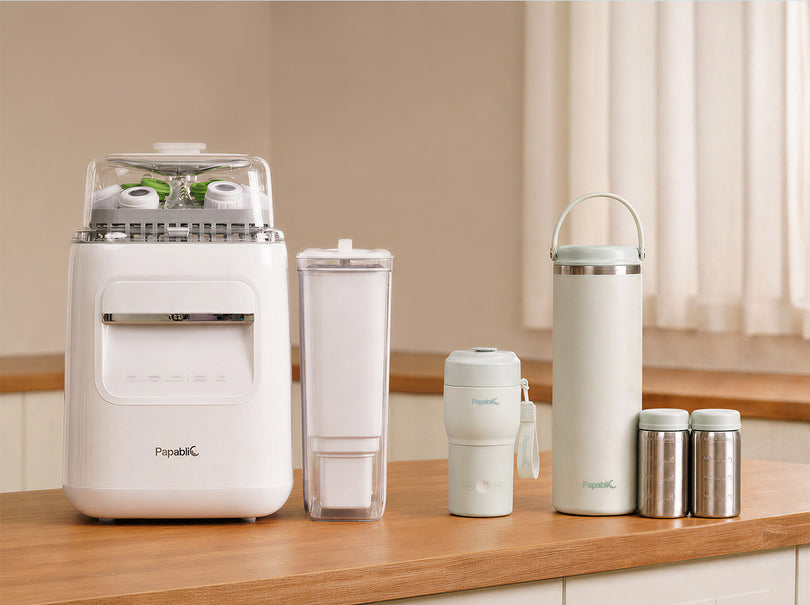
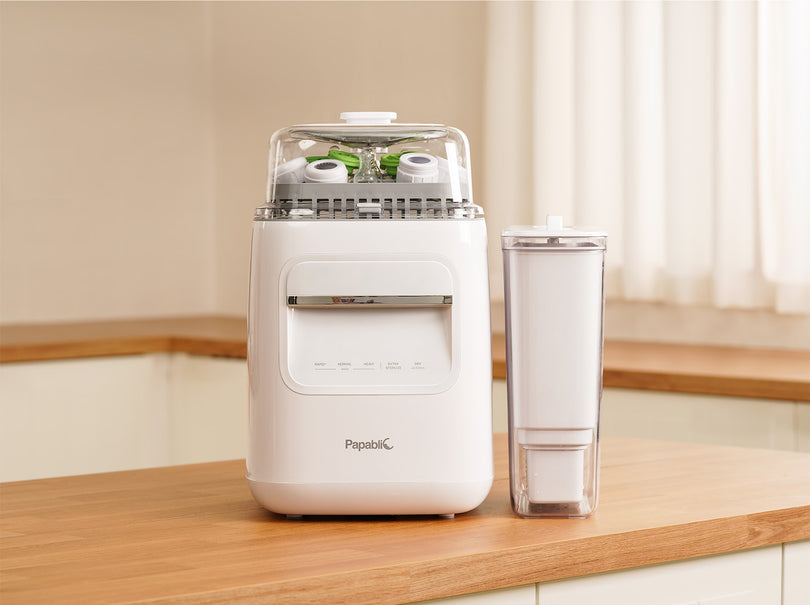
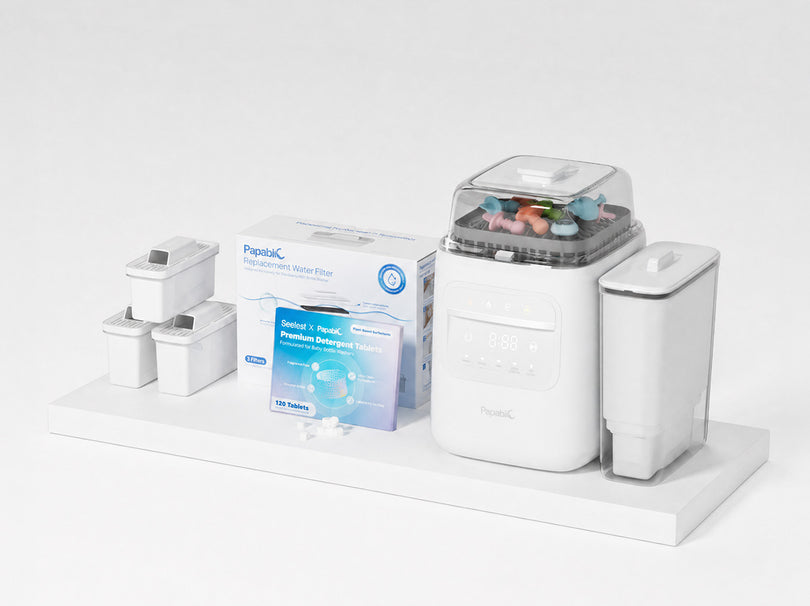
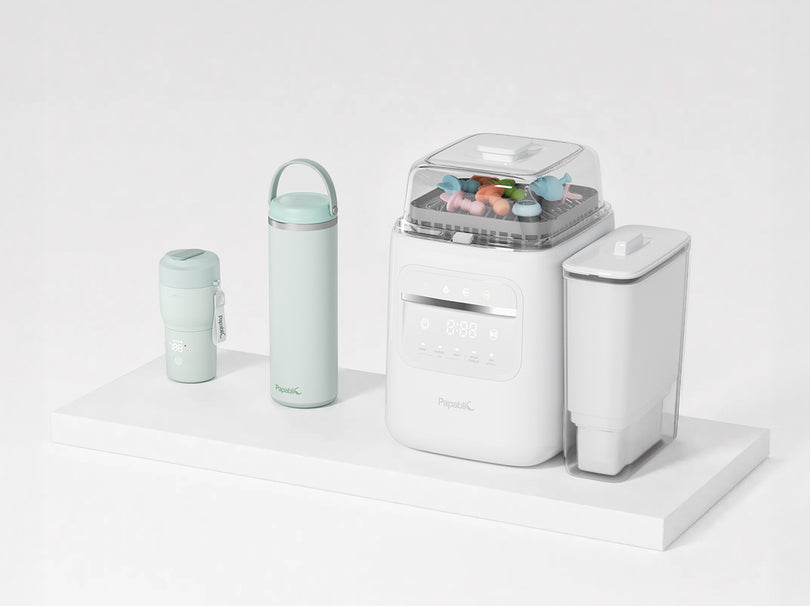
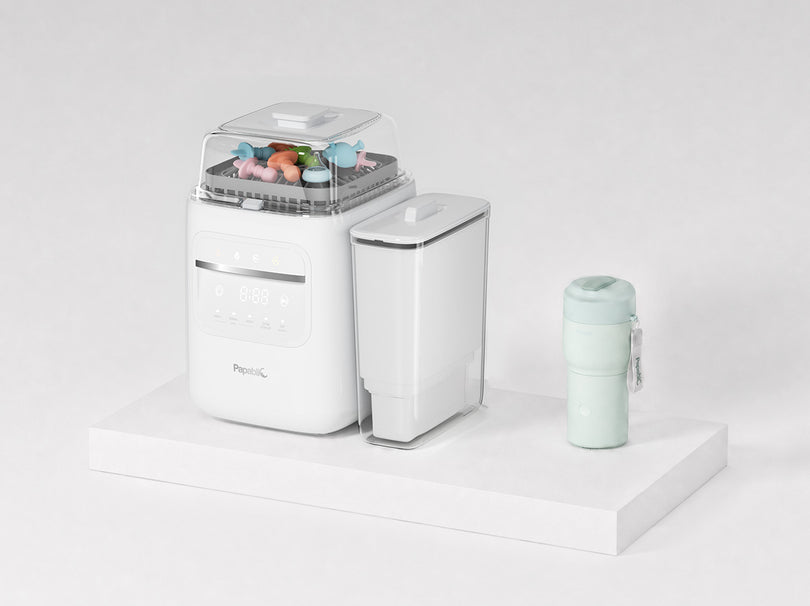
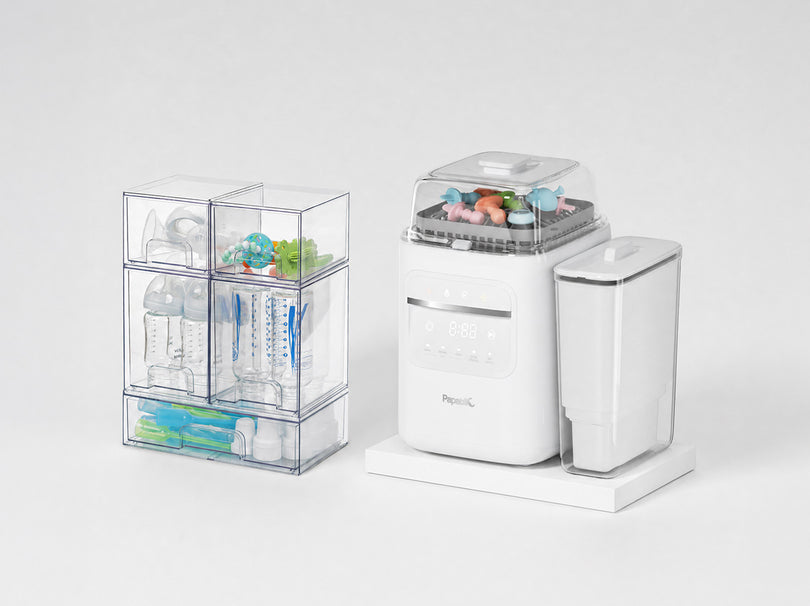
Our SafeguardPlus™ Baby Bottle Washer System closes all these gaps. It's the first and only bottle washer with a built-in water filtration system (PurifyClean™), and its five-in-one system handles every step of the cleaning cycle in one automated sequence: filters the water, washes, sterilizes with steam, dries, and stores your bottles.
Load up to 8 bottle sets. Customize the washing cycle that best suits your needs. Press start. Walk away. Bottles stay protected for up to 72 hours inside the sealed unit, backed by 99.99% germ reduction through the sterilization cycle. Every component is made with 100% baby-safe materials.
Where SafeguardPlus™ Outperforms Standard Bottle Washers
While standard bottle washers have come a long way, they’re not all created equally. A few things separate our SafeguardPlus™ from the rest of the market and are worth considering before making your purchase.
The SafeguardPlus™ Filters the Water Before It Reaches Your Bottles
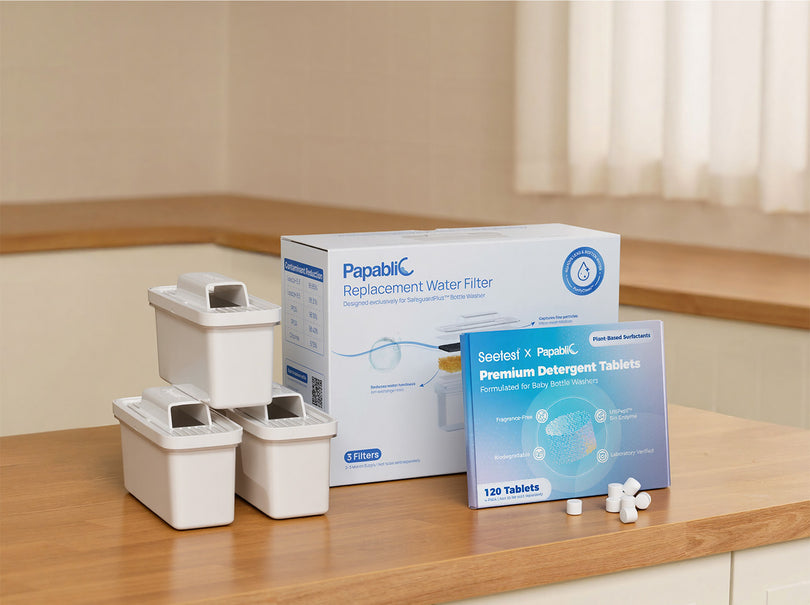
Most bottle washers don't address water quality at all. You fill them with tap water, run the cycle, and assume the result is clean. The PurifyClean™ filtration system in the SafeguardPlus™ changes that: it filters the water before it enters the wash cycle, so every clean starts with filtered water, not just a cleaning process applied to whatever comes out of the tap.
Nina Spears from Baby Chick, a birth and postpartum doula with 15 years of experience, tested our SafeguardPlus™ noting that the TDS (Total Dissolved Solids) meter showed 180 ppm before filtration and 9 ppm after filtration, highlighting that the system is doing its job beautifully.

The SafeguardPlus™ Dries and Stores
A lot of machines stop at sterilizing. You're still transferring bottles to a drying rack, waiting for them to air dry, and then moving them again to storage. Every transfer is a chance for contamination to creep back in.
The SafeguardPlus™ completes the full cycle and keeps bottles sealed inside the unit for up to 72 hours. You don't touch them again until you need them.
- Top Tip: When comparing bottle washers, look beyond the wash cycle. A machine that washes and sterilizes but doesn't dry fully leaves bottles open to recontamination on the drying rack. Sealed post-sterilization storage is one of the most overlooked specs in the category.
The Capacity Makes a Real Difference
Eight bottle sets per cycle covers a full day's worth of feeds for most families, along with pump parts and accessories in the same load. Smaller-capacity washers require more frequent cycling, which means more time, more water, and more steps in your day. For families who are pumping regularly or managing multiple feeds, that difference adds up.
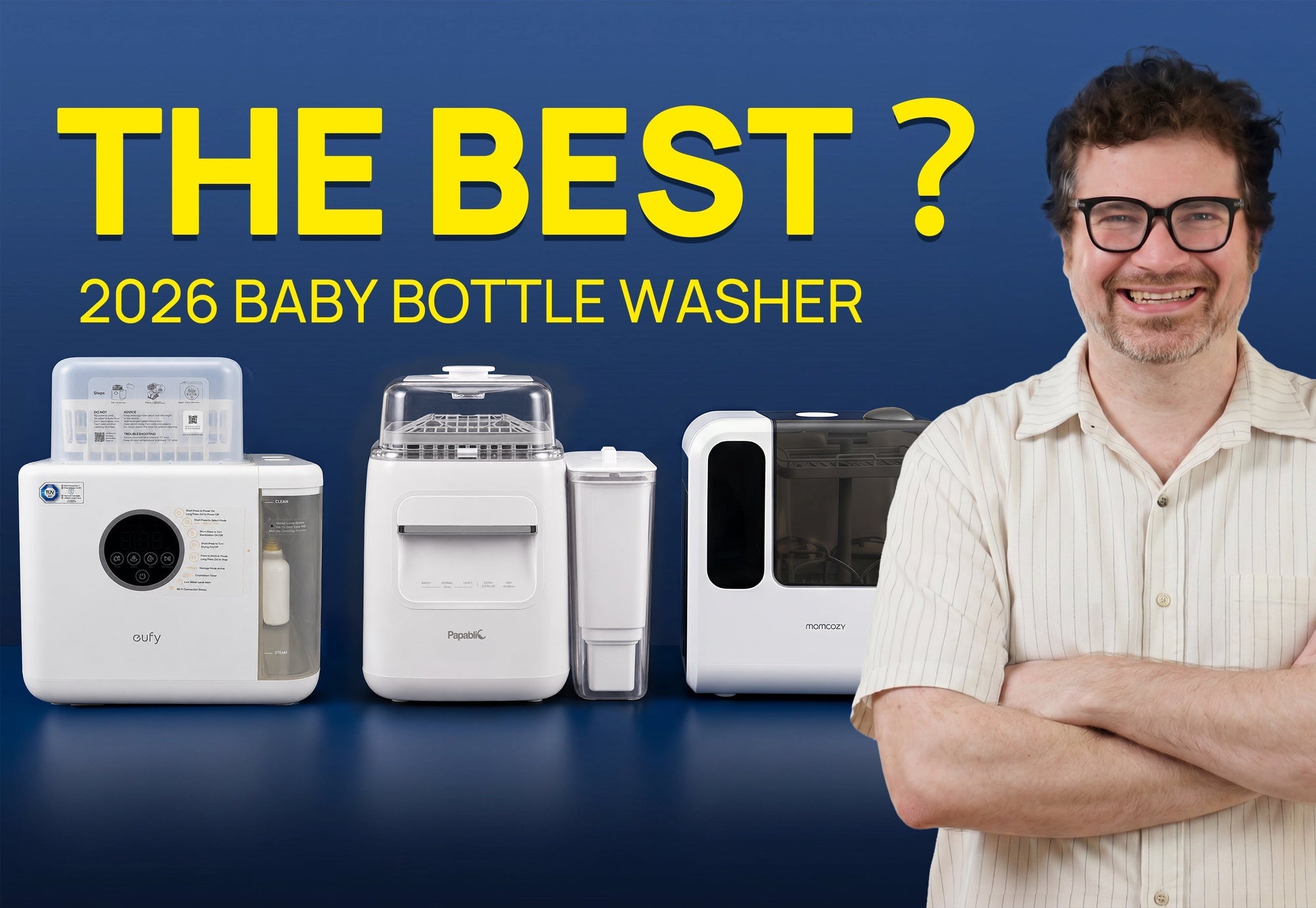
For a side-by-side look at how the SafeguardPlus™ stacks up, our 2026 bottle washer comparison guide covers the key differences.
Who the SafeguardPlus™ Baby Bottle Washer System Is Built For
Newborn Families
In the first weeks, bottle hygiene is one of the highest priorities in the feeding routine and all bottles for newborns under 2 months need daily sterilizing. Newborns' immune systems are still developing, and consistent sterilization matters for every feed. The SafeguardPlus™ covers the full cycle automatically: no stove, no tongs, no manual monitoring of temperatures or timing.
Pumping Parents
If you're pumping, the volume of equipment going through the wash cycle every day adds up quickly. Pump parts, bottles, storage accessories: all of it needs to be clean and ready. A single cycle that handles everything in one pass, and keeps it protected for 72 hours afterward, makes a meaningful difference to the daily workload.
Families with NICU or Premature Babies
For families bringing a premature or NICU baby home, the care around bottle hygiene stays at the highest level for longer. Everything that touches feeding needs to be thoroughly cleaned and sterilized, consistently. The SafeguardPlus™ removes the variables from that process: the same filtration, the same sterilization, the same sealed storage, every single cycle.
Parents Recovering from a C-section
In the weeks after a C-section, reaching over a sink or managing a heavy pot on the stove can be uncomfortable or physically difficult. According to the Mayo Clinic, lifting should be limited to 10-15 pounds in the first couple of weeks. The SafeguardPlus™ is a countertop unit built for easy loading and one-press operation. Load the bottles, press start, and the machine handles the rest: again, no heavy pots, no stovetop monitoring.
Frequently Asked Questions
Is It Worth Having a Baby Bottle Washer?
For most bottle-feeding families, yes. A dedicated bottle washer removes the inconsistency of handwashing and stovetop methods, and the better models handle sterilization, drying, and storage in the same cycle. For newborns especially, the consistency and convenience are hard to replicate by hand. If you're feeding multiple times a day, the time saving alone adds up quickly.
Which Baby Bottle Washer Is Best?
The SafeguardPlus™ Baby Bottle Washer System is our top pick for 2026. It's the only countertop bottle washer with a built-in water filtration system, and it covers washing, sterilizing, drying, and storing in one automated cycle. The 72-hour hygienic storage and 8-bottle-set capacity make it the most complete option currently available.
Do I Need Distilled Water for a Baby Bottle Washer?
With most bottle washers, distilled water is sometimes recommended to reduce mineral buildup and water quality concerns. With the SafeguardPlus™, the PurifyClean™ filtration system handles that at the source: it filters the water before it enters the cycle. You use regular tap water, and the built-in filtration takes care of the rest.
Five Steps. One System. Nothing Missed.
The best baby bottle washer is the one that handles the full job: filtered water in, clean, sterilized, dry, stored bottles out, ready when you need them. Whether you're in the early newborn stage, pumping several times a day, or just trying to simplify a routine that's stretched you thin, having one machine cover everything will make your life easier.
Explore the SafeguardPlus™ Baby Bottle Washer System and see how it fits into your feeding routine. Want to understand what to budget for before you buy? Our 2026 bottle washer price guide covers what to expect at every price point.