
Introduction
A Baby Bottle Washer can be a game-changer for new parents by turning a repetitive, high-friction task into a predictable routine. With feeding cycles every 2 to 4 hours, the real challenge is not just the effort but the mental load of ensuring bottles are truly clean, dry, and ready for the next feed.
Handwashing often misses thin milk film in bottle threads, nipples, and pump parts, while drying can become a bottleneck. A clean but wet bottle isn't fully ready, as moisture supports bacterial growth and can cause musty odors. This guide helps you make a budget-friendly, performance-based decision in 2026 by comparing bottle washers on cycle time, residue control, sterilization method, and drying system—ensuring you don’t overpay for features you won’t use. The goal is a workflow that keeps you calm, even at 2 a.m.
If you are a NICU family or supporting NICU parents, the routine often needs extra structure. The CDC notes that sanitizing infant feeding items daily is especially important when a baby is under 2 months old, born prematurely, or has a weakened immune system, and it also stresses the importance of letting items air-dry thoroughly (not towel-drying) to avoid reintroducing germs.
Official Site: Papablic

Baby Bottle Washer fundamentals
Cleaning vs sanitizing vs sterilizing
Parents often use these words interchangeably, but they describe different outcomes.
- Cleaning removes visible soil plus invisible milk residue. It relies on water flow, detergent, friction, and time.
- Sanitizing reduces germs to safer levels after cleaning. For many families, this is the daily baseline when baby is very young.
- Sterilizing targets a higher level of germ reduction, commonly by steam. A Steam Sterilizer function is popular because it is chemical-free and easy to repeat.
In practice, a Bottle Washer with Sterilizer is most helpful when it handles the full chain: wash thoroughly, sterilize consistently, and then dry completely.
Residue risk: fats, proteins, and biofilm
Milk leaves a mix of fats and proteins that can cling to plastic and silicone. Residue hides in places that are hard to inspect:
- Bottle neck threads and collar rings
- Nipple bases and anti-colic vent paths
- Pump valves, membranes, and backflow protectors
When residue stays behind, it can form a film that feels slippery, looks cloudy, or smells sour. That film also gives microbes more to cling to, which is why reliable spray coverage matters more than raw cycle speed.
Why drying is part of hygiene
Drying is not only about convenience. It is a hygiene step because wet surfaces make it easier for germs and mold to grow during storage. The CDC emphasizes letting sanitized items air-dry thoroughly and avoiding towel-drying because towels can transfer germs back to clean parts. CDC
If you need bottles ready for the next feed, a Hygienic Bottle Dryer or Fast Drying Baby Bottle Sterilizer feature can be the difference between a smooth schedule and scrambling.
Workflow fit: newborn, pumping, daycare
The most affordable option is often the one that matches your daily rhythm.
- Newborn feeding: you need fast turnaround, and you will run partial loads.
- Exclusive pumping: small parts drive the workload. The best system prevents lost valves and keeps parts separated.
- Daycare prep: you need predictable staging, usually one larger batch cycle.
A strong Bottle Sterilizer and Dryer workflow also reduces sink time, which helps postpartum recovery. That is a real performance benefit, even though it does not show up in spec sheets.
Daily newborn feeding workflow

A daily newborn routine is mostly about repeatability. You want a process that works even when you are tired, baby is crying, and you only have one free hand.
Here is a practical cycle-and-staging approach for a Baby Feeding Bottle Washer:
- Step 1: Pre-rinse quickly (10 to 20 seconds). This reduces dried-on film if you cannot run a cycle right away.
- Step 2: Batch by the next 6 to 8 hours. Instead of washing one bottle at a time, run a load that covers the next block.
- Step 3: Choose a cycle based on readiness. If you need bottles soon, prioritize a shorter wash plus effective dry.
- Step 4: Store in a clean zone. Keep finished parts in the closed unit or in a protected bin once fully dry.
Why this works: your bottleneck is usually not washing. It is drying. When you remove wet parts too early, you end up air-drying on towels, and that adds handling steps.
How Papablic fits this module (performance per cycle):
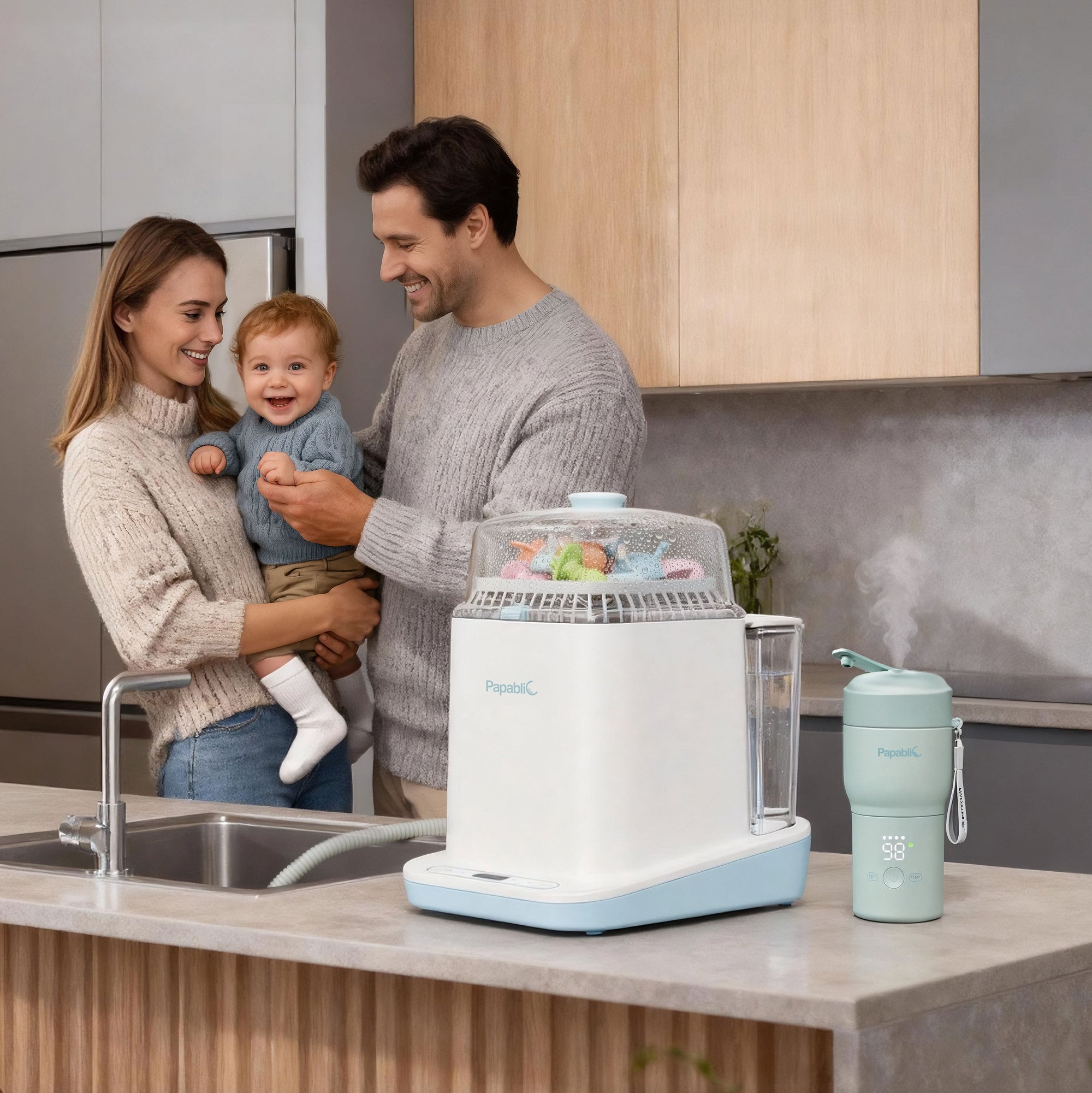
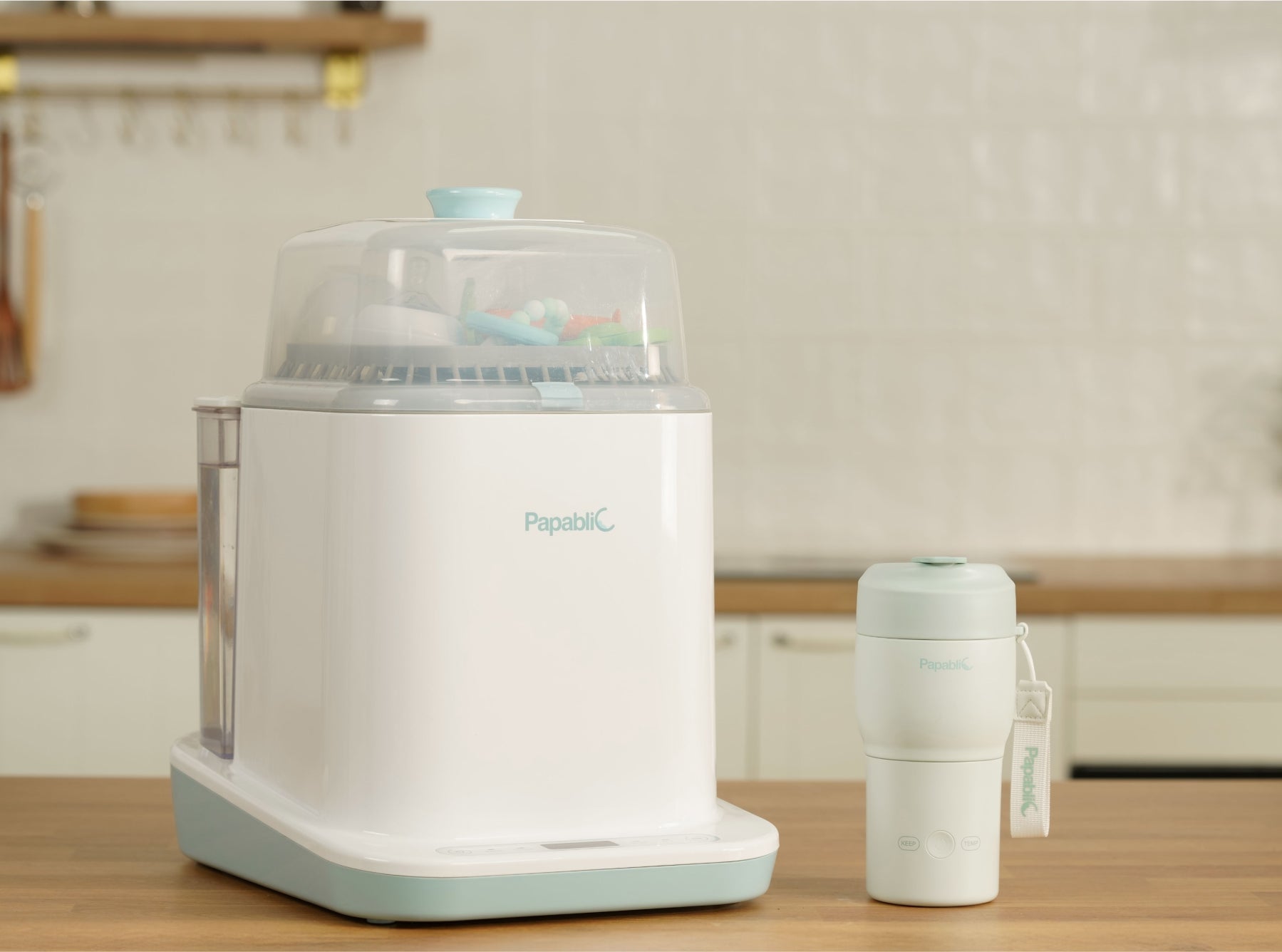
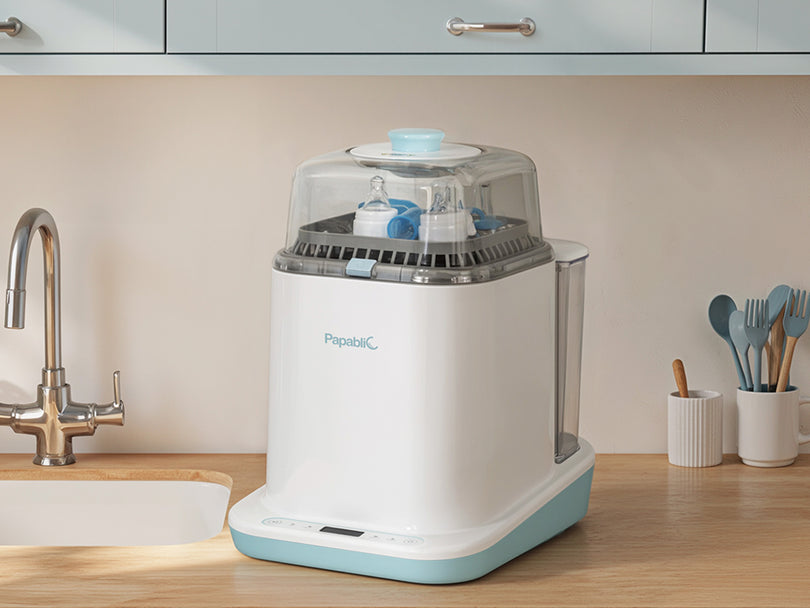
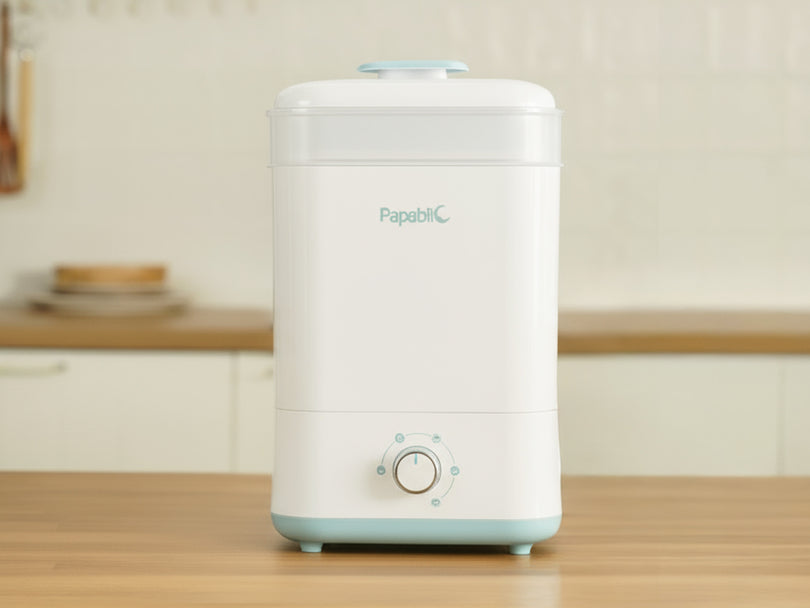
Papablic positions its all-in-one unit as a 4-in-1 system that combines power-washing, steam-sterilizing, drying, and storage. On its product page, Papablic states it uses 26 precision jets with 25,000 Pa pressure to target milk residue from multiple angles, and it claims 99.99% sterilization in 19 minutes. It also highlights a compact, double-stack layout designed to hold up to 6 bottles and 2 full pump kits per cycle, which supports the newborn reality of frequent loads.
If you are comparing a Baby Bottle Sanitizer feature across brands, treat these numbers as a decision clue: more directed jets and stable rack geometry often translate into better interior coverage, especially for narrow-neck bottles and small vent pieces.
Shop: Papablic Baby Bottle Washer Sterilizer and Dryer All in One Bottle Cleaner
NICU-style hygiene routine
For NICU parents and medically fragile infants, the goal is not to panic-clean. The goal is to build a routine that is strict but sustainable.
A NICU-style routine has three parts: separation, frequency, and handling discipline.
- Separate clean and dirty zones
- Dirty zone: used bottles, pump parts, and a dedicated basin.
- Clean zone: dry rack, closed washer storage, and sealed containers.
- Decide a sanitizing cadence you can follow
- If baby is premature or immunocompromised, daily sanitizing is commonly used as an extra layer.
- The CDC specifically highlights daily sanitizing as especially important for babies under 2 months, premature babies, or babies with weakened immune systems. CDC
How Papablic fits this module (hygiene consistency):
Papablic describes its unit as combining washing, steam sterilizing, drying, and hygienic storage in one device. For NICU-style workflows, that matters because it reduces the number of transfers between sink, rack, and countertop.
The angled control panel design is also a practical detail for postpartum recovery. The easier the interface is, the less likely you are to skip a cycle during a rough day.
Shop: Papablic Baby Bottle Washer Sterilizer and Dryer All in One Bottle Cleaner
Pump parts and small accessories

Pump parts are where many cleaning systems fail, even when bottles look fine. The reason is geometry.
- Valves and membranes are thin and can fold or stick together.
- Flanges have curves that trap film.
- Wearable pump parts have chambers that need direct spray paths.
Use this setup method for any Bottle Cleaning System:
- Step 1: Disassemble completely. If you leave membranes attached, water flow will not reach the contact surfaces.
- Step 2: Use a small-part basket or a dedicated top zone. Small silicone parts should not bounce around.
- Step 3: Prioritize spacing over capacity. A half load with good spray paths is better than a full load with blocked jets.
- Step 4: Inspect the “milk line” areas. Focus on flange tunnels, duckbills, and backflow protectors.
The CDC also includes small feeding items and pump parts in its infant feeding hygiene guidance, and it emphasizes sanitizing pump parts at least once daily for extra protection in higher-risk scenarios. CDC
How Papablic fits this module (capacity and organization):
Papablic highlights a double-stack design and the ability to handle two full pump kits per cycle. In real use, this matters because you can run a pump-parts-focused load without sacrificing bottles.
The 26-jet, high-pressure approach is also well aligned with pump-part cleaning, because many parts rely on internal flow rather than surface scrubbing. When you compare an Automatic Bottle Cleaner, look for a rack design that keeps valves upright and prevents nesting.
Shop: Papablic Baby Bottle Washer Sterilizer and Dryer All in One Bottle Cleaner
Travel and backup scenarios
Routines break. Power goes out. You stay with family. A daycare bag comes home with surprise bottles. This is when a calm backup plan protects your feeding schedule.
Build a two-layer strategy:
Layer 1: Minimal-manual method (fast and realistic)
- Use a dedicated wash basin, not the sink.
- Use a brush for threads and nipples.
- Air-dry on a clean surface, protected from splashes.
The CDC specifically warns not to place feeding items or pump parts directly in the sink because sinks and drains can contaminate them. CDC
Layer 2: Heat-based option when you need extra confidence
- Boiling works if parts are boil-safe.
- Steam systems work if you can follow the manufacturer timing.
- A Quick Bottle Sterilizer cycle is helpful when you need bottles ready for the next feed window.
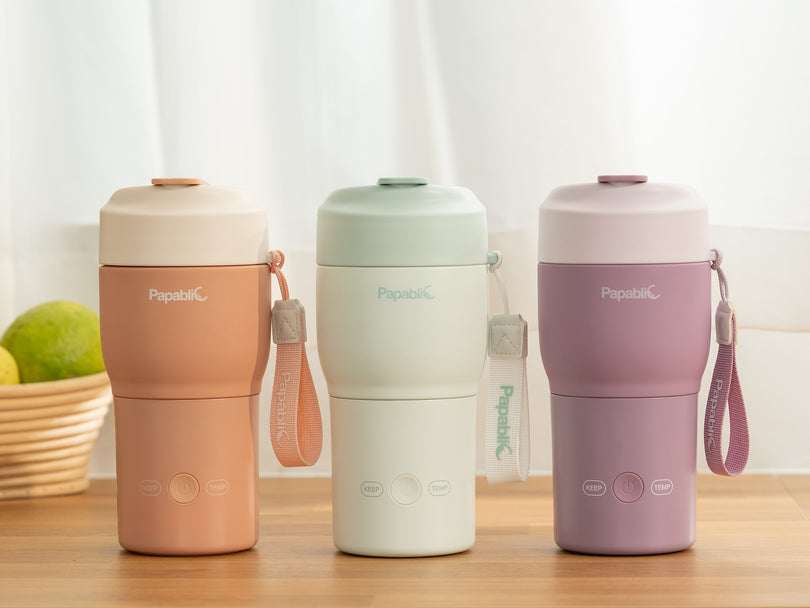
If you also travel with warming needs, look for Portable Bottle Warmer or On-the-Go Bottle Warmer solutions that keep your feeding plan intact, even when cleaning options are limited. In a true travel setup, you are not trying to replicate your home system. You are trying to reduce variables.
How Papablic fits this module (use-anywhere practicality):
Papablics integrated wash-sterilize-dry approach supports continuity when your countertop space is limited. When you return home after travel, you can also run one recovery cycle that resets all bottles and pump parts without extra sink time.
Shop: Papablic Baby Bottle Washer Sterilizer and Dryer All in One Bottle Cleaner
Quick comparison table for decision-making
| Scenario | What matters most | What to prioritize | Common trade-off |
|---|---|---|---|
| New parents running partial loads | Speed + dry readiness | Short effective cycles, reliable drying | Smaller loads waste capacity |
| NICU parents or higher-risk routine | Consistency + handling control | Steam sterilizer cycle + protected drying/storage | Longer cycles, stricter process |
| Exclusive pumping | Small parts coverage | Rack organization + spray access to valves | More setup time per load |
| Daycare prep batches | Capacity + predictability | Larger racks + stable dry performance | Longer single cycle is fine |
Best practices and pitfalls
Best practices
- Disassemble all parts before washing
- Threads, membranes, and vent pieces need direct contact with water flow.
- A fully assembled bottle can look clean while hiding film in joints.
- Use sanitize or heated dry when you need extra protection
- For very young babies or higher-risk families, a Steam Sterilizer cycle reduces guesswork.
- Heated dry also reduces wet storage time.
- Air-dry fully before storage if anything is still damp
- Damp storage is a common source of odor and regrowth.
- If you must air-dry, use a clean, protected surface.
Common pitfalls to avoid
- Washing items directly in the sink
- Sinks and drains can carry germs that contaminate feeding items.
- Use a dedicated basin instead.
- Towel-drying sanitized parts
- Towel contact can reintroduce germs.
- Air-dry is slower, but it preserves the benefit of sanitizing.
- Overloading racks and blocking spray paths
- When parts nest, jets hit plastic walls instead of milk-contact surfaces.
- If you see pooling water inside nipples or flanges, spacing is the fix.
Conclusion
A Baby Bottle Washer is most affordable when it reduces total workflow cost: fewer sink sessions, fewer repeat washes, and less stress around hygiene and drying. In 2026, the best value usually comes from matching cycle options to your real daily volume, not from buying the most complex device.
If you are a new parent or supporting NICU parents, prioritize three outcomes: reliable residue removal, a consistent Bottle Washer with Sterilizer routine when needed, and a drying system that finishes the job.
Official Site: Papablic
FAQ
How much should I expect to spend on a high-quality bottle washer?
Expect a higher upfront cost than brushes, but the value depends on performance features, not on price alone. The biggest drivers are usually wash coverage (jets and rack geometry), sterilizing options, and drying speed. If you only need help with drying, a bottle sterilizer and dryer may meet your needs without full washing. If you need consistent residue removal across many parts, an automatic bottle cleaner can offer better time savings.
Is a bottle washer worth it in the long run compared with handwashing or dishwasher?
It can be worth it if you wash multiple times daily, need consistent results, or have limited sink time. Handwashing often fails at the same points: bottle threads, nipples, and pump valves, especially when you are tired. Dishwashers can work well when parts are dishwasher-safe, but small parts may flip or pool water, which extends drying time. A dedicated system is often most helpful when it produces fully dry parts that are ready for the next feeding window.
What’s the most affordable bottle washer with good performance?
The best value is typically the unit that matches your daily volume with the shortest effective cycle and dependable drying, without paying for unused modes. For many families, the most expensive mistake is choosing a unit that cannot dry small parts well, because you then add air-drying time and extra handling. If you run multiple partial loads, you may prefer faster cycles even if total capacity is smaller. If you batch once or twice per day, prioritize capacity and consistent outcomes over raw speed.