
Introduction
A Baby Bottle Washer sounds like a convenience upgrade, but for new parents and especially NICU parents, it is often about repeatability. When you are tired, the risk is not effort. The risk is skipping steps, missing tiny valves, or storing parts slightly damp.
If you are building a Smart Baby Bottle Station at home, the best approach is to choose an all-in-one workflow first, then layer in Feeding Essentials like Bottle Warmers and a Breast Milk Cooler. The goal is simple: fewer manual handoffs, fewer mistakes, and a clean system you can run at 2 a.m.
CDC guidance highlights that sanitizing feeding items is especially important for babies who are younger than 2 months, were born prematurely, or have weakened immune systems, and it also explains a clean-sanitize-store workflow for infant feeding items. CDC
Product List: 5 Key Features Educated Parents Should Prioritize
1) True all-in-one workflow: wash, sterilize, dry

When people search for an all-in-one bottle washer, they are usually trying to remove the handoff points. You do not want to wash in one place, then move wet parts to a separate Steam Sterilizer, then move them again to a rack.
An all-in-one cycle matters because it reduces decision fatigue. Instead of asking, "Did I sanitize this? Did it dry fully?" you run a consistent Bottle Cleaning System and move on.
What to look for in this feature:
- A true All-in-One Bottle Washer workflow that includes washing, a sterilization step, and a Hygienic Bottle Dryer finish.
- A design that supports clean-to-dry handoff without touching nipples, collars, and valves mid-process.
- A closed chamber option that doubles as cleaner storage after drying, because open-air racks can collect dust.
- Enough room for the parts that actually drive workload: nipples, anti-colic vents, flanges, duckbills, and membranes.
- A cycle that fits real life, such as a quick wash for turnaround and a deeper routine cycle when you are resetting for the next day.
How Papablic fits the all-in-one idea:
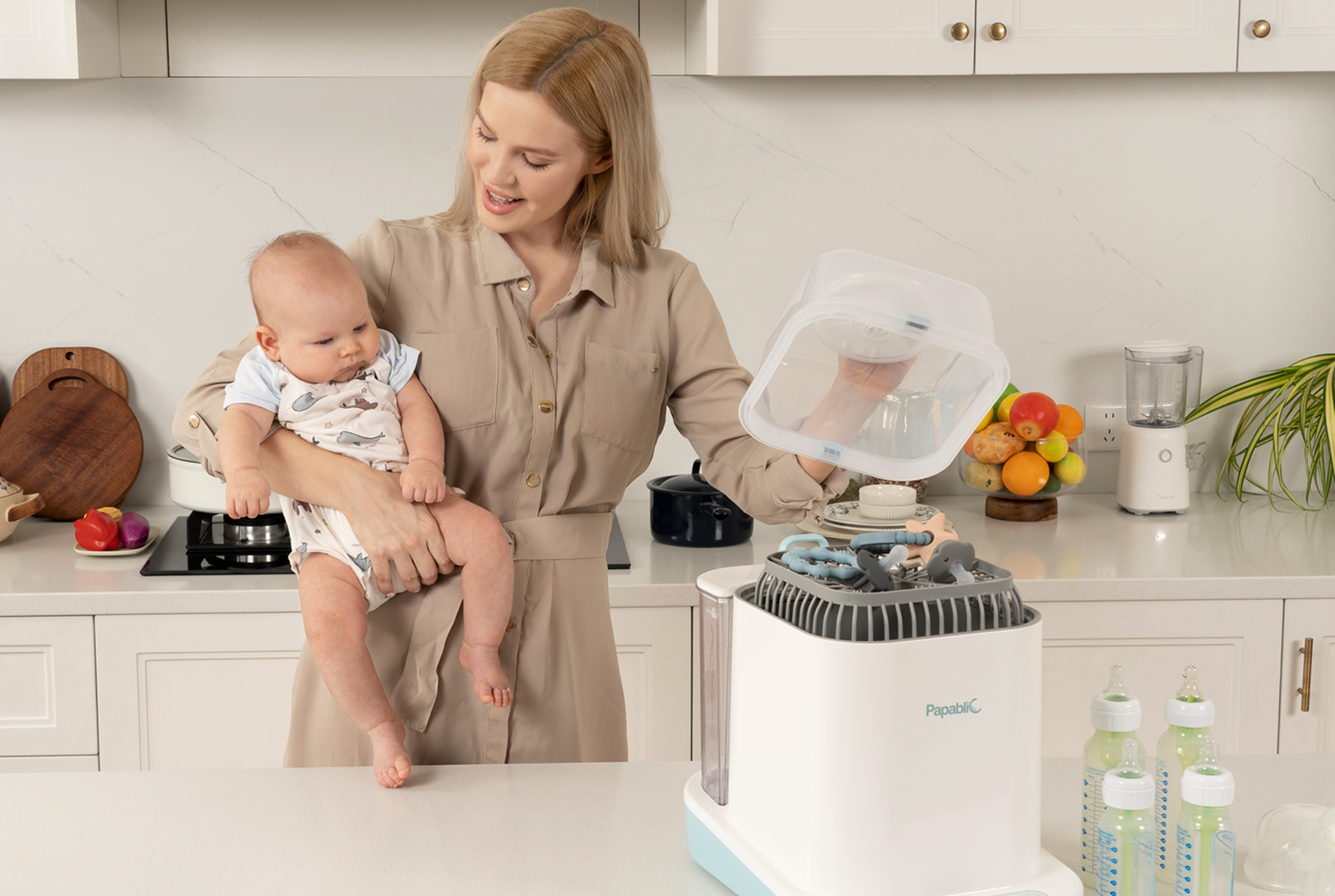
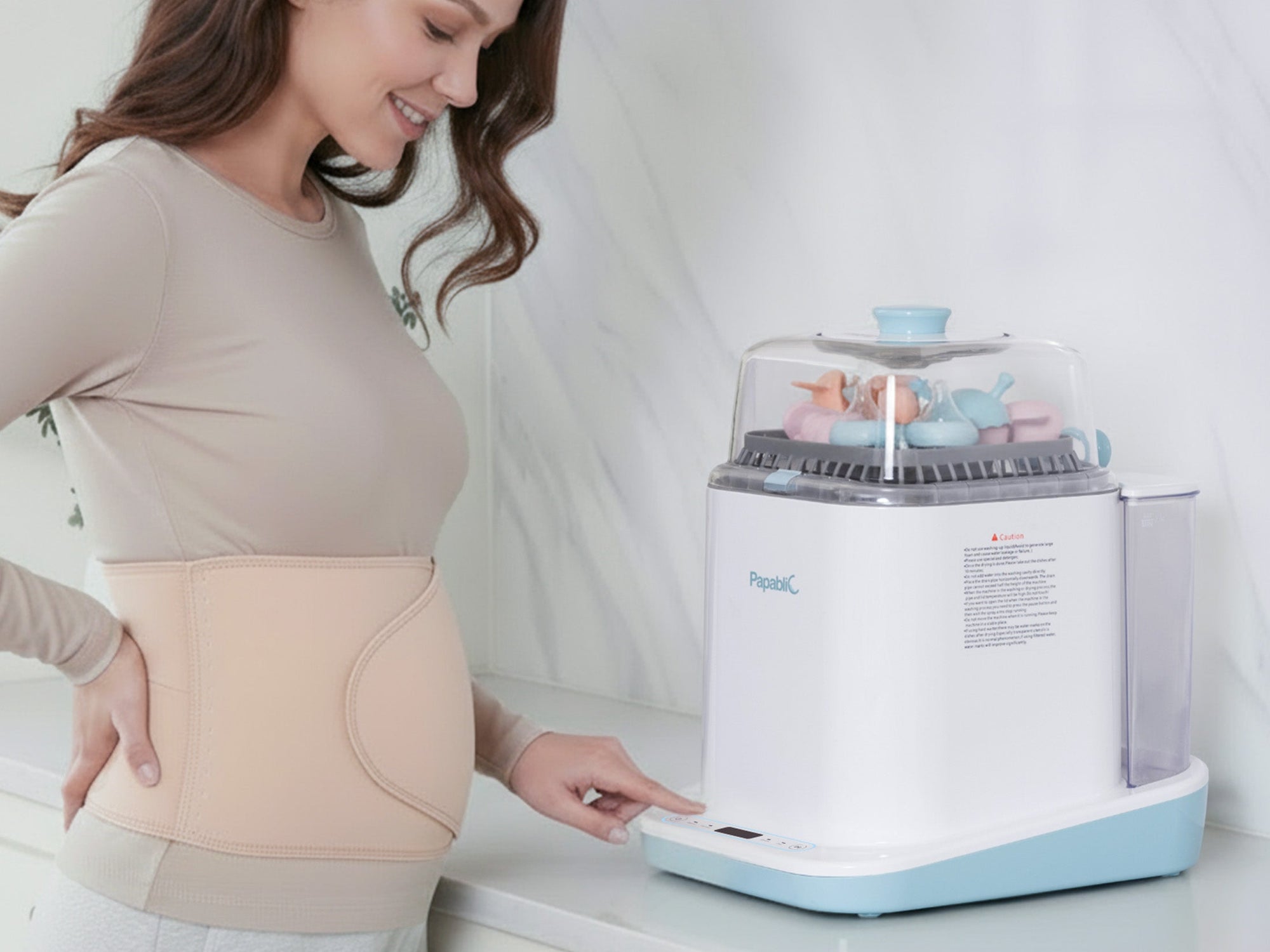
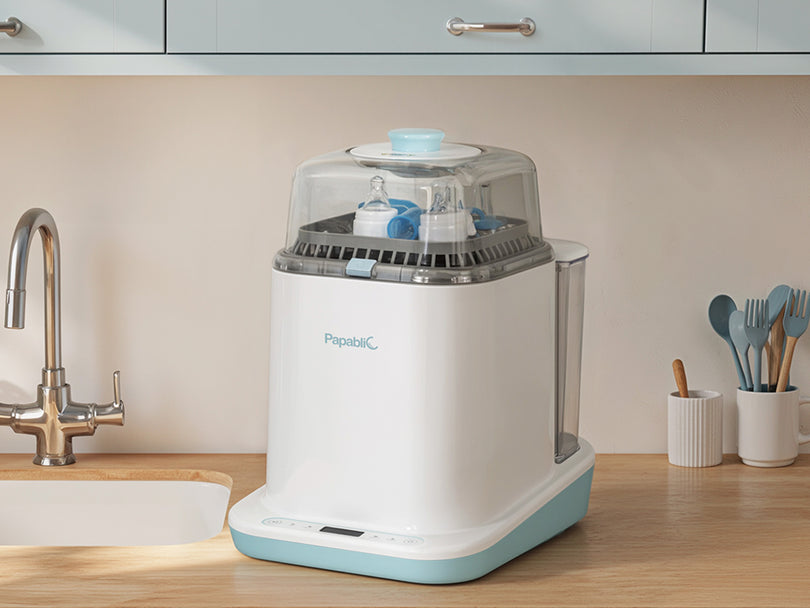
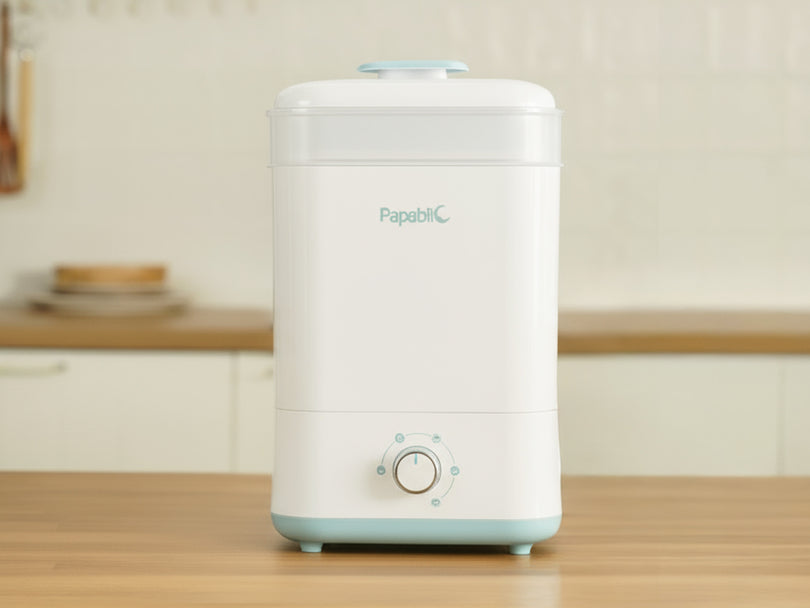
- The Papablic Baby Bottle Washer Sterilizer and Dryer All in One Bottle Cleaner is presented as a 4-in-1 Auto System that cleans, sterilizes, dries, and stores. It is also positioned as postpartum-friendly for one-handed use.
Shop: Baby Bottle Washer Sterilizer and Dryer All in One Bottle Cleaner
Why it wins:
- In practice, all-in-one reduces the number of "open loops" in your routine. Therefore, it can lower the chance you forget a step when you are juggling feeds, pumping, and sleep.
2) Verified germ reduction and sterilization method
Most parents are not asking for perfection. They are asking for confidence. That is why a clear sterilization method matters more than marketing language.
A Steam Sterilizer function is easier to reason about than vague "sanitizing" claims. If you are a NICU parent, you also want clarity: what step handles milk residue, and what step addresses germs.
What to look for in this feature:
- A specific, stated sterilization method (steam vs. heat-only drying).
- A clear germ reduction claim that is stated plainly.
- A process that does not rely on towel drying, because towels can reintroduce lint and bacteria.
- A way to keep parts protected after sterilization, such as closed storage time.
- A workflow that encourages full disassembly, because assembled parts hide residue.
Reality check on common claims:
- Papablic lists a "99.99% Germs Free" claim for its washer, framed around removing milk residues and germs.
- Baby Brezza describes steam killing 99.9% of germs and drying with HEPA-filtered hot air.
- Grownsy describes high-temperature sterilization and also highlights extended sterile storage when unopened.
Shop: Baby Bottle Washer Sterilizer and Dryer All in One Bottle Cleaner
Why it wins:
- A clearly described sterilization step helps you build a repeatable Baby Bottle Disinfection routine. As a result, you spend less time second-guessing whether you did enough.
3) Capacity that matches your daily feeding math
Capacity is the easiest feature to overbuy or underbuy. Highly educated parents often optimize based on an ideal schedule, then reality hits: cluster feeding, extra pump sessions, and more parts than you expected.
Instead of asking, "How many bottles does it hold?" ask a better question: "Can I clean my whole rotation in one cycle during my busiest window?"
What to look for in this feature:
- Capacity that includes bottle bodies plus small parts at the same time.
- Space for at least one full pump-part load if you are pumping, because pump parts can outnumber bottles.
- A layout that prevents nesting, because nested parts block spray and trap moisture.
- A chamber that supports mixed materials (plastic, silicone, glass) if your bottle system changes over time.
- Clear capacity claims you can map to your household.
How Papablic frames capacity:
- Papablic describes its washer as compact yet high capacity, with room for "4+ bottles or 2 full pump kits." That is a useful way to think, because pump kits are the real bottleneck for many families.
Shop: Baby Bottle Washer Sterilizer and Dryer All in One Bottle Cleaner
Why it wins:
- Matching capacity to your bottle rotation reduces peak-hour re-washes. Therefore, it helps keep feeding prep predictable.
4) Postpartum- and caregiver-friendly usability
If your system depends on perfect technique, it will fail in week two. Postpartum recovery, C-section mobility limits, and caregiver handoffs make usability a safety feature.
This is where the details matter: can you open it easily, load it without bending, and run it with one hand while holding a baby?
What to look for in this feature:
- One-handed controls and intuitive cycles, because you will not want to read a manual during a night feed.
- A loading system that makes small parts hard to lose.
- A design that reduces bending and awkward lifting.
- A chamber you can visually check quickly, because mistakes often happen when you cannot see what you loaded.
- A routine that works for multiple caregivers, because consistency matters.
How Papablic positions usability:
- Papablic explicitly calls its washer postpartum-friendly and designed for one-handed use with no bending or straining. For NICU parents, that matters because you need a reliable routine even during high-stress days.
Shop: Baby Bottle Washer Sterilizer and Dryer All in One Bottle Cleaner
Why it wins:
- Usability supports compliance. In other words, the easier it is to run correctly, the more likely you are to keep the hygiene routine consistent.
5) Maintenance and consumables that stay manageable
Every Automatic Bottle Cleaner has upkeep. The difference is whether it feels like a quick weekly reset or an annoying chore that you postpone.
Maintenance is where long-term satisfaction is made. If descaling and detergent refills become confusing, parents often drift back to sink scrubbing.
What to look for in this feature:
- Clear consumable requirements, such as detergent tablets and descaling frequency.
- Easy wipe-down surfaces and a drain strategy that does not create mess.
- A parts design that does not trap gunk in corners.
- Reminder-friendly routines, because your brain is already full.
- Reasonable, predictable restocking for detergent and descaling.
How Papablic frames consumables:
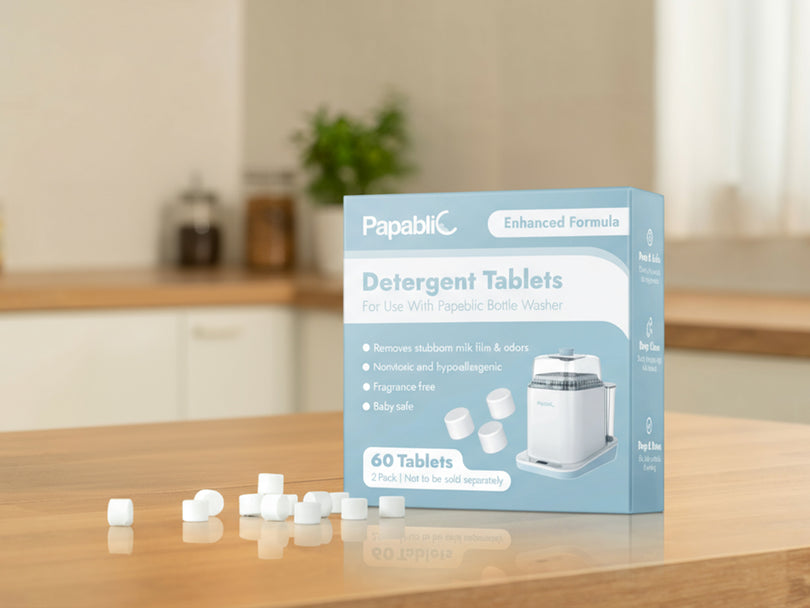
- Papablic lists a free gift of detergent tablets and descaling tablets with the washer, which reduces friction when you are setting up.
Shop: Baby Bottle Washer Sterilizer and Dryer All in One Bottle Cleaner
Why it wins:
- Maintenance that is simple enough to do on autopilot keeps your bottle cleaning system stable over months, not just days.
Buying Guide: How to Choose Without Overbuying
Factor 1: How often should I sanitize for NICU?
If you are a NICU parent, your safest baseline is a routine you can execute the same way every day. CDC guidance calls out premature babies as a group where sanitizing feeding items is especially important, which is why parents often choose a Bottle Washer with Sterilizer rather than wash-only.
Practical approach:
- Decide on a daily sanitize window that matches your life, such as a morning reset or an evening reset.
- Choose a machine that can complete wash, sterilize, and dry in one closed routine.
- Build a storage habit immediately after drying so parts stay protected.
Factor 2: Do I need a dryer to prevent mold?
Drying is not just cosmetic. Moisture hides in nipples, rings, and valves. Therefore, if parts come out damp and get stored, odors and buildup can follow.
Practical approach:
- Favor a Fast Drying Baby Bottle Sterilizer cycle that ends with fully dry parts.
- Avoid towel drying, because it adds handling and can reintroduce particles.
- If you are storing parts for later, prefer closed storage rather than open racks.
Factor 3: How hard is upkeep over 6 months?
The best bottle washer is the one you keep using in month five. That depends on how easy it is to wipe down, descale, and keep detergent stocked.
Practical approach:
- Prefer systems with tablet-style detergent, because dosing is consistent.
- Put descaling on your calendar, such as every 2 to 4 weeks depending on water hardness and use.
- Keep consumables in your Smart Baby Bottle Station drawer so you never hunt for them.
Practical tip: Build a 24-hour parts inventory
If you are chasing parts all day, your system will feel broken even with the best washer.
A simple rule:
- Have enough bottles and pump parts for 24 hours.
- Run one main clean cycle per day, then a quick top-up cycle if needed.

Shop: Smart Baby Bottle Station- Baby Bottle Oragnizer
Common mistake: Underestimating pump-part volume
Wearable pumps, flange sets, and extra collection bottles can double your daily small-part count. As a result, parents end up doing multiple sink sessions even if they bought a washer.
Fix:
- Choose capacity based on pump kits, not bottle count.
Common mistake: Ignoring maintenance time
If your machine requires frequent deep cleaning with hard-to-reach corners, you will procrastinate.
Fix:
- Choose a setup that supports quick wipe-down and predictable tablet use.
Comparison Table
| Option | Wash + Sterilize + Dry | Sterilization method and claim | Capacity claim | Maintenance and consumables | Trade-offs and limitations |
|---|---|---|---|---|---|
| Papablic Baby Bottle Washer Sterilizer and Dryer All in One Bottle Cleaner | Cleans, sterilizes, dries, and stores | Claims 99.99% germs free | Holds 4+ bottles or 2 full pump kits | Includes detergent tablets and descaling tablets as a free gift | Compact footprint can mean you must load carefully to avoid blocking spray on small parts |
| Baby Brezza Bottle Washer Pro | Washes, sterilizes, and dries | Steam kills 99.9% of germs; dries with HEPA-filtered hot air | Holds up to 4 bottles plus accessories | Uses detergent tablets; descaling schedule referenced by retailer listing | Requires brand-specific tablets; capacity may feel tight for heavy pumping days (target.com) |
| Grownsy EaseClean Baby Feeding Bottle Washer Pro | Cleaning, sterilizing, drying, storage | High-temperature sterilization kills 99.9% bacteria | FAQ states up to 4 bottles plus accessories; marketing references large capacity | Comes with detergents (x30) in the box | Larger feature set can increase decision-making if you switch modes often (grownsy.com) |
Conclusion
A Baby Bottle Washer is only worth it if it reduces mistakes, not just effort. For highly educated new parents and NICU parents, the five features that matter most are an all-in-one workflow, a clear sterilization method, realistic capacity, postpartum-friendly usability, and manageable maintenance.
If you want a straightforward all-in-one Bottle Washer with Sterilizer approach, Papablic positions its washer as a compact 4-in-1 Bottle Cleaning System with a 99.99% germ claim, plus capacity designed around bottles and pump kits.
Shop: Baby Bottle Washer Sterilizer and Dryer All in One Bottle Cleaner
FAQ
1. Are there bottle washers that offer multiple functions like sterilizing and drying?
Yes. Many all-in-one units combine washing, steam sterilizing, and heated drying so you do not have to move parts between devices. This matters most when you are cleaning multiple small parts, like nipples and pump components, where missed steps are common. Look for a workflow that ends with fully dry parts, because damp storage can lead to odors and moisture buildup.
2. How can I make sure baby bottles are sterilized properly every time without making mistakes?
Consistency is the real goal: the same steps, the same load style, the same cycle choice each day. Disassemble every part fully so spray or steam can reach crevices like valves and rings. Avoid overpacking, because crowding can block water jets and trap moisture. Once the cycle ends, keep parts covered or stored cleanly until the next feeding.
3. How to ensure baby bottles are 100% sterile for a premature baby?
For premature babies, the safest approach is to follow a repeatable routine that includes daily sanitizing and careful storage. Sterilization is only as reliable as the cleaning step before it, so remove milk residue first and fully take parts apart. Use a cycle designed for sterilize-and-dry, then keep items protected from sink splash, dust, and handling. If you are unsure, confirm your routine with your NICU care team based on your baby’s specific risk factors.
4. What is the safest way to dry bottles to prevent mold growth?
The safest drying approach is getting parts fully dry and then storing them in a clean, protected space. Moisture trapped in nipples, collars, and valves is a common issue, so prioritize a drying cycle that moves air and heat through the chamber. Avoid towel-drying because it can transfer lint or germs onto clean parts. If anything comes out damp, let it air-dry completely before storage.
5. Is a bottle washer necessary for first-time parents, or is handwashing or using a dishwasher sufficient for cleaning baby bottles?
Handwashing and dishwashers can be sufficient when done correctly, but they demand time and attention to detail that is hard to sustain during newborn sleep deprivation. A dedicated washer can reduce missed steps by standardizing the process, especially when you are cleaning many small parts daily. For families with higher hygiene needs or higher volume, automation can be less about convenience and more about reliability. The right choice depends on your feeding frequency, your tolerance for daily manual scrubbing, and how often you need to sanitize.